As someone who goes to a lot of festivals for a living (more or less), one of the more annoying aspects is getting stuck without service as the venue fills up and trying to access set times on a website I can’t connect to. Fortunately, for Rolling Loud attendees in New York this weekend, the festival has figured out a way to keep set times accessible at a moment’s notice, releasing them as nifty phone wallpapers. Now, all you have to do is turn on your phone’s screen to check when and where your favorite artists are performing.
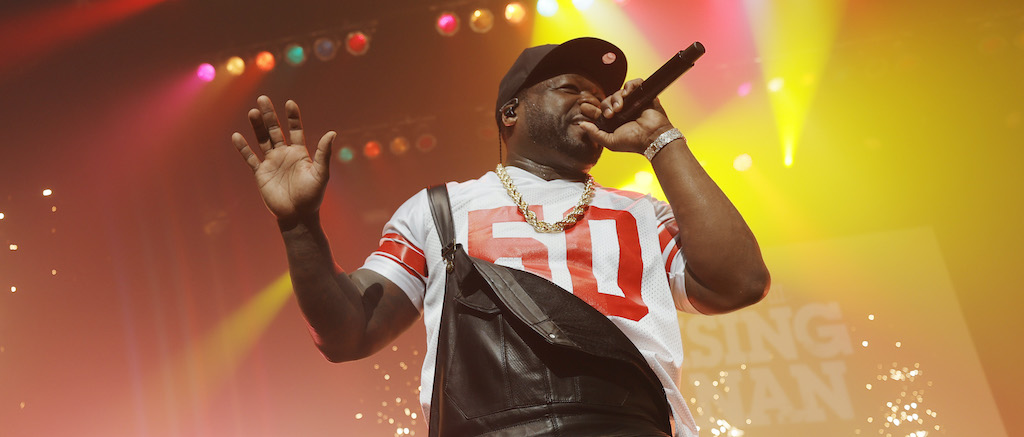
The festival kicks off today with headliners 50 Cent, JID, and Lil Durk on the Deleon Stage, Punx Stage, and Audiomack Stage, respectively. Meanwhile, the absolutely stacked day-one lineups include stars like Lil Uzi Vert, Gucci Mane, Gunna, Jack Harlow, Moneybagg Yo, and Polo G, with hometown heroes Bobby Shmurda, Joey Badass, Dave East, Young M.A., Smoove’L, CJ, DreamDoll, Stove God Cooks, and Nyck Caution sprinkled in throughout the day (does Fetty Wap count? He’s from New Jersey, not New York, but they’re basically neighbors, right?).
There’s also a site map and an app to help you build your schedule for the day. Check them out in the thread below.
In the midst of two federal investigation and a surge of public outrage, Activision Blizzard — and its CEO, Bobby Kotick — are finally making some concrete changes to the company that aren’t merely canceling BlizzCon and renaming one of their game’s characters. This announcement comes after the videogame empire, famous for owning hit franchises such as Call of Duty, Overwatch, World of Warcraft, and Candy Crush, was ousted for maintaining a “frat boy” culture at their offices earlier this summer, with numerous victims reporting unfair labor practices and sexual misconduct. Since then, many workers have begun to privately sue the company while both the Securities and Exchange Commission (SEC) and California Department of Fair Employment and Housing (DFEH) opened investigations into Activision’s misconduct. In an attempt to restore some hope in the company, Activision Blizzard is now taking action.
In a letter shared earlier this morning, Kotick announced a series of initiatives the company is taking to help reestablish faith in the company after admitting “guardrails weren’t in place everywhere to ensure that our values were being upheld,” chief among these being a massive pay cut for the chief executive officer.
“Over the last decade, as we’ve brought in new companies, grown our workforce, and expanded our business, we believed we had the systems, policies, and people in place to ensure that our company always lived up to its reputation as a great place to work. Clearly, in some vitally important aspects, we didn’t .. In some cases, people didn’t consistently feel comfortable reporting concerns, or their concerns weren’t always addressed promptly or properly. People were deeply let down and, for that, I am truly sorry.”
Following his apology, Kotick announced Activision Blizzard will be reducing his salary to the minimum allowed Under California law for salaried workers: $62,500. In addition, Kotick said he will not be receiving any bonuses or equity grants. This takes Kotick from being the second-highest paid chief executive nationwide — bringing in a whopping $154 million just last year — to one on the lower end of the spectrum.
In addition, Kotick said Activision Blizzard will be implementing a “zero-tolerance” harassment policy while also ending mandatory arbitration for sexual harassment and discriminations claims, meaning employees will now be able to sue the company directly rather than go through a company arbitrator if they feel they are being discriminated against. The company also vowed to increase the percentage of women and non-binary people in its ranks by 50% and be more transparent about pay equity, as well stated it will invest $250 million to advance opportunities for diverse workers. Lastly, Kotick has promised “regular progress updates” with a “dedicated focus on this vital work” will be delivered alongside the company’s annual earnings report and other public disclosures.
Right now, Activision is currently in the process of trying to pay $18 million to settle an investigation by the U.S. Equal Employment Opportunity Commission. However, the California regulator has said the “proposed settlement amount is too low and that the agreement includes provisions harmful to victims and its case,” (via The Wall Street Journal). While it’s uncertain just how everything will be resolved, here’s hoping the company’s proposed plan — and some forced accountability — help ensure some justice is dealt.
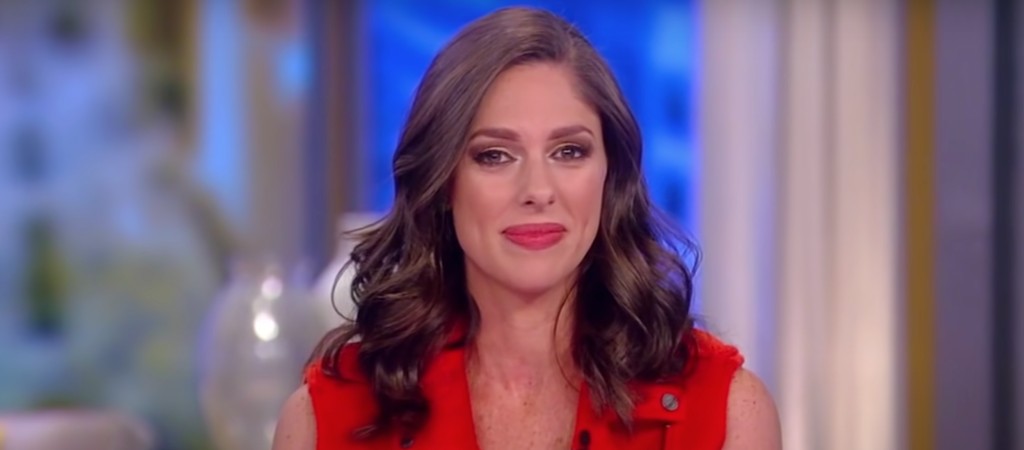
After a brief tenure from 2018 to 2020, former Fox News personality Abby Huntsman abruptly announced that she was leaving The View to help work on her father’s gubernatorial campaign. While that was the official story, reports quickly began to swirl that Huntsman’s real reason for leaving was because of behind-the-scenes drama at The View that was coming from an odd source: Her best friend Meghan McCain. The two were close allies on the show thanks to their friendship and shared background of being the daughters of conservative politician. In fact, McCain reportedly pushed ABC execs to hire Huntsman, so it was notable that after a short stint, she made a run for the exit.
After fading into the background, Huntsman has returned with a new podcast, I Wish Somebody Told Me, and she’s opening up about leaving the daytime talk show. Right out of the gate, Huntsman confirms that, yes, the show’s workplace environment was her real reason for quitting and working for her father’s campaign was a convenient excuse that popped up at just the right time.
Huntsman then made a very notable remark considering McCain just spent last week promoting her audiobook that dipped heavily into the behind-the-scenes drama at The View. Via Deadline:
“I’m never going to write a tell-all book,” [Huntsman] says, but adds that the “executives in charge” had created an environment that “was all about money and the tabloids… You would see people act in ways that were not okay, that was very much part of the toxic environment of The View, and here we were going on the air criticizing others for toxic culture.”
On the one hand, Huntsman seemingly corroborates McCain’s claim about The View‘s toxicity issue. On the other, Huntsman could also very easily be talking about McCain as the source of that toxicity, which CNN reported back in January 2020. The two reportedly had a falling out after McCain told Huntsman to stop bringing up her children during panel discussions. Of course, Huntsman could clear things up by stating that McCain was not her reason for leaving, but interestingly, she chose not to go that route.
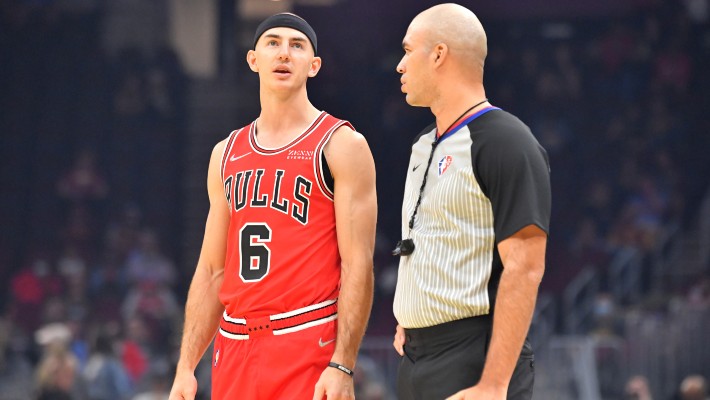
CHICAGO – Something big changed for Alex Caruso in the bubble. It wasn’t on-court metrics, it wasn’t him getting in the “best shape of his life,” and it wasn’t winning a championship (okay, he did do that). It was reigniting a love for golf. The then-Lakers guard, like a lot of guys killing time at Disney World, took full advantage of the accommodations, most notably the course that was available to players pretty much exclusively.
Thankfully he had a willing teacher and partner in Lakers assistant coach Mike Penberthy. Penberthy, who has been dubbed a “whisperer” for his ability to get the most out of NBA guys looking to improve their golf game, transformed Caruso’s approach. The result was knocking quite a few strokes off his handicap and making him as pesky to play against as he is on the hardwood.
Caruso has carried that passion since the bubble, and is settling into his hobbies, his role, and his part as a fan favorite. After inking a $37-million deal with the Bulls, he also picked up his first major apparel sponsorship in golf brand TravisMathew, where he’s being announced as an ambassador on Thursday. While the headband wearing, scrappy defender might not be the first name that comes to mind for fashion, it’s part of a long journey for Caruso, who has gone from G League to reliable contributor in the league. And he can’t go anywhere without being recognized as long as his signature shaved head is showing. (Although he can still hide incognito with a hat on.)
Going from uncomfortable to comfortable is everything to Caruso, who sat down with Dime from Miracle Mile before his photoshoot to talk everything from golf and his fit with the Bulls to his personal style and what NBA players’ group chats are really like.
You’ve been in Chicago now for a minute. How’s the adjustment been? How have the fans been? What has this experience been like so far? Obviously you’re still getting to wear the headband. Some people worried that it wasn’t going to be on when they saw you in a Bulls uniform.
It’s been a nice adjustment. But it has been an adjustment going from Manhattan Beach, California, and LA for four years to living in an apartment in a city-city now. It’s different, but I like it. It’s a change of pace for me. I think it’s good for me. A little uncomfort, get out of my comfort zone, which I think throughout basketball and kind of my life has been a good thing for me. I feel like I grow a lot when I’m uncomfortable in new situations. Fan reception’s been great.
I know Chicago’s a big sports town, a big sports city and they’ve been fiending for good basketball and good sports for a while. So, got off to a good start in preseason [and so far this season], but we’ve got a lot of work to go. We’re excited. We’re excited for sure.
You mentioned that being comfortable with being uncomfortable. Is that kind of how you approach everything? Because it seems like that’s been the case for you is you don’t back down from any challenges. But more specifically in terms of clothing and fashion, it’s not necessarily what some people are known for off the bat.
Yeah, definitely. I mean, everything from fashion to my hobbies, to life for me, it’s just about being comfortable and having fun. Never really stressing too much about either what you’re putting on for clothes, or who you’re now with, or what you’re doing. I’m a real big go with the flow guy. I never really take stuff too seriously. And that’s just been really, really easy for me to push that into all facets of my life.
TravisMathew
A big hobby of yours is golf. I know you got to play a lot when you were in the bubble and it really improved your game.
Yeah, my agent [Greg Lawrence] swears it was help from one of the assistant coaches. Mike Penberthy. Former Laker player. And now assistant coach. I played a lot with him and some of the other guys in the bubble. I probably went from like a mid 90s to like a mid 80s guy coming out of there. And he swears by him being like my swing doctor. There might be a little truth to it.
Favorite course you’ve ever played. You have one?
Probably Pebble Beach. I went to play with Greg and my dad and my financial manager, Joe, late August. And I mean, for a golf head, yeah, man. It’s one of the ones I’ve played on video games. I played that.I love golf and I love playing new courses. But this was the first time where I was like a little kid. I was giddy going around the course. I know this whole, like I’ve seen Tiger Woods hit this shot or such and such hit that shot. And then cap it off 18. You know, along the coast, it’s pretty sweet.
With regards to kind of your personal style and aesthetic. Did you pick anything up in LA that you didn’t expect to pick up, wear some stuff that you were a little shocked by? Maybe taking cues from Kuz?
I started getting a little more adventurous in LA, but I think that’s also just me growing up, kind of realizing the kind of taste that I had. Being exposed, obviously, like you said, a lot of my teammates, or ex-teammates and current teammates have very loud fashion choices. I’m a little more reserved. I did start to rock the no socks, little high cut pants. That’s one of my favorite looks, but nothing too crazy. I think, at least in my eyes, I was, like I said, wearing stuff that you’re comfortable in and I like it, I’m going to wear it, and don’t really care if anybody else doesn’t.
That Premier League fantasy league, are you still in that with those guys?
I’m not, no. Didn’t do fantasy soccer this year. It’s hard for me to keep up with that and fantasy football. And watch basketball. There’s just a lot. Also just wasn’t very good at that. That was a big kicker in it too. The hardest part about being an EPL fan was living on the West Coast. Yes. Cause if your team got the early game, it’s 4:30 AM. I missed the 4:30 games. I will not lie to you. 6:30 and after I’ll get up.
Getty Image
How did you get connected with TravisMathew? I mean, other than being a golf fan. What does this line represent for you, and the opportunity to be the face of something like this? Where you’ve had some opportunities, you’ve had endorsements, but a major clothing brand putting their way behind you has got to feel pretty cool.
Yeah. It is. I mean, I’m excited for it. Even outside of them approaching us with this partnership. I just like their clothes. That makes it really easy for me to have this partnership when you back a product, and you actually enjoy it, and wear it, and are comfortable in it. I liked TravisMathew, and was just excited. I remember a couple years ago when I connected with somebody through their socials and was like, “They’re going to send you some clothes.” I was like, “Oh, that’s awesome.” And a couple shirts that I had, I was excited. And now it’s like TravisMathew is pretty much one of the only comfort brands that I wear around the house, out with my friends, pretty much the only hat I wear too. I have a bunch of TravisMathew hats. Too many.
And then, when it comes to comfort wear and athleisure, we’ve seen such a big change in kind of that relationship between guys and what they wear. I mean, not that long ago when you wear stuff, that’s your team warmups. But now you don’t have to sacrifice comfort to have some style.
I think that’s partially why I love it so much. Because it’s formal enough to wear if you need to wear it to dinner, out with some people. It’s a nice outfit. Or, if you just want to hang out with the boys and watch football, you can throw it on. I’ve worn different TravisMathew stuff into games before, I’ve worn it traveling. For me, it’s really diverse, how you can wear it, where you can wear it. And that’s part of the reason why I like it so much.
I’ve been thinking a lot about the new rules on offense. How is that affecting how you’re maybe approaching how you guard guys? Is it going to be a feel-out stage? Because you don’t want to maybe bite too quick if refs haven’t adjusted all the way yet or are still making those foul calls.
It’s a lot of trust. There’s a lot of trust in the system just that they are going to adjust it. Like they say they are. They’ve been really good about it and diligent about it in the past when they have emphasis on rules. So for me, I’m going to keep just doing what I’m doing and keep preparing, and being ready to guard some of these high profile and dynamic players in the league. But hopefully these rules will make it a little bit easier on me, because these guys are already as good as they are. They don’t need any extra help.
With so many moving parts on the Bulls, and so many guys that have come in, new face-wise, do you feel like you kind of have an advantage in knowing your role? In knowing your comfort level in that role? Because of everything that happened in LA, it was next man up every single year with new faces, new guys, and you went out there and you just were Alex the entire time you were in Los Angeles.
Yeah, that’s something that I pride myself in, is just being myself. We talked about off the court, wearing certain outfits and stuff like that. Or on the court, being myself, playing my game, it’s the same thing. Being comfortable. I think I’ve grown a lot as a player while I was in LA, learned a lot from some of the older guys and great teammates and coaches I had. And I’m really just excited to kind of keep pushing myself and see how far I can take my skill set, my game, and continue to be that great teammate and try to win games.
TravisMathew / Uproxx
Did you see that meme of Jordan passing the torch to you?
Yeah, I did. That made it to the boys group chat. That’s what I think people understand is that, all this stuff that goes on Twitter, my friends send it to me before I see it on social media. They love it more than everybody else.
This interview has been edited and briefly condensed for clarity. Dime was invited on a hosted trip to Chicago by TravisMathew for reporting on this piece. You can find out more about our policy on press trips/hostings here.
Texas’ draconian new abortion law is pretty insane, not to mention a bold move. State lawmakers and Governor Greg Abbott were very proud of outlawing the medical practice after six weeks, meaning that a lot of women won’t even know that they’re pregnant (because there are a lot of non-pregnancy related reasons why a period is two weeks late) before it’s too late for an appointment. The law also allows any private citizen to go into vigilante mode and sue anyone who helps a woman secure an abortion (that includes clinic staff and anyone who gives a woman a ride to a clinic). Rape exceptions are now nonexistent with Abbott declaring (while signing the bill in a room full of white dudes) that that problem is easily solved because he’s simply gonna jail all rapists.
The Daily Show determined to reflect upon how the law is already impacting women, so Desi Lydic visited with Nancy Northup of The Center for Reproductive Rights to ask the bluntest of questions (and to rate the law on the “f*cked-up meter”). The answers that Desi received are sobering ones:
Desi: “Exactly how f*cked up on the f*cked-up meter is this law? Are we talking, like, this f*cked up?”
Nancy: “It is preventing about 85% of abortion patients being able to get access in the state of Texas. By creating a legal scheme that has been very hard to challenge, in court. It’s outrageous.”
Desi: “That is pretty f*cked up.”
Nancy: “It is a massive violation of constitutional rights, yes.”
The pair went further, discussing how Texas has protected itself from lawsuits by enacting a law that’s designed to not be criminally enforced, so it can’t be challenged in court on whether it violates the U.S. Constitution. Instead, it turns Texas residents into “vigilantes” to the tune of claiming a $10,000 bounty. Desi assessed the situation: “An unconstitutional law that can’t be ruled unconstitutional? Genius.”
So, who’s the main mastermind behind this constitution-circumventing legislation? As the Washington Post revealed a few weeks ago (on who “paved the way” for this Texas law), that would be Mark Lee Dickson (a director of Right to Life of East Texas), whose arsenal of lawyers guided him through getting the law passed. Yes, he speaks on camera. He’s perfectly comfortable with the “private enforcement mechanism” that is designed to evade the constitution. When Desi inquires whether he’s trying to take abortion back to the Wild West days, his answer is as follows:
“Everyone loves Batman, right? No one’s complaining about having a costumed vigilante known as Batman getting the job done. And so, why are people against private citizens to get the job done.”
And Desi had a voiceover comeback that nailed it: “Explaining comic books to women while also restricting their rights. This guy must be getting laid, 24/7.” As Rep. Alexandria Ocasio-Cortez declared of Abbott’s own stance, the governor spoke from “such a place of deep ignorance” that he clearly didn’t understand how the female anatomy functions. One might also make the same assumption of a guy making a Batman analogy about abortion, too.
When musicians oftentimes perform in front of thousands of people, it’s not uncommon for fans to throw things on stage. They can have everything thrown at them from flowers to undergarments (and if you’re ASAP Rocky, that includes a sweaty pair of boxer briefs). But sometimes, the most hardcore fans somehow find a way to rush on stage and make a scene. That’s exactly what happened at a recent Maroon 5 concert, and a video of the incident instantly went viral on TikTok.
Adam Levine was at the Hollywood Bowl on Saturday to perform at Audacy’s We Can Survive concert. While he delivered the soaring chorus to the band’s hit track “Sunday Morning,” a woman rushed on stage and managed to grab Levine from the side before she was promptly whisked away by security. Levine was, of course, startled by what had happened and mouthed a profanity before shaking himself off.
After the clip made the rounds on the internet, Levine took to his Instagram Stories to address the incident. According to NME, he clarified that he wasn’t angry with the fan, he was simply caught off guard at the moment. “I have always been someone that loves, respects, worships our fans,” he said. “Without our fans, we don’t have a job. I say that all the time to our fans. To think that anyone would believe that I thought that our fans were beneath us or less than us makes my stomach turn. It’s just not who I am, it’s not who I’ve ever been.”
Levine continued: “So I just need you guys to know, I was really startled, and sometimes when you’re startled, you have to shake it off and move on, cause I’m doing my job up there. It’s what I pride myself on. So I need to let you guys know what my heart is, and my heart is that connection that exists between the band performing onstage and the fans. I hope we can all understand that.”
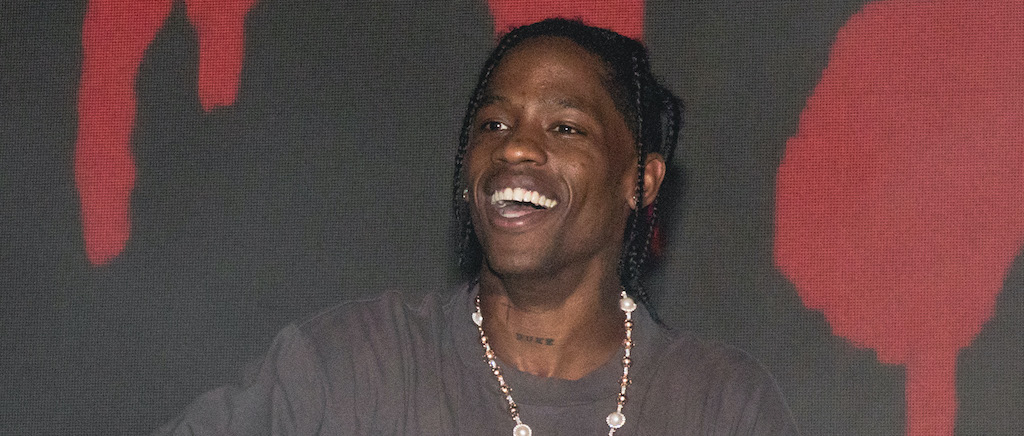
Over the past few years, Travis Scott has cultivated a reputation for giving back to his hometown via the Cactus Jack Foundation, and next month, he’ll extend his philanthropy even further as his Astroworld Festival now includes an Astroworld Week. In the days leading up to the festival, which lands on November 5-6, Travis is taking over Houston with events looking to benefit local youth including a celebrity golf tournament and softball game; the unveiling of his Cactus Jack Design Center, several public basketball courts, and a youth community garden; and a slew of sneaker release events in conjunction with Nike’s SNKRS program.
In addition, Travis revealed the premiere date for the A24-produced film, Red Rocket: November 6, during the Astroworld Festival. The Astroworld Festival lineup, which was revealed earlier this week, also includes 21 Savage; Baby Keem; Bad Bunny; BIA; Chief Keef; Don Toliver; Earth, Wind & Fire; Houston All-Stars; Lil Baby; Master P; Roddy Ricch; Sheck Wes; Sofaygo; SZA; Teezo Touchdown; Toro Y Moi; Travis Scott; Tame Impala; Young Thug; and Yves Tumor.
You can find more information about the Cactus Jack Foundation here and more about Astroweek here.
Some artists covered here are Warner Music artists. Uproxx is an independent subsidiary of Warner Music Group.
This full list of nominees for this year’s American Music Awards was unveiled this morning, and you may notice something peculiar while looking at the list as it appears on the AMAs website: Controversial country star Morgan Wallen earned two nominations — Favorite Male Country Artist and Favorite Country Album for Dangerous: The Double Album — but both of his listings include asterisks. That’s because, despite his nominations, Wallen is banned from attending this year’s ceremony (which airs November 21 on ABC).
A note at the bottom of the AMAs nominations page, attributed to MRC Live & Alternative, reads:
“Unique among awards shows, American Music Awards (AMA) nominees are determined by performance on the Billboard Charts and are not chosen by a voting committee or membership organization. AMA nominees are based on key fan interactions with music (including streaming, album sales, song sales, radio airplay, social engagement), tracked by Billboard and its data partner MRC Data. The AMA winners are voted entirely by fans.
Morgan Wallen is a nominee this year based on charting. As his conduct does not align with our core values, we will not be including him on the show in any capacity (performing, presenting, accepting).
We plan to evaluate his progress in doing meaningful work as an ally to the Black community and will consider his participation in future shows.”
The “core values” hyperlink leads to a page on MRC Live & Alternative’s website titled “Our Commitment To Diversity, Equity & Inclusion.” It reads in part, “MRC is an anti-racist organization committed to diversity, equity and inclusion in our company, on our platforms, in our products and with our partners. As an entertainment company we believe the best stories are told through diverse and authentic voices and representation in front of and behind the camera. […] Our differences make us a vibrant and successful company and we strongly encourage our partners to adhere to our stated values as part of our expectations of doing business with one another.”
Joy Ride is the perfect watch for those of us who enjoy comedy but are maybe a little disillusioned with “the stand-up special” as an artform. Is a full hour of filmed stand-up really the gold standard of comedic talent?
“I don’t care how brilliant the comedian is, there’s a fatigue that sets in at about 40, 45 minutes,” says Bobcat Goldthwait, a comedian who frequently performs for longer than that.
In Joy Ride, Goldthwait, comedian-turned-novelty-80s-actor-turned-filmmaker, and his friend, comedian and Simpsons writer Dana Gould, take the stage together, cracking jokes, telling stories, and riffing. This is intercut with footage of them on the road, and mixed with period footage from their early lives, early careers, and things they reference in the act. It all adds up to an enjoyable and breezy watch, at just over 70 minutes.
Partly it’s a live podcast, partly it’s a throwback to comedy duos that used to be so popular, and partly it’s the documentary answer to The Trip, if Steve Coogan and Rob Brydon didn’t eat fine food or do Michael Caine impressions. If instead maybe they just drove through bad weather and got into car crashes in between discussions about Robin Williams meeting Koko the Gorilla and hating Jerry Seinfeld.
Oh yes, we do get into that feud. Turns out, Bobcat Goldthwait’s was the bleeped name in an episode of Seinfeld’s Netflix show, Comedians In Cars Getting Coffee, with guest Bridgett Everett. Goldthwait had directed Everett in Love You More and Misfits & Monsters, and Everett’s mere mention of him in front of Seinfeld prompted Seinfeld to muse , “He used to rail against comedians because they weren’t as wild and dangerous as he was. ‘Cause he sucked! He wasn’t funny. And that’s why he didn’t get anywhere. That’s why he had to do that stupid f—ing voice. ‘Cause you have no f—ing act!”
Goldthwait had indeed ragged on Seinfeld in the nineties, so Seinfeld’s rant didn’t exactly come out of nowhere. “I was very vicious, let’s not kid ourselves,” Goldthwait now says of his earlier Seinfeld bashing. “But I thought it was over, because I was friendly with one of his managers. Maybe I should’ve reached out or something.”
But as long as we’re back on the subject… “You know that show where millionaires dissect comedy until it’s not funny anymore?” Goldthwait asks of Comedians In Cars. “It’s like, ‘hey, you know what the average Joe can relate to? You in a half million dollar car.’ That just tears my cock off. Go f*ck yourself.”
Goldthwait reasons that he had mostly stopped celebrity bashing in his act, because he didn’t like the way it made him feel (not to mention Sylvester Stallone threatening to eat his heart). Evolving into more of a storyteller in the years since, he nonetheless says that there are good reasons for Seinfeld to drop the beef.
“As soon as he [brought me up], people were trying to figure out who he’s talking about. And then they Google my name and Jerry Seinfeld, and it just goes to clips of me talking about him banging teenage girls and being a Scientologist enthusiast.”
As Nathan Rabin has pointed out, where you side on the Seinfeld/Goldthwait feud sort of comes down to whether you believe that a comedian’s “goal” is to be rich and successful, or to connect with people. For what it’s worth, I think there’s some truth to what Seinfeld was saying. I do enjoy Goldthwait more as a storyteller than I did as an avant-garde stand-up comic. Yet I’m firmly Team Goldthwait in the matter, because when he talks, onstage and off, he has an almost uncanny ability to make you feel like you’re just listening to a friend tell a story. It rarely feels like you’re experiencing “a performance” (even though, of course, you are). He’s an engaging personality in a way that you can’t grade purely on laffs volume.
This is the second time I’ve interviewed Goldthwait (the first when he was promoting Call Me Lucky, his documentary about his friend Barry Crimmins, who I also interviewed before his death in 2018), and it always just feels like we’re friends shooting the shit, despite never having met the man outside of the context of promotional interviews. I tend to think that’s simply Goldthwait’s gift. It’s the same feeling you get from watching Dana Gould and Bobcat ruminate and reminisce with each other onstage in Joy Ride. In some ways it seems to be the feeling Seinfeld himself was trying to create in Comedians In Cars Getting Coffee. And yeah, maybe it is easier to relate without all the fancy cars.
Joy Ride hits select theaters and OnDemand platforms October 29th. I spoke to Bobcat and Dana via Zoom this past week.
—
I see you’ve got that picture of Barry behind you.
BOBCAT GOLDTHWAIT: Yeah, I’m doing a narrative version of Call Me Lucky with Judd Apatow. Been working on it awhile. It’s very hard because I want it to be a good movie, and I want it to be honest, and I also don’t want to be haunted by a drunk ghost. That’s the reality of it.
Is it going to be with him testifying in Congress and stuff like that?
BOBCAT: Yeah, there’s that, but what’s probably made it harder is I’ve been trying to tackle a bigger slice of him. But I do agree, I think biopics that are a specific chunk of time are more interesting than cradle-to-the-grave biopics.
[Dana Gould shows up to the Zoom]
DANA: Hey, sorry about that.
All right. So what made you guys want to do this tour as a duo?
BOBCAT: Well, we just liked the idea of doing rock clubs together, and we wanted to see how it worked. If it would work. What happened was is we would come out, and we would goof around, and see who was going to headline that evening by flipping a coin, but we both quickly learned that people were enjoying the part of Dana and I dicking around on stage together more than our actual stand-up. I’m really happy when there’s some genuine ad-libs that are going on, but I couldn’t have done this any earlier in my career because I could not have handled someone else getting all the focus at any point on stage. I would’ve been in full on Jerry Lewis overdrive.
Aside from the clash of egos not allowing one of you guys to go first, did it take some pressure off not having to remember a set?
BOBCAT: Yeah. It’s so funny, too. Like, now Dana will remember something I said and he’ll try to tee it up for me, and I just look at him like a stroke victim, and I don’t know what he’s talking about.
DANA: “Know what, Bob? These baseball players sure have funny names.”
BOBCAT: “Yeah. Actually, I haven’t noticed. I don’t follow baseball…”
DANA: It is true, I agree with Bob that this wouldn’t have worked 10 years ago, but we’re both at a place in our careers and in our maturity where laughter, there’s not a finite amount. If you get some, it doesn’t mean there’s less for me. We can really just enjoy it. You know, the term “word jazz” gets thrown around a lot…
Comedy duos, it seemed like there used to be a lot of them, but now, I can’t think of any that aren’t twin siblings. Do you think there’s a reason that the comedy duo has–
DANA: (laughing) That’s really true! It’s funny you say that, because Jason Skylar lives literally five houses down the street.
BOBCAT: Are you sure it’s Jason?
DANA: Yes, and I wasn’t for a long time.
BOBCAT: I worked with the Lucas brothers, and I would make a note on which one had the red piping in his hat that day, and I never called him by the wrong name. Then the last time I saw him I did, and I wanted to die.
Do you think the duo is going to come back?
BOBCAT: Well, you know I have a huge soft spot for that kind of stuff, like Martin and Lewis, and Hope and Crosby. I think the closest we’ve had, it’s been years, but The Mighty Boosh. That was really that traditional thing where it’s two guys that love each other, one guy’s clueless and fun, and drives the other guy nuts. I was always looking for that. Briefly, David Bowie and myself talked about doing an act. Even a couple years later, I would’ve done it. But when he wanted to do it, he was like, “Okay. I started looking into the small venues,” and by that he meant like 2,000 seat halls. They would’ve killed me.
DANA: I always get the call after Bowie passes. “Tin Machine? No. No, I can just fill in.”
It seems like with this, you get to do the things you like about stand-up without necessarily having to do traditional stand-up. What is your relationship to the medium? Were there ever times where you disliked it or wondered if it was worth it?
DANA: Oh yes. The goal of the tour was the other 23 hours. It was, I hate traveling alone, living alone. Especially when Bob and I were adults. We have romantic partners, children. I’m very socialized. And being alone for all that time is a drag. I was like, “Hey, we can be alone together. This is great.” The stage act grew out of that necessity, I think.
BOBCAT: Yeah and also just to get out of comedy clubs. Because these are rock venues, so these people came to see us. They weren’t there because it was a date night or it was a Groupon or whatever. And the two of us together, the draw’s a little better. The two of us together, we’re this little unit. The shows would start running to two to two and a half hours, and we would leave it all out there.
I don’t know that I would necessarily want to watch two hours of a straight comedy special, or that I would want to watch a whole thing about just a road trip, but because you mixed all these things, with the historical footage and the stage footage– yeah, I liked it a lot.
BOBCAT: I don’t care how brilliant the comedian is, there’s a fatigue that sets in at about 40 minutes, 45 minutes, no matter how great the act is. I think because there’s a bit of a narrative, and that hopefully we allude to that. But I was going to say no comedian, but you know what’s funny? I saw Andy Kaufman when I was a teenager, and there was no fatigue because he kept peeling the onion back. He came out speaking jibberish, and then he’s doing the Elvis, and then he’s doing a version of himself, and then he’s wrestling. There was no fatigue, you’re going “Oh, he just cried playing bongos. Oh, now we’re wrestling women. Wait, now we’re all putting our arms around each other and singing… Oh, Howdy Doody’s here.” It was mental.
So Bobcat, why didn’t you like Dana at first? And when did it change?
BOBCAT: You are what you hate, or as Mel Brook says, “You are what you mock.” To really get down to it, I grew up with Tom Kenny[comedian and voice of Spongebob], who I’ve known since I was six years old. I think he’s the funniest person I’ve ever met. And Dana was influenced by Tommy, so–
DANA: Yeah. In a big way, Bob lived in Boston with our two friends, Tom Kenny and Dan Spencer. And then Bob moved to San Francisco and I moved to Boston and became friends with Dan and Tom. Absolutely at that age, 18, 19 years old, I absorbed some of Tom’s personality. Shamelessly, by the way. I wouldn’t have liked me either if I was Bob.
BOBCAT: My bullshit thing was, in my head, I felt like I was defending Tom Kenny somehow, but the reality is Tom Kenny didn’t have a problem. The real subconscious reason I believe was that I didn’t like the part of me that was derivative of Tom. And so I attacked Dana. The other thing is is I’ve never been a person that’s “on” offstage. I’ve always been punch the clock funny. I like watching my friends be funny, and I like laughing with my friends, but when people are always on, I just have a problem with it. And Dana was very needy then, and Dana would be on.
Was it also that you’d moved away, and [Dana] had replaced you in the friend group somehow?
BOBCAT: Yes.
DANA: What’s so funny about that is I thought that’s what it always was. Now I’m like, “Oh, it was something else?”
Oh yeah, actually it was just your personality.
DANA: And also, not to belabor a well-made point, I grew up in a very, very small town, and I literally didn’t really meet people that I didn’t know already until I left my hometown and went to college. That was right around the time that Bob met me. I was 18, 19, but emotionally, I was probably 13 or 14, just by dint of my upbringing. I’ve said this so many times, but I meet people that knew me before I was 30, and I’m just like, “I’m really, really sorry.” And it wasn’t long after that but we were at a show at Largo, and I think that there was a sense of like, “Oh, he’s changed. I’m going to talk to him.”
BOBCAT: Dana changed, but my thing was do you want to be right, or do you want to be happy? I had a Rolodex of resentments towards everybody. “Oh, this guy. Well, he did this and that, and that’s why I don’t like him.” But at the end of the day, you have to ask yourself do I want to be right and isolated and bitter, or do I want to have loved ones and friends?
You guys talked about teeing each other up for bits during the show. I was trying to figure out, is Bobcat hating Jerry Seinfeld a bit that Dana was trying to tee you up for, or is that just a thing that he likes to goad you into talking about?
DANA: Neither!
BOBCAT: So that clip of him on that show where millionaires dissect comedy until it’s not funny anymore [Comedians in Cars Getting Coffee], and are shocked when marginalized people are offended by something that they say? It’s like, “hey, you know what the average Joe can relate to? You in a half a million dollar car.” That just tears my cock off. Go fuck yourself.
DANA: Give him a minute, he’ll warm up.
BOBCAT: But truly, I can honestly say this and I know no one’s going to believe it, but I really don’t hate Jerry Seinfeld. It’s worse than that: I don’t care about Jerry Seinfeld. When I watched him say that stuff, it was like the RCA dog looking into the speaker with my head cocked sideways. See, 20, 25 years ago, I would say a lot of vicious things about the guy, and… I mean, I was very vicious, let’s not kid ourselves. But I thought it was over, because I was friendly with one of his managers who’s a real mensch.
Maybe I should’ve reached out or something, but then, he did that thing, and then he’s saying in an interview later that that was his favorite part of the season. And he’s like, “You tell him I said that.” In the past I felt like I had to stop celebrity bashing in my act because I didn’t like how it made me feel. That’s really how I became more of a storyteller. But the funny thing is, it’s like I’m this retired gunslinger. Seinfeld shows up in town, and he’s like, “Goldthwait!” And I’m like, “I’m out of this game, man.” “Goldthwait, I want to talk to you! I’m going to embarrass my friend Bridgett until you come out!” And I go, “Okay.” I take the .45s down, and I’m like, “Man, you really don’t want to do this.”
The reason he shouldn’t do it is that as soon as he did that, people were trying to figure out who he’s talking about and then they Google my name and Jerry Seinfeld, and it just goes to clips of me talking about him banging teenage girls and being a Scientologist enthusiast.
You talked about not wanting to talk about celebrities anymore. Is that a hard thing to manage? Because when you talk about them in an act, you’re relating to the audience and it’s just you and them, and that’s one thing. But then when that clip is available everywhere always and that person that you’re talking about can see it, it becomes another thing.
BOBCAT: I learned right away that whatever I said got back to people. The first HBO special I had, I was in my manager’s office, I kept getting calls from Sylvester Stallone saying he was going to kill me. Actually, he said he was going to rip my heart out. But I remember my daughter had been born, and they’re finishing the edit on the HBO special, and I’m on a payphone going back and forth seeing my daughter because she was in the hospital for awhile, and they wanted to know if I wanted to cut this stuff out about Stallone. I talked to Robin [Williams] about it, and Robin’s going, “Oh no, B. I do jokes about Stallone all the time. I do him doing Shakespeare. It’s fine.” Like yeah, but it’s the difference between doing Stallone doing Shakespeare and calling him a draft dodger. But Robin and I would sit there with legal pads, and we would come up with ideas, and he would go, “Oh, that’s too dark. That’s for your pile. I can’t say that. People will hate me.”
Dana, are there any celebrities or comedians that you would like to take this opportunity to start a beef with?
DANA: Oh yeah, that’d be great. Jerry Lewis. No. It’s like what Bob said, I don’t care. I know I have a lot of friends, and I’m not talking about Bob here, that are very much monitoring the “comedy civil war,” of the bro comics versus the whatever. I have three kids, and a whole other career as a writer, and I wish I had the time to keep up with Joe Rogan. I honestly could not care less.
BOBCAT: But when you’re bashing other comedians, I should say what you’re really saying is, “They’re famous, they’re making more money than me, and I’m awesome and I should be.” That’s the subtext there. But as far as Jerry, I can try to figure out what originally got me. I think it was just because he was so condescending when I moved to LA. I would like to think that I’m pointing out his hypocrisy, or the fact that he’s just so mainstream or whatever, but the reality is, the guy was just a dick to me when I met him. That was it. I think I just put him in that Rolodex I was talking about earlier.
DANA: It’s funny, a lot of these things, they go back to the smallest personal thing. It’s the small humiliations.
Well, they told me I had 30, and I don’t want to screw up the rest of your guys’ schedule.
DANA: Oh, yeah. We have other things. You’re right. Let me look at what the other thing is. Hang on one second… Oh, yeah. Shit, I’m late. I’m late. I do have to go. I’m sorry.
I appreciate it.
DANA: I’m doing an unrelated interview with Beaver Hunt magazine.
Well that’s a much more important publication.
BOBCAT: Who books that?
I’ll ask you [Bobcat] one last thing, which is, if I remember correctly, you got through this entire movie without discussing cancel culture once. How you were able to manage that?
BOBCAT: Well, I’ll speak about me. I’ve always said what I wanted to say on stage, and people got pissed off, and I either addressed it, apologized for it, or doubled down. That’s the job. Cancel culture reminds me of back in the day when every city had their version of a shock jock who basically were very derivative of Stern, and all of them were always at odds with the FCC or at odds with another radio show that was very similar to theirs. And the more they attacked that, the more their fan base grew and defended them. Nobody’s freedom of speech is in jeopardy, I just think now marginalized groups have a tiny bit of a voice. I think there’s people who aren’t used to anyone saying, “Hey, I don’t feel really cool about that.” Like I said, I’m not obsessed with Jerry Seinfeld, but someone had asked me this question, and he thought I was talking about him, but I guess it applies. He makes some gay joke, and then when people were upset by it, that was so foreign and shocking to him. Say what you want. And if people get upset, you should send them a thank you note because it helps promote your thing.
Do you think part of it is that our brains are not built to handle the level of feedback that is now possible?
BOBCAT: Yeah, I think that’s crazy. Ego surfing is so dangerous. Falling down some rabbit hole when I’m reading somebody’s opinion on me that wouldn’t pay money to come see me. Social media is set up in a way that lies and anger get amplified, fighting gets amplified. It’s like that thing the other day about Facebook, it’s like, “Wait, so this platform that was started by some Ivy League bros to rate women’s tits and faces didn’t have the betterment of mankind behind it?” Oh, what a shock. It started from a shitty place and it went downhill from there.
‘Joy Ride’ hits select theaters and OnDemand platforms October 29th. Vince Mancini is on Twitter. You can access his archive of reviews here.
“Like Deon Sanders said, ‘You look good, feel good, you play good, they pay good.’”
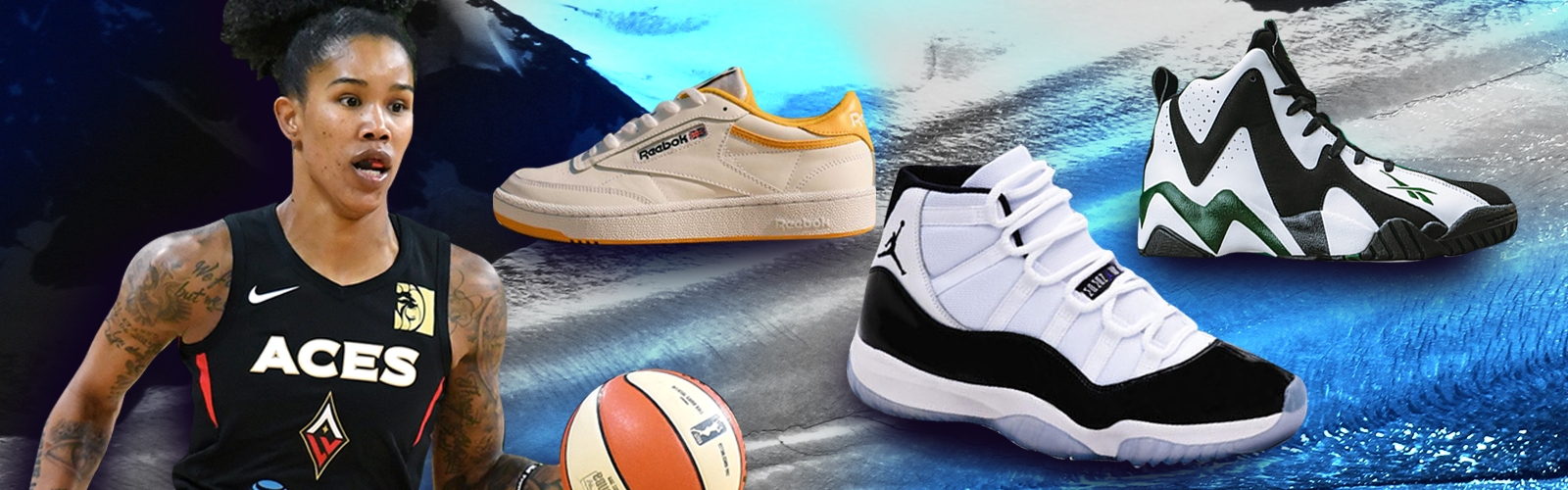
That’s been WNBA veteran Ty Young’s guiding philosophy when it’s came to her kicks game ever since she stepped onto the court. The league’s certified Sneaker Queen has always seen her style as an extension of her athletic skill, a way to separate herself from the pack, to bring more attention to the game, and, above all else, a guarantee she’d deliver come game time. That “look good, feel good, play good” mentality saw her rise through the ranks, as a first-ever draft pick for the Atlanta Dream and then as a disrupting defensive force for teams like the Chicago Sky and the Las Vegas Aces.
She’s spent 12 years watching the WNBA grow, evolve, and experiment, and she’s led plenty of that change herself, especially when it comes to the league’s style. While some of her contemporaries are just now rocking designer kicks and choice fits that land them on sports fashion blogs, Young’s been running the game for much longer, polishing her look and defining her brand – often by what she’s wearing on her feet.
But, before she was crowned the WNBA’s “sultan of swag,” Young was just a kid trying to keep up with her older siblings. She hails from the same North Carolina town as Michael Jordan and played ball at the Laney High School, where both of their jerseys hang in the rafters. Jordan supplies the school’s team with gear every season, but for Young, her love of sneakers was inspired by some good-natured sibling rivalry.
“It was almost like a family thing,” she tells Dime. “I was the baby, but seeing my oldest siblings getting these dope sneakers … back then they were wearing Air Force 1, Jordans, Air Max — that just became the norm for me, because I wanted to be like my brother and sister.”
Young’s always favored a classic shoe. She gravitates towards retro and vintage designs in cream colorways. She got flack for it back in the day.
“I’ve never been into the kicks that everyone is talking about, I started off wanting kicks that were different,” she says. “I would get picked on at times because I would wear some kicks that I thought was fly, but maybe everyone else didn’t.”
But that same originality and confidence in her style are what elevated her game and her brand when she graduated, first to college, then the WNBA. Young needed to navigate some tricky waters as a sneakerhead in the league when she first broke through — back then, players were regulated to black or white kicks, though they could also rock their team colors if they could find a court shoe in them. As the men’s side began experimenting with fashion more – transforming tunnel walks into catwalks and dropping serious cash on the latest designer kicks – Young saw the women’s side evolve.
“It became a part of the fashion, a part of the game, a part of the attention that we were getting,” she recalls. “Even now, people are looking forward to seeing what kind of kicks players are wearing.”
She took full advantage of that shift.
You’d be hard-pressed to find a blog or social media account dedicated to covering the league’s best looks that doesn’t have at least one, if not half a dozen, pics of Young’s impressive shoe game. She’s invited fans and journalists into her closet, a dedicated room in her Georgia home that houses seemingly endless pairs of Jordans, Kamikazes, Nikes, and more, all resting on custom-built shelves. She likes to dip into that space on her days off, rearranging her 600+ pairs of kicks whenever the mood strikes. For now, they’re color coordinated and organized by style. There are Iversons on one wall, designer wear on another. And, because she recently signed for a shoe deal with Reebok, you’ll find plenty of the brand’s more retro selects on her shelves.
“It has changed my sneaker game,” Young tells us of the new partnership. “People are hitting me up on social media like, ‘Hey, you just made me go cop on Reeboks. I haven’t worn them in years.’ It’s almost the same for me. I haven’t worn them in years either, but now it’s a thing.”
She’s got her favorites, ones that signal where her shoe game is at right now. When Young was fresh out of school, she wore “anything” — LeBrons, Jordans, those heavy Charles Barkleys. When she started playing league ball, she realized she had to make some fundamental changes to her shoe game too.
“I had become this defensive player. I couldn’t wear those heavy sneakers chasing people like Deanna Nolan and Diana Taurasi around the court,” she says with a laugh. “So it became a point where I was still looking for fly kicks, but kicks that weren’t as heavy in the weight, so it would be more comfortable, and I could move a little bit better.”
That emphasis on utility and comfort is what drives her shoe choices now, too.
“So it’s this Club C model that Reebok has,” Young answers when I ask which sneaker is her go-to right now. “I have double pairs in a lot of them because I love that shoe. It’s an OG style, and I can dress it up or dress it down.”
Young recently retired from the league, in part, to focus on her fashion endeavors. She’s got an apparel line, TY1 Gear, that she launched during her time with the Chicago Sky after fans complained it was impossible to get cool merch with her name and number on it.
“It started with just t-shirts with my logo, where fans could have something that would support me and represent me,” she explains.
Now the brand has grown to include everything from hoodies and hats to socks and, yes, eventually shoes. As for her Reebok deal, Young’s shifting away from the expected course once again, forgoing athletic kicks for more everyday wear.
“There hasn’t been a basketball shoe because I just feel like that’s what a lot of athletes are getting, especially ones that are signed with sneaker deals,” she says. “For my brand, I like to do a casual shoe because it’s something different, but it’s still something that resonates with me, and who I am. I’m into fashion. I’m into style. So if I can get a PE made with Reebok, and then have a lifestyle shoe made for my brand, I think that’s just awesome.”
And she’s proud that her legacy might be reaching beyond the court as well. For Young, earning that Sneaker Queen title just means there’s a better chance that more women in the WNBA will get some much-needed respect thrown their way when it comes to their own shoe collections.
“I still think there’s a long way to go,” she says. “There are a lot of women sneakerheads out here. And some, you may not know because they don’t post their sneakers all the time, or they don’t wear them all the time, but they still have love for them and still have a nice collection. I think now though we’re starting to give women the love and the notoriety of being sneakerheads.”
This website uses cookies to improve your experience. We'll assume you're ok with this, but you can opt-out if you wish. Cookie settingsACCEPT
Privacy & Cookies Policy
Privacy Overview
This website uses cookies to improve your experience while you navigate through the website. Out of these cookies, the cookies that are categorized as necessary are stored on your browser as they are essential for the working of basic functionalities of the website. We also use third-party cookies that help us analyze and understand how you use this website. These cookies will be stored in your browser only with your consent. You also have the option to opt-out of these cookies. But opting out of some of these cookies may have an effect on your browsing experience.
Necessary cookies are absolutely essential for the website to function properly. This category only includes cookies that ensures basic functionalities and security features of the website. These cookies do not store any personal information.
Any cookies that may not be particularly necessary for the website to function and is used specifically to collect user personal data via analytics, ads, other embedded contents are termed as non-necessary cookies. It is mandatory to procure user consent prior to running these cookies on your website.

pic.twitter.com/Z3GZPtOYet
https://t.co/50AwOe6ThG pic.twitter.com/csKCwZheFw