As the cost of living in large cities continues to rise, more and more people are realizing that the value of a dollar in the United States is a very relative concept. For decades, cost of living indices have sought to address and benchmark the inconsistencies in what money will buy, but they are often so specific as to prevent a holistic picture or the ability to “browse” the data based on geographic location.
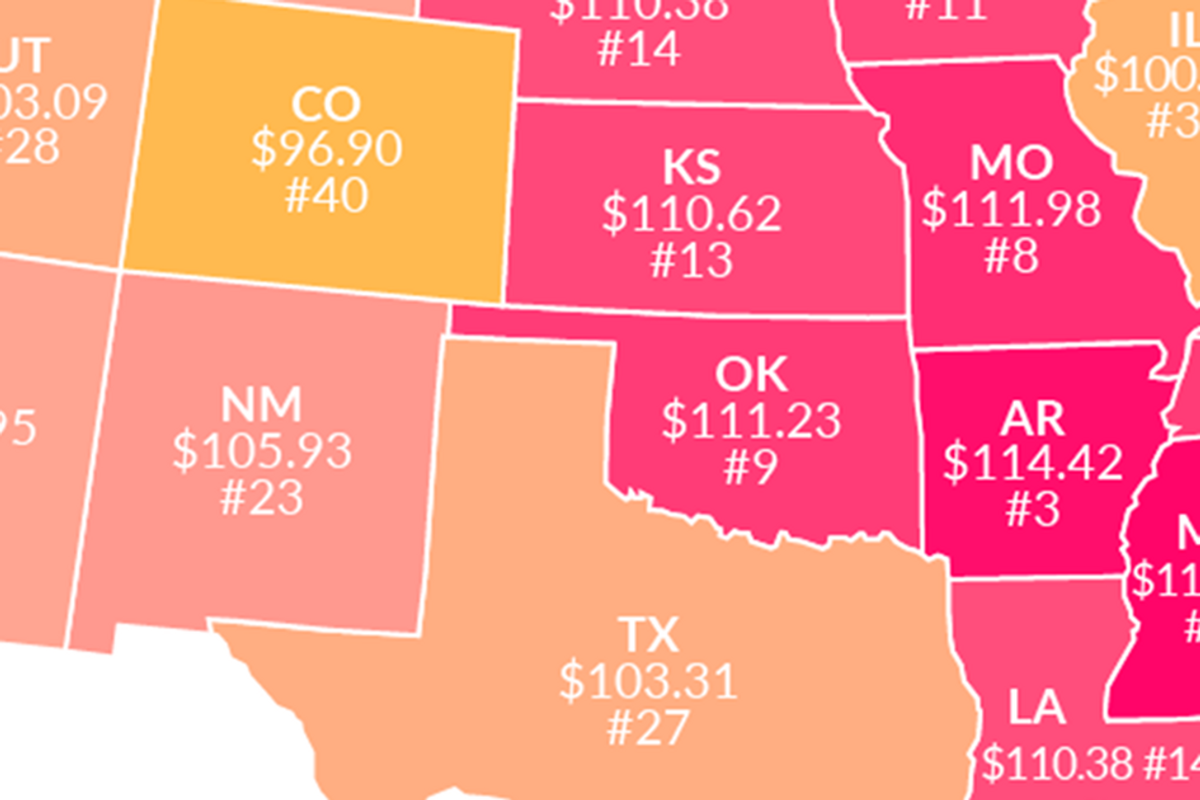
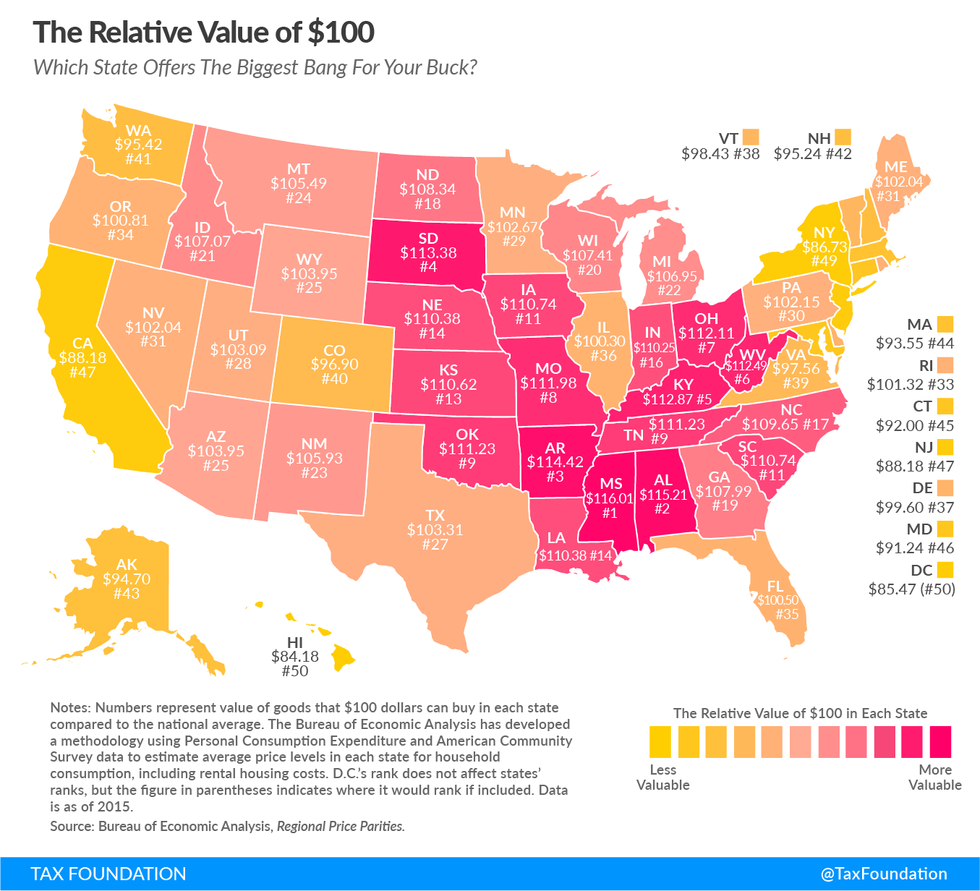
The Tax Foundation addressed many of these shortcomings using the most recent (2015) Bureau of Economic Analysis data to provide a familiar map of the United States overlaid with the relative value of what $100 is “worth” in each state. Granted, going state-by-state still introduces a fair amount of “smoothing” into the process — $100 will go farther in Los Angeles than in Fresno, for instance — but it does provide insight into where the value lies.
The map may not subvert one’s intuitive assumptions, but it nonetheless quantities and presents the cost of living by geography in a brilliantly simple way. For instance, if you’re looking for a beach lifestyle but don’t want to pay California prices, try Florida, which is about as close to “average” — in terms of purchasing power, anyway — as any state in the Union. If you happen to find yourself in a “Brewster’s Millions”-type situation, head to Hawaii, D.C., or New York. You’ll burn through your money in no time.
If you’re quite fond of your cash and would prefer to keep it, get to Mississippi, which boasts a 16.1% premium on your cash from the national average.
The Tax Foundation notes that if you’re using this map for a practical purpose, bear in mind that incomes also tend to rise in similar fashion, so one could safely assume that wages in these states are roughly inverse to the purchasing power $100 represents.
92-year-old Norma had a strange and heartbreaking routine.
Every night around 5:30 p.m., she stood up and told the staff at her Ohio nursing home that she needed to leave. When they asked why, she said she needed to go home to take care of her mother. Her mom, of course, had long since passed away.
Behavior like Norma’s is quite common for older folks suffering from Alzheimer’s or other forms of dementia. Walter, another man in the same assisted living facility, demanded breakfast from the staff every night around 7:30.
Jean Makesh, CEO of Lantern assisted living facilities, says he meets folks with stories like these every day. It’s their stories that inspired him to make some changes at Lantern.
“I thought I knew a lot about elderly care. The more and more time I was spending with my clients, that’s when I realized, ‘Oh my god, I have no clue.'”
Confusion is common in Alzheimer’s patients, but Makesh knew there had to be some way to minimize these conflicts.
A big believer in the idea that our environment has an enormous effect on us, he started thinking big — and way outside the box.
“What if we design an environment that looks like outside?” he said. “What if I can have a sunrise and sunset inside the building? What if I’m able to have the moon and stars come out? What if I build a unit that takes residents back to the ’30s and ’40s?”
And that was just the beginning. He also researched sound therapy. And aromatherapy. And carpet that looked like grass. No idea was off-limits.
What he came up with was a truly unique memory-care facility. And after testing the concept in Lantern’s Madison, Ohio, facility, Makesh is opening two new locations this year.
Instead of rooms or units, each resident gets a “home” on a quiet little indoor street reminiscent of the neighborhoods many of them grew up in.
Instead of a boring panel ceiling, residents look up and see a digital sky, which grows dimmer late in the day to help keep their biological clocks in tune.
Throughout the day, nature sounds and fresh aromas like peppermint or citrus are piped in.
Some studies have shown that this kind of aromatherapy may indeed have some merits for improving cognitive functioning in Alzheimer’s patients.
For Makesh, this isn’t just about making patients comfortable, though. He wants to change how we think about the endgame of severe dementia.
Makesh said one of the frustrating shortcomings of most nursing facilities is that they create conflicts with unnatural environments and schedules, and they try to solve them by throwing antipsychotic and anti-anxiety medications at patients. In other words, when someone has severe dementia, we often give up on them. From there, they stop getting the engagement their brain needs to thrive.
Of course, we’re a long way from a cure for Alzheimer’s.
But Makesh’s project shows that when we think strategically about altering the environment and focus on helping people relearn essential self-care and hygiene skills, the near-impossible becomes possible.
“In five years, we’re going to [be able to] rehabilitate our clients where they can live independently in our environment,” he said. “In 10 years, we’re going to be able to send them back home.”
He knows it’s a lofty goal. And whether he’ll meet it remains to be seen. But in the meantime, he’s proud to own one of the few places that offers something pretty rare in cases of severe dementia: hope.
I grew up black in a very white neighborhood in a very white city in a very white state.
As such, I am a lot of people’s only black friend.
Being the only black friend is a gift and a curse. I am black and I love having friends. But I am also, at any given moment, expected to be a translator, an ambassador, a history teacher, and/or a walking, talking invitation into “I am not racist” territory. It’s a lot to handle. See what I mean about that curse?
So when I saw the animated short-film “Your Black Friend,” I felt so seen. Clearly, I am not alone.
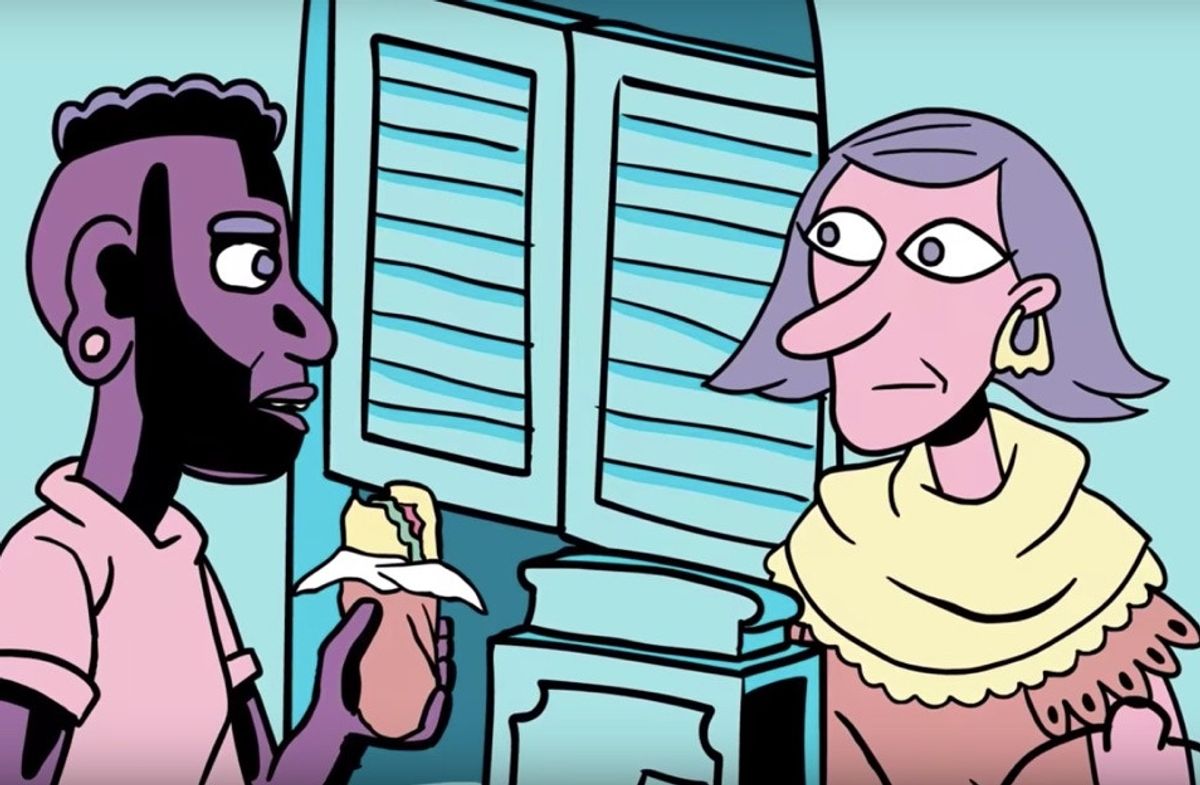
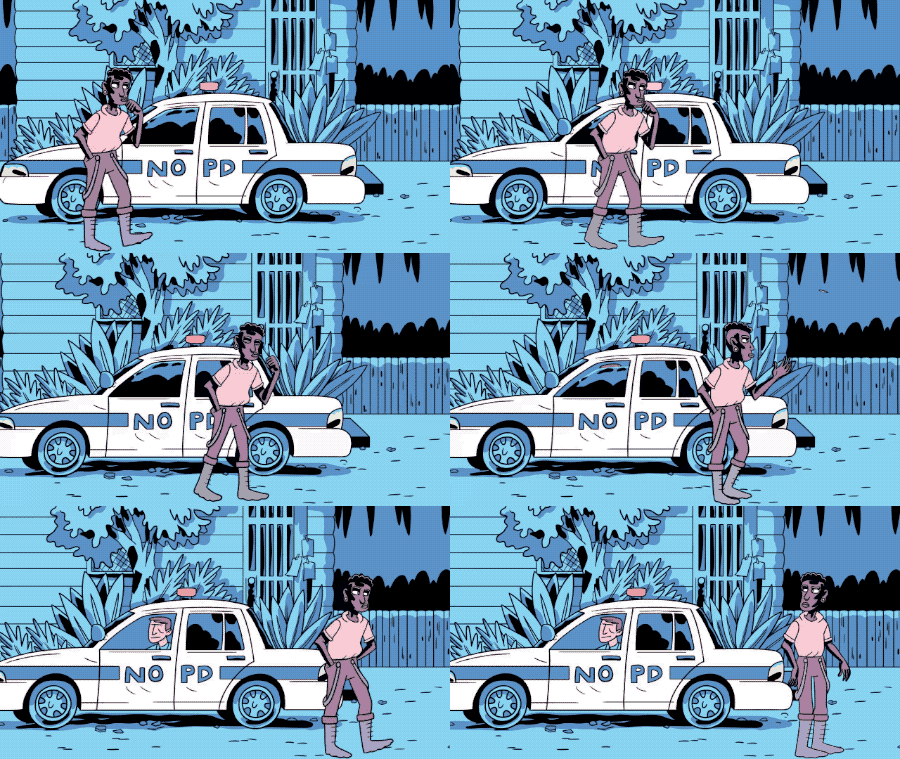
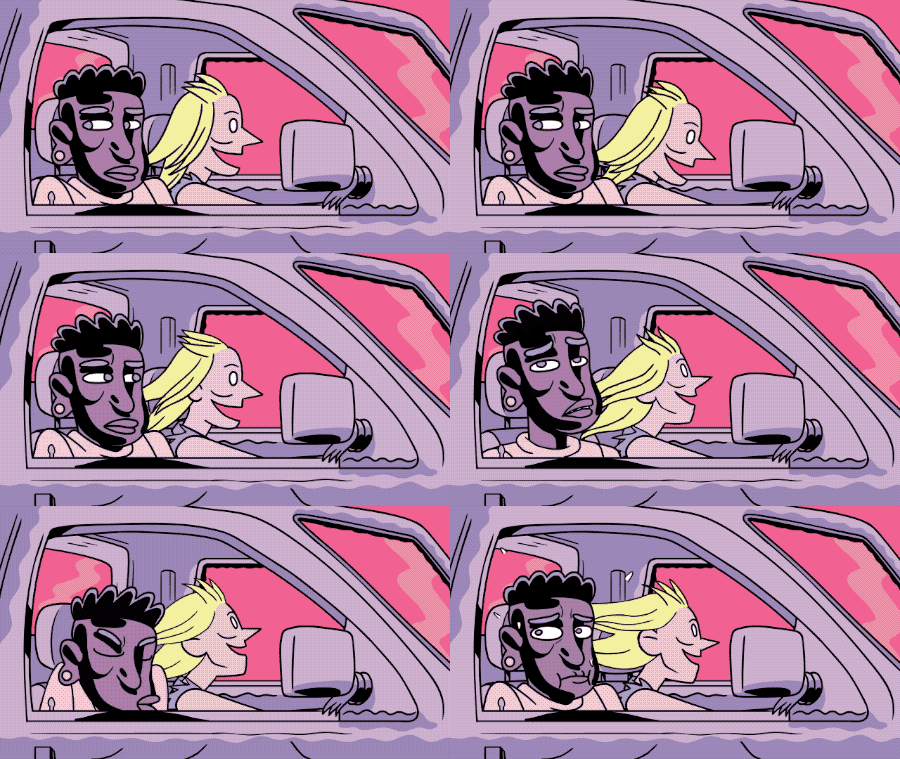
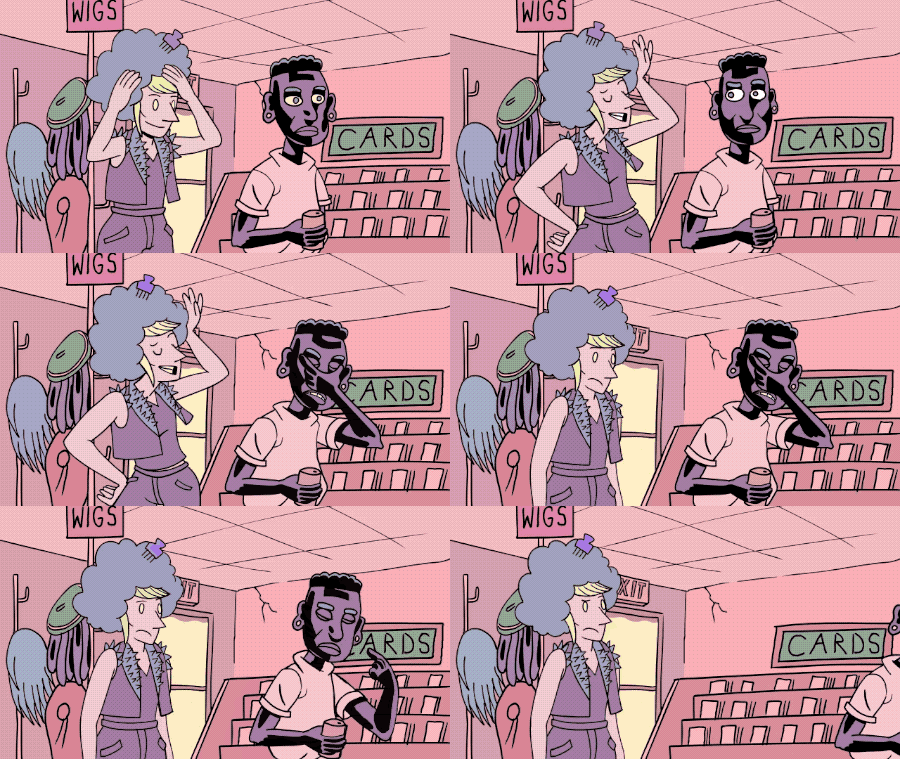
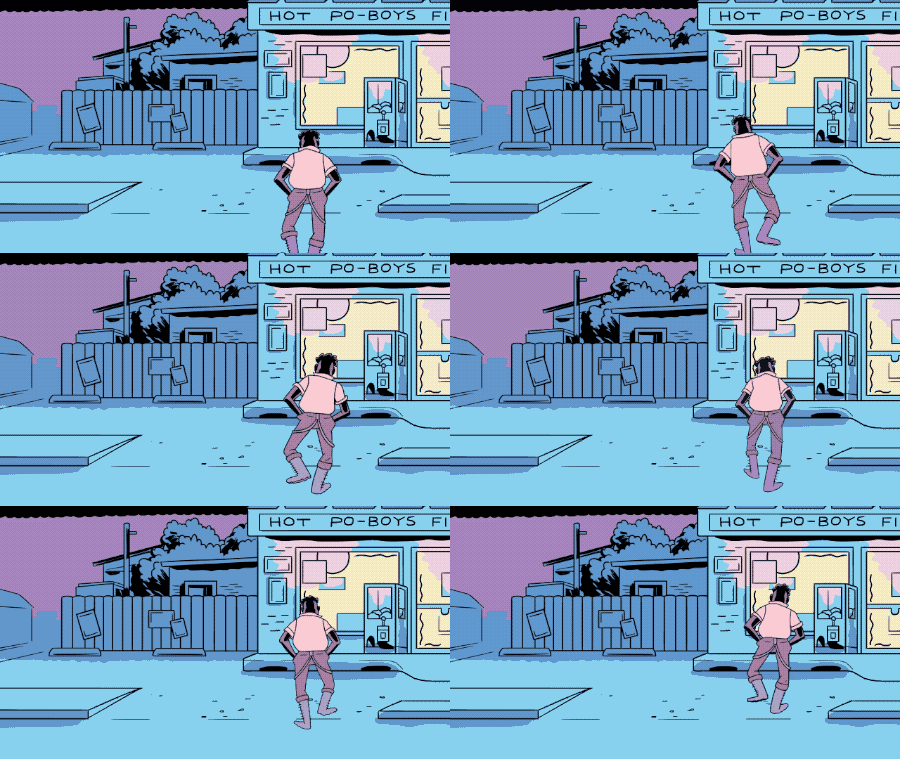
The film, which was written, designed, and narrated by Ben Passmore and is based on his mini-comic of the same name, is a brilliant, refreshing way to examine whiteness and racism. The comic and animated short are an open-letter from “your black friend” to you, their well-meaning white friend, about bias, alienation, and what it means to be a good ally and friend.
It’s funny, honest, and heartbreaking in equal measure. And speaking from personal experience, it captures the experience of being a black friend to white people pretty much perfectly.
So if you’re a “woke” friend and ally, here are some things your black friend wants you to know.
1. You’re going to have to get uncomfortable.
It could be something as obvious and upsetting as a racist joke. Or something as “benign” as your aunt suggesting you cross the street when she sees a group of black kids walking by. But either way, if you want to be a good friend and a real ally, you’re going to have to speak up. You’re going to have to have those tough conversations with people you care about.
It’s not easy to confront strangers or people you love, but if you don’t do it, you are part of the problem. Sitting out isn’t an option. No one said being an ally is easy.
2. “Your black friend would like to say something to the racist lady, but doesn’t want to appear to be that ‘angry black man.'”
“He knows this type of person expects that from him, and he will lose before he begins,” Passmore says.
Black people can’t always react or respond the way we want to. When I am followed in a department store, pulled over for no reason, or stared at while picking up dinner at the fancy grocery store, I can’t stop what I’m doing and yell, “YES, I AM BLACK. NO, I AM NOT A CRIMINAL YOU SMALL-MINDED, BIASED ASSHOLES.” Trust me, I want to. But especially when police are involved, I have to be calm, respectful, and obedient.
That’s where you come in. You, white friend, need to speak up and say something when I can’t. If you are not at risk, nor considered a threat, you have a certain amount of privilege in these situations. Use it to demand answers, speak to supervisors, or if things really get dicey, pull out your phone and hit record.
3. We are constantly monitoring our surroundings and adjusting our clothes, hair, speed, and speech to maintain white comfort.
When I am in a parking garage and walking behind a white woman, I intentionally cough or walk a little louder so she turns and notices me.
Why? Because when I don’t, that same white woman will often clutch her purse and occasionally let out an audible gasp as I pass her. This is something my white friends likely don’t realize I have to do. Some of them may even be the pearl-clutchers in the parking lot.
But to maintain white comfort and to avoid having the cops called on us, we often have to tamp down clothes, modify our speech and volume, even do our hair differently. We have to have “the talk” with our kids about how the world sees them, and how act in order to make sure they come home alive.
No, it’s not fair. No, we don’t like it. But so long as this country and its institutions are built on a solid foundation of white supremacy, it’s a grim reality. You need to know that, and take it up with your fellow white people about how to dismantle it.
4. “Your black friend wishes you’d play more than Beyoncé. There are more black performers than Beyoncé.”
“Lemonade” was awesome. There is no denying it. And yes, I love seeing her iconic looks on Instagram too. But there is more to black music and black art than Beyoncé. Dip a toe outside your comfort zone and try new new artists and genres you may not be familiar with. Go listen, see it, and experience it for yourself.
And while we’re here, you can’t say the n-word when you sing along. Nope. You just can’t.
5. Speaking of which, performative blackness is really uncomfortable.
When you wear that braided wig on Halloween, or use your “blaccent” when you’re around me or other black people, it hurts. It’s not cute or charming, and it definitely doesn’t make you seem cool.
Our culture and heritage are not costumes you can slide on and off at your convenience. We don’t get to be black only when it suits us. Neither do you.
6. “Your black friend feels like a man without a country.”
Having white friends and seeming to “fit in” with the majority can feel really alienating. You can feel too “white” for black people, and too “black” for white people when all you want to do is find people to eat pizza with. As Passmore wrote, “He is lost in this contradiction, and held responsible for it.”
7. We would love it if we could stop talking about our anxiety and frustrations regarding racism. But right now, that’s impossible.
We can’t be expected to dismantle white supremacy on our own.
Our white friends and allies need to step up and gather their people. Have the tough conversations. Speak up when you see racism, discrimination, and microaggressions. The time to talk about it is done. Be about it, or find yourself a new black friend.
92-year-old Norma had a strange and heartbreaking routine.
Every night around 5:30 p.m., she stood up and told the staff at her Ohio nursing home that she needed to leave. When they asked why, she said she needed to go home to take care of her mother. Her mom, of course, had long since passed away.
Behavior like Norma’s is quite common for older folks suffering from Alzheimer’s or other forms of dementia. Walter, another man in the same assisted living facility, demanded breakfast from the staff every night around 7:30.
Jean Makesh, CEO of Lantern assisted living facilities, says he meets folks with stories like these every day. It’s their stories that inspired him to make some changes at Lantern.
“I thought I knew a lot about elderly care. The more and more time I was spending with my clients, that’s when I realized, ‘Oh my god, I have no clue.'”
Confusion is common in Alzheimer’s patients, but Makesh knew there had to be some way to minimize these conflicts.
A big believer in the idea that our environment has an enormous effect on us, he started thinking big — and way outside the box.
“What if we design an environment that looks like outside?” he said. “What if I can have a sunrise and sunset inside the building? What if I’m able to have the moon and stars come out? What if I build a unit that takes residents back to the ’30s and ’40s?”
And that was just the beginning. He also researched sound therapy. And aromatherapy. And carpet that looked like grass. No idea was off-limits.
What he came up with was a truly unique memory-care facility. And after testing the concept in Lantern’s Madison, Ohio, facility, Makesh is opening two new locations this year.
Instead of rooms or units, each resident gets a “home” on a quiet little indoor street reminiscent of the neighborhoods many of them grew up in.
Instead of a boring panel ceiling, residents look up and see a digital sky, which grows dimmer late in the day to help keep their biological clocks in tune.
Throughout the day, nature sounds and fresh aromas like peppermint or citrus are piped in.
Some studies have shown that this kind of aromatherapy may indeed have some merits for improving cognitive functioning in Alzheimer’s patients.
For Makesh, this isn’t just about making patients comfortable, though. He wants to change how we think about the endgame of severe dementia.
Makesh said one of the frustrating shortcomings of most nursing facilities is that they create conflicts with unnatural environments and schedules, and they try to solve them by throwing antipsychotic and anti-anxiety medications at patients. In other words, when someone has severe dementia, we often give up on them. From there, they stop getting the engagement their brain needs to thrive.
Of course, we’re a long way from a cure for Alzheimer’s.
But Makesh’s project shows that when we think strategically about altering the environment and focus on helping people relearn essential self-care and hygiene skills, the near-impossible becomes possible.
“In five years, we’re going to [be able to] rehabilitate our clients where they can live independently in our environment,” he said. “In 10 years, we’re going to be able to send them back home.”
He knows it’s a lofty goal. And whether he’ll meet it remains to be seen. But in the meantime, he’s proud to own one of the few places that offers something pretty rare in cases of severe dementia: hope.
Charles Munger, Vice Chairman of Berkshire Hathaway and Warren Buffet’s closest business partner, passed away on Tuesday, November 28, at 99. Buffett and Munger’s partnership lasted over 50 years, producing Berkshire Hathaway, one of the largest and most successful conglomerates in history.
When Munger passed, his estimated worth was $2.6 billion. Buffet, 93, is believed to be worth $119 billion.
But Munger was far more than just a wealthy man. Apple CEO Tim Cook called Munger a “keen observer of the world around him,” and he was known for his pithy bits of common-sense wisdom known as “Mungerisms.”
These sayings have been collected into books, including “Poor Charlie’s Almanack: The Wit and Wisdom of Charles T. Munger.”
My greatest lesson from Munger:nnu2022Never ever feel sorry for yourselfnu2022Never have envy
— (@)
In a piece called “Charlie Munger on How to Lead a Successful Life,” Time magazine shared one of Munger’s most valuable pieces of advice. Munger believed that one of the best qualities one can have is the ability to see things in the inverse.
“If you turn problems around into reverse, you often think better. For instance, if you want to help India, the question you should consider asking is not “How can I help India?’ Instead, you should ask, ‘How can I hurt India?’ You find what will do the worst damage, and then try to avoid it,” Munger once said.
“Perhaps the two approaches seem logically the same thing. But those who have mastered algebra know that inversion will often and easily solve problems that otherwise resist solution. And in life, just as in algebra, inversion will help you solve problems that you can’t otherwise handle,” Munger continued.
Charlie Mungeru2019s formula for success is simple and perfect:nn- Spend less than you earn n- Invest prudently n- Avoid toxic people and toxic activitiesn- Defer gratificationn- Never stop learning
— (@)
Munger believed it’s as important to be as clear about the things we want to avoid in life as those we wish to pursue.
“What will really fail in life? What do we want to avoid? Some answers are easy,” Munger said. “For example, sloth and unreliability will fail. If you’re unreliable, it doesn’t matter what your virtues are, you’re going to crater immediately. So, faithfully doing what you’ve engaged to do should be an automatic part of your conduct. Of course, you want to avoid sloth and unreliability.”
Another piece of Munger’s advice that needs to be shared far and wide in today’s America is avoiding “extremely intense ideology” because it “cabbages up” one’s mind.
“You see a lot of it in the worst of the TV preachers. They have different, intense, inconsistent ideas about technical theology, and a lot of them have minds reduced to cabbage. That can happen with political ideology. And if you’re young, it’s particularly easy to drift into intense and foolish political ideology and never get out,” Munger said.
As a student of the human condition, Munger understood that few of us can overcome our own “self-serving bias.” So, when making persuasive arguments, it’s best to avoid using reason and, instead, appeal to the person’s interests.
“You should often appeal to interest, not to reason, even when your motives are lofty,” Munger said.
I grew up black in a very white neighborhood in a very white city in a very white state.
As such, I am a lot of people’s only black friend.
Being the only black friend is a gift and a curse. I am black and I love having friends. But I am also, at any given moment, expected to be a translator, an ambassador, a history teacher, and/or a walking, talking invitation into “I am not racist” territory. It’s a lot to handle. See what I mean about that curse?
So when I saw the animated short-film “Your Black Friend,” I felt so seen. Clearly, I am not alone.
The film, which was written, designed, and narrated by Ben Passmore and is based on his mini-comic of the same name, is a brilliant, refreshing way to examine whiteness and racism. The comic and animated short are an open-letter from “your black friend” to you, their well-meaning white friend, about bias, alienation, and what it means to be a good ally and friend.
It’s funny, honest, and heartbreaking in equal measure. And speaking from personal experience, it captures the experience of being a black friend to white people pretty much perfectly.
So if you’re a “woke” friend and ally, here are some things your black friend wants you to know.
1. You’re going to have to get uncomfortable.
It could be something as obvious and upsetting as a racist joke. Or something as “benign” as your aunt suggesting you cross the street when she sees a group of black kids walking by. But either way, if you want to be a good friend and a real ally, you’re going to have to speak up. You’re going to have to have those tough conversations with people you care about.
It’s not easy to confront strangers or people you love, but if you don’t do it, you are part of the problem. Sitting out isn’t an option. No one said being an ally is easy.
2. “Your black friend would like to say something to the racist lady, but doesn’t want to appear to be that ‘angry black man.'”
“He knows this type of person expects that from him, and he will lose before he begins,” Passmore says.
Black people can’t always react or respond the way we want to. When I am followed in a department store, pulled over for no reason, or stared at while picking up dinner at the fancy grocery store, I can’t stop what I’m doing and yell, “YES, I AM BLACK. NO, I AM NOT A CRIMINAL YOU SMALL-MINDED, BIASED ASSHOLES.” Trust me, I want to. But especially when police are involved, I have to be calm, respectful, and obedient.
That’s where you come in. You, white friend, need to speak up and say something when I can’t. If you are not at risk, nor considered a threat, you have a certain amount of privilege in these situations. Use it to demand answers, speak to supervisors, or if things really get dicey, pull out your phone and hit record.
3. We are constantly monitoring our surroundings and adjusting our clothes, hair, speed, and speech to maintain white comfort.
When I am in a parking garage and walking behind a white woman, I intentionally cough or walk a little louder so she turns and notices me.
Why? Because when I don’t, that same white woman will often clutch her purse and occasionally let out an audible gasp as I pass her. This is something my white friends likely don’t realize I have to do. Some of them may even be the pearl-clutchers in the parking lot.
But to maintain white comfort and to avoid having the cops called on us, we often have to tamp down clothes, modify our speech and volume, even do our hair differently. We have to have “the talk” with our kids about how the world sees them, and how act in order to make sure they come home alive.
No, it’s not fair. No, we don’t like it. But so long as this country and its institutions are built on a solid foundation of white supremacy, it’s a grim reality. You need to know that, and take it up with your fellow white people about how to dismantle it.
4. “Your black friend wishes you’d play more than Beyoncé. There are more black performers than Beyoncé.”
“Lemonade” was awesome. There is no denying it. And yes, I love seeing her iconic looks on Instagram too. But there is more to black music and black art than Beyoncé. Dip a toe outside your comfort zone and try new new artists and genres you may not be familiar with. Go listen, see it, and experience it for yourself.
And while we’re here, you can’t say the n-word when you sing along. Nope. You just can’t.
5. Speaking of which, performative blackness is really uncomfortable.
When you wear that braided wig on Halloween, or use your “blaccent” when you’re around me or other black people, it hurts. It’s not cute or charming, and it definitely doesn’t make you seem cool.
Our culture and heritage are not costumes you can slide on and off at your convenience. We don’t get to be black only when it suits us. Neither do you.
6. “Your black friend feels like a man without a country.”
Having white friends and seeming to “fit in” with the majority can feel really alienating. You can feel too “white” for black people, and too “black” for white people when all you want to do is find people to eat pizza with. As Passmore wrote, “He is lost in this contradiction, and held responsible for it.”
7. We would love it if we could stop talking about our anxiety and frustrations regarding racism. But right now, that’s impossible.
We can’t be expected to dismantle white supremacy on our own.
Our white friends and allies need to step up and gather their people. Have the tough conversations. Speak up when you see racism, discrimination, and microaggressions. The time to talk about it is done. Be about it, or find yourself a new black friend.
This January, Sol Blume announced the lineup for its 2023 iteration, so logic would suggest that the 2024 lineup will arrive next January. In the meantime, the beloved hip-hop and R&B festival has at least confirmed when it will take place next year. On Wednesday, November 29, Sol Blume announced that it will expand to three days and return to Discovery Park in Sacramento, California from May 3 to May 5, 2024. Below is all you need to know about ticketing (so far).
When Will Tickets For Sol Blume 2024 Come Out?
“To celebrate the news, a limited number of discount-priced blind presale festival passes will go on sale to the general public next Friday, December 8 at 10:00 a.m. PST via SolBlume.com, which includes three-day GA and VIP wristbands as well as with the introduction of the GA+ ticket type,” Sol Blume relayed in a press release. “Fans are encouraged to act fast as pricing will increase as the festival date approaches.”
An accompanying Instagram post also stated that “these will be the lowest prices before the general on sale” and confirmed that “payment plans will be available.”
Sol Blume lists ticket prices on its official website. General admission tickets are broken down in three tiers. Tier 1 start at $249 (before fees) followed by $279 for Tier 2 and $299 for Tier 3. General Admission+ tickets start at $349 (before fees), while VIP options start at $449 (before fees). Payment plan details are not yet listed.
Zack Snyder and comic book movies had a good run. His second feature was 300, a monster hit version of Frank Miller’s take on the Greco-Persian wars. He was the one who pounded Alan Moore’s Watchmen into a movie, and he rebooted both Superman and Batman (and introduced a new Wonder Woman). Then came Justice League, which was such a headache that it took him years to get his version on screens. Now he’s done with the genre — well, sort of.
“We’ve been on the treadmill — it has not evolved,” Snyder said. “I don’t have the excitement for it that I used to have.”
Not that he’s completely burning that bridge. Should his buddy James Gunn, now co-honcho of the the revamping DCEU, call, he wouldn’t turn down the chance to tackle another Frank Miller classic: The Dark Knight Returns — though he’d only do it if he could make “a true representation of the graphic novel.”
Oh, and he also wouldn’t Miller’s Elektra Lives Again out of bed. “But that’s it,” he insists.
One thing he’s adamant against doing is Star Wars, but only because, he says, “Those guys have a handle on the brand.”
In the chat, Snyder praises some of his old DCEU friends, including Ezra Miller, who he said “did a great job in that Flash movie,” adding, “It’s very difficult to play against yourself.”
Snyder also cast Ray Miller, who played Cyborg in Justice League and had a bear of a time, in Rebel Moon. About him, Snyder said, “He’s weathered the storm in a way not many people could or get to do.”
As per a press release on Wednesday, November 29, Sol Blume will return to Discovery Park in Sacramento, California from May 3 to May 5, 2024, marking the festival’s first-ever three-day staging. An Instagram post also promised “bigger stages, more food and beverage options, new experiences, the return of ‘Sol Skate,’ and a new GA+ pass experience.”
“To celebrate the news, a limited number of discount-priced blind presale festival passes will go on sale to the general public next Friday, December 8 at 10:00 a.m. PST via SolBlume.com, which includes three-day GA and VIP wristbands as well as with the introduction of the GA+ ticket type,” the press release states. “Fans are encouraged to act fast as pricing will increase as the festival date approaches.”
You can sign up to receive real-time festival updates, including lineup announcements and ticket information, on the festival’s official website.
Kehlani is a Warner Music artist. Uproxx is an independent subsidiary of Warner Music Group.
Now that Thanksgiving weekend is behind us it’s as good a time as any to, you know, actually start caring about what we’re eating on a day-to-day basis. Don’t get us wrong, we are by no means passing judgment on what you’re eating. You do you, but we know we can’t be the only ones who are getting a little carried away with all the indulgent foods and snacks that somehow taste even better at this time of year than any other. It’s not our fault, it’s biological (maybe). It’s a winter thing, we can’t help but want to eat slice of pie after slice of pie.
Don’t blame yourself. Blame nature!
Anyway, our point is that the holiday season isn’t over and we’re not going to let this time of year come and go without indulging in ham, tamales, and any other food that makes us feel nice and cozy during these colder months. So it’s probably smart to cut calories where we can, and if you’re relying on fast food for most of your meals, that’s not going to be easy.
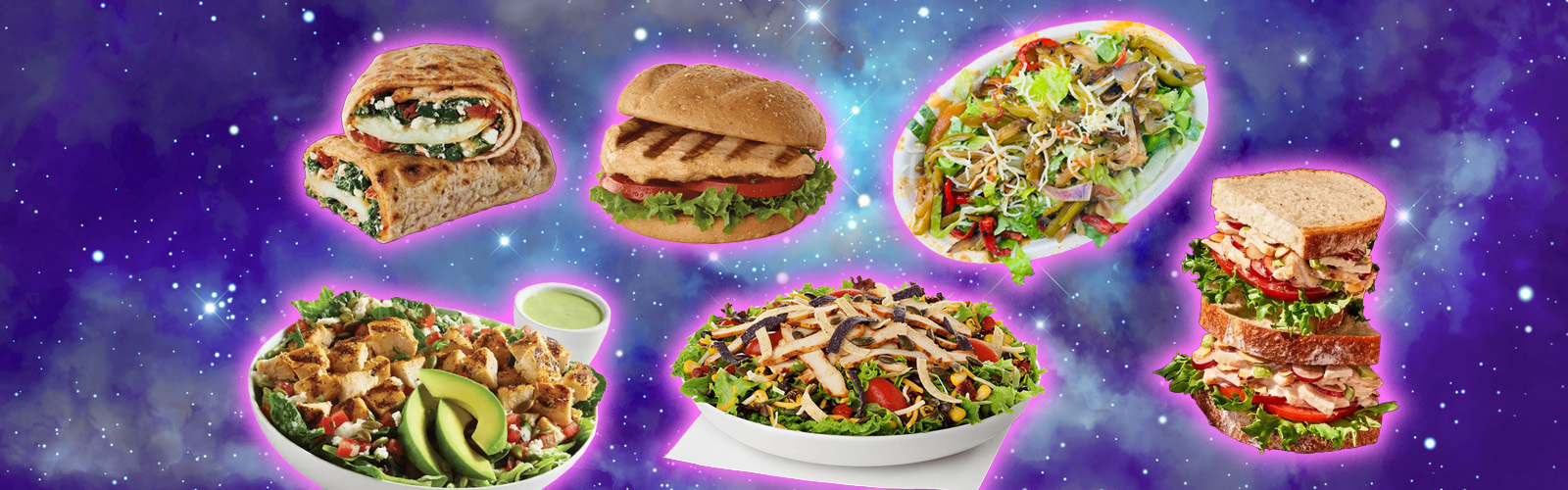
Luckily, there are a few healthy dishes out there in the fast food universe that actually taste delicious and today we’re listing off 10 of the most popular and best-tasting healthy meals in fast food. A quick note: keep in mind that when we say “healthy” we’re talking relative to fast food — so the sodium content of this food is still probably too high to truly be considered “healthy.” Think of this list as “healthy… for fast food.”
We’ll be sure to list the calories, fat, sodium, protein, and carb content of each meal. Okay, enough talk, let’s dive in!
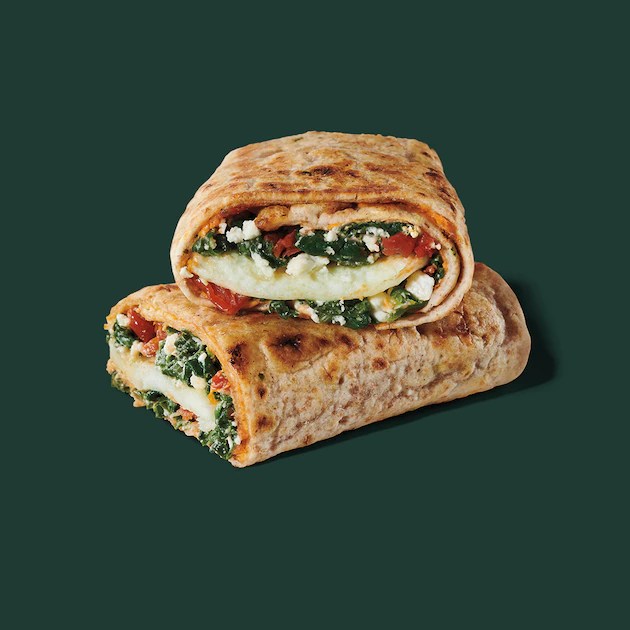
10. Starbucks — Spinach Feta and Egg White Wrap
Starbucks
Calories: 290
Fat: 8 grams
Sodium: 840mg
Carbs: 34g
Protein: 19g
Tasting Notes & Thoughts:
Look, every ranking has to have a bottom and I’m sorry to Starbucks fans but, this time around, you’re it. The Spinach Feta and Egg White Wrap is straight-up not very good.
What you get here is egg whites mixed with spinach, feta cheese, and sun-dried tomato cream cheese inside a whole wheat wrap. The spinach’s major tasting note is dirt, and the combination of egg and feta cheese is a bit too salty. That makes the two major tasting notes: dirt and salt.
I will say this though: that sundried tomato cream cheese saves the whole dish. It’s tangy, and bright, and brings a sense of umami to this bland wrap.
The Bottom Line:
As a mid-afternoon pick-me-up, this dish gets the job done. But if you want to actually enjoy your food rather than just eating for the sake of fuel, look elsewhere.
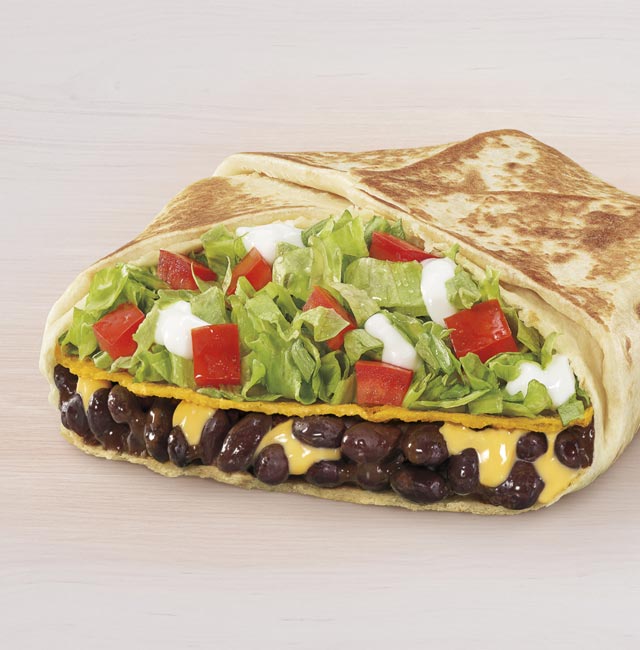
What is any fast food list without some Taco Bell? It may not seem like it at first glance, but Taco Bell offers some dishes that, while high in sodium and carbs, are relatively healthy, like the Black Bean Crunchwrap Supreme.
Eating this Crunchwrap feels like cheating — the stats aren’t that bad but it still feels like you’re eating junk food, which let’s face it, is a nice feeling.
Instead of meat, what you have here is a mix of black beans, salty nacho cheese sauce, tomatoes, sour cream, and lettuce on top of a tostada shell wrapped in a giant flour tortilla. The black beans have a nice textural element and an earthy flavor that, honestly, is better than most Taco Bell meat options anyway, while the cheese sauce provides that indulgent salty quality characteristic of Taco Bell.
The Bottom Line:
The sodium and carbohydrate content is pretty high, but this is just as satisfying as a greasy burger or chicken sandwich at less than half the calories.
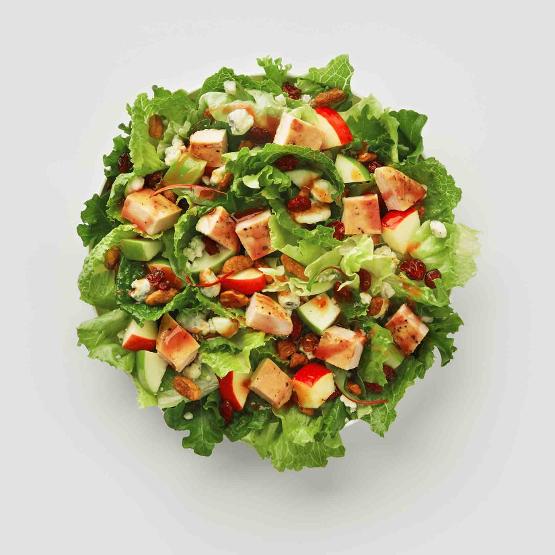
Wendy’s makes a damn good salad. This salad features a mix of sweet and tangy red apples (my guess is Fuji) and sour green apples, pecans, cranberries, blue cheese crumbles, and any Wendy’s chicken filet of your choice, including spicy, homestyle, and grilled over a bed of mixed green. We listed the caloric information for the spicy option because that’s all Wendy’s will tell us on their site, but obviously, you’re probably going to want to go with the grilled chicken to cut down on the calories, carbs, and sodium.
The grilled chicken is pretty good, it’s a bit dry but Wendy’s gives you pomegranate vinaigrette to pour all over your salad which remedies the dryness and adds sweet and tart notes to the dish, complimenting the mix of fruity, nutty, and salty notes.
As is the case with most fast food salads, the weak link here is the lettuce. It’s a basic mix of greens and romaine lettuce and really serves as nothing more than texture. No tasty arugula or spinach leaves at all, unfortunately.
The Bottom Line:
A great tasting salad that even with fried chicken, is still pretty healthy compared to something like a cheeseburger or chicken sandwich.
7. El Pollo Loco Classic Double Chicken Chopped Salad
El Pollo Loco
Calories: 490
Fat: 14g
Sodium: 900mg
Carbs: 14g
Protein: 48g
Tasting Notes & Thoughts:
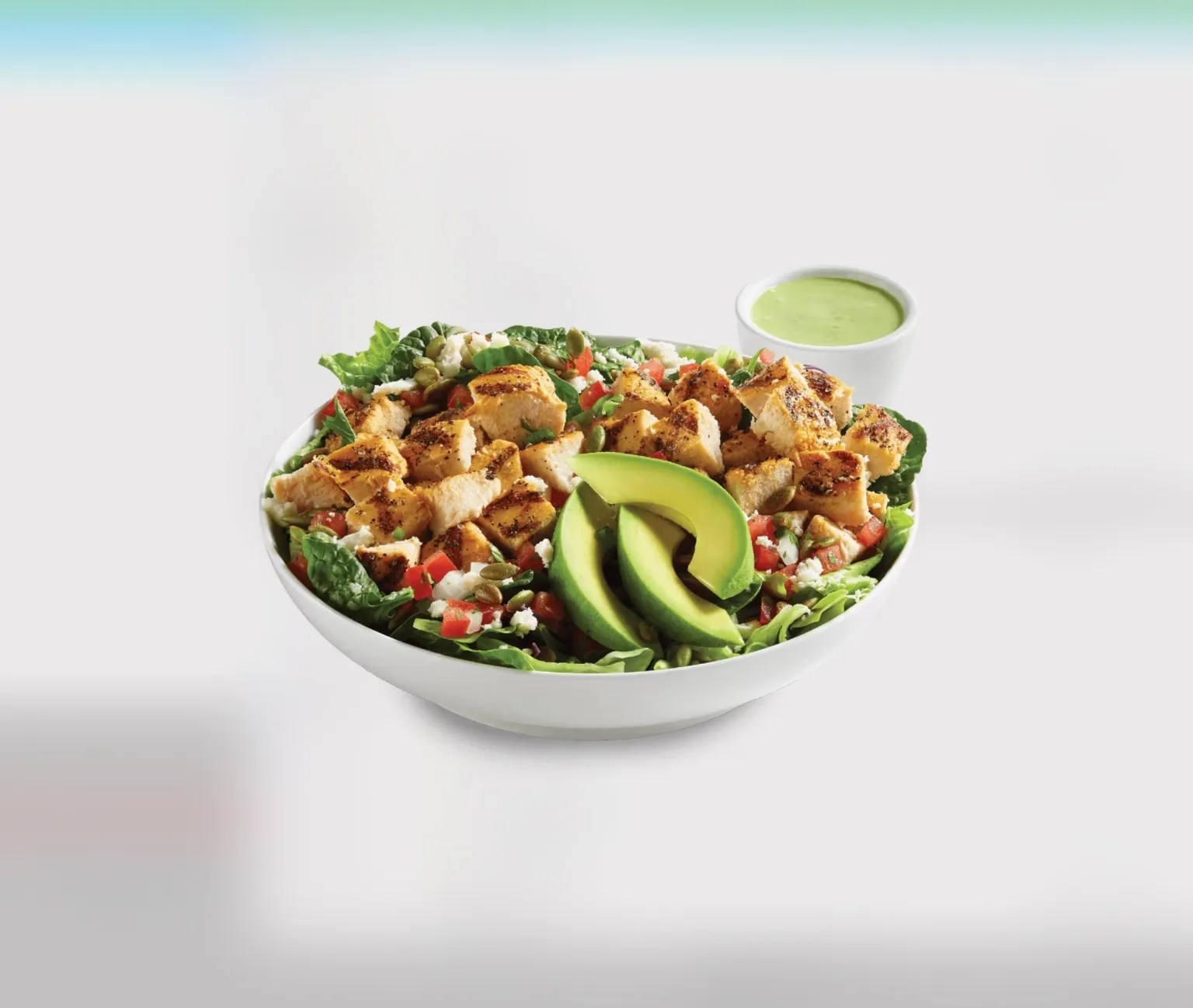
The great thing about El Pollo Loco is that the chain deals with grilled chicken, so even a two-piece meal with the right sides is a healthy choice. But rather than suggest some bone-in chicken with corn and broccoli as your sides, which sounds incredibly boring, we’re just going to go ahead and suggest something that is both healthy and delicious, the Double Chicken Chopped Salad.
What you get here is a double dose of grilled white meat chicken mixed with slices of buttery avocado, pumpkin seeds, creamy queso fresco, greens, pico de Gallo, and a creamy cilantro dressing. The chicken is delicious with a mix of charred flavors with some citrus zest, while pico de Gallo adds a sense of freshness which pairs nicely with the peppery dressing.
If you want to take this to the next level, pour some avocado salsa all over the salad for more intense heat.
The Bottom Line:
A delicious, meaty, and flavorful salad. How many other salads can you describe as “meaty”?
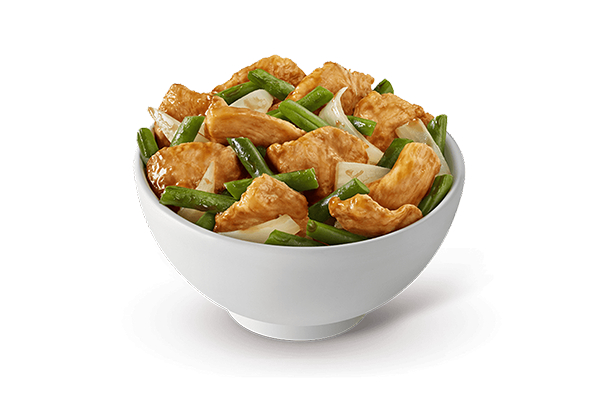
Yes, it’s easy to be tempted by dishes like Orange Chicken, Chili Crisp Shrump, and Honey Sesame Chicken Breast, but the String Beach Chicken offers less than half the calories of those sugary breaded dishes and tastes just as good.
The chicken is tender, juicy, and perfectly cooked and is tossed in a light ginger and soy sauce that is subtly sweet and floral. The combination of string beans and onions gives a nice crunch with some lightly sweet vegetal notes. It’s a great dish even without the rice, but we’re going to assume you want rice, so we suggest white.
It’s not the healthiest option (super greens are), but it’s significantly less sodium-rich than the chow mein and fried rice.
The Bottom Line:
Panda Express’ healthiest dish doesn’t sacrifice big flavors for low calories. This is a great dish.
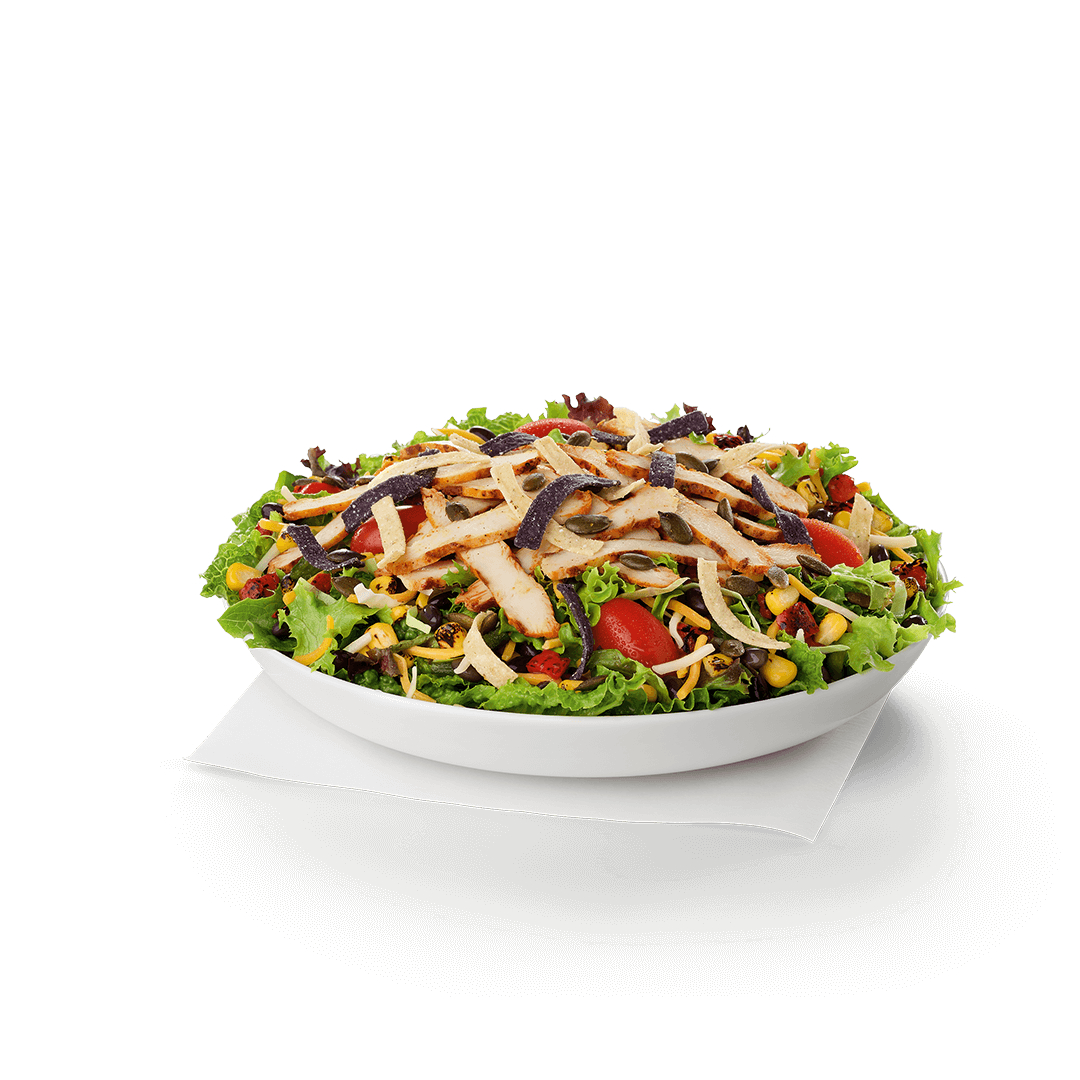
As much as I like Wendy’s Apple Pecan salad, Chick-fil-A’s Spicy Southwest puts it to shame. This salad features your choice of chicken on a bed of mixed greens with grape tomatoes, Monterey Jack and cheddar cheese, roasted corn, black beans, poblano chilies, and red bell peppers.
At Chick-fil-A, you can get this sandwich with a spicy grilled filet, grilled filet, nuggets, chicken strips, or a fried filet (spicy or regular), which is great for customization, but honestly, I think the plain grilled filet works best with the rest of the build.
Each forkful here is a mix of fresh sweet and peppery flavors with a mild heat on the backend which slowly builds on the palate. The poblano chilies are the obvious star of the show here, but we also have to shout out the mix of black beans, tortilla, and corn which add some nice texture to the salad.
The Bottom Line:
Quite possibly the best salad in all of fast food.
Most people I know who are hardcore Chick-fil-A fans don’t even know this sandwich exists, which is a shame because it’s way better than you might expect. It’s no secret that Chick-fil-A knows how to make chicken, and that skill extends to the chain’s grilled bird.
The breast filet is well marinated, juicy, and tender, with a lemon and black pepper flavor with a hint of grill-charred notes. The sandwich sits atop green leaf lettuce, juicy tomatoes which bring a nice umami character to the dish, and a toasted multigrain bun that brings some subtle sweetness to each bite. Overall, it’s a well-thought-out and built sandwich, and the chicken is juicy enough that you don’t need sauce.
What other chicken chain can claim the same?
The Bottom Line:
On some days, calorie-cutting be damned, Chick-fil-A’s Grilled sandwich hits the spot better than its fried counterpart can.
3. Panera — Napa Almond Chicken Salad on Country Rustic Sourdough
Panera
Calories: 640
Fat: 25g
Sodium: 970mg
Carbs: 78g
Protein: 27g
Tasting Notes & Thoughts:
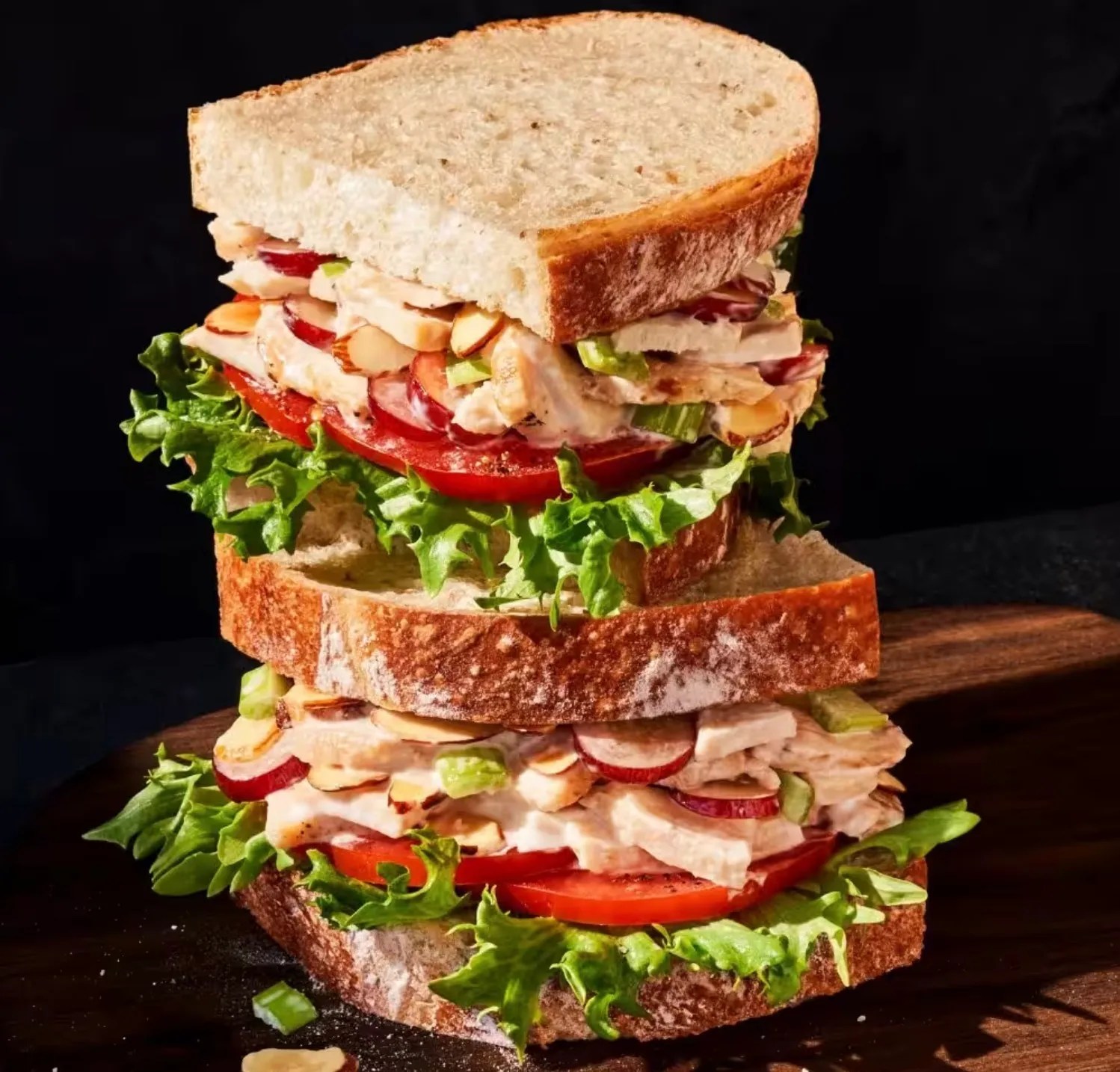
It’s sandwiches like the Napa Almond Chicken Salad on Country Rustic Sourdough (ridiculous name) that make me think, “Am I sleeping on Panera?” This sandwich is straight-up delicious, whether you’re watching what you eat or not.
The build is a mix of thin slices of white meat chicken, and diced celery, which bring a nice peppery crunch, red grapes, toasted almonds, a sweet honey and vinegar-based sauce, tomatoes, emerald greens, and salt and pepper on chewy, tangy, sourdough.
The greens here are great, they provide a slightly bitter base that melds well with the soft nutty tones of the almonds, the peppery quality of the celery, and the sour sweetness of the grapes. The sauce combines floral honey notes and cider vinegar, creating a slight mustardy tang with some umami sumptuousness from the tomatoes.
If you’re willing to add an extra 90 calories and some healthy fats, you can beef this sandwich up with avocado which brings a nice buttery rounded character to the sandwich.
The Bottom Line:
A delicious sandwich that tastes even better once you add the slices of avocado.
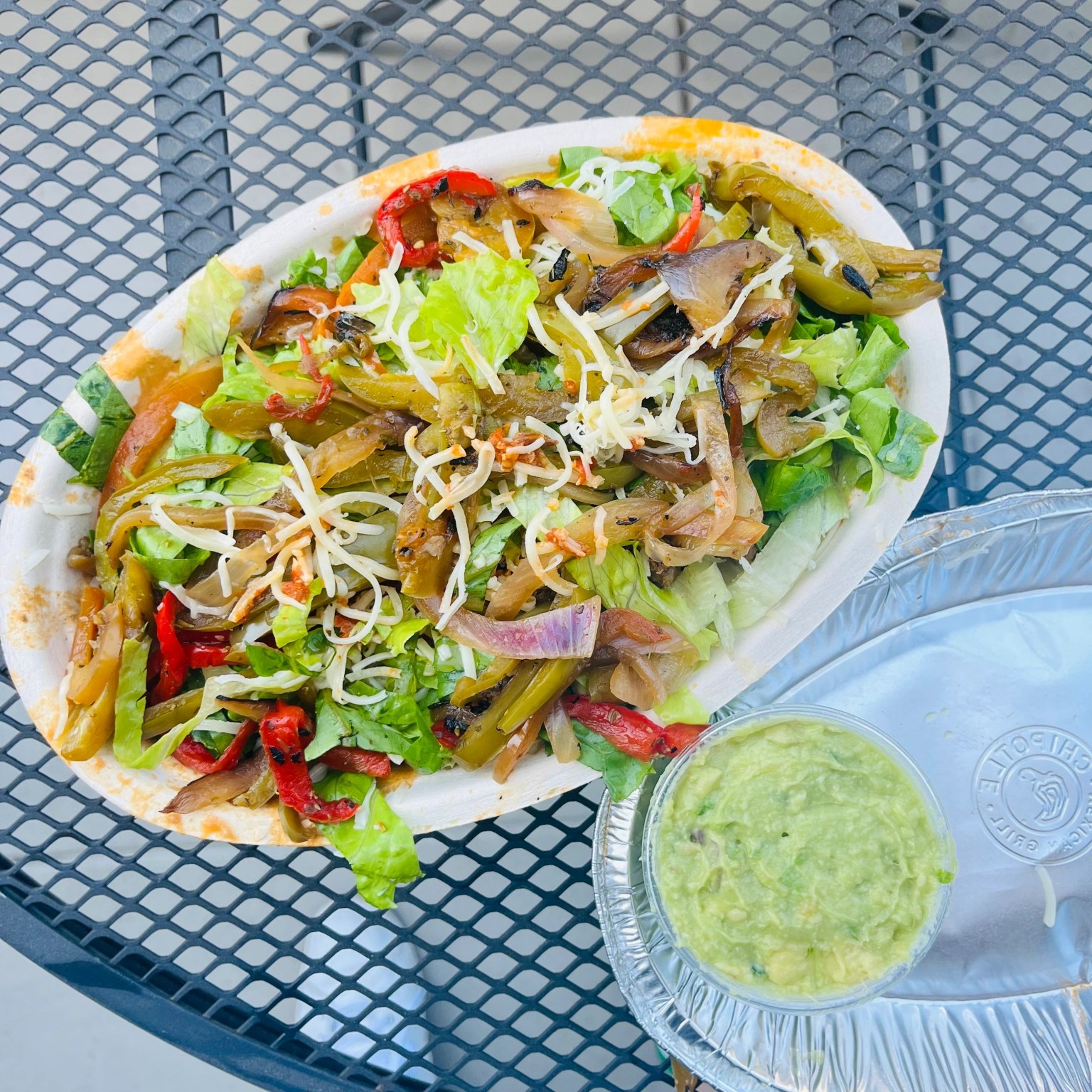
2. Chipotle — Burrito Bowl (Our Best Tasting Build, Modified)
Dane Rivera
Calories: 690
Fat: 21g
Sodium: NA
Carbs: 78g
Protein: 44g
Tasting Notes & Thoughts:
We’ve done extensive testing in the past to build the greatest Chipotle Burrito Bowl and filtered down our findings for three different bowls: the “best tasting,” bowl, the “best-tasting keto,” bowl, and the decadent “anything goes” bowl. We stand by those bowls, but rather than recommending the keto bowl here, I’m going to propose a fourth build, a modified version of our “best-tasting” bowl.
Here is the build:
barbacoa
pinto beans
white rice
extra fajita veggies
tomatillo red salsa
roasted chili corn salsa
cheese and lettuce
a dash of jalapeño Tabasco.
The end result should be a savory and flavorful salad with smokey, earthy, and spicy notes with a mild and sweet finish. The barbacoa provides herbal clove and oregano notes into the mix, which pair perfectly with the cumin-heavy pinto beans which soak nicely into the bed of rice. Overall, the dish is incredibly aromatic thanks to the extra fajitas and it’s so good that you’ll be blown away that it clocks in at well under 1000 calories.
If you’re looking to cut back even more, here is another modification: drop the rice and you’re looking at 480 calories, 17 grams of fat, 40 grams of protein, and 38 grams of carbs, which leaves some room to add guacamole. You can also swap out the barbacoa for the chicken but we are going to reccomend strongly against that. Barbacoa is what brings in that rich herbal flavor — you need that element.
The Bottom Line:
Chipotle makes eating healthy without sacrificing big flavor easy. This bowl will blow your mind.
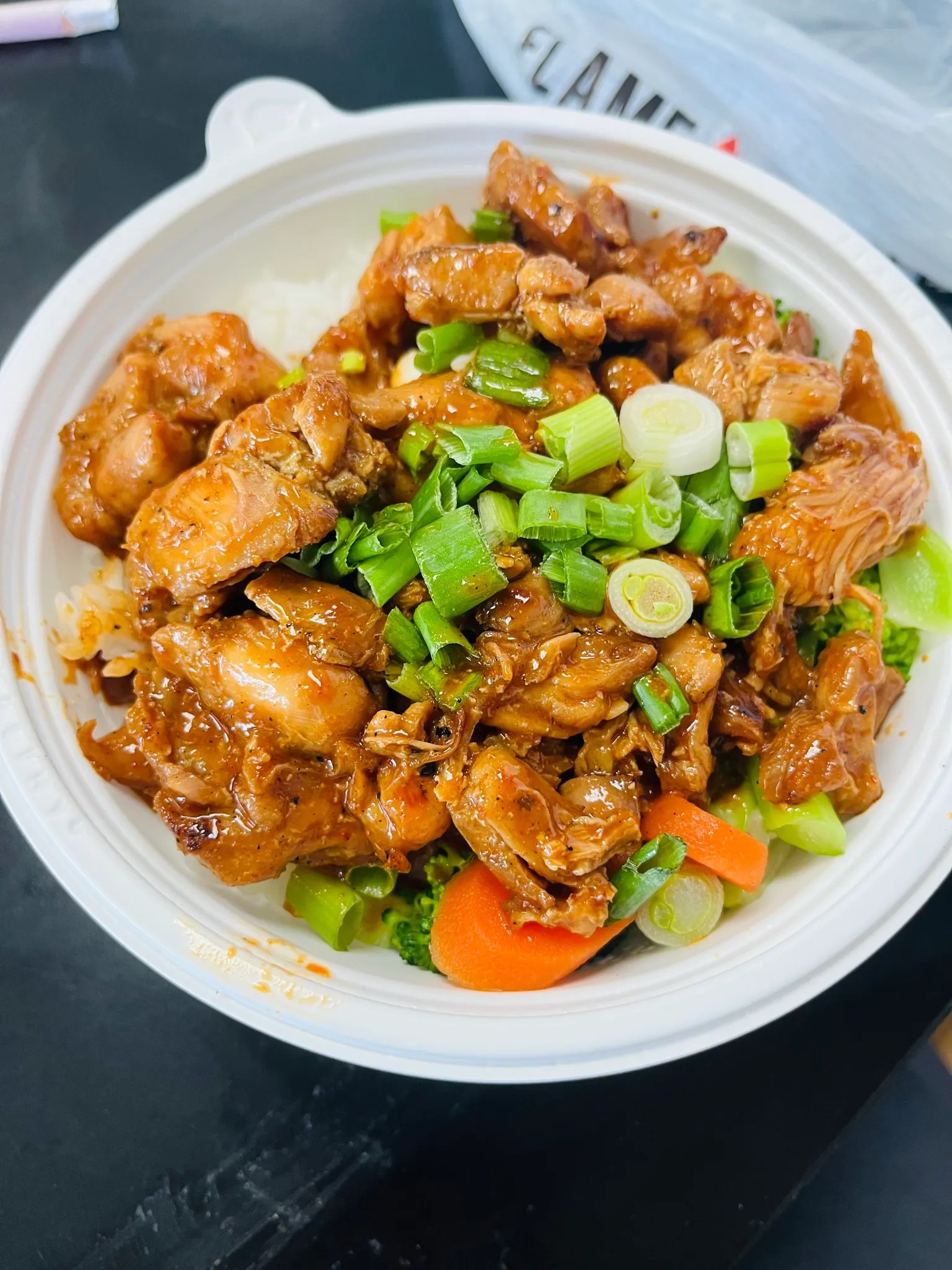
Choosing a number one for this list was honestly a no-brainer, I said it in my original review of the dish: Flame Broiler’s Korean Spicy Chicken is the best tasting and healthiest dish in all of fast food. This isn’t just healthy for fast food by the way, this is a well-balanced nutritious dish, full stop, and it tastes so f*cking good.
The chicken is a flavor bomb of chili spice, offering layers of sweet and savory sensations. Because it is thigh meat, it’s juicy and tender, and the heavy gochujang-inspired sauce transfers to your bed of vegetables and rice, ensuring every bite is full of flavor.
We strongly suggest adding some additional Magic Sauce (Flame Broiler’s version of Teriyaki) to your bowl. Yes, it’s going to up the sodium, calorie, and sugar content, but in this dish, you can spare it and it’ll help to deepen the sweeter notes and bring some umami qualities to the forefront.
The Bottom Line:
Hands down the best-tasting healthy dish in fast food right now. A must order whether you’re trying to eat healthy or not.
This website uses cookies to improve your experience. We'll assume you're ok with this, but you can opt-out if you wish. Cookie settingsACCEPT
Privacy & Cookies Policy
Privacy Overview
This website uses cookies to improve your experience while you navigate through the website. Out of these cookies, the cookies that are categorized as necessary are stored on your browser as they are essential for the working of basic functionalities of the website. We also use third-party cookies that help us analyze and understand how you use this website. These cookies will be stored in your browser only with your consent. You also have the option to opt-out of these cookies. But opting out of some of these cookies may have an effect on your browsing experience.
Necessary cookies are absolutely essential for the website to function properly. This category only includes cookies that ensures basic functionalities and security features of the website. These cookies do not store any personal information.
Any cookies that may not be particularly necessary for the website to function and is used specifically to collect user personal data via analytics, ads, other embedded contents are termed as non-necessary cookies. It is mandatory to procure user consent prior to running these cookies on your website.