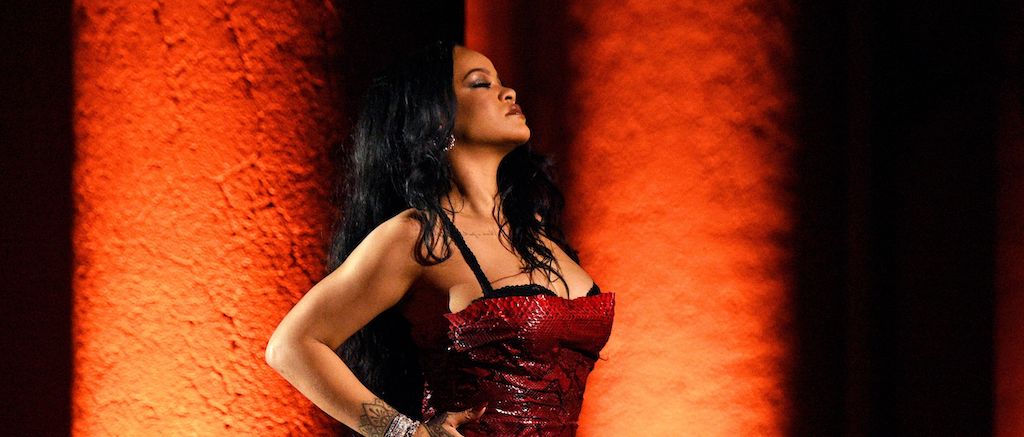
Not only is Rihanna is a talented singer, humanitarian, and a national hero in her native Barbados, she’s also an incredibly savvy entrepreneur who has just raised a lot more money for one of her ventures. Rihanna’s Savage X Fenty lingerie brand — which emphasizes inclusivity, body positivity, and confidence — just raised $125 million in their Series C round of investing.
This comes shortly after Savage X Fenty opened its first retail location this month, at the Fashion Show Mall on the Las Vegas strip. As Forbes reports, opening physical locations is the big push in 2022 for the surging company, which plans to open four more stores in the first quarter of 2022, “in Culver City in Los Angeles (where the company is based), followed by the Galleria Mall in Houston, the King of Prussia Mall outside Philadelphia and Pentagon City’s Fashion Centre in Arlington, Virginia.”
This new round of funding was led by Neuberger Berman, but there were a number of other private investors in the mix as well, including Jay-Z’s Marcy Venture Partners VC firm. Savage X Fenty has now raised a total of $310 million in capital. Rihanna, meanwhile, has a reported net worth of over $1.7 billion (well over $1 billion of which comes from here Fenty Beauty cosmetics line), second only to Oprah as the wealthiest female in the entertainment industry.
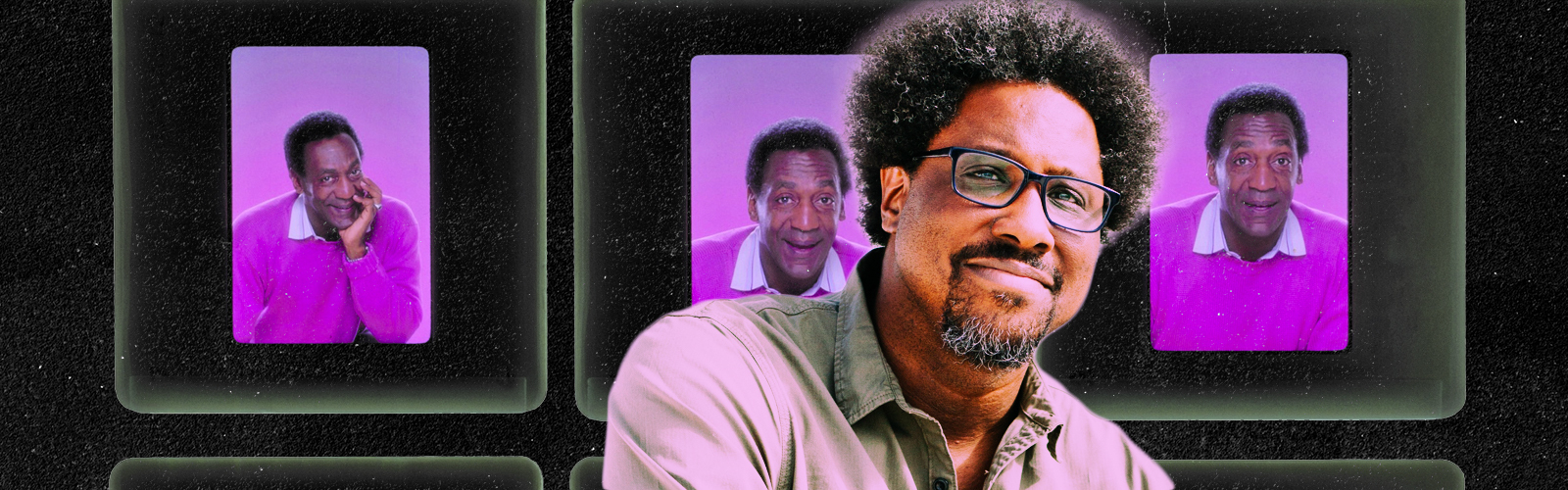
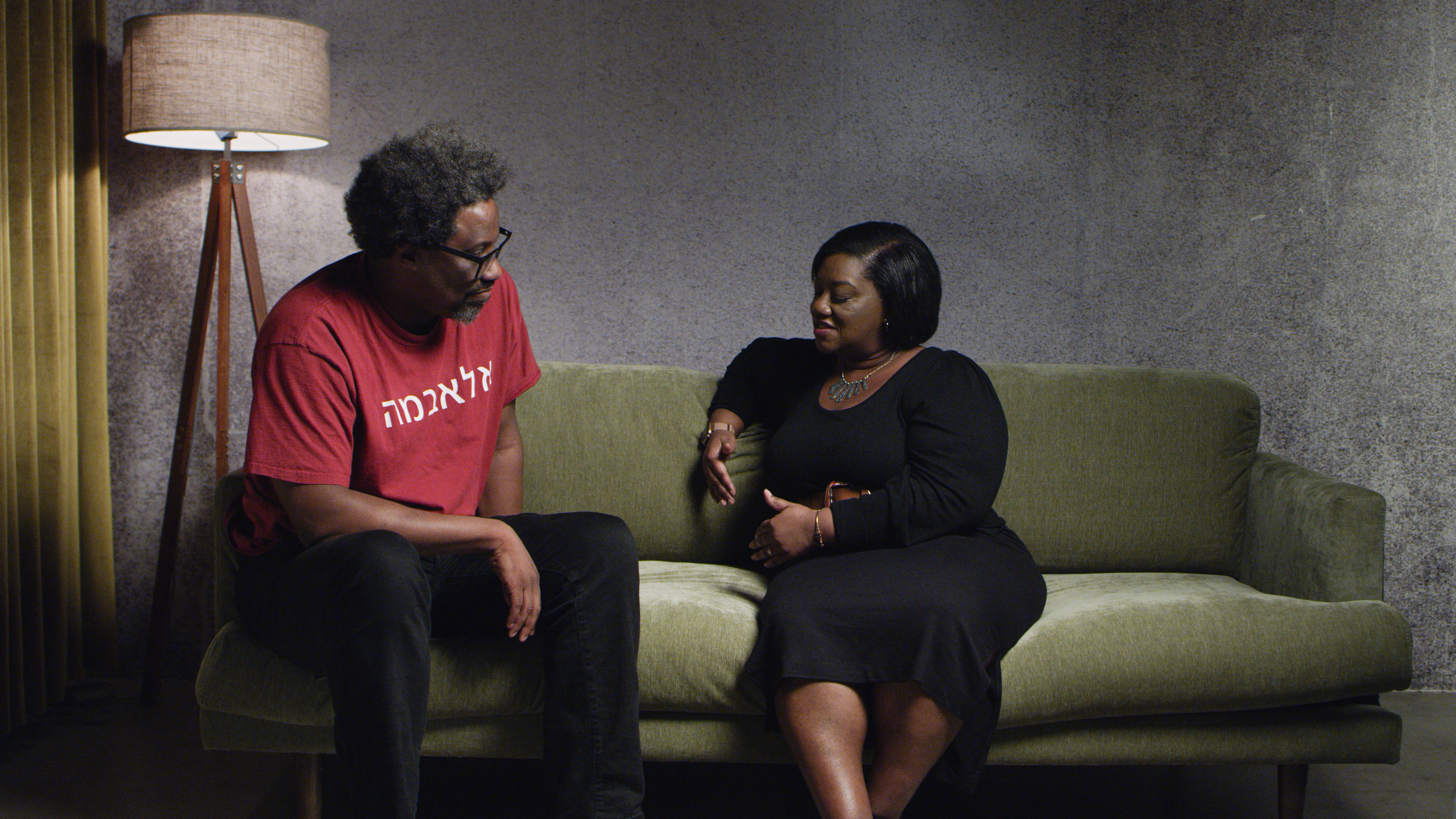
“Let’s talk about the good stuff while really confronting the bad stuff,” says W. Kamau Bell at the start of a long conversation about his new docuseries, We Need To Talk About Cosby (which premieres Sunday on Showtime). He’s speaking to his approach on the series in response to me telling him about my initial hesitancy to watch and cover such heavy and upsetting subject matter. It’s an unusual lead-in for an interview, but an honest feeling that Bell knows a lot of people may have. It’s something he needed to confront going into this project – the need to bring in a broader audience that might not always watch something like this.
It’s fair to say that if you’re reading this, you know that former TV icon and “America’s Dad” Bill Cosby was accused of sexual assault by more than 60 women and convicted on three counts of aggravated indecent assault in 2018. You also know that that conviction was overturned on a procedural matter and that Cosby is out of jail now (and criticizing Bell’s docuseries). That was the self-imposed limit of my understanding of all of this going in, but stopping at the basics can undercut the impact. In the theater of public opinion, it turns these women into a kind of monolith and it simplifies Cosby’s heel turn for mass consumption; especially to a younger generation that didn’t experience him at the height of his fame and influence.
To counter that thought, you might say that we as a society spend too much exploring the nuances of our villains and monsters thanks to cable news and flowery profiles of Nazis and anti-vax profiteers. But this isn’t that. Sure, we see come of Cosby’s good deeds with regard to representation on-screen and behind the scenes from earlier in his life, but that’s a part of an overall package that, if I can editorialize, pushes back on our latent need for hero worship while serving as an important reminder that villains and monsters don’t always put up billboards heralding their bad intentions or let you in on their darkest secrets. Most importantly, however, this is a series that makes a concerted effort to have victims be heard, and not just with regard to where their lives and dreams collided with Bill Cosby.
Uproxx spoke with Bell about all of this, the wall of silence in comedy culture, the difference between consequences and cancellation, and whether Bell would watch a Cosby comedy special again.
What was your own relationship to Bill Cosby’s works prior to the allegations and everything that followed?
I feel like I was like many Black kids in America. Because I was born in the early ’70s, I grew up [with] Fat Albert And The Cosby Kids as just another Saturday morning cartoon. But it was the one that had Black people on it and it was majorly Black. So that was right up there to me with Super Friends. [Laughs] Bill Cosby was just the host of the show, I had no idea it was his show, I had no idea he did so many of the voices. But that show was the Trojan horse that said, “Bill Cosby is somebody you should pay attention to.” And that show was filled with moral messages, so my mom of course supported it and she also knew Cosby from I Spy and the comedy albums.
When I was a young kid who was starting to like standup comedy and I saw Bill Cosby himself, I was like, “This is better than the other standup comedy I’ve seen. This is a step ahead of that stuff.” Just by the nature of the fact that he was sitting down and nobody else was sitting down. Then The Cosby Show hit. So I would have been president of the Bill Cosby Fan Club at 11-years-old if that was a thing. That show, as we talk about in the docuseries, I don’t think we had the words at the time, but for Black folks, it was a half-hour break from the horrors of America that also celebrated Black excellence before we had really coined that phrase. Black excellence. Also, the fact that White people liked it just made it easier for us to watch it. [Laughs] So it didn’t feel like something we couldn’t discuss or couldn’t talk about. It was like, “Oh, he’s America’s Dad, sure. He’s America’s Dad, but he’s ours.”
What was the biggest surprise for you going through this process?
I knew this was a thorny conversation, but it was only after we started asking people and so many people said no that I started to realize how thorny the conversation was. It occurred to me, “Oh, I may have made a mistake. I may have made a mistake in getting involved in this.”
When people are saying no to you do you perceive that to be column A, they just don’t want to talk about it, or column B, they’re still afraid of the influence and power he has in general, even from prison at that time?
I think there’s a column A, a column B, a column C, a column D, a column E, there are so many reasons that people can name for reasons why not to do it. One, there is, “even if I’ve been public about my belief, my support for these women, there’s no percentage in being public about it again, because it just stirs up a hornet’s nest with my own fandom.” So it’s like no reason to turn to kick this log over again. Because at the time, Cosby was in prison, so it felt like, “He’s done, why would I kick this log over?”
For many people, I think, I’m not known to be a documentary filmmaker, so maybe they’re like, “I don’t know that you would do a good job with this.” I think there’s also the side of it that is like, “I’ve said my piece and I really don’t want to have to fight the masses if I say my piece again.” Then there is a sense of, like we say in the film, especially people said no before he got out of prison, and then I think when he got out of prison they were like, “Oh, thank God I said no.” Because now it feels like this is active again, he’s talking about going on tour. He is such a divisive figure, specifically in the Black community still, that if you can just avoid talking about it, why not just avoid talking about it?
Jumping back, in terms of surprises, what was the biggest surprise you encountered in going through this and in talking to people? Not just what people were revealing, but how it impacted you.
I believed the survivors before I started this work, but to really sit down and talk with them, and these conversations, many of them were more than two hours… and to hear their whole stories outside of even their relationship, outside to whatever happened in their relationship or that night with Bill Cosby for some of them, or that event with Bill Cosby… to sit down and talk, I was nervous the first time I sat down and talked with them. Victoria Valentino was the first survivor I talked to. And she was so full of light and love and joy and so happy to be there. I found out so many of the survivors knew my work, which is why they came, because they were like, “I trust you to handle this.”
I think we have an image of this as being, and I don’t use this word regularly, but I’m saying I think there are people who have an image of this, even people who maybe believe them, as 60 groupies who were waiting backstage after the show to meet Bill Cosby. So in some sense, [these people are saying] even if it’s bad that he assaulted or raped them, that that’s what they were there for. When you sit down with these women and hear their life stories, which I did for most of them, you realize that so many of these women were living their lives, going about their business and he stepped in front of them and said, “Come with me.”
Sho
One thing that I found most shocking was just how many times throughout the course of the last 40 years, 50 years, he told on himself… with the barbecue sauce thing and the Cosby Show or the Larry King interview. I’m sorry, this is a long-winded question, but then we get to a point with Hannibal on stage and everything breaks out, but there were whispers for a while. In your opinion, why did it take so long for the light to flash?
I think this is what we were really trying to make clear with the series is that this is all bigger than Bill Cosby. So America, and I think I say something to this effect, America has a history and a present, but let’s focus on the history of not taking women’s stories of being sexually assaulted and raped seriously.
And dismissing them in every way, trying to find ways, like you were saying before, they get put into a box, all his “groupies,” that’s what the culture does and it’s astonishing.
Yeah, and it’s pervasive through the culture throughout the history of this country, so it’s not like we ever did a better job of it in history, we’ve only done slightly better jobs maybe as we’ve moved along. So I think Bill Cosby’s operating within that, Mo Ryan says that, he’s operating in this blind spot where women come forward, get blamed and shamed, as Lili Bernard says, and then other women see that happen to a woman, then they don’t come forward and then we blame them for not coming forward.
In 2004, when Andrea Constand’s case is happening, there’s no social media, the internet is a thing but it’s nowhere near what it is now. So Bill Cosby’s able to have siloed information. If you’re not watching the evening news about Andrea Constand, you don’t know that story. If you only are watching late-night talk shows and you see him come on to promote something, you’re just like, “Yay, Bill Cosby.” We didn’t all have easy access to the same information, whereas now we have access to more information than you want. Now, all the streams are crossing, and then you have somebody like Hannibal Buress, who very much accidentally forced us to reckon with this.
Sho
Did you reach out to Hannibal to be in the doc?
Yes, yes, I did. I don’t blame… I want to be clear, Hannibal’s a friend of mine and I hope he feels that we did okay by him in this because I really worked on that section hard, but that wasn’t a plan he executed. I think some people think it was a plan he executed… [Laughs] Like, “I’m going to go to Philadelphia, I’m going to do a joke that is half-written, I’m going to set somebody in the back with a really bad cellphone camera…” If you know Hannibal’s life and career, he had no interest in being a part of that. I can’t speak for him, but I just know that… So I think he’s had to reckon with it, and I hope he doesn’t feel like he has to reckon with it unnecessarily here, but it is a thing that I don’t think he feels like, “This is not something I was trying to do.” I think the other thing, he’s not trying to make a name off of this, which I think some performers might.
That is a question though, in general, the idea of reckoning with it, the idea of comedy culture in general and whether there’s a wall of silence with some of this stuff. Thoughts on that?
In my years as a touring standup comic, here’s what has never happened. “Welcome to the club, before you come inside, you need to sign this paperwork about sexual assault and harassment. Also, the HR department is over here, so if you have any problems, you can go over there. Also, just so you know, that’s where the other people will go and they can tell stories or have anonymous tips about things that are going wrong here.” There’s no HR department in standup comedy clubs, not in the time I was in one. The fact is that, I’m a part of this too, the reason why we get into it is because we like to stay up late and have a good time, and sometimes that involves substances, alcohol, legal and illegal substances. So it creates a clubhouse playground mentality that is not conducive to lots of good things. It’s conducive to good comedy maybe, but it’s not conducive to safety. Yeah, I’ll just leave it at that. It’s not conducive to safety. And show business is the same. There’s more money on the table, but showbiz, when they built showbiz back in the day, when they built Hollywood, they didn’t start with the HR department. The HR department came a lot later and still, it is not something that is clear enough about, “Here’s what we’re here to do and here’s what here not to do.” In my opinion.
You mentioned Cosby getting out of prison and feeling like it’s an active situation again. Cancel Culture is the label that gets used so, so much. Thoughts on that? Because I’ll preface this by saying Louis CK just got a Grammy nomination, people who get “canceled” complain about being canceled to their three million followers on Twitter or in a special.
I think we’ve seen it happen, whatever this thing called Cancel Culture is, it has become a career move for people. [Laughs] It has become a thing where if you get canceled, you’ll get a new audience. If you get canceled, you’ll be able to move to a new platform where they want the canceled people. Cancel culture is just another tool in people’s, “How do I get an audience?” arsenal. Well, you need a graphic designer and you need a good website and you need to get canceled. So I think there are certainly people who have… I just saw yesterday, I was reading an article about Kathy Griffin, and that’s an example of like, she’s materially been affected by the things she did — that’s 100% true — but I think sometimes, and I’m not really commenting on the Kathy Griffin situation, but we’re really getting confused between cancel culture and consequences sometimes. And also, how you recover from the consequences. And certainly, Kathy Griffin as a woman is in a very different position than a lot of male performers who are doing things that are way worse than what she did but manage to somehow come back.
If Bill Cosby did a standup special, would you watch it?
[Laughs] I just froze like a computer. Here’s the thing, I regularly watch things I don’t agree with, just to know what’s going on. So I regularly engage with material, and this is part of my job too, I have to. But I regularly go, “I just want to see what’s happening.” Also, I think I would have to watch it because I would be asked about it. Now, am I going to support his tour? Am I buying the T-shirt? No, I’m not doing any of that stuff, but I do think that a part of this thing for me is actually investigation and reckoning and also being able to have the conversation. But saying all that, I don’t begrudge anybody. I think I’m watching it for different reasons. I’m not sitting down to watch that special to go, “Ah, new comedy from Bill Cosby.” I’m sitting down to watch it and go, “What is he doing?”
I can’t even imagine the moral panic it would set off if I was watching a Bill Cosby special and he said something that caught me and I laughed. I can’t even imagine.
I mean, through this whole process, we had these Zooms, again because of COVID, and we had producers and editors and associate editors say, “I watched this stuff, I watched this or I listened to his standup and I find myself laughing and then I catch myself, why am I laughing?” That’s where the whole conversation is for me, how do we reckon with this? Because some people can, but you can’t just turn off what makes you laugh. If it makes you laugh, it makes you laugh. But then you can go, “Why am I laughing? What does it mean about me that I’m laughing? Is it okay that I’m laughing?” These are all the kinds of questions I feel like a lot of people don’t want to ask.
‘We Need To Talk About Cosby’ premieres Sunday on Showtime
Polo G’s Hall Of Fame is nearly nine months in the rearview, but that hasn’t stopped the Chicago product from continuing to release new content in support of the album. The latest is the video for the Moneybagg Yo collaboration “Start Up Again,” which finds the two rappers posted up in a gentlemen’s club hosting an NSFW twerk-off under the black lights as they throw cash and boast their prowess in both reciting their raps and getting derrieres to clap.
Polo’s nonstop support of his 2021 album has included videos for “Unapologetic,” “Heating Up,” “Fortnight,” and “Young N Dumb,” which all appeared on the updated deluxe edition of the album, Hall Of Fame 2.0. Polo’s relentless promotion paid off early as the original version debuted at No. 1 on the Billboard 200, becoming his first album to do so. The deluxe edition, which was released in October, featured 14 new songs, including collaborations with Lil Baby, Lil Tjay, and NLE Choppa.
Meanwhile, Moneybagg Yo had a similarly successful 2021, dropping his own No.1 album, A Gangsta’s Pain. Moneybagg’s chart-topper was so successful that it actually returned to the top spot, producing a hit record with “Wockesha” and earning him a spot on Kanye’s upcoming Donda 2.
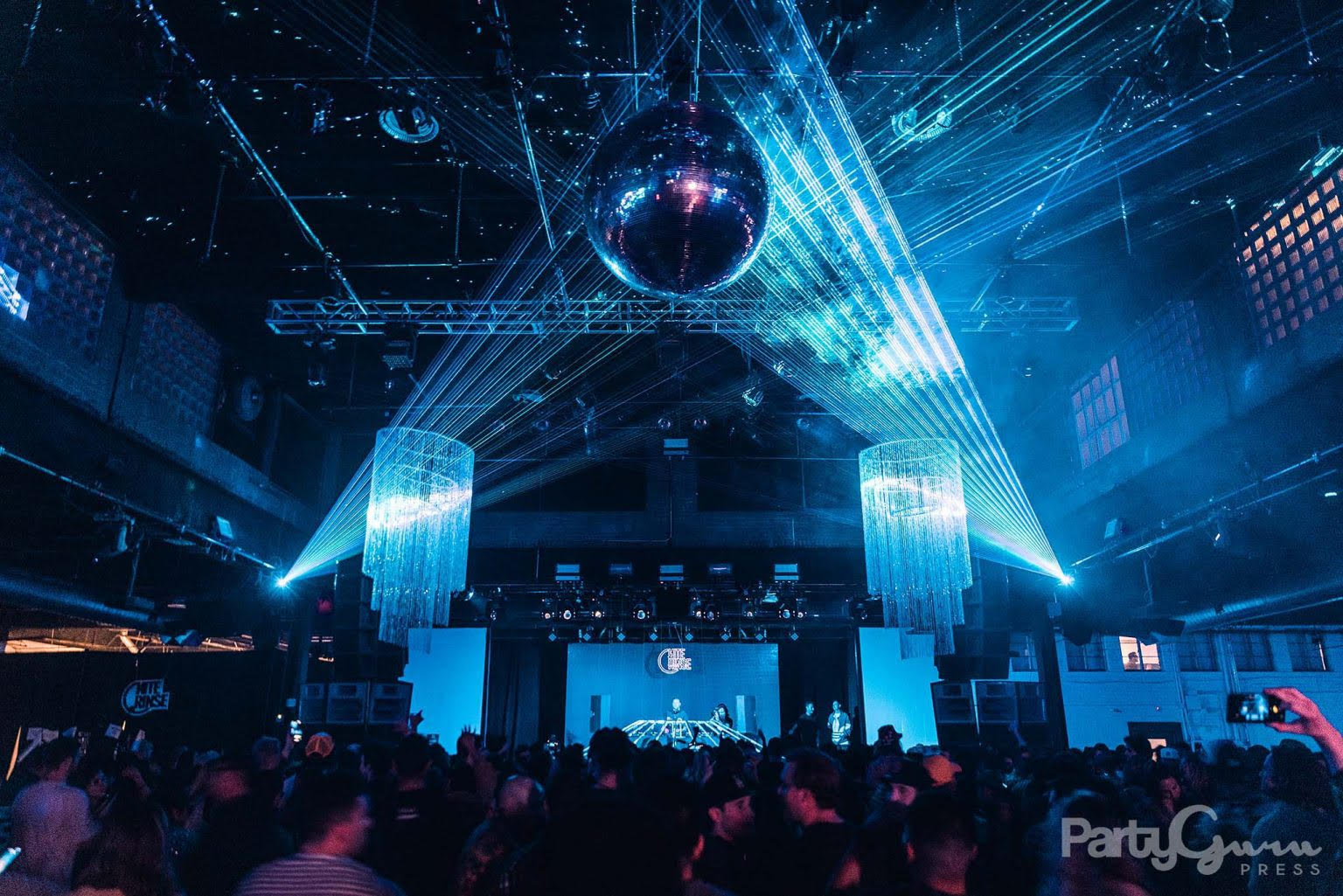
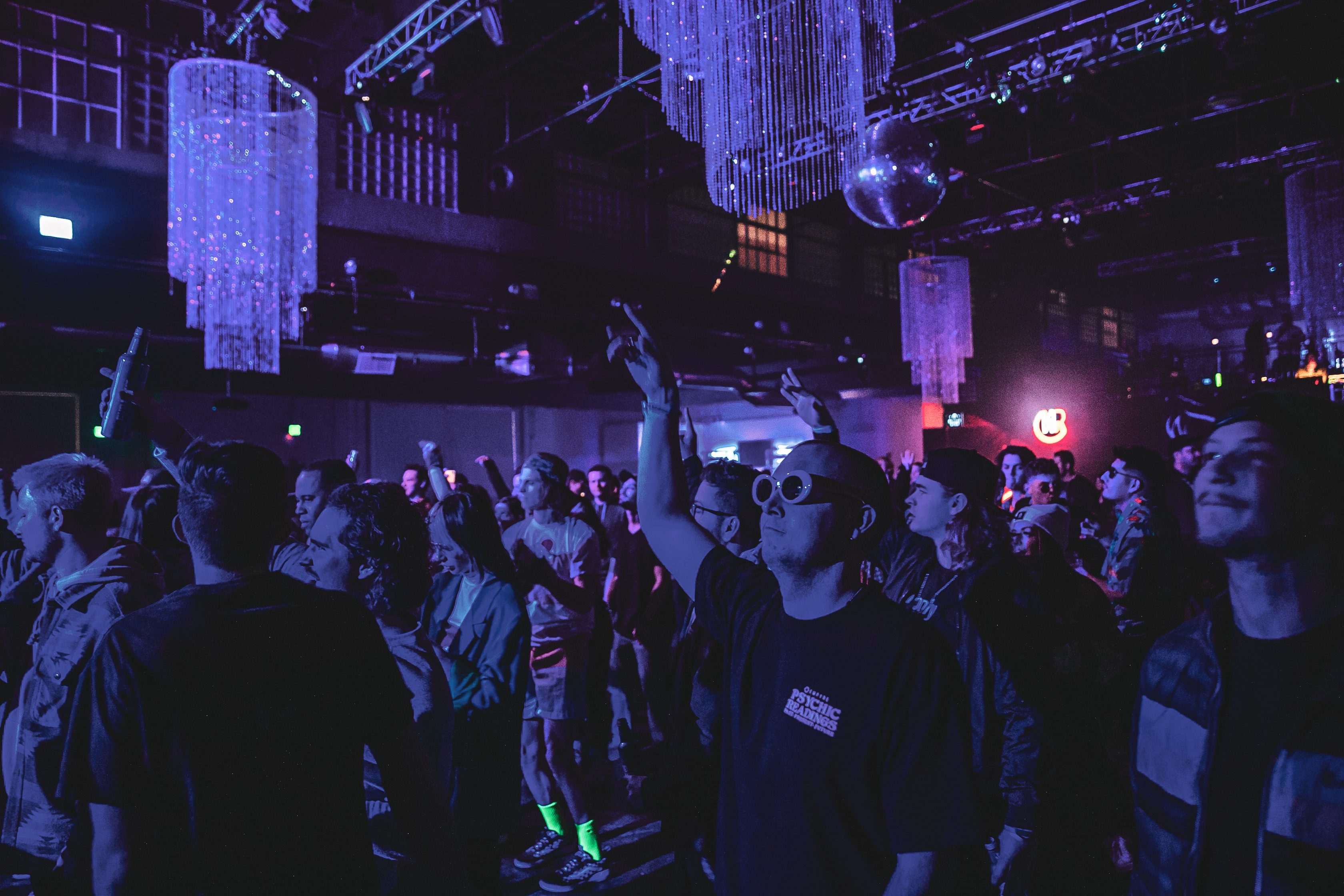
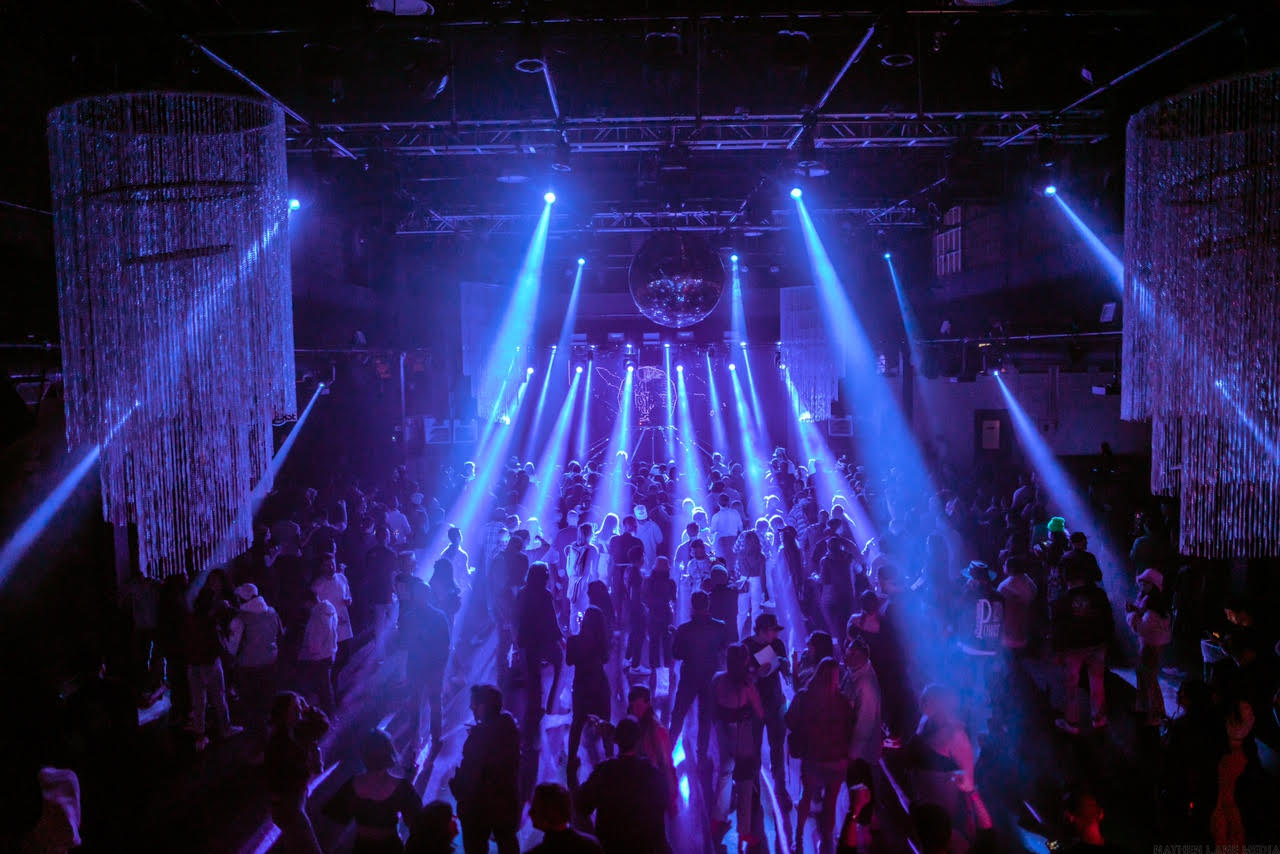
When I hear “underground warehouse party,” I can’t help but feel a little skeptical. Hundreds of people gathered in a dark space at a secret location? Slightly terrifying. But anyone who hits the warehouse party scene knows that at their best they’re incredibly safe and buttoned up. And also a ton of fun.
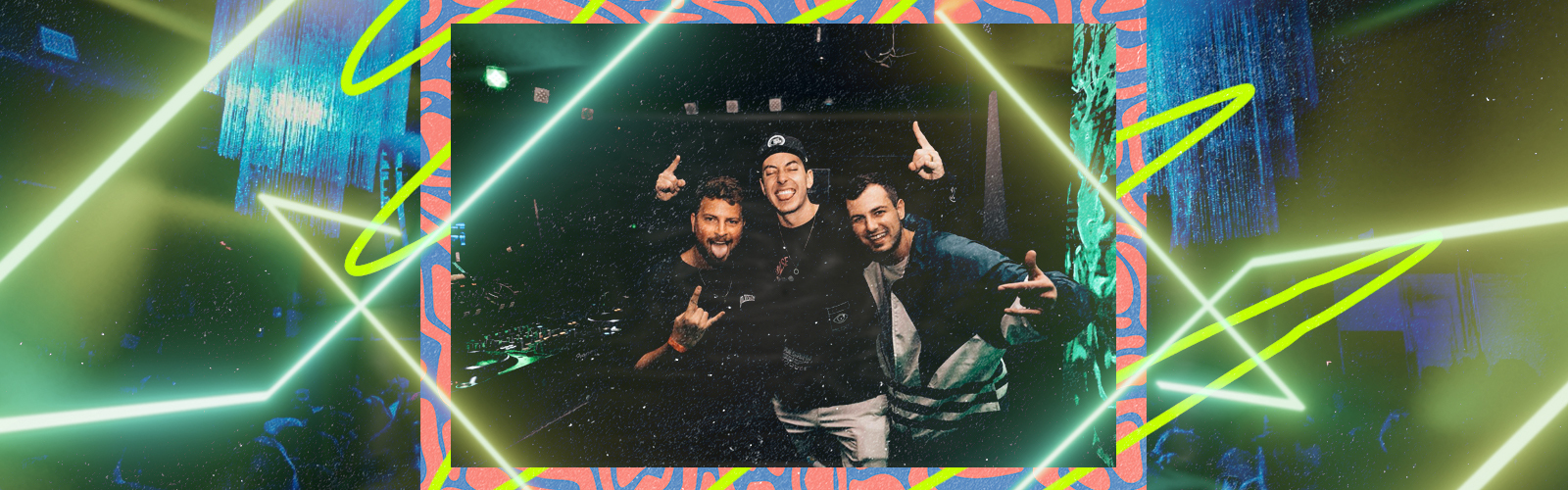
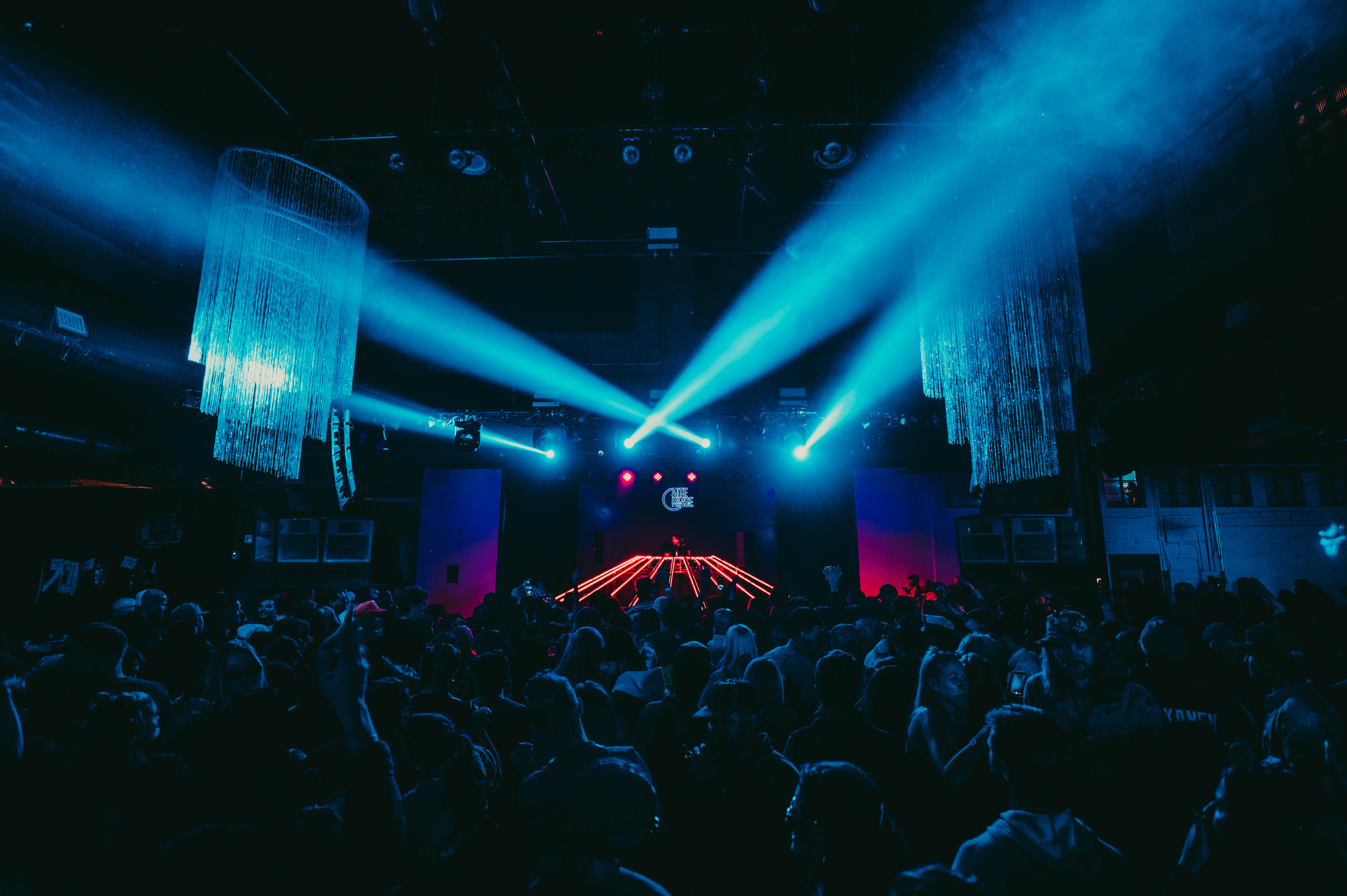
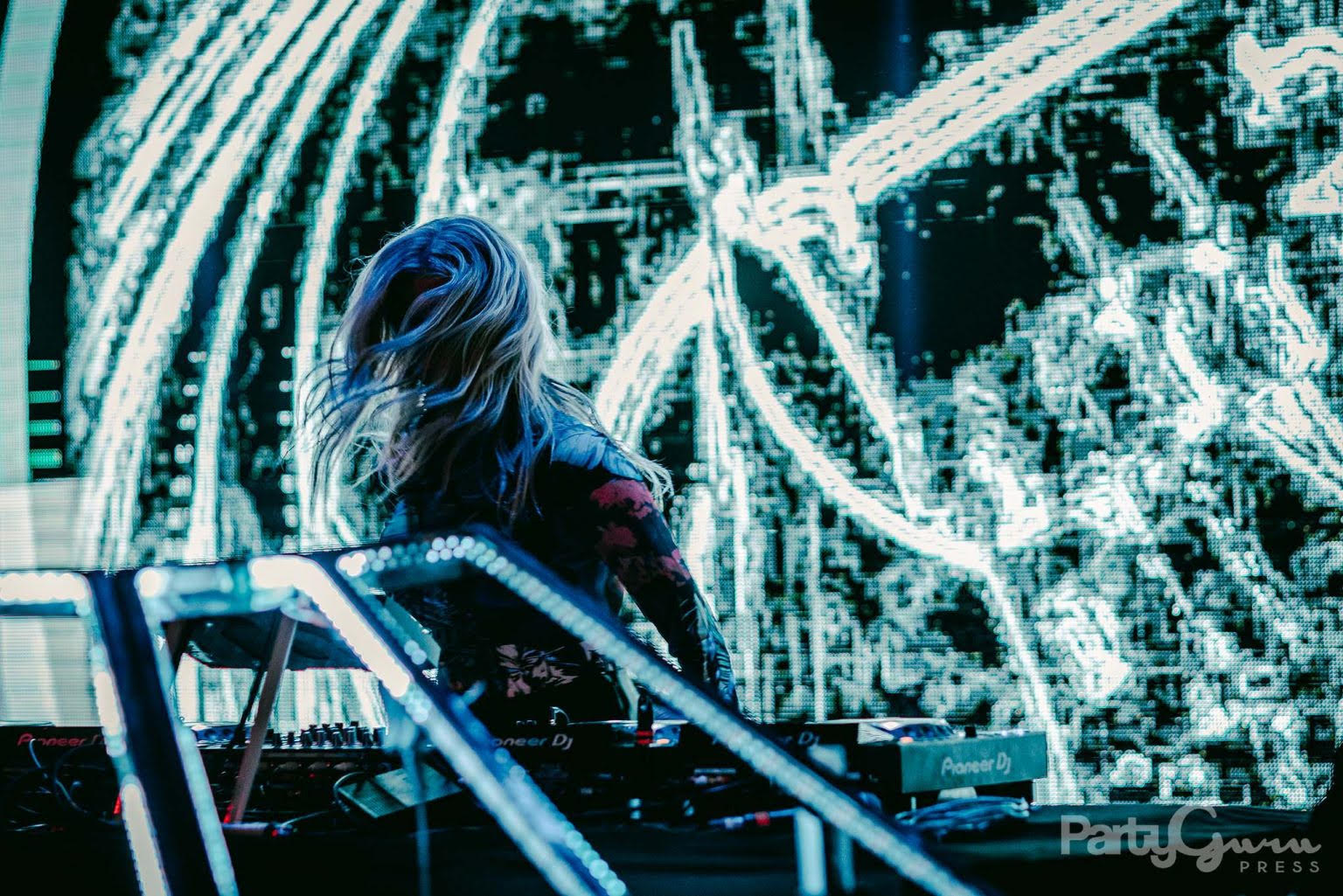
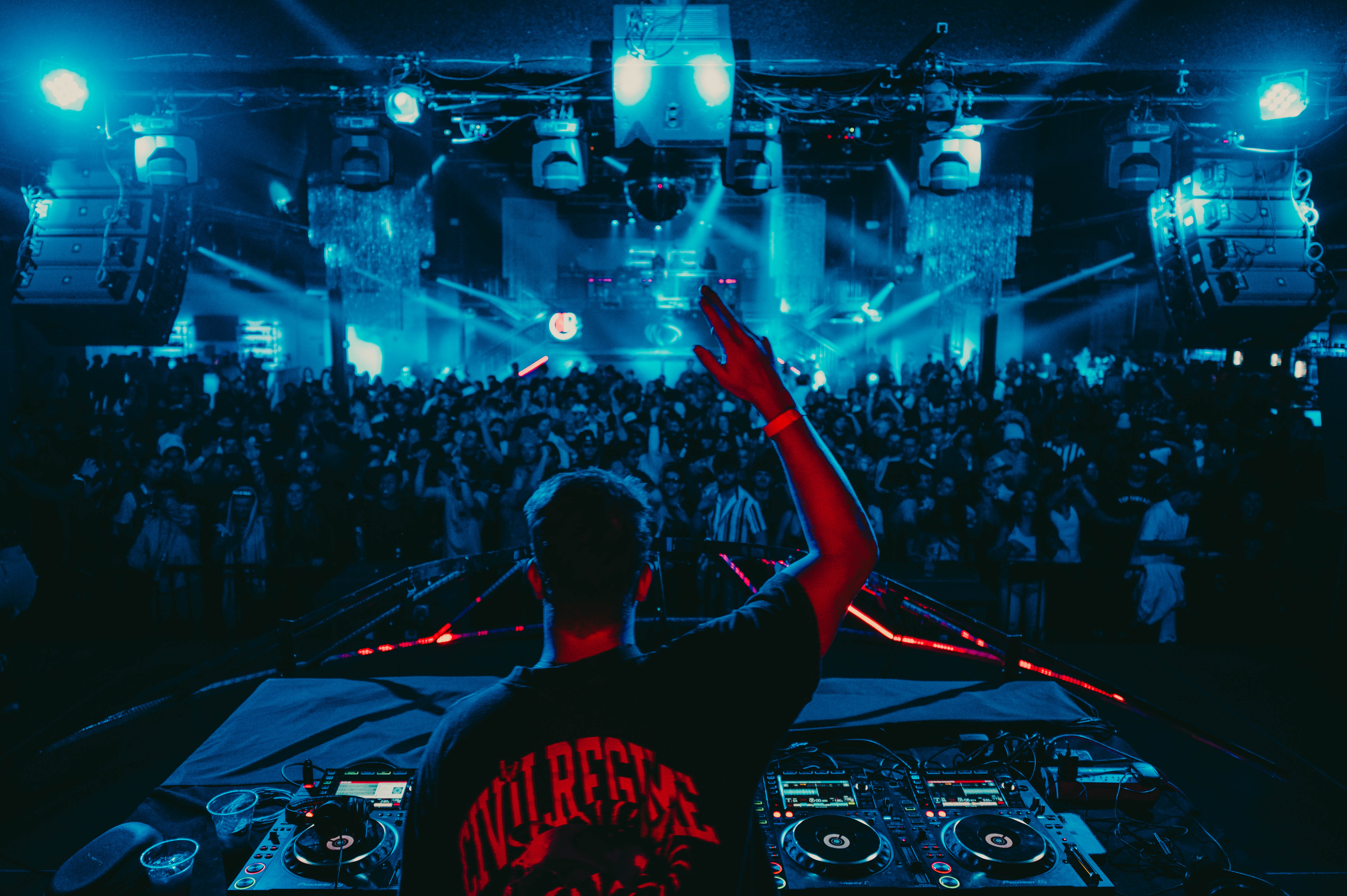
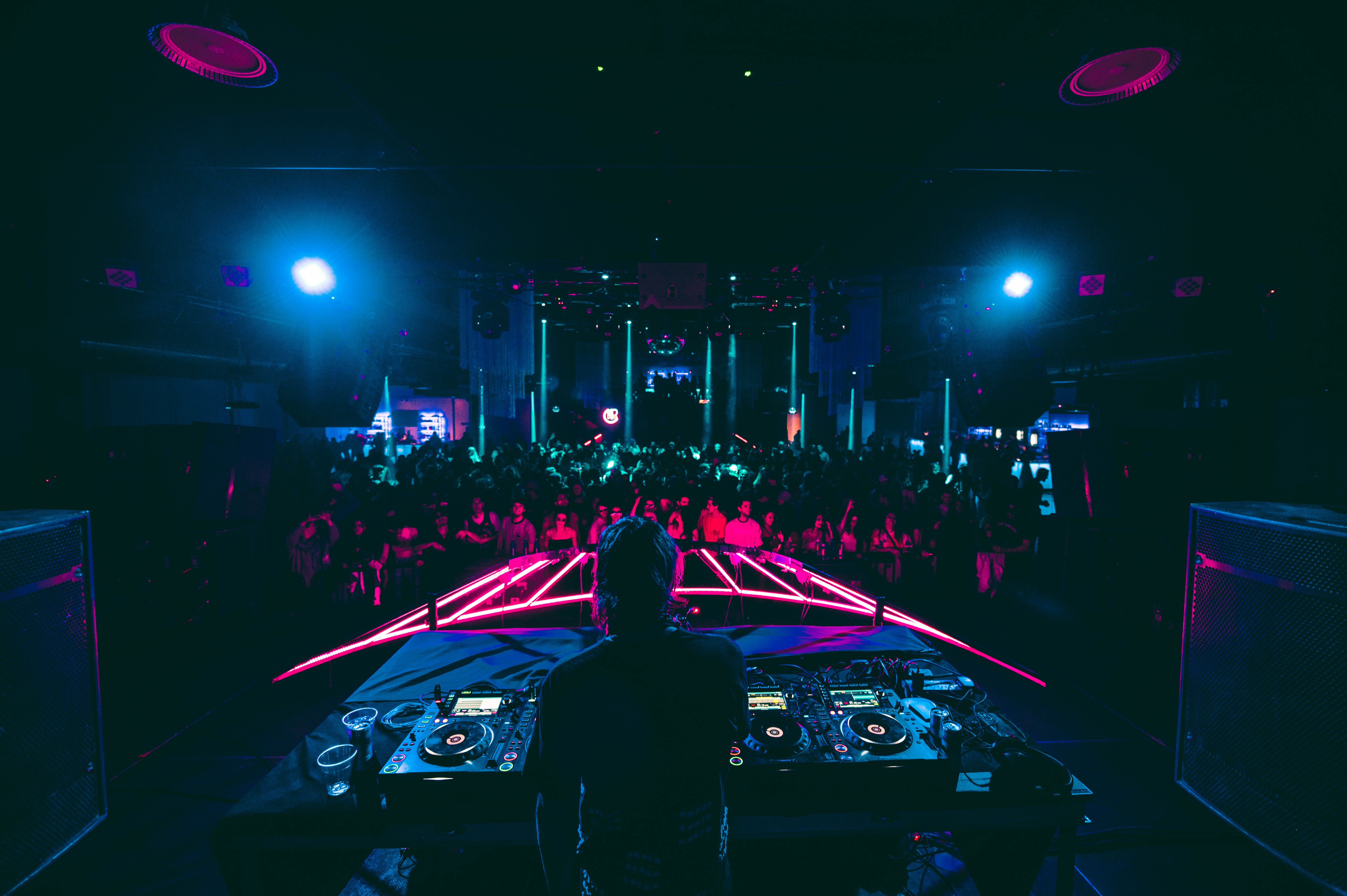
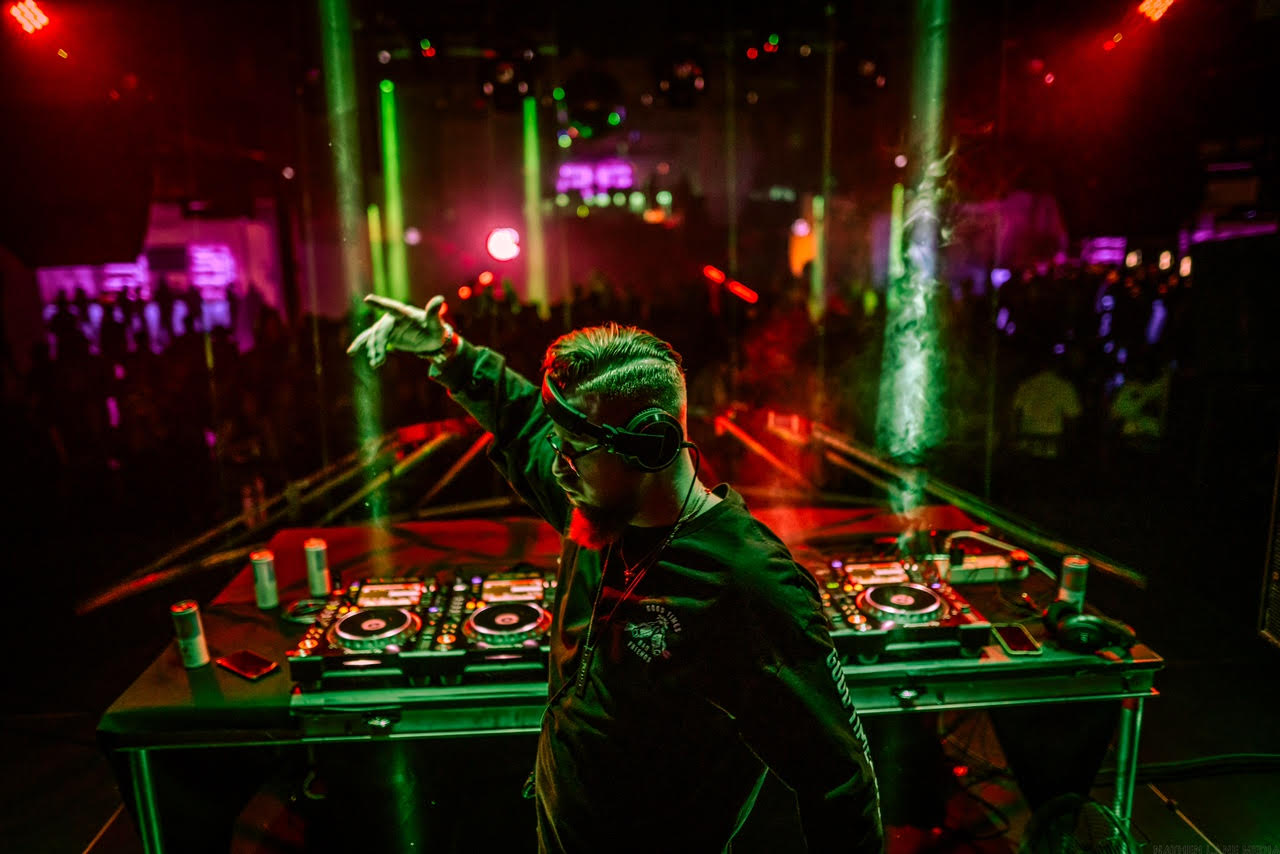


Nite Rinse, an LA and Denver-based warehouse events company, takes underground parties to the next level by creating a lineup of well-known and local DJs, integrating eye-catching art installations, and blasting party-goers’ eyes with epic laser shows that keep them dancing until the sun comes up (and often well-beyond). It also provides a unique and affordable music experience compared to your typical festival or concert.
According to the founders, “Nite Rinse was created to provide a platform for artists to share their sound and cultivate a space and community that values creativity and freedom of expression.”
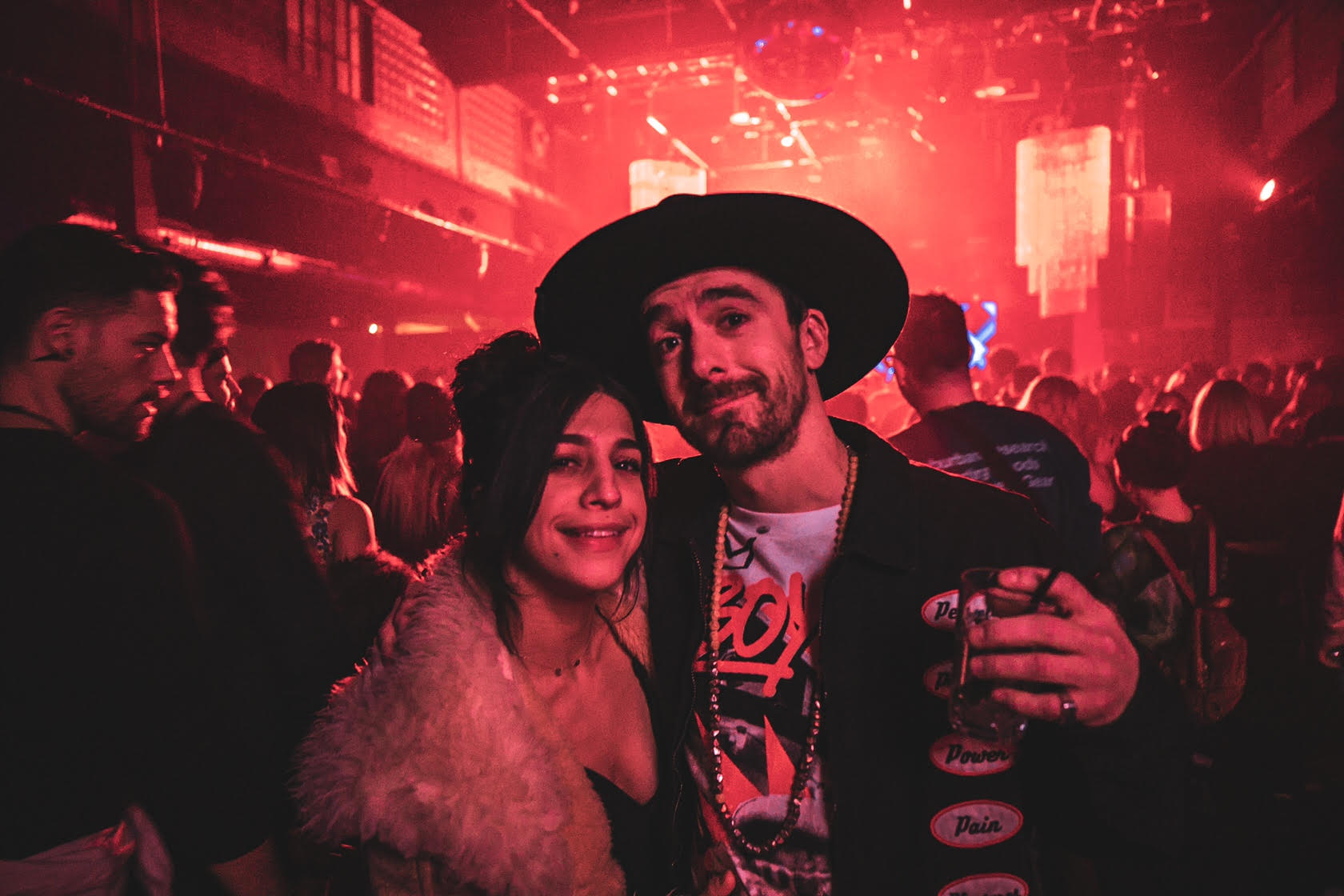

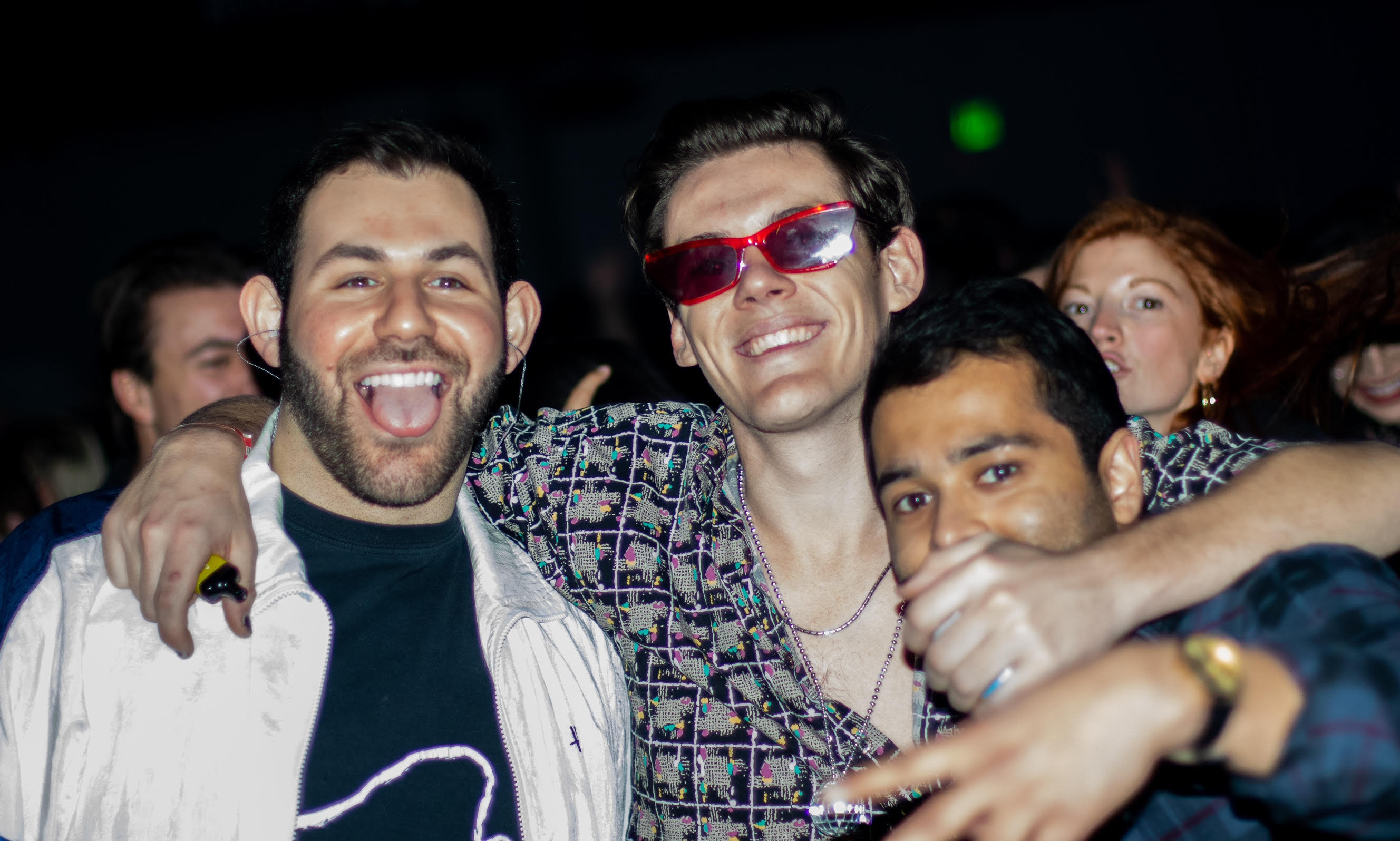
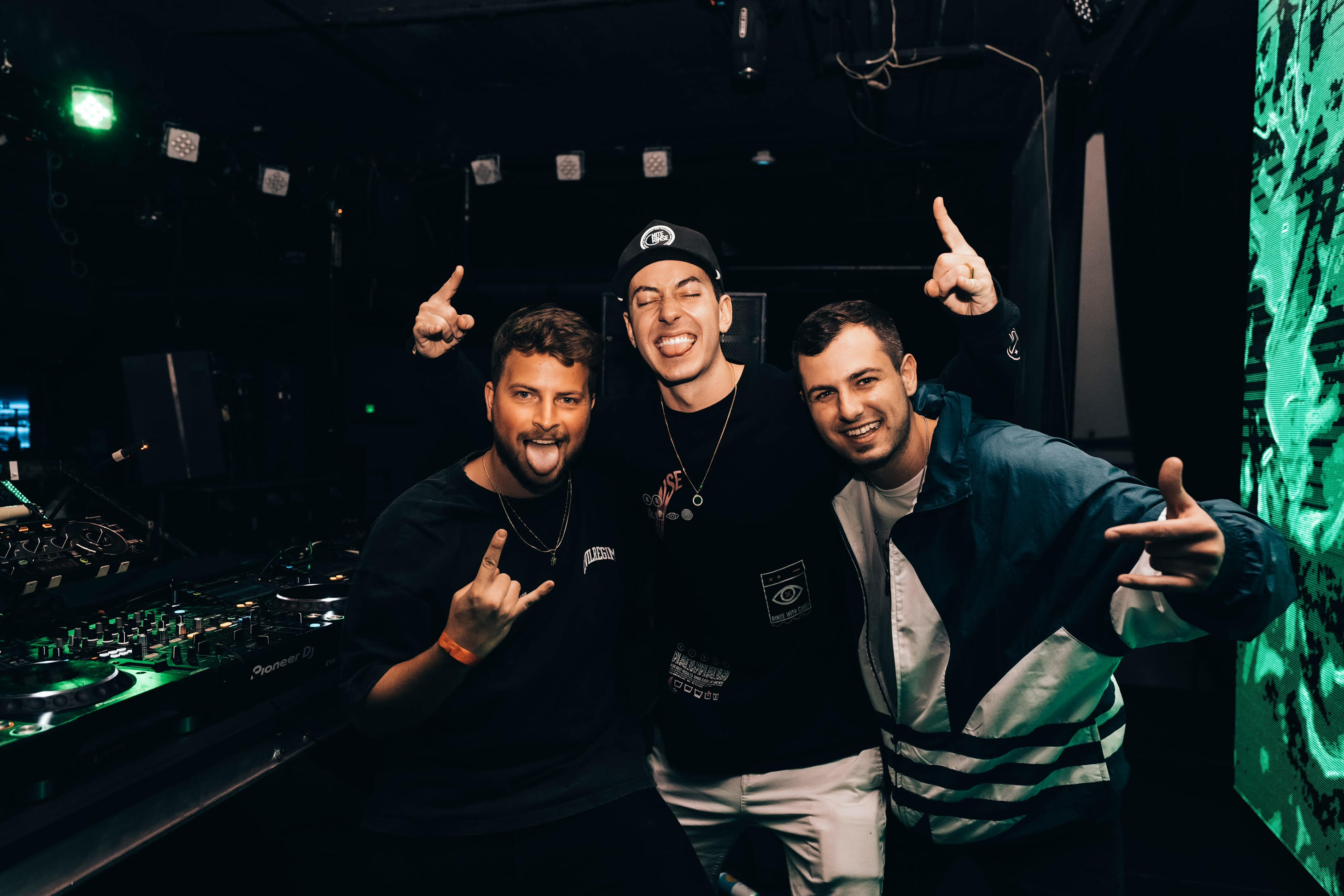
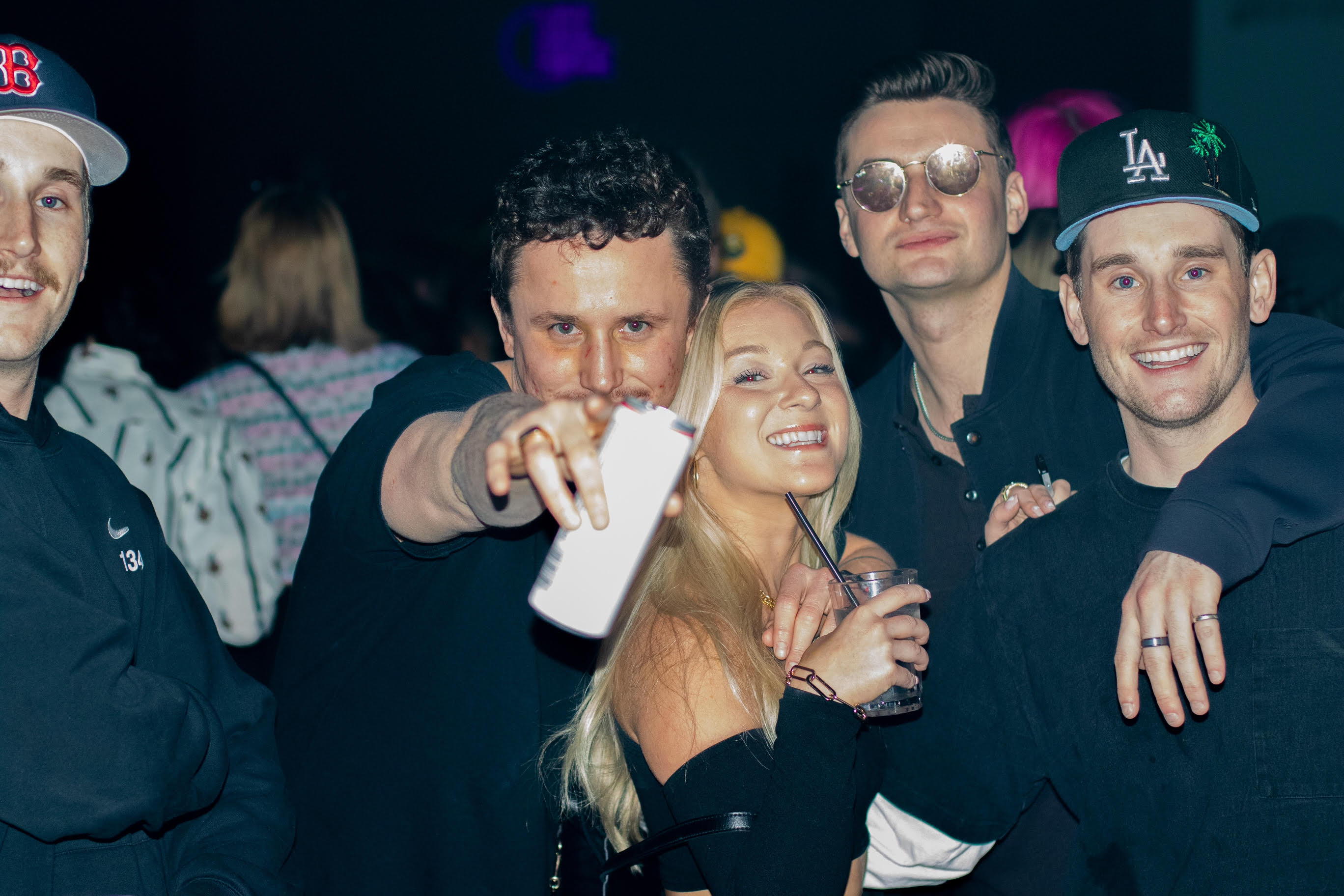
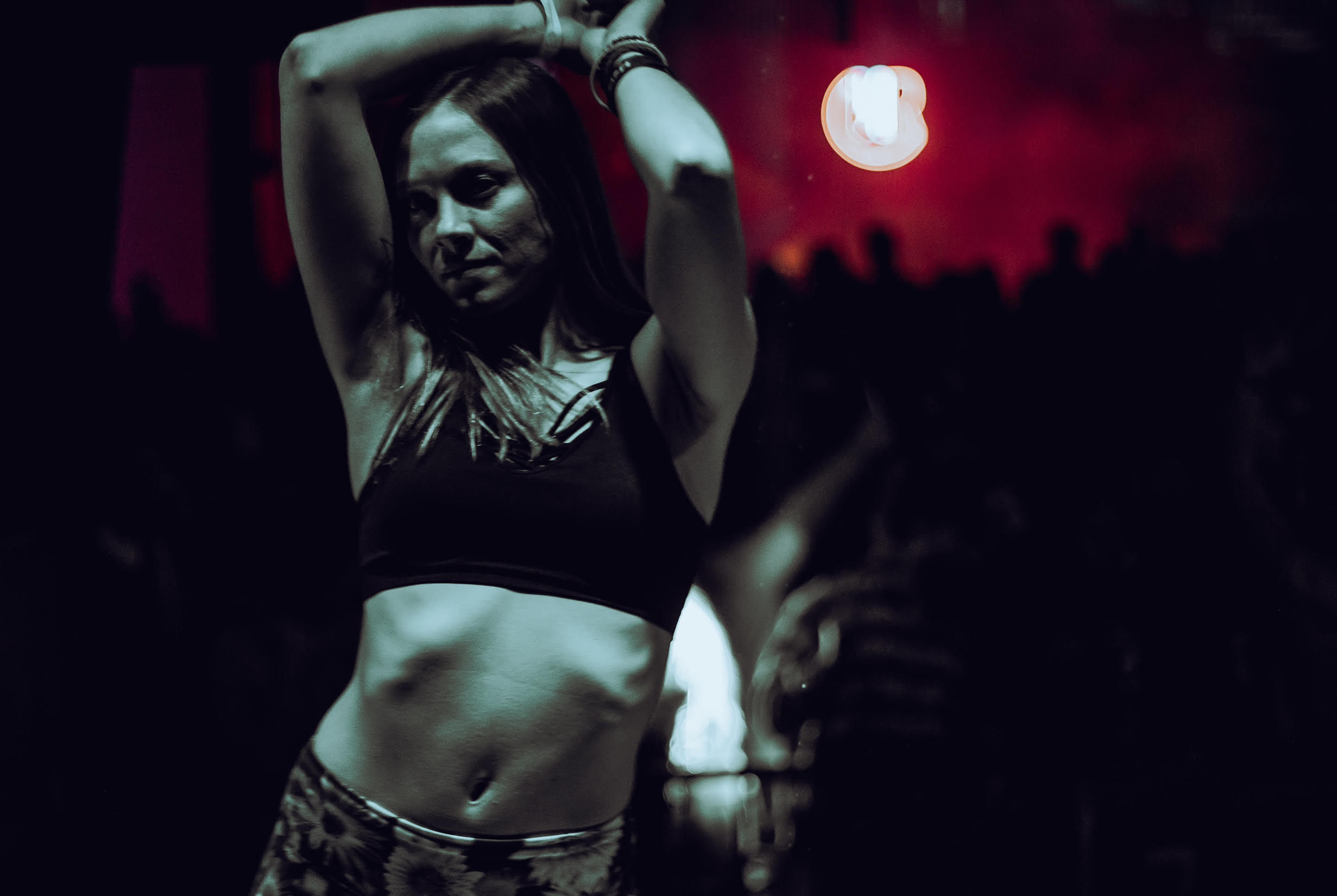
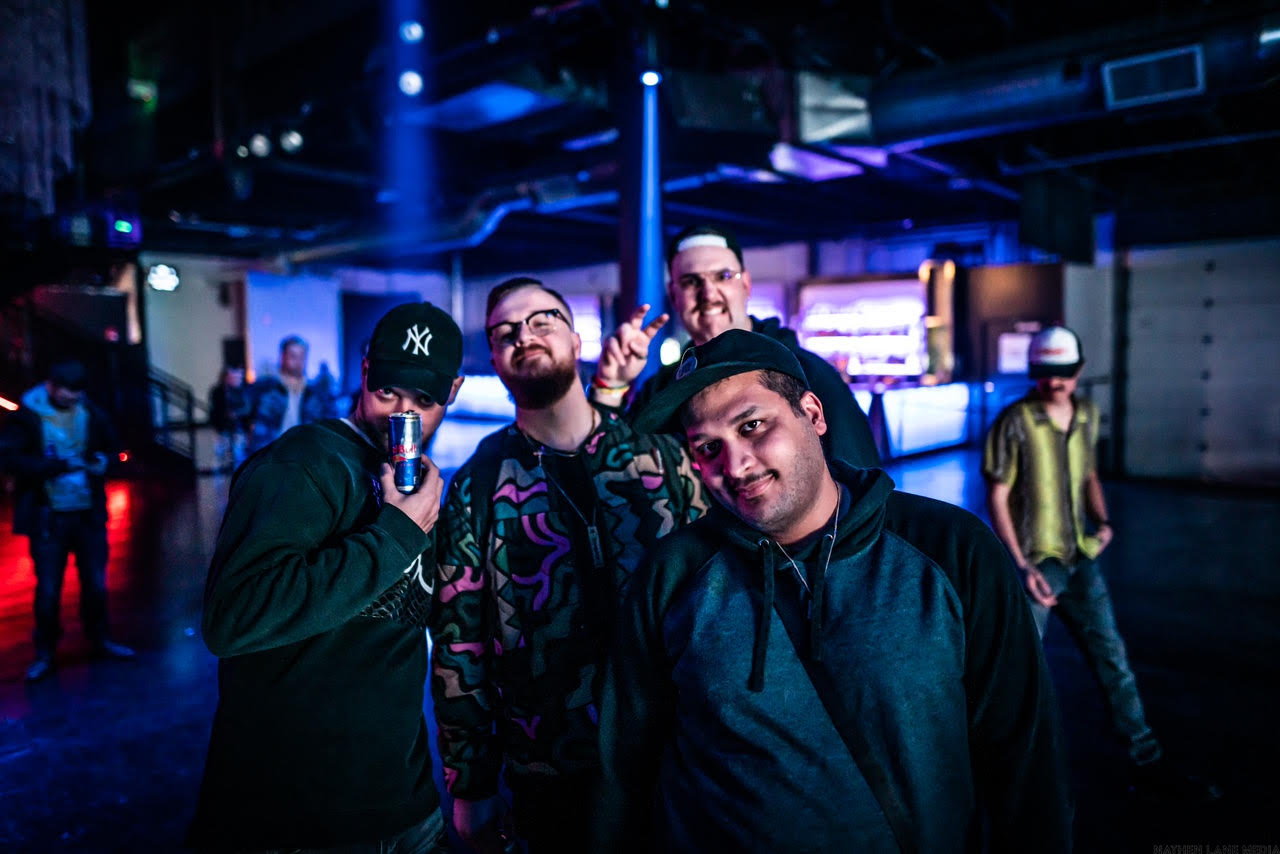
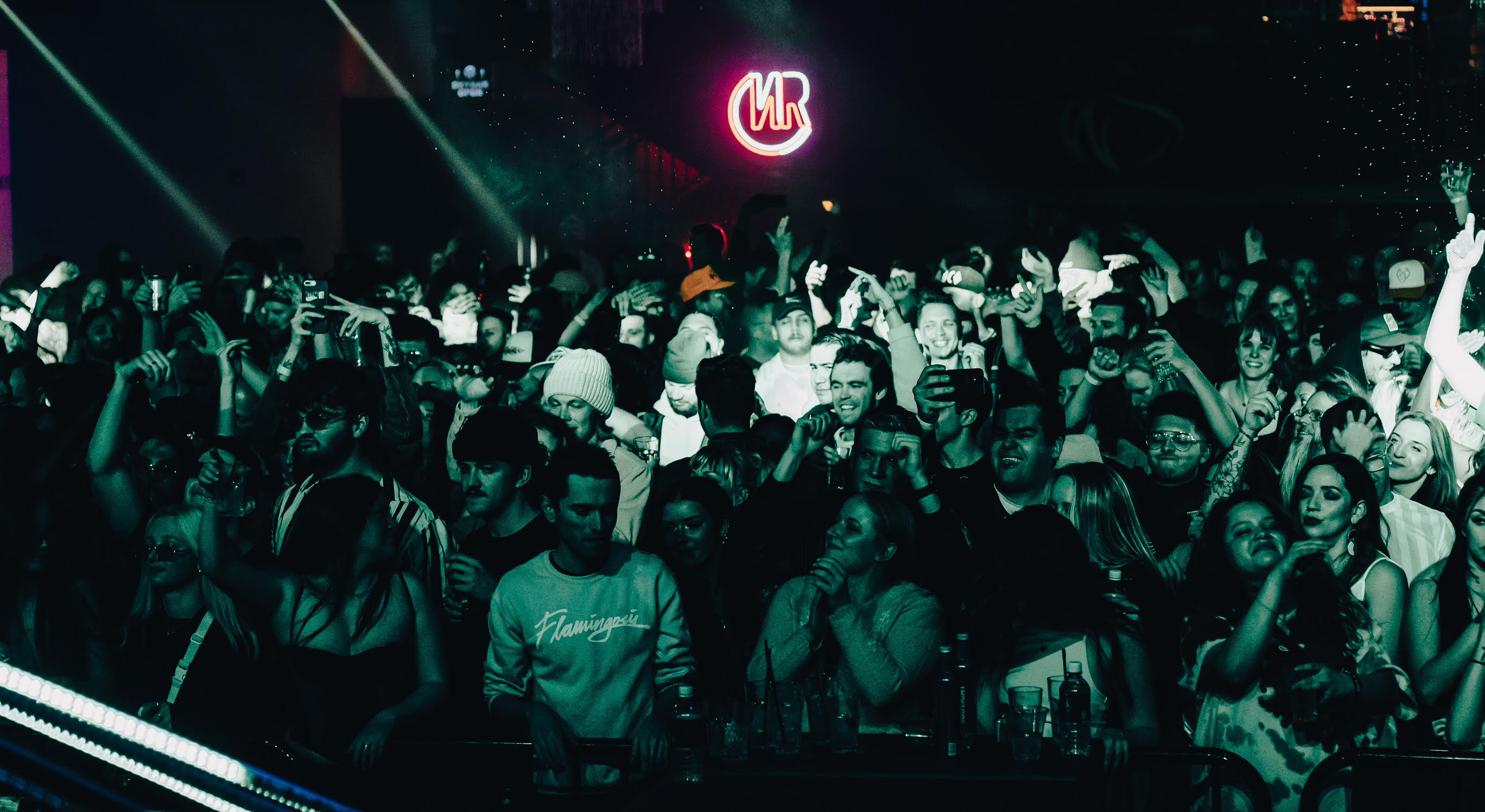
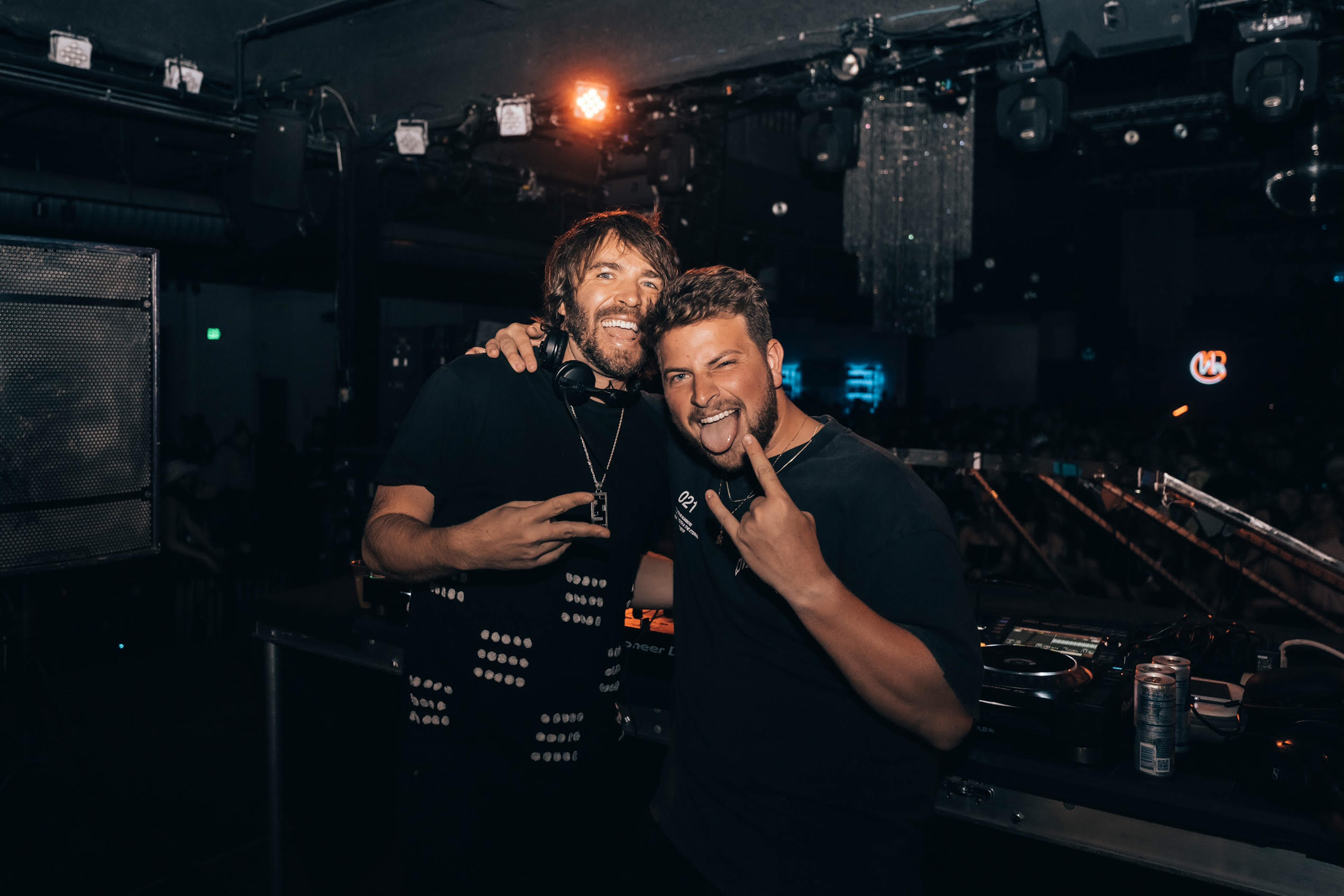
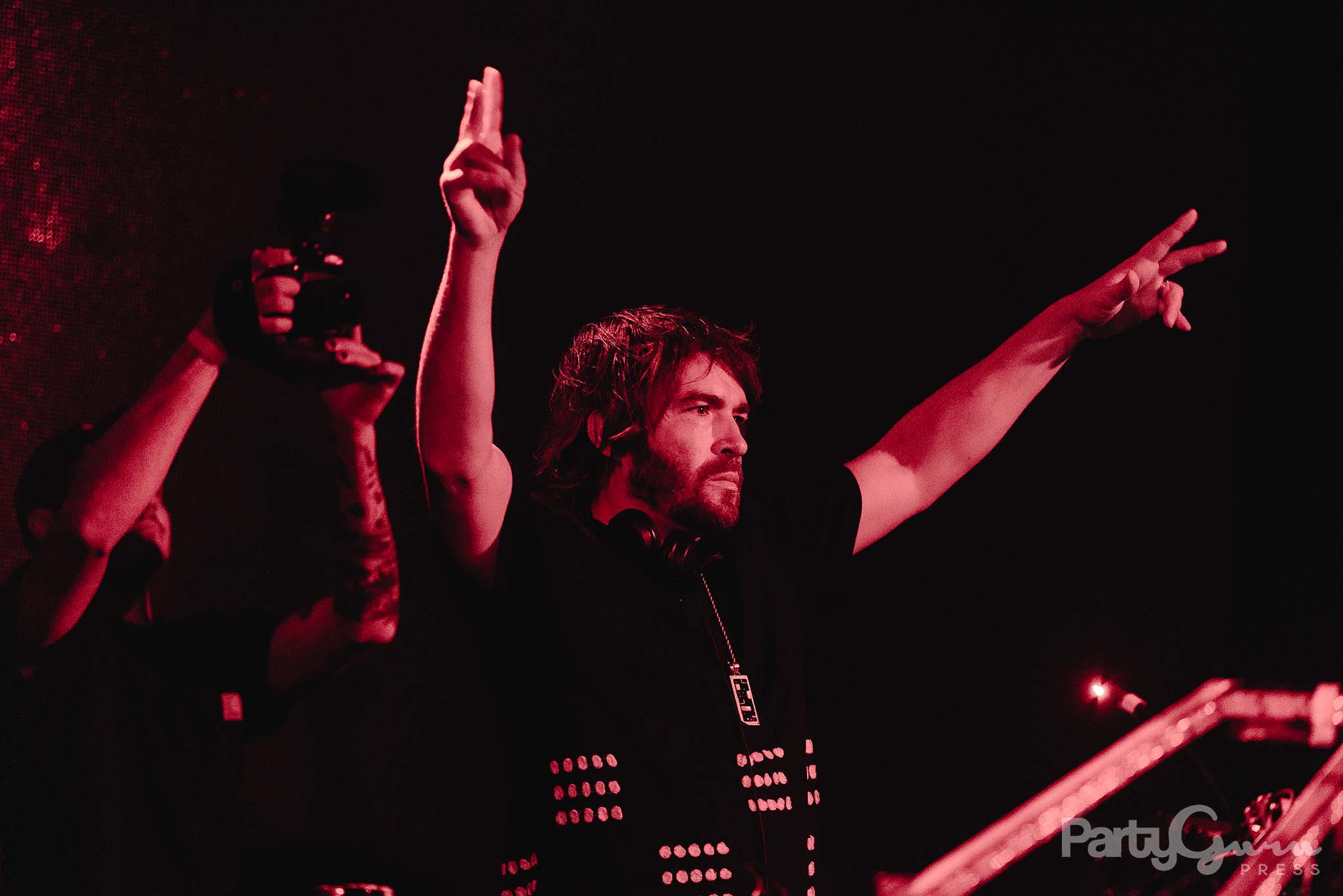
Between the out-there outfits, bass-heavy beats, and neon lights, it’s safe to say that creativity and freedom of expression were oozing through the Nite Rinse three-year anniversary party at REELWORKS in Denver’s iconic RiNo District on Saturday, January 22nd. The lineup included Lee Foss and Westend, with support from local artists including CJ Music, HOUSEWIFE, and Josh Fedz.
If you need something to get you hyped for the weekend, check out the photos below. The scene from Nite Rinse’s three-year anniversary event is sure to put you in the mood to party.
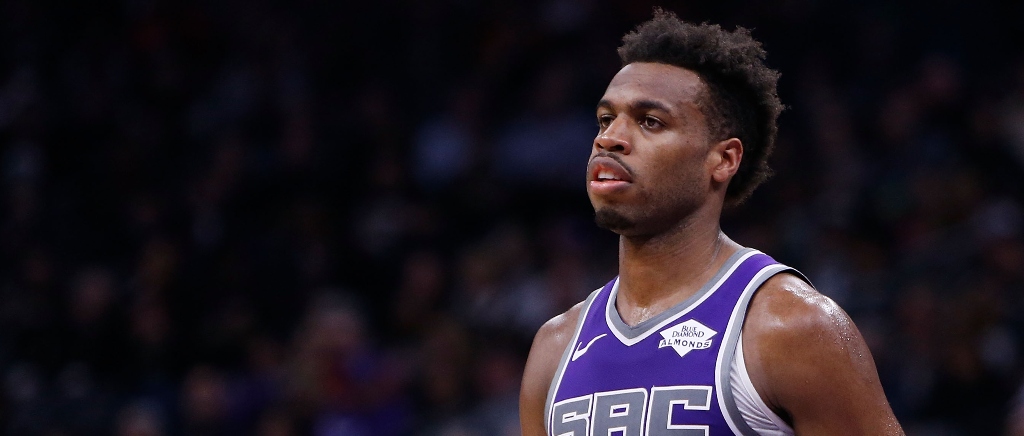
Amid a struggling 24-25 season and fewer than two weeks ahead of the trade deadline, the Los Angeles Lakers are searching for reinforcements to an underwhelming roster. Much like last summer, one of those reinforcements appears to be Sacramento Kings sharpshooter Buddy Hield, who Los Angeles nearly acquired back in August before taking the package they reportedly offered for him, adding to it, and trading for Russell Westbrook.
According to Chris Haynes of Yahoo Sports, the Lakers have once again contacted Sacramento about a deal for Hield, this time centered around Talen Horton-Tucker. But apparently, no real traction has been made between the two parties.
“Obviously, the Kings are like, ‘No. We feel like there’s more lucrative deals out there,’ ” Haynes said on the “Posted Up with Chris Haynes” podcast. “The Kings are going to be active. They’ve got a whole bunch of people calling them.”
Sacramento certainly seems correct in its position that better deals for Hield are available. Through 2.5 seasons, Horton-Tucker has struggled to become an impact rotation player and the Kings already have three young guards as foundational players. Horton-Tucker, who is still only 21, doesn’t project to usurp De’Aaron Fox or Tyrese Haliburton and more pressing needs exist on the wings and inside for Sacramento.
Hield has his faults, but he’s a marksman from deep who’s drilled over 40 percent of his career threes. Many teams with the right structure in place would benefit from his floor-spacing and off-ball movement. The Lakers are one of those teams, though their avenues to acquire him seem quite limited for now.
Riley Stearns was last making the festival rounds back in 2019 withThe Art Of Self-Defense, his arch indie take on masculinity and martial arts starring Jesse Eisenberg as a wimpy accountant. This year he’s back at Sundance with the far superior Dual, a sci-fi-tinged lark about having to fight your own clone for the right to your identity.
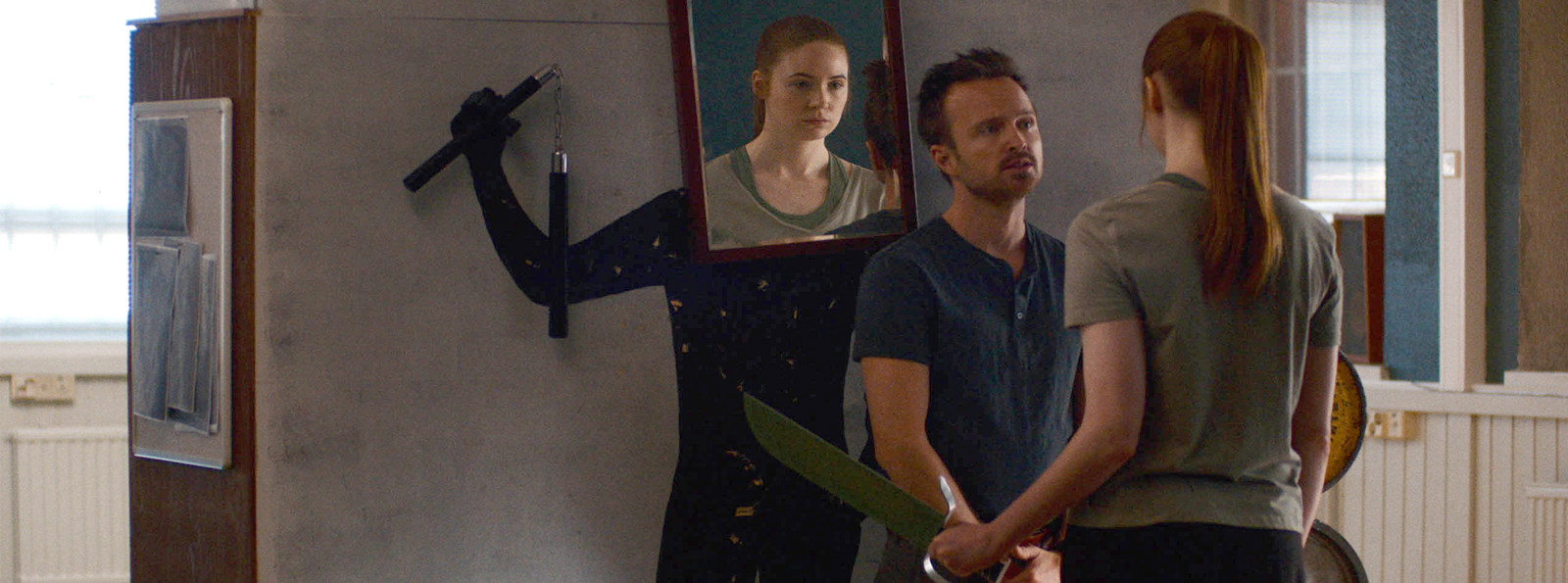
The hallmark of both movies is a detached, affectless style of delivery that makes every character sound like a chatbot sharing some interesting facts they’ve just learned about bread. While this conceit felt like an impediment to deeper understanding in The Art Of Self-Defense, Stearns’ aloof style is a far better fit in Dual, which stars Karen Gillan as Sarah, a terminally-ill millennial who pays a futuristic tech company to make a clone that will eventually replace her, who ends up having to fight the clone for the right to her identity.
Stearns shot Dual entirely in Finland during the height of COVID lockdowns, meaning all the locations are ineffably Scandinavian and the whole cast outside of the principals have a cornucopia of accents, from Finnish to British to everything in between, similar to the way Sergio Leone used Italian locations, crews, and extras for his English-language “Spaghetti Westerns” back in the 60s. I asked a Finnish friend for the Finnish equivalent of “spaghetti” and she suggested “pyttipannu,” a quick mix of old potatoes with sausage and onion. Which I guess makes Dual a sort of Pyttipannu Sci-Fi, though I admit it doesn’t roll off the tongue in quite the same way.
Yet the setting has much the same effect as Stearns’ spammy house style, giving Dual a slightly otherworldly, uncanny valley sensibility that only highlights the ideas of alienation and corporate dehumanization it explores. Its tertiary characters evoke the feeling of reaching some customer support technician somewhere out there in the ether, with opaque backstories and unplaceable accents. Does anyone actually care about me? Is true human connection even possible? Or are we all just going through the motions? Finland is a weird little place, and Dual is a weird little movie.
HBO Max’s brilliant megachurch comedy The Righteous Gemstones has been renewed for a third season, as the second season continues airing through next month.
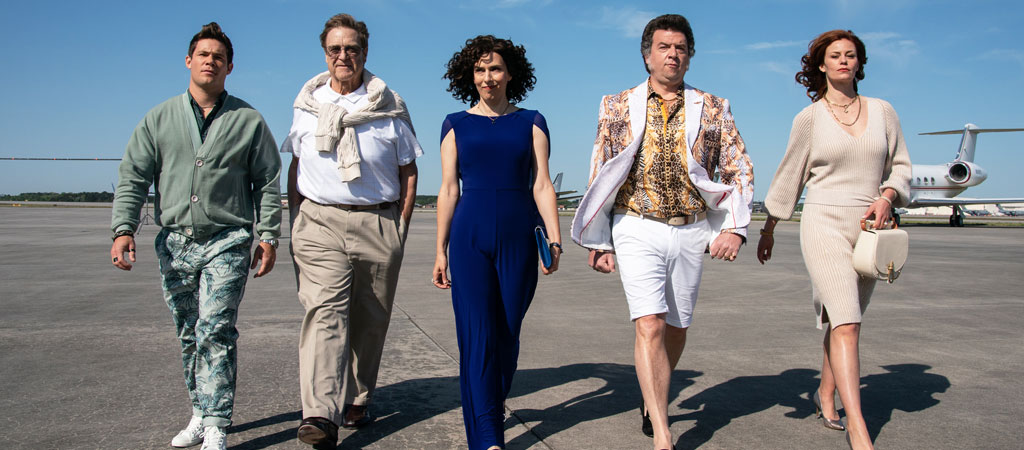
The show follows a world-famous yet slightly dysfunctional televangelist family, led by Eli Gemstone, played by John Goodman. He and his children, Jesse (Danny McBride), Judy (Edi Patterson) and Kelvin (Adam DeVine), work to expand their network of megachurches while threatening smaller churches. Hilarity ensues, obviously, but the show sometimes feels too specific, almost as if it’s based on a true family. Could there be a Gemstone family really out there?
The quick answer is no — Eli and Co. are all fictitious. But, the mega-church culture and the televangelist business is definitely real.
McBride, who created the series, drew influence from growing up as a Baptist being raised by his single mother, and the cutthroat world of religious families and drama. After moving to South Carolina, McBride did research into mega-churches.
He told Uproxx in 2019, “I went to a few different mega-churches and talked to a few different pastors there and my aunt is a minister at a pretty big church in Atlanta. So yeah, I did try to research it and figure out what goes on in someone’s head when they’re creating something like this.”
So, while you won’t see the Gemstones out and about, you just might encounter another real-life family who likes to sing and tap dance the word of the Lord.
There are two words that seem to terrify the folks over at Fox News: “Black woman.” And now that Supreme Court Justice Stephen Breyer has officially announced he will be retiring at the end of his current term, all eyes are on Joe Biden, who vowed during his campaign that if given the chance to appoint a new SCOTUS, he would choose a Black woman. Needless to say, as Trevor Noah shared, Fox News’ most prominent anchors don’t really seem to know what to do with this information… except to endlessly deliver one bad take after the next.
On Wednesday night’s edition of The Daily Show, Noah shared a highlight reel of some of the most amazingly tone-deaf quotes to come from the Fox News team. Sean Hannity, seemingly oblivious to any sense of irony (or history), was offended that “right off the bat, [Biden] is excluding all potential candidates who are not African-American women.”
Tucker Carlson, meanwhile—empath that he is—suggested that “You almost got the impression that Joe Biden believes all Black women are the same. That they’re identical… This is exactly why decent Americans hated segregation. It dehumanized people. And why isn’t there an American Indian on the court? Or a genderqueer? Why isn’t there an Afghan refugee under consideration?” (For the record: As The Daily Beast noted, Carlson also snarkily suggested that “the obvious choice” to fill the SCOTUS vacancy was Bridget Floyd, sister of George Floyd… Which wasn’t racist at all.)
Noah totally got where Carlson was coming from and also wants to know why there’s not a “sexy M&M under consideration?”
“There’s a lot to unpack here. But most importantly: Being a Black woman isn’t the qualification, alright? Joe Biden is going to pick who is ALSO qualified. These people act like Biden is just gonna show up at the mall and be like, ‘Yo, Shaniqua—come with me!’… No! She’s going to be qualified. And why is that a bad thing? Why not try to make the Supreme Court a little more representative of the country it represents?”
Noah did concede that he understands why the Fox pundits are so upset. “I feel bad for Tucker Carlson,” he admitted. “Of course he’s upset. Think about it: For almost all of American history, the entire Supreme Court was white dudes with bowties and weird hair. Now that’s all gone. It’s all gone! Where’s Tucker’s representation?”
Michelle Zauner had an amazing 2021 and she’s keeping that going here in 2022. We’re not even through January yet and she’s already been on national TV twice: Japanese Breakfast performed on The Late Late Show last week, then she popped up on Ellen today. She delivered a rendition of Jubilee highlight “Be Sweet” on the show, joined by a band and flooded in blue and purple stage lighting for the upbeat tune.
Zauner previously told Apple Music of “Be Sweet,” “Back in 2018, I decided to try out writing sessions for the first time, and I was having a tough go of it. My publisher had set me up with Jack Tatum of Wild Nothing. What happens is they lie to you and say, ‘Jack loves your music and wants you to help him write his new record!’ And to him they’d say, ‘Michelle loves Wild Nothing, she wants to write together!’ Once we got together, we were like, ‘I don’t need help. I’m not writing a record.’ So we decided we’d just write a pop song to sell and make some money. We didn’t have anyone specific in mind, we just knew it wasn’t going to be for either of us. Of course, once we started putting it together, I realized I really loved it. I think the distance of writing it for ‘someone else’ allowed me to take on this sassy ’80s women-of-the-night persona. To me, it almost feels like a Madonna, Whitney Houston, or Janet Jackson song.”
Watch Japanese Breakfast perform “Be Sweet” on Ellen above and revisit our recent interview with Zauner here.
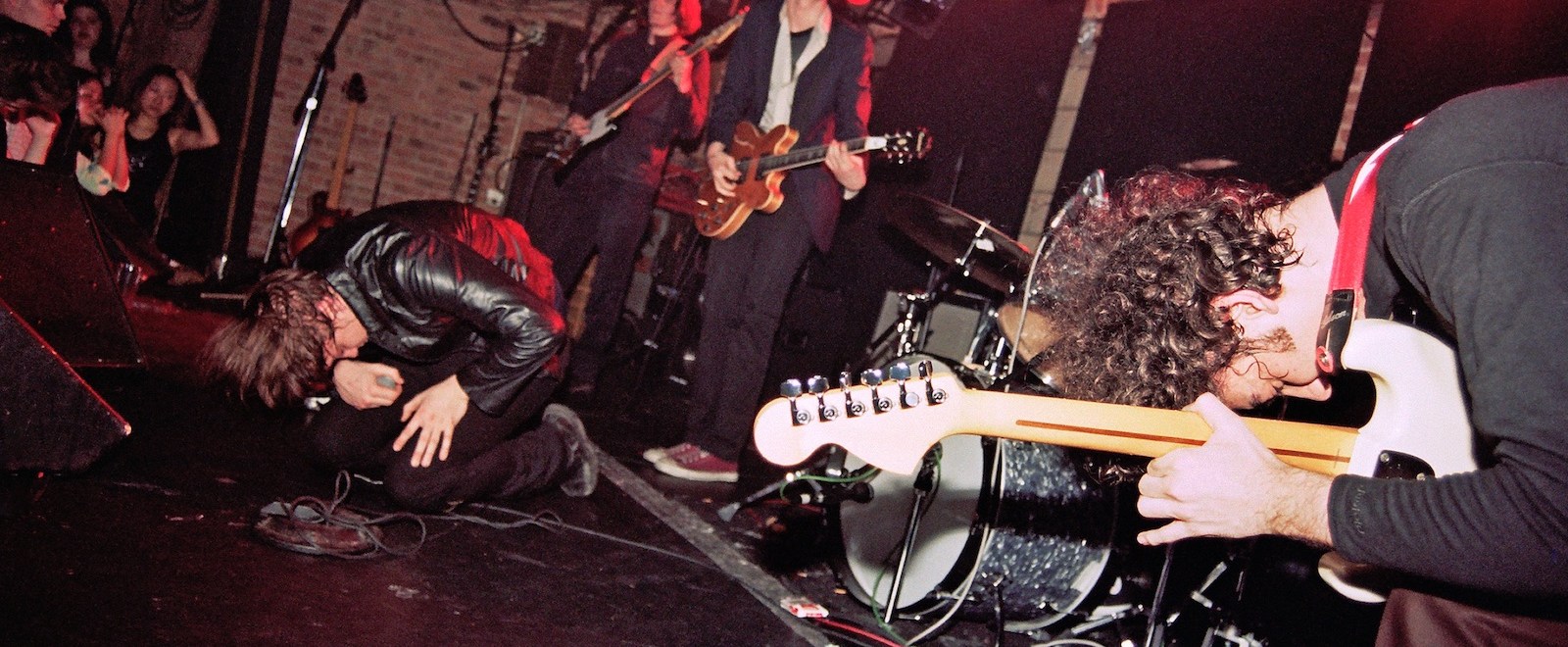
Based on Lizzy Goodman’s book Meet Me in the Bathroom, directors Dylan Southern and Will Lovelace (who also directed the LCD Soundsystem film, Shut Up and Play the Hits, which, like this, premiered at the Sundance Film Festival) take a different approach to the material in their new documentary. There are no talking heads explaining what it all meant or what it’s supposed to mean today. Instead, Southern and Lovelace tracked down a plethora of unseen footage of these New York City bands (which include The Strokes, LCD Soundsystem, Yeah Yeah Yeahs, Interpol) from the late ’90s and early 2000s to create a pure visual experience. The filmmakers here want the viewer to be immersed in the experience.
And as they say ahead, it’s not just an interesting time musically – one that probably won’t happen again, at least like this – but it’s an interesting time for fan recordings. It’s from an era where cameras that can shoot video are affordable, so people have them, but not everyone has them. And then the fact YouTube didn’t exist yet, so the footage wasn’t immediately uploaded. Which means the stuff we see in this film has been sitting in a lot of drawers for the past 20 or so years.
You’ve called this an experimental film, that you wanted it to just immerse people in that era, which it does. Was that always the intent from the beginning?
Dylan Southern: I mean, we always wanted it to be an experience, and we knew that nothing would take you out of the time more than cutting to a kind of a talking head of some of these live young rock stars that we’re seeing in their twenties. We didn’t want to be that behind the music, retrospective looking back thing. So, we always knew we wanted to make it immersive and to drop the audience into the time period and try it as much as possible not to break the spell as that. We didn’t know at the start that it was going to be a 100 percent archive, because we didn’t think we could afford to make it a 100 percent archive. But when COVID hit, it gave us leeway to kind of push harder on that route because we had more time on our hands.
Did you always know you’d have enough interesting footage?
Dylan Southern: We still don’t know.
Well, I would say you found enough interesting footage.
Will Lovelace: Well, it’s an interesting time. It’s not like now, making a film about now in 20 years will be a nightmare because everyone films on the thing, and takes thousands of photographs. But we were kind of confident that there would be enough of a document of that time because we were doing something similar in the UK filming smaller bands. No one as famous as these bands, but people were doing that.
Dylan Southern: We suspected we would find what we needed. It was just whether we could get our hands on it was the big question though.
Will Lovelace: And so in one sense, it’s great. Because people just hadn’t uploaded all of this stuff. If this film had been set into the late two-thousands, everyone would’ve uploaded everything to YouTube as it happened. So nothing would be unseen.
Was there any push by back at all from any of the bands you feature?
Dylan Southern: I’d say there were different degrees of collaboration based on relationships that we already had with people. They’d all done the book as well. So, there was a bit of persuasion in like, “This isn’t just going to be you rehearsing stuff that you said for the book.” So, another part of the process was the sort of diplomacy aspect of getting the buy-in from everybody, which was also fun and interesting process.
Even without talking heads, the footage you have forms a narrative and Ryan Adams doesn’t come off great in this. He’s kind of an antagonist to The Strokes, and the MTV stuff is really bizarre and the confrontation they have about drug use … I’m assuming he probably wasn’t helpful…
Dylan Southern: No, he wasn’t. Particularly. He didn’t want to be. But yeah, it was an interesting one because it felt like that particular story, that was the sort of most headline-grabbing narrative in the book. At the time when the book came out in 2017, it felt like, to not go there, would be as noticeable as going there. It felt like it was part of the story. So, yeah.
James Murphy and LCD Soundsystem have a big part in this. Did that worry you at all that you already you’ve done a full movie on them?
Dylan Southern: It was an interesting one because one aspect of the film is the way things change over time, and at the tail end of the film, things are happening, the technology’s starting to proliferate, and it is when James writes “Losing My Edge.” We don’t bring them in until past the halfway mark in the film, because we wanted to establish that they’re not the same scene. His transformation is quite fascinating as well. The fact that he’s so much older than everyone else and he’s floundering a little bit, but for us, each strand in the story is a coming-of-age story. We didn’t want to just retell the story in the book. We wanted to take the essence of the book and make a 90, a 100-minute film, and for us they’re all origin stories.
Are the legacies of these bands maybe more this era than the bands themselves at this point? Especially since rock music has a hard time breaking through today?
Dylan Southern: But I think it’s the tail end, isn’t it? Like a conversation, we kept having is, could this happen again now? Now that people consume music the way they do? Now that people make music the way they do? Now people are so polarized? Is there a counterculture anymore? Is there a perfect storm in which a musical scene can emerge because of a time and place? We still hope the answer is yes. But there’s also a slight worry that the answer is no.
Will Lovelace: I do think it was a perfect storm. They weren’t all living in each other’s pockets necessarily, but they were all in the same city, and that’s the big thing. It’s New York City at that moment in time, as the internet is starting, as cell phones are starting. It’s a very different world, and I do think that’s why it happened then, rather than 10 years later or 20 years later.
Dylan Southern: Also, there’s a sort of synchronicity between Lizzy’s afterwards in the book. She has that line where she says, “We were all chasing New York and for a few magical years, we caught it. I think, there’s that nature of it that, which is universal, and about having this moment in your youth that nobody else could have had. But then there’s also something about the time in that, it probably was the end of a more innocent period. Just as the internet was starting to emerge as something that everybody uses and the kind of utopian ideas about what the internet might do and, now flash forward 20 years later, and we’re in a dystopia. That time has this weird innocence that, if you lived through it, we’re all starting to hanker for it a bit. And I hope kids who didn’t live through that, see it, and there’s a little sense of something missing. And maybe someone picks up a guitar or a sampling machine or something.
This website uses cookies to improve your experience. We'll assume you're ok with this, but you can opt-out if you wish. Cookie settingsACCEPT
Privacy & Cookies Policy
Privacy Overview
This website uses cookies to improve your experience while you navigate through the website. Out of these cookies, the cookies that are categorized as necessary are stored on your browser as they are essential for the working of basic functionalities of the website. We also use third-party cookies that help us analyze and understand how you use this website. These cookies will be stored in your browser only with your consent. You also have the option to opt-out of these cookies. But opting out of some of these cookies may have an effect on your browsing experience.
Necessary cookies are absolutely essential for the website to function properly. This category only includes cookies that ensures basic functionalities and security features of the website. These cookies do not store any personal information.
Any cookies that may not be particularly necessary for the website to function and is used specifically to collect user personal data via analytics, ads, other embedded contents are termed as non-necessary cookies. It is mandatory to procure user consent prior to running these cookies on your website.