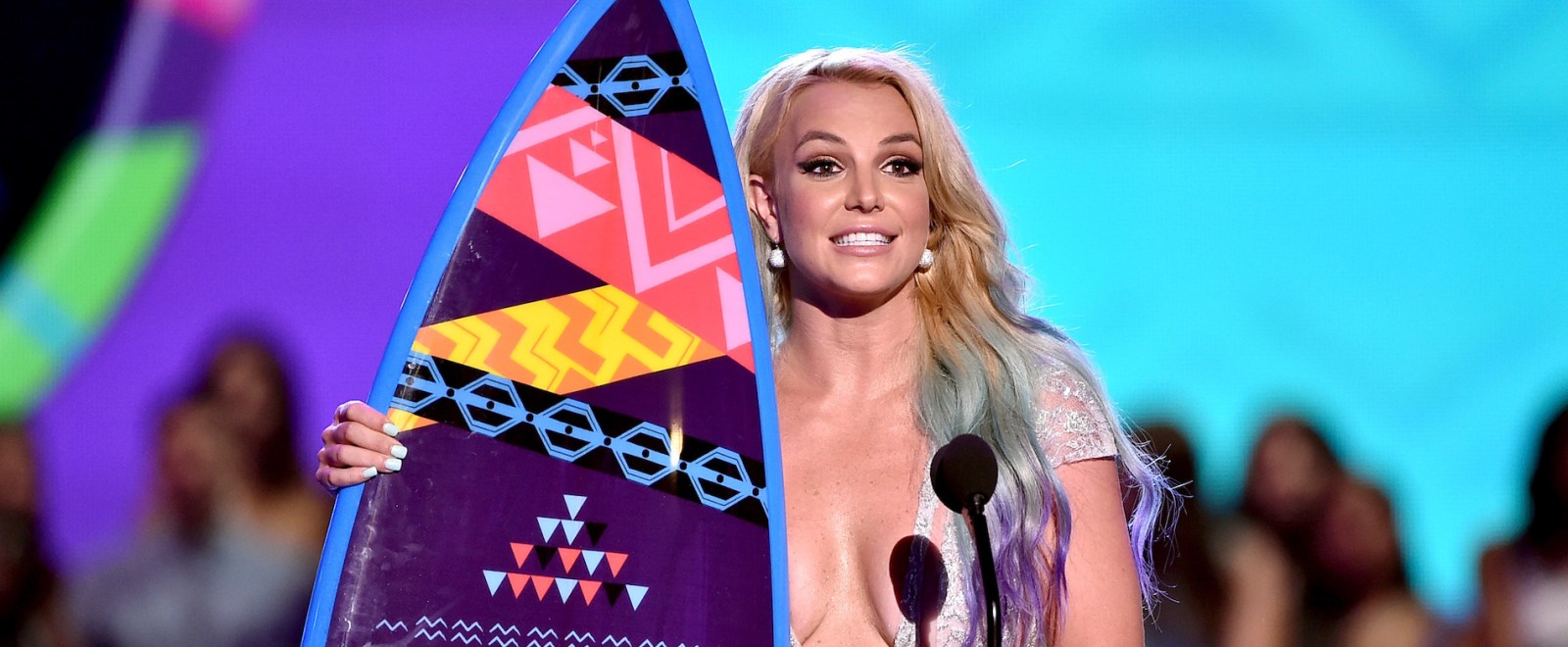
Britney Spears’ long-standing conservatorship was officially terminated back in September, but there are still a few legal loose ends related to that arrangement that still need to be tied up. Yesterday, Spears took another step closer to fully reclaiming her independence, as Rolling Stone reports that a judge ruled Spears will regain control over her fortune, which consists of an estimated $60 million in assets.
Furthermore, there will also be an evidentiary hearing will take place “before the court closes the books on Britney’s recently terminated conservatorship and all its pending requests for outstanding payments” from Jamie Spears. The arguments in the Wednesday hearing reportedly “devolved into shouting matches,” after which Judge Brenda Penny set a follow-up hearing for July 27.
Britney has expressed her gratitude for her attorney, Mathew Rosengart, writing on Instagram in October, “Thankfully I found an amazing attorney Mathew Rosengart who has helped change my life !!!!”
Speaking of social media, Britney has been more open than ever on Instagram and Twitter in recent days. This has mostly been related to her spat with sister Jamie Lynn, which boiled over yesterday when an enraged Britney accused Jamie Lynn of treating their mother poorly and wrote, “F*ck you Jamie Lynn !!!!“
In a new interview, Fat Joe credits his peer and part-time rival Jay-Z for having the “hardest lyric in hip-hop.” Appearing on the I Am Athlete podcast with hosts Brandon Marshall, Chad Ochocinco Johnson, DJ Williams, and LeSean McCoy, Joe explained why he believes a line from Jay’s debut album Reasonable Doubt sums up a philosophy that is underrated but important for success in any endeavor.
The line in question appears on “Feelin’ It,” the fourth and final single from Reasonable Doubt. Over a sample of jazz musician Ahmad Jamal’s 1974 song “Pastures” re-worked by Ski Beatz, Jay rhymes, “If every n**** in your clique is rich, then your clique is rugged / Nobody will fall ‘cause everyone will be each other’s crutches.”
Joe expounds on that idea for I Am Athlete, explaining, “Everybody wanna be the man. Everybody wanna be the guy everybody looks up to. There’s no real strength in that. The strength is in everybody eating — so that if one of us falls, we can lift him up. You have to understand that mentality.”
As far as his former rivalry with Jay, he credits that to his jealousy of Jay’s success — and Jay stepping in on the one place Joe reigned supreme: The world-famous Rucker Park basketball league. “The man was always winning,” he chuckles. “I might have been a little jealous if I’m gonna be a man about it. He won at everything. He had the baddest chick in the world. So, what Joe had carved out was this: I always had the streets, no matter who I had beef with. And so The Rucker is part of the streets. That was the streets in the summertime, and out of nowhere here comes this guy after I win five ‘chips in a row, he wants a team!”
The Australian Open kicked off earlier this week, and one notable player wasn’t there: Novak Djokovic. The world’s top tennis player, who has triumphed over the competition in Australia a total of nine times, made headlines when he arrived in Melbourne for the tournament, and was kindly asked to leave the continent given that he’s not vaccinated against COVID. And if there’s one person who’s really enjoying this story, it’s The Daily Show host Trevor Noah.
On Wednesday, Noah shared some clips of various global news broadcasts reporting on Djokovic’s deportation back to Serbia and how the Australian government canceled his visa over concerns that “his presence could lead to an increase in anti-vaccination sentiment and even civil unrest.” While Djokovic did have a medical exemption from Australia’s vaccination mandates due to a recent bout with COVID, an estimated 71 percent of Australians wanted the athlete barred from entering the country.
“Damn! It says a lot about you when that many Australians think you’re too dangerous to be in their country,” Noah said. “I mean, this is the country whose health minister is a giant poisonous spider.”
The worst part about this whole ordeal, as Noah sees it, isn’t seeing the top-ranked athlete in a sport turned away and unable to defend his title. It’s spending 25 hours flying all the way to Australia only to then have to turn around and spend another day of your life flying away from Australia. “I don’t know what Djokovic thinks is in the vaccine,” Noah said, “but it can’t possibly be worse than breathing in farts for 50 hours straight.”
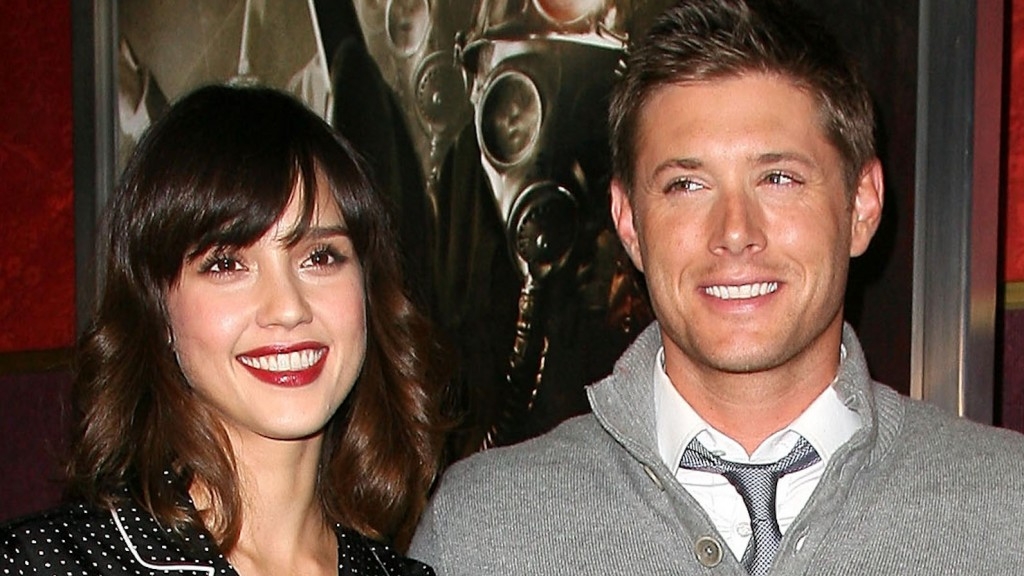
Today, Jessica Alba is probably best known as the wildly successful founder of The Honest Company, an eco-minded consumer goods company that she founded in 2011 and took public in 2021 with a $1.4 billion valuation. But back in the early aughts she was better known as the breakout star of Dark Angel, a post-apocalyptic TV series co-created by James Cameron. While the series was short-lived, lasting just two seasons, it was enough exposure to help Alba’s acting career skyrocket. But behind the scenes, says her Dark Angel co-star Jensen Ackles, Alba was “horrible.”
Ackles—who has gone on to have a major small-screen career with meaty roles in Dawson’s Creek, Smallville, Supernatural, and The Boys—recently shared all the gory details of the challenges he and Alba faced back in the day while chatting with Michael Rosenbaum for “Inside of You with Michael Rosenbaum.” As Page Six reports, Ackles and Alba didn’t always have the best working relationship.
“I was the new kid on the block, and I was picked on by the lead,” Ackles said of his experience working on the series. Describing their tension as the kind of “bickering” that often happens between siblings, Ackles seems to have adopted a whole new perspective on the situation with time. “It wasn’t that she didn’t like me,” he said. “She just was like, ‘Oh, here’s the pretty boy that network brought in for some more window dressing because that’s what we all need.’”
It wasn’t until Ackles decided to “fight fire with fire” that the two eventually developed what the actor described as a “mutual respect” for each other. “But we bickered,” Ackles reconfirmed. “We bickered like brother and sister.”
Now, 20 years after the fact, it seems as if Ackles has realized that life for Alba, who was being plastered across every lad mag known to man—including an unauthorized Playboy cover (an with the image taken from a movie still)—probably wasn’t all billion-dollar IPOs and biodegradable baby wipes at the time.
“I love Jess, which I know kind of contradicts what I just said,” Ackles said. “She was under an immense amount of pressure on that show. She was young, she was in a relationship and that was… causing some undue stress, I believe.” (That relationship would be with one Michael Weatherly, a noted sexual harasser and Alba’s Dark Angel co-star/one-time fiancé, who was a dozen years older than her.)
But for all the strife he claims they had, Ackles also remembers Alba as a real comfort in times of need. “My grandfather died while I was shooting it and she literally just walked into my trailer and held me for a half an hour,” he said. “So it was that kind of a relationship. If she walked in, we’d be all hugs, but she didn’t make it easy on me.”
If it’s a funeral, let’s have the best funeral ever.
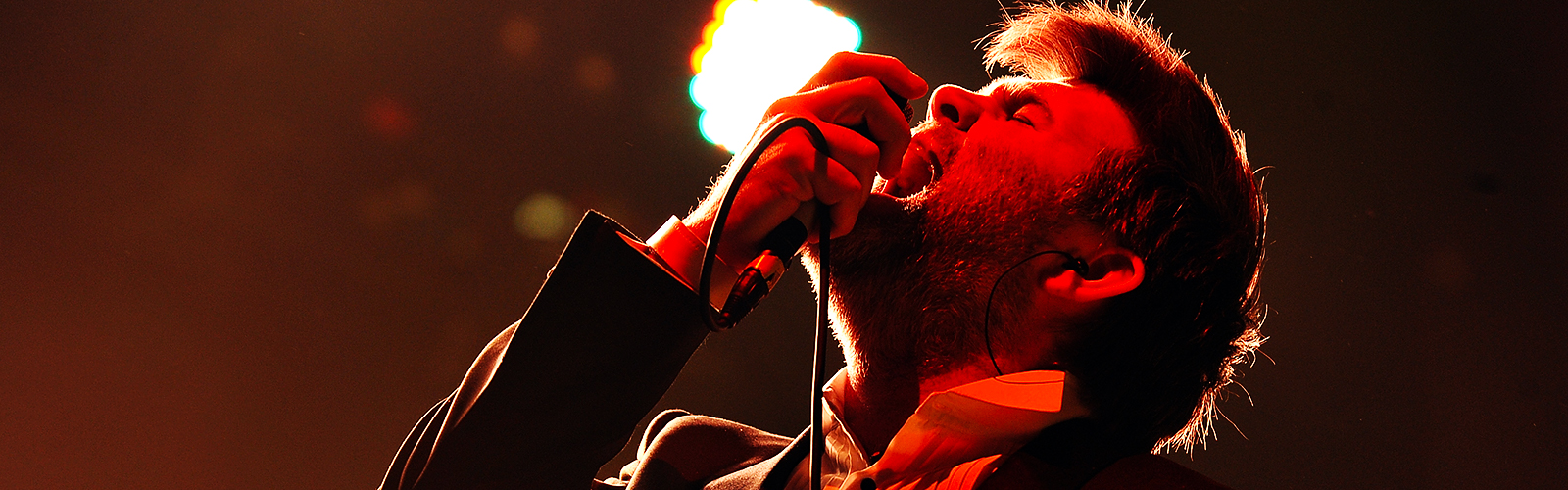
These words, printed in white type against a black screen like a social media apology, open Shut Up And Play The Hits, the 2012 documentary directed by Dylan Southern and Will Lovelace. When the film premiered 10 years ago this week at the Sundance Film Festival — it later played theatrically in the U.S. for just one night that July — the epigraph had an unmistakable meaning: Shut Up And Play The Hits is about the “final” concert by LCD Soundsystem, held at Madison Square Garden in the spring of 2011. In the movie, we see performances from the show intercut with footage of head LCD James Murphy before and after the gig, including a long, philosophical interview with the cultural critic Chuck Klosterman.
The emotional climax of Shut Up And Play The Hits comes when Murphy, who has expressed uncertainty throughout the picture about whether he’s made the right decision to shutter LCD Soundsystem, is invited to take one last look at the band’s gear before it’s sold off and scattered to the winds. On paper, this is an unusual trigger for a cathartic moment — in fact, one might even call it a strained contrivance for a movie without a strong ending. But as it’s portrayed in the film, the sight of keyboards and sequencers and microphone stands sets Murphy on a Proustian reverie in which the life of LCD Soundsystem flashes before his eyes. And, like that, he breaks down dramatically into tears.
I can’t say how this played at Sundance in 2012. But in 2022, like so much about Shut Up And Play The Hits, this scene is so preposterous that it registers as unintentionally hilarious, like a This Is Spinal Tap for early 21st century indie rock. And the reason for this is obvious: LCD Soundsystem did not break up. They went on a five-year hiatus, and then returned in 2016 to play a series of lucrative shows, including some high-profile appearances at Coachella, Bonnaroo, and Primavera Sound. And then they released their fourth album, 2017’s American Dream, their first for Columbia Records.
To break up and then reunite is hardly unprecedented in popular music. But most bands don’t go out by booking the biggest concert of their career and explicitly marketing it as a “farewell” show. And it’s certainly uncommon to immortalize that show with a self-mythologizing film. Yes, it’s true that The Band continued after The Last Waltz set the blueprint for Shut Up And Play The Hits, but they carried on without Robbie Robertson, the guy who conceived the breakup show and pontificates the most in the film about how he’s eager to escape “the road.” James Murphy theatrically mourned the loss of his gear on celluloid and then procured more gear (or maybe even the same gear?) a mere half-decade later.
Again: He had the right to bring back his band! But LCD Soundsystem’s subsequent “reunion” (if we should even still classify it that way as this point) has transformed Shut Up And Play The Hits into a completely different film. This is what fascinated me most when I revisited it recently. So much of the movie plays in retrospect as unwitting self-parody, and therefore is far more revealing now than it was likely intended to be 10 years ago.
Some of this has to do with how “extremely early 2010s” Shut Up And Plays The Hits seems now, like when Murphy expresses his ambivalence about the band’s end by doing an extended analysis of a Kanye West tweet. (Times were so simple back then!) Some of this has to do with the jarring incongruity between Murphy’s self-serving rhetoric about what LCD Soundsystem “means” (such as aligning the band with a romantic DIY punk-rock ideology) and the reality of what’s on screen (Murphy conversing with his British manager as he sits surrounded by indie-famous luminaries backstage at MSG).
But mostly the accidental satire of Shut Up And Play The Hits stems from Murphy’s relentless push to make this concert (and LCD Soundsystem by association) historically significant. This is conveyed both by how the film is shot and edited — specifically the focus on the audience, who we see basking the band in worshipful adoration in frequent slow-motion montages, which is precisely what you don’t see in films like The Last Waltz and Stop Making Sense — and Murphy’s endless ruminations on whether he’s doing the right thing by ending a band whose legacy is putting out three pretty good albums in the aughts. When you consider that R.E.M., an exponentially more consequential group than LCD Soundsystem by any metric, broke up just five months after this concert by issuing a press release (and then stayed broken up), the self-importance of Shut Up And Play The Hits becomes even funnier.
Not that I’m interested in only laughing at Shut Up And Play The Hits, because I actually believe this film is historically significant, just not in the way it was intended. When viewed with the benefit of hindsight, it really is an “end of an era” film in the vein of The Last Waltz, it’s just that it doesn’t come across as triumphant.
To be fair: There are some genuinely exciting performances. “All My Friends” is an undeniable anthem. “Someone Great” still tugs at my heartstrings. The cover of Nilsson’s “Jump Into The Fire” is expertly rendered. But this was a moment when aughts-era indie was peaking, as signified by the guest-star appearance by the members of Arcade Fire, just two months removed from winning the Album Of The Year Grammy for The Suburbs. Never again would life be as good for either band.
It’s clear now that this period of time, when middle-aged NYC groups could command the culture’s attention by staging a grandiose curtains-closing arena-rock concert, ended soon after the last weeping hipster exited Madison Square Garden. Shut Up And Play The Hits not only marks this denouement, but also the end of “breaking up” being a thing at all in rock music. The relative lack of blowback to LCD Soundsystem’s return proved that the public now understands that any band’s future return — save for possibly R.E.M. — hinges on a combination of sentimental longing, boredom, and stupidly generous festival offers. But that wasn’t the case just five years earlier. Back then, it was still possible to suspend disbelief just long enough to buy the idea of a farewell concert, even as Murphy counterintuitively insists over and over that LCD Soundsystem isn’t even a real band.
It’s no surprise that the central anxiety that animates Murphy in Shut Up And Play The Hits is his self-conscious fear of appearing uncool. This seems to be his main motivation for staging the farewell concert in the first place. It’s his stab at a “let’s just do it and become legends” moment. As he explained to the New York Times in 2017, “The idea of it being ‘next’ was just unappealing. I didn’t want to be that band. I liked being the band that was relevant to me. I felt like we were about to be the band that was not relevant to me.”
Watching the film now, it’s inarguable that the fate Murphy feared is precisely what happened, which gives Shut Up And Play The Hits a poignancy that it didn’t have a decade ago. It’s become very easy (maybe too easy) to take shots at LCD Soundsystem. This is the band who has been pilloried recently for supposedly spreading Covid and co-conspiring with evil corporations on corny holiday specials. Meanwhile, the canon of cool-guy late 20th century music with which Murphy is closely aligned has dimmed in critical favor. As a result, it’s become increasingly difficult to explain to younger generations why this band was ever at the center of indie culture in a way it’s not for, say, The Strokes. (Grouchy bad-asses in leather jackets have a long shelf life.) It’s not that Murphy has “lost his edge,” to quote his most famous song. The kids are no longer coming at him from behind; they’re in an entirely different lane. They no longer care about guys like him.
The critic Larry Fitzmaurice recently wrote an insightful piece about LCD Soundsystem that helped me understand my own distance from their music since that fateful 2011 concert at MSG. Like many music writers engaged with indie rock in the aughts, I was an avowed LCD fan, especially of the self-titled 2005 debut and their landmark second record, 2007’s Sound Of Silver. But I was barely interested in 2017’s American Dream, and I rarely reach for the old records these days.
Fitzmaurice writes:
As a white man prone to white T-shirt wearing and varying levels of unkempt facial hair, there was something about James Murphy in my late teens-early 20s that made me think, “Hey, that could be me, maybe.” That sounds stupid, and it is stupid, but I was far from alone in that aspirational belief. (Anecdotally, I heard other white male critics say the same around the time, nothing accurately quotable though.)
Allow me to fill in the blank left by the parenthetical: I was one of those white male critics. At the risk of horribly embarrassing myself, here’s an excerpt from a column I wrote right before the Madison Square Garden concert, written in the form of an open letter to James Murphy (shudder):
Like a lot of music critics, I feel a special kinship with you, because we are you. Or, rather, you are a better, smarter version of us. The relationship music critics have with you is similar to what film critics have with Quentin Tarantino, who, like you, started out as a know-it-all fan who, unlike most critics, took all the trivial, microscopic specificities he absorbed from every corner of his fan experience and found a way to create something new with it. But even if you guys are big-shot artists now, you’re also still critics at heart; you did it like Godard, critiquing art by making better art.
To be clear, plenty of people thought this frighteningly sycophantic screed was a bit much at the time. Writing for Slate, Jody Rosen called my piece a “deranged fanboy’s cri de Coeur,” which I knew was a devastating burn even before I looked up what “cri de Coeur” meant.
Reading my own words confirms that LCD Soundsystem appealed to a certain subset of music critics by essentially flattering them. We appreciated the “meta” nature of what he was doing — the way he wrote songs about listening to songs, and then cataloguing songs, and making this seem like something that could make you the center of attention at a party. (Rather than the person people avoid at parties.)
Ultimately, I don’t think I was wrong to observe that Murphy was a kind of critic-musician who instead of writing reviews made records that reflected his aesthetic ideals. The problem (and this is what Rosen nailed me on) is that I bought too much into the mythology of the “farewell” concert at the risk of ignoring simple logic: Of course a man in his early 40s wasn’t actually retiring. It was always the move of an intensely self-reflexive artist who wanted to engineer the “perfect” ending for his band based on how future generations would theoretically revere him for it.
In the space between Shut Up And Play The Hits and LCD Soundsystem’s return, I grew up a lot. I became a parent. I wasn’t going out to bars every night. I like to think I am a little less narcissistic and more inclined to define myself not by what I like but by things that actually matter. You remember that episode of Seinfeld where Jerry dates a woman (played by Janeane Garofalo) who is exactly like him? At first, he loves it. But eventually he comes to a pivotal realization: “I can’t be with someone who’s like me,” he wails. “I hate myself!” My relationship with James Murphy is a lot like that. But my problem isn’t really with James Murphy. It’s with the James Murphy I see inside of myself.
I wonder if James Murphy, in some way, feels the same. Whatever you want to accuse him of, you can’t say that he’s still overly concerned with looking cool. You don’t reunite your band, put out your worst record, and then collaborate with Amazon if you’re still worried about shoring up your punk bonafides. If that’s the case, I’m actually happy for him. We all could stand to be liberated from our inner James Murphy, even James Murphy himself.
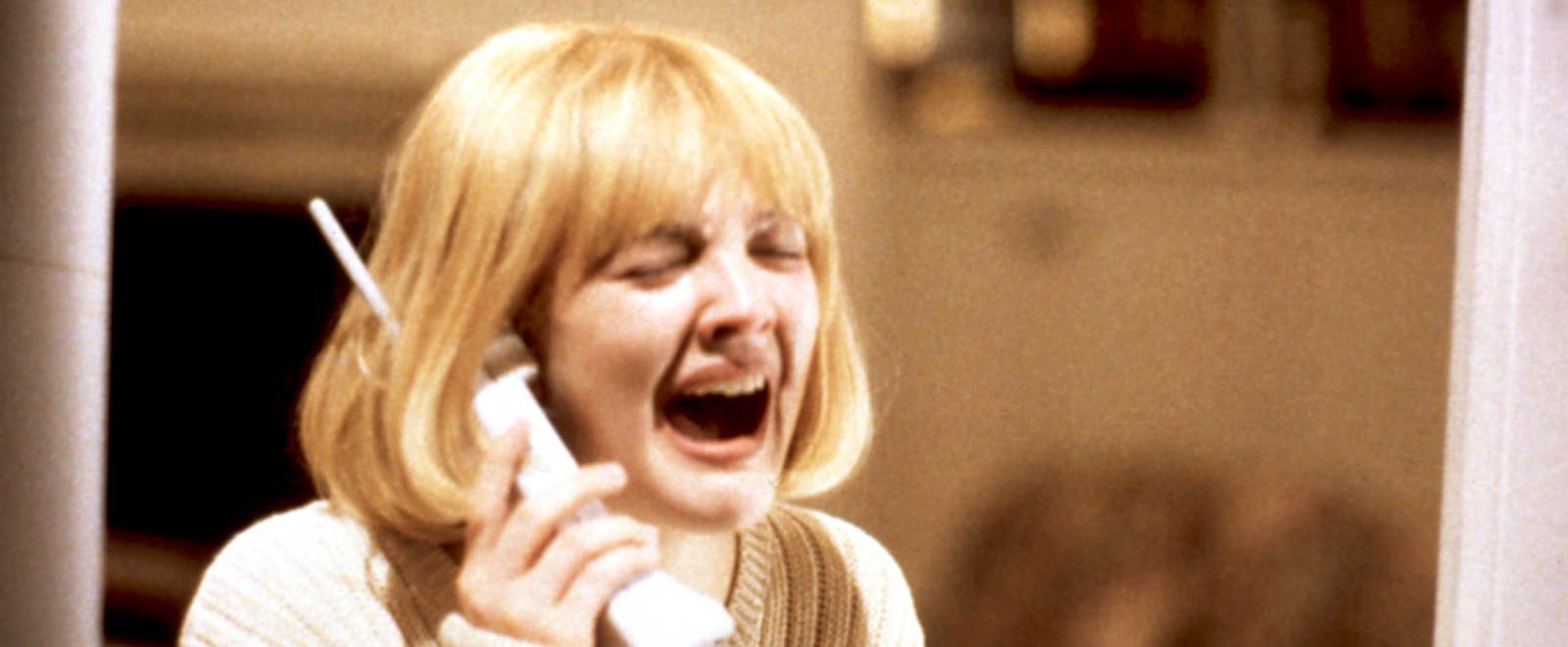
2022’s Scream is dedicated to horror legend Wes Craven, who passed away in 2015 after directing the first four installments in the series. There’s a “For Wes” title card as the closing credits begin to roll during the film, but if you stick around until the end, you’ll see some other familiar names. Rian Johnson gets a “thanks” from filmmakers Matt Bettinelli-Olpin and Tyler Gillett (it’s obvious why if you’ve seen the movie), as does some of the original Scream cast, including Drew Barrymore, Matthew Lillard, and Jamie Kennedy. Those three don’t appear in the new Scream, but you can hear them.
“So with Matt Lillard, we have his voice in the movie. He is the voice of the Stab 8 Ghostface with the flamethrower and then he also has a line in the house that says, ‘Cool house, Freeman!’ at the party when Amber’s walking by,” executive producer Chad Villella told Fandom. That is not nearly enough Lillard. The people demand more Lillard (even if casting him as flamethrower Ghostface is an inspired choice).
Gillett also revealed that Barrymore, who appears in the original film’s iconic opening scene, has a voice cameo “as the principal at the high school. That’s her reading the announcement at the end of the school day. And Jamie Kennedy also voice cameos at the party. He’s the guy who says ‘Someone’s goofy ass dad is kicking us out’ while Mindy and Francis are making out on the couch.”
Sadly, the Ghostface parody from Scary Movie was not thanked.
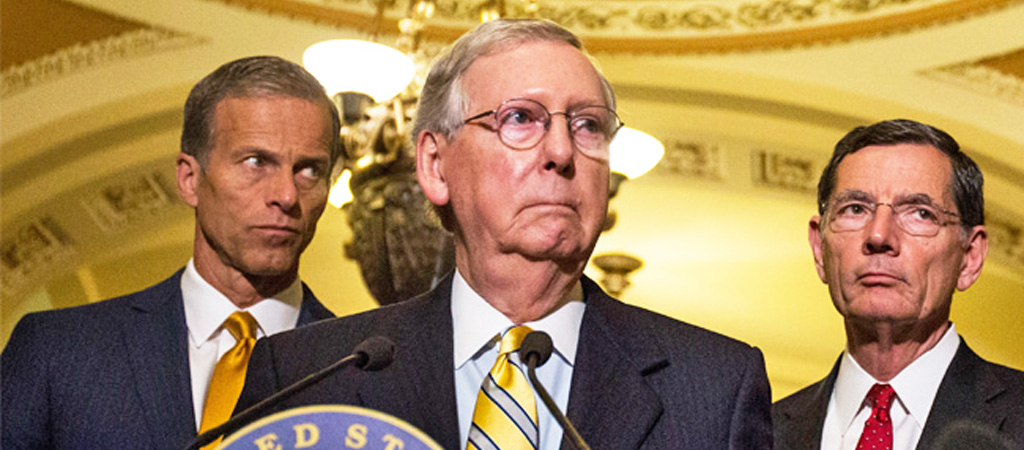
In theory, Democrats have control of the Senate. In practice, well, that ain’t happening, and the shut-down of voting rights legislation (The Freedom to Vote Act and John Lewis Voting Rights Advancement Act) this week is a prime example. Democrats Kyrsten Sinema and Joe Manchin refused to change the filibuster (which Senate Majority Leader Chuck Schumer hoped to abolish, although honestly, this outcome is no real surprise), and Republicans sure took advantage of that non-development (their continued ability to block legislation that they cannot stomach) with Minority Leader Mitch McConnell delivering remarks in the aftermath.
What transpired was… not great. McConnell originally promised to go “scorched earth” if the filibuster hadn’t survived, but he didn’t have to worry about all that. Nor does Mitch have to think about voting access being expanded through more early voting possibilities and mail-in ballot measures. Instead, he was able to deliver some (unfortunately phrased) remarks when asked (via Mediaite), “What’s your message for voters of color who are concerned that… they’re not going to be able to vote in the midterms?”
McConnell responded, “Well, the concern is misplaced because if you look at the statistics, African-American voters are voting at just as high percentage as Americans.” And the issue there is that McConnell is comparing these voters as though they’re two different groups with the suggestion that “African-American voters” are not “Americans.” It’s not a fantastic look (and it’s even dog-whistle-y, and people noticed).
#MoscowMitch is hard to understand sometimes so let me translate:
JUST IN: Mitch McConnell just told voters of color that their concerns about voter suppression are “misplaced” and added: “If you look at the statistics, African American voters are voting in just as high a percentage as Americans.”
The dogwhistle just became a foghorn.
— No Lie with Brian Tyler Cohen (@NoLieWithBTC) January 20, 2022
Mitch McConnell: “The concern is misplaced, because if you look at the statistics, African-American voters are voting in just as high a percentage as American voters.” pic.twitter.com/ReOvHGJcnI
McConnell has yet to further comment on the reaction to his comments. He might be more worried about Lindsey Graham recently threatening his leadership. Politics, it’s a mess!
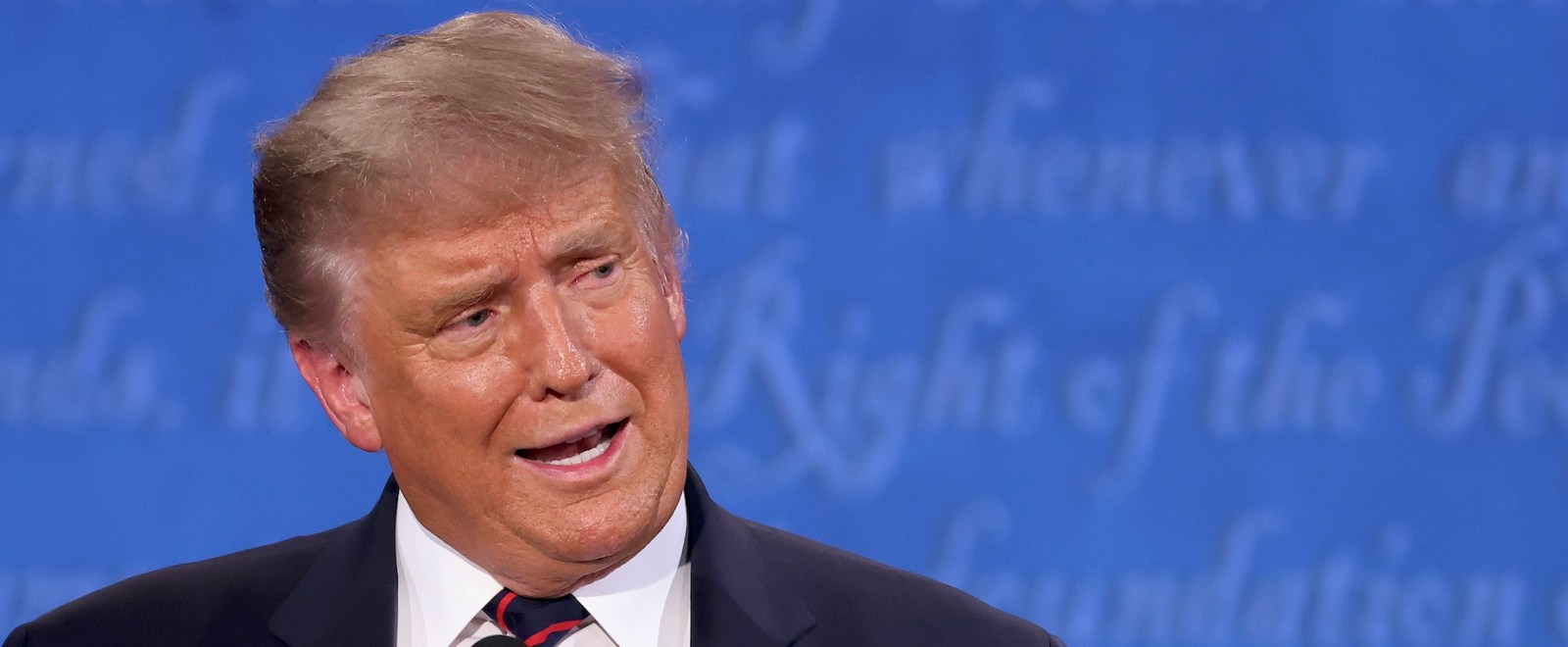
Donald Trump may be dreaming of taking back the White House in 2024, but the State of New York could have other plans for him. On Tuesday evening, New York Attorney General Letitia Jamesreleased a statement in which she confirmed that her office, which has been investigating the former president and his allegedly crooked businesses, has already “uncovered significant evidence that suggests Donald J. Trump and the Trump Organization falsely and fraudulently valued multiple assets and misrepresented those values to financial institutions for economic benefit.” Now Trump, who has never been one to take responsibility for his actions (see: January 6, 2021), is fighting back.
While Trump’s days of tweeting out insults for days are over following his permanent ban from the social media site one year ago, he attempted to do what in his mind is the next best thing: appear on a right-wing radio show and lob abuses at James and her office from there. As Raw Story reports, the former president was a guest on “The Mark Levin Show” on Wednesday night, where Levin broached James’s statement and asked Trump: “What is it about you, you apparently scare the hell of these people, that they really want to put a stake through your heart?”
Trump, blissfully unaware that he had just been compared to a vampire, had an answer—and it was as nonsensical as it was evasive (as if you’d expect anything less). “There’s never been anything like this,” Trump replied, as usual seeming to imply that everything’s bigger in Trumpland. “They’ve weaponized all of these law enforcement agencies, and we didn’t. It’s a bad thing to do, but we didn’t.”
Because all roads seem to lead back to Hunter Biden, the former president went on to seemingly clarify that by “we didn’t” he had meant that his administration did not go after Joe Biden’s son—even though they did. Viciously. Yet Trump went on:
“We didn’t, you know—they come after my kids, who are great kids, and just, it’s a disgrace, but they’ve weaponized it. And the people who are doing it are the people who campaigned. You look at the attorney general in New York—just take a look at that. This is a woman that went out and campaigned on getting Trump. She got into office by viciously campaigning about Trump. I used to hear about her. I’d say, ‘Who the hell is that?’ And it was horrible what she was saying.
“And then she gets in, and even after she was in, she thought it was so funny, she went on The View a couple of weeks ago—and, you know, very threatening—and horrible that you’re allowed to do that, and you’re not really allowed to do that.”
Whining about what someone is or is not allowed to do in their professional capacity is rich coming from a man who practically turned violating the Constitution into a sport during his brief spell in office. But something tells us that James isn’t going to let a little thing like being called “horrible” by the man whose secrets she’s finally beginning to unravel derail her.
You can watch the full interview (via Rumble) here.
Hot off of the success of Bad Trip and his current stint on The Righteous Gemstones Season 2, comedian Eric André stopped by Jimmy Kimmel Live! on Wednesday night where he opened up about getting the call to appear in Jackass Forever. Obviously, André jumped at the chance with the Jackass crew.
“Oh my god, they raised me. They shaped my worldview,” André told Kimmel before admitting he also immediately had second thoughts. “It was the quickest I’ve ever said ‘yes’ to a project, and then I was immediately terrified because being on a Jackass set is like the Vietnam War of comedy. Every step you take, a real landmine or an explosive could be underneath.”
While André wasn’t exploded, he did learn that being a part of the Jackass crew opened him to things like Johnny Knoxville breaking into his house on Christmas Eve while André was sick with Omicron:
He had toilet paper and an Andy Warhol wig, and he started toilet papering my house. My alarm goes off. I’m stoned by myself, paranoid, and I open the window. I don’t know it’s him, so I’m just yelling out the window like, “I’m calling the police! I have a gun!” I open the door. I’m like, “I’m going to kill you, man. I have a gun and the cops are on their way.” And [Knoxville] goes, “Dude, how good would the publicity have been if you got me arrested and shot me right before Jackass comes out.”
To be clear, this was Knoxville’s way of cheering André during his bout with COVID. And setting aside the initial terror and chance of gunfire, it seems to have worked. A good time had by all!
“The Call,” a near-4-minute video helmed by Straight Outta Compton director F. Gary Gray, features each artist getting an important call, prompting them all to head to SoFi Stadium in Inglewood, California for the big game. Through the cinematic clip, snippets of the legends’ iconic songs set the stage for the show, as the ad features “Rap God,” “The Next Episode,” “Family Affair,” “Humble,” “Still D.R.E.,” and “California Love.”
Gray says of the video in a statement (via The New York Post), “Each time I collaborate with Dre, it seems to mark an important moment in entertainment history, from projects like Friday, Set It Off, Straight Outta Compton, to now the Pepsi Super Bowl LVI Halftime Show. As a super fan, I consider it an honor and privilege to authentically build and create this moment with five of the most legendary artists in music history.”
Todd Kaplan, VP of Marketing at Pepsi, also said in a statement, “Now that we are just weeks away from the most anticipated Pepsi Super Bowl Halftime Show performance of all time, we’re bringing fans closer to the magic of what will certainly be a colossal moment in pop culture history.”
Watch “The Call” above.
This website uses cookies to improve your experience. We'll assume you're ok with this, but you can opt-out if you wish. Cookie settingsACCEPT
Privacy & Cookies Policy
Privacy Overview
This website uses cookies to improve your experience while you navigate through the website. Out of these cookies, the cookies that are categorized as necessary are stored on your browser as they are essential for the working of basic functionalities of the website. We also use third-party cookies that help us analyze and understand how you use this website. These cookies will be stored in your browser only with your consent. You also have the option to opt-out of these cookies. But opting out of some of these cookies may have an effect on your browsing experience.
Necessary cookies are absolutely essential for the website to function properly. This category only includes cookies that ensures basic functionalities and security features of the website. These cookies do not store any personal information.
Any cookies that may not be particularly necessary for the website to function and is used specifically to collect user personal data via analytics, ads, other embedded contents are termed as non-necessary cookies. It is mandatory to procure user consent prior to running these cookies on your website.

 Proud Dem (@cwebbonline)