Categories
News Trending Viral Worldwide

Indie Mixtape 20: Proper. Knows All The Words To Every Kanye And Say Anything Album (Even The Bad Ones)

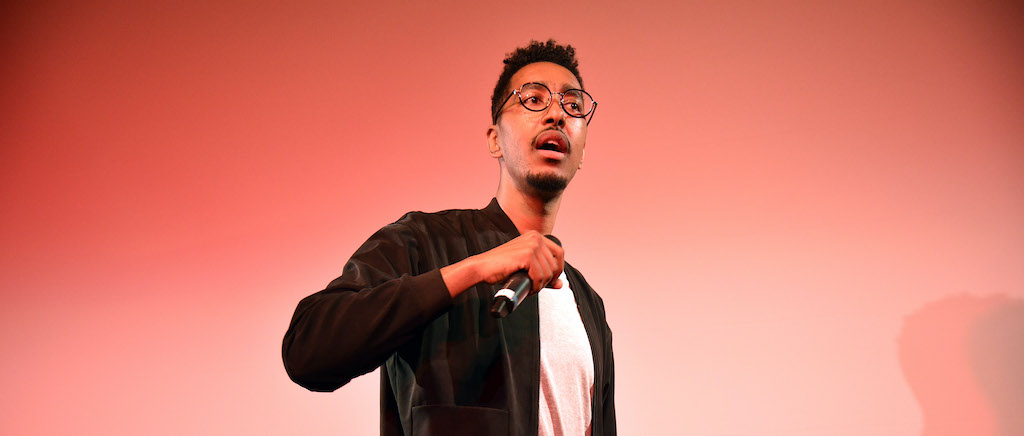
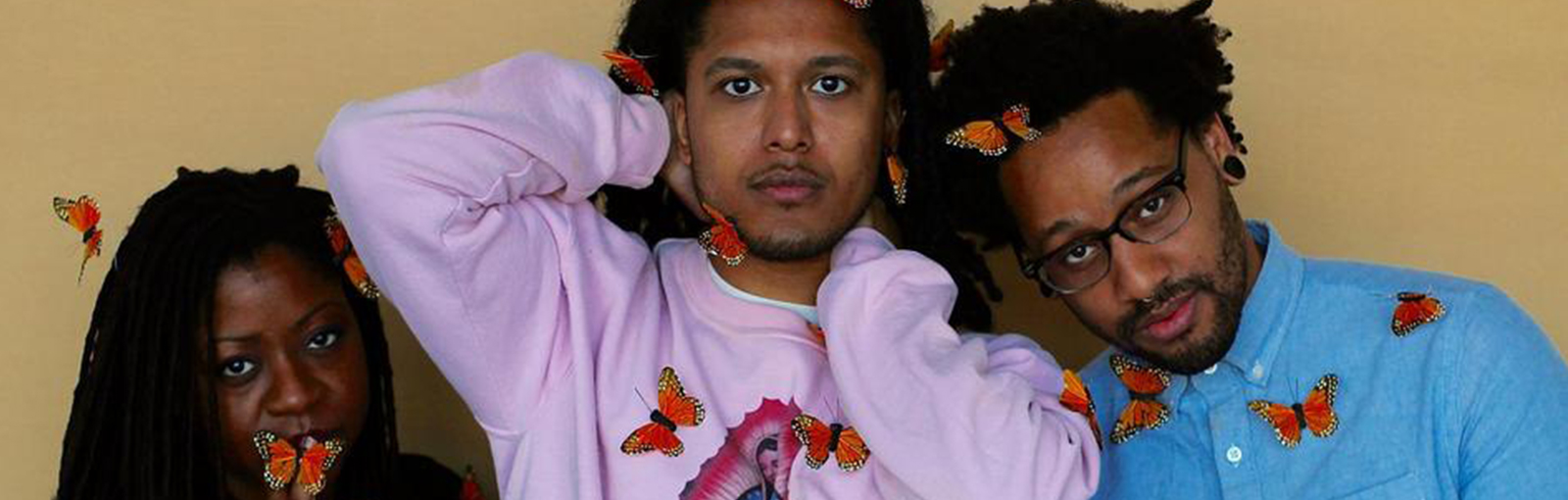
When I saw Proper. at a DIY showcase at SXSW 2019, I found myself enamored with their unique and earnest approach to emo and pop punk. The trio’s new album I Spent The Winter Writing Songs About Getting Better takes its name from a lyric by punk heavyweights The Wonder Years, and takes the tropes of the pop punk genre to a more original and exciting place.

To celebrate the new LP, frontperson Erik Garlington sat down to talk Tyler The Creator, African pattern jumpsuits, and Always Sunny in the latest Indie Mixtape 20 Q&A.

What are four words you would use to describe your music?

Black, queer, & sexworker friendly.

It’s 2050 and the world hasn’t ended and people are still listening to your music. How would you like it to be remembered?

We want to be remembered as one of the groups that pushed the genre forward and inspired lbgtqia+ and people of color to pick up an instrument or a pen.

What’s your favorite city in the world to perform?

It’s a tie between Paris and London.

Who’s the person who has most inspired your work, and why?

Tyler The Creator. I used to HATE him, and rightfully so, for his edgy lyrics. But he was the first artist that made me realize you can really do this on your own now. From starting a collective of talented artists, filming all their videos to just last year releasing the No. 1 album with zero radio play a decade in his career. It’s mad inspiring, especially since we’re the same age.

Where did you eat the best meal of your life?

New Orleans for sure. If I could uproot that city and move it to the center of NY, I’d never leave the East Coast again.

What album do you know every word to?

Every album by Kanye and Say Anything, even the bad ones.

What was the best concert you’ve ever attended?

Vince Staples and Kilo Kish. I grew up on random air force bases, which are always outside of small towns, or in the middle of nowhere. So after finally moving to NY my first this was my first big show and it really set in that I live here now. Plus Vince is just dumb good.

What is the best outfit for performing and why?

The more ridiculous the better! Huge faux fur coats, extremely short shorts in the summer, full African pattern jumpsuits. If it catches people’s attention we’re gonna wear it on stage.

Who’s your favorite person to follow on Twitter and/or Instagram?

Zack Fox. He’s a comedian that I’ve been following from the beginning so there’s an extra layer to it for me. He was the first person I followed when we made a twitter account last year.

What’s your most frequently played song in the van on tour?

I try not to play the same songs too much on tour for fear of driving the others crazy. I doubt they wanna hear that one good Maroon 5 album 20 times in a row.

What’s the last thing you Googled?

The last thing I googled is “Why is my spider plant dying faq” lol

What album makes for the perfect gift?

My Beautiful Dark Twisted Fantasy by Kanye or Because The Internet by Childish Gambino. The music is A1, the lyrics are even better, but the packaging and design are next level. They really made sure to make the whole roll out for their albums an experience and gifting them to people always yields great results.

Where’s the weirdest place you’ve ever crashed while on tour?

A wheel flew clean off in Kansas City, MO. Luckily I’d lived there for 5 years so I had friends who could help us out!

What’s the story behind your first or favorite tattoo?

I got my first tattoos at 16 or 17. A bass clef with a star on my left hand and a treble clef with a lighting bolt on my right. My dad’s from Florida so while down there visiting family my cousin mentioned they knew a guy who tattoos out of his house. My mom and I thought that was a great idea and went that night to get tattooed. I got them covered up a few years ago.

What artists keep you from flipping the channel on the radio?

I live in NY so I don’t have a car to listen to the radio in. If SZA came up on my shuffle tho I’d never skip her song.

What’s the nicest thing anyone has ever done for you?

Eli agreeing to join the band and then wait an entire eight months for me to set up our website, make merch, record, keep everything totally secret, etc. before even playing our first show. I used to move at a glacial pace, so slow that people would quit the band before we even announced we were a band. He’s a real one for sticking with me.

What’s one piece of advice you’d go back in time to give to your 18-year-old self? What’s the last show you went to?

Save your money and don’t waste so much time in the bible belt thinking you can make it better. It’s okay to leave a bad situation, it’s not up to you to fix it.

What’s the last show you went to?

Bartees Strange, The Muslims, and Loamlands in D.C. AMAZING lineup.

What movie can you not resist watching when it’s on TV?

I cut the cord about 10 years ago! I’ll never not watch Always Sunny tho. It’s pretty much the only reason I have Hulu.

What would you cook if Kanye were coming to your house for dinner?

I’ve been on a Thai and Filipino kick (And I wanna impress him obviously) so I’d make pad see ew with lumpia and sticky rice with some mango.

I Spent The Winter Writing Songs About Getting Better is out now on Big Scary Monsters. Pick it up on vinyl here.
Categories
News Trending Viral Worldwide

Open Mike Eagle Seeks To Ward Off Bad Energy With ‘Neighborhood Protection Spell (Lana Del Biden Nem)’

Like many artists, LA-based, Chicago-bred “art rapper” Open Mike Eagle is grappling with the effects of the COVID-19 outbreak and subsequent shutdowns on his life, as well as those of ongoing civil unrest and a looming, critical election day. In response, he has issued the cathartic and defensive “Neighborhood Protection Spell (Lana Del Biden Nem).” Over a slow-churning beat, Mike incants his thoughts on the unnerving vibes 2020 has brought on. Incidentally, though, the song was written before the worst of the news unraveled, yet accurately responds to much of it, if obliquely.

In a statement explaining the new track, Mike elaborates, “When I wrote this song the world was not on fire yet. I had felt subtle attacks on Blackness from Joe Biden and other public figures. Notions that were harmful about authenticity. Notions that called our behavioral and consumption choices into question without any reference to the historical context that they are couched in. I made this song as a spell to ward off subtle social attacks at Blackness. I put a lot in it to make sure it works.”

Mike’s 2020 stands in stark contrast to 2019, when his New Negroes show with Baron Vaughn sparked one hilarious video after another for several weeks, including “Eat Your Feelings,” “Woke As Me,” and “Extra Consent.” Hopefully, his protection spell works and we can all get back to chuckling at the idiosyncrasies of everyday life rather than fretting about the end of the world soon enough.

Listen to Open Mike Eagle’s “Neighborhood Protection Spell” above.

Categories
News Trending Viral Worldwide

Tom Holland Is The Latest Avenger To Praise The 6-Year-Old Boy Who Saved His Sister’s Life

Not one to be outdone by his fellow Avengers, Tom Holland is the latest Marvel hero to swoop in and praise six-year-old Bridger Walker for saving his little sister’s life.

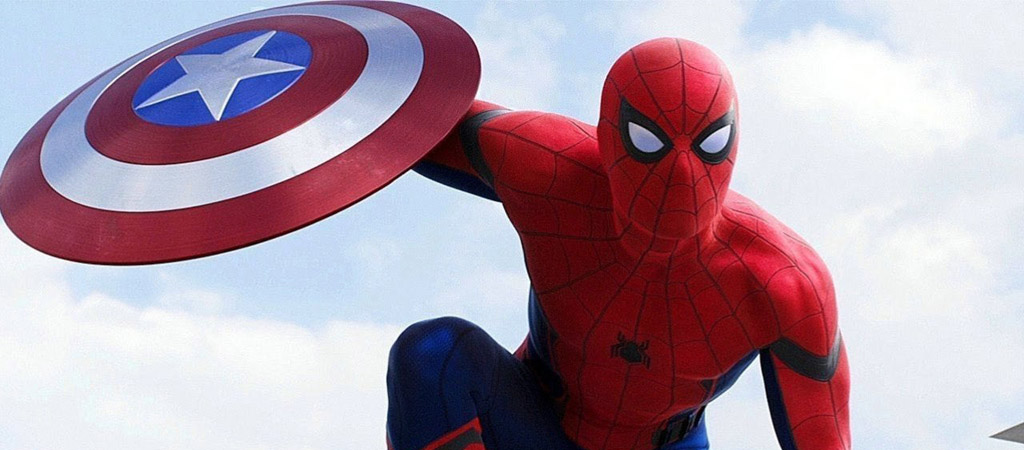
After learning about the viral story of how Bridger placed himself between an attacking dog and his little sister so she could run to safety while he took the brunt of the assault, which resulted in 90 stitches, Holland cleared his schedule to FaceTime the young hero and not only thank him for his bravery, but invite him to the set of the third Spider-Man film when it starts production.

“Your little sister is so lucky to have someone like you. I mean, you’re just such a brave little kid. It’s not easy what you did, mate, you should be proud of yourself,” Holland told the starstruck boy, who was understandably shy during the call. “We’re going to be shooting Spider-Man 3, and if you ever want to come to the set and hang out and see the Spider-Man suit up close and hang out with us, you’re always welcome. You’ll always be my guest.”

You can see Holland FaceTime the young hero below:

View this post on Instagram

When dreams come true.

A post shared by Nikki Walker (@nicolenoelwalker) on

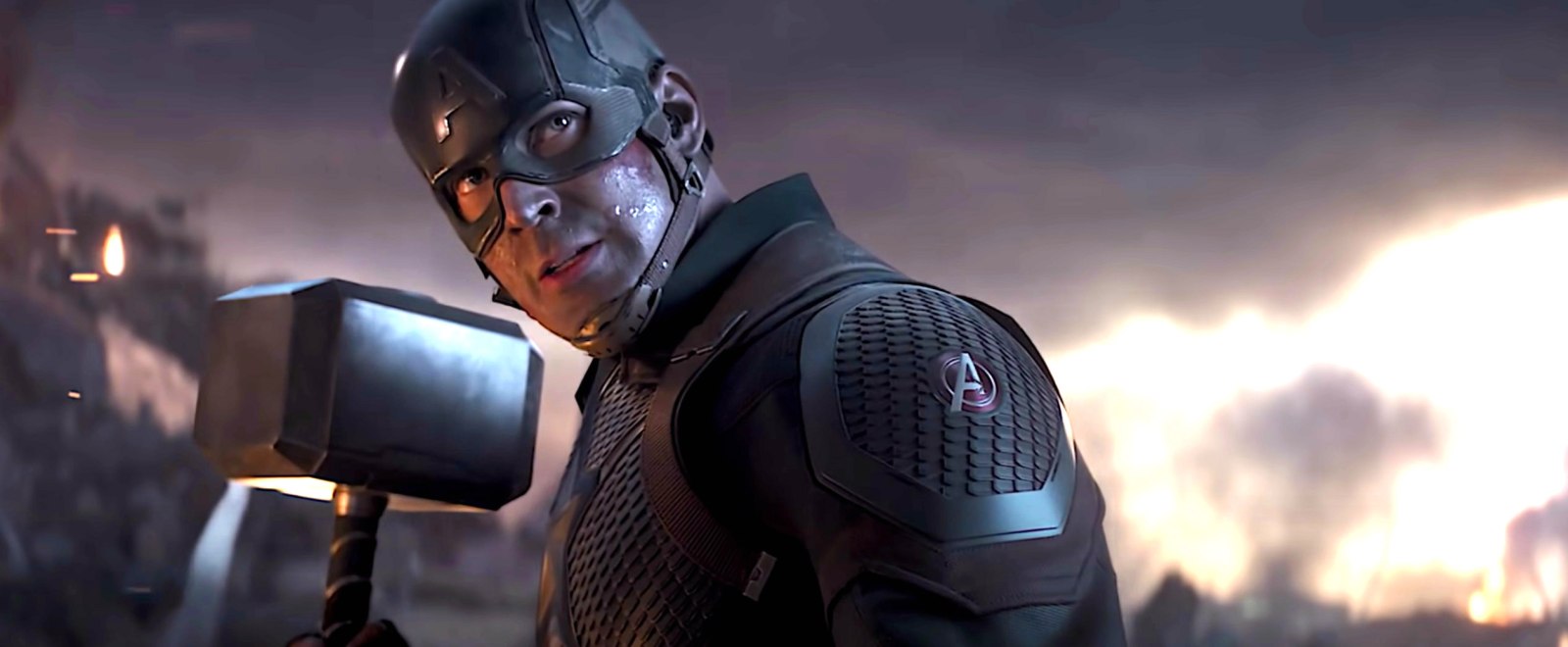
Holland’s FaceTime call follows video messages from Chris Evans and Chris Hemsworth, who were both blown away by Bridger’s brave decision to sacrifice his life to protect his little sister. When the story went viral, the young boy said, “If someone had to die, I thought it should be me,” which prompted Evans to reach out and promise to send Bridger an “authentic Captain America shield” for going above and beyond his duties as a big brother.

Not even a day later, Hemsworth joined Evans by praising Bridger in a video message and inviting him to join the Avengers. Hemsworth also dubbed the young hero worthy of wielding Thor’s hammer. “You’re an absolute inspiration,” he said. “Your courage is beyond belief and we are all so impressed by you.”

(Via Nicole Walker on Instagram)

Categories
News Trending Viral Worldwide

The ‘Avengers: Endgame’ Directors Are Making Netflix’s Most Expensive Movie Yet With Chris Evans And Ryan Gosling

We recently learned that two of Netflix’s most popular original movies ever are Michael Bay’s 6 Underground and Best Picture nominee The Irishman. It’s a good thing they were hits, as the streaming service reportedly spent $150 million and $160 million, respectively, on the two films. (The list was topped by Extraction. $65 million well spent.)

Making Robert De Niro look 30 year again didn’t come cheap, but The Irishman, nor 6 Underground, is the Netflix project with the highest budget: that expensive distinction currently belongs to the Gal Gadot- and The Rock-starring Red Notice, although according to Deadline, the only movie that matters now has some pricey competition.

The Gray Man, starring Chris Evans and Ryan Gosling and directed by Avengers: Endgame helmers Joe and Anthony Russo, is the hopeful beginning of a “new franchise with a James Bond-level of scale and a budget upwards of $200 million”:

The action thriller is a deadly duel between killers as Gentry (Gosling) is hunted across the globe by Lloyd Hansen (Evans), a former cohort of Gentry’s at the CIA. The Gray Man turned into a bestselling book series, and the expectation is that Gosling will continue in multiple installments. The project was developed years back at New Regency as a Brad Pitt/James Gray vehicle, but it stalled. The Russos have quietly been developing it for years.

Anthony compared the film to Captain America: Winter Soldier, as it takes place in a “real world setting,” while Joe added, “The idea is to create a franchise and build out a whole universe, with Ryan at the center of it… These are master assassins and Gosling’s character gets burned by the CIA and Evans’ character has to hunt him down.” It’s a good thing he added “character” after their names, although I would like to see Real-Life Ryan Gosling being “hunted across the globe” by Real-Life Chris Evans.

The bidding for the rights to The Fugitive-meets-The Amazing Race begins at $250 million. I’m hoping for Hulu or HBO Max, but will resign myself to Quibi, as have we all.

(Via Deadline)

Categories
News Trending Viral Worldwide

Oddisee Returns With The Surprise EP, ‘Odd Cure’

DMV rap veteran Oddisee has been quiet since the release of his 2017 album album The Iceberg, but today, he returned with a surprise EP, Odd Cure, to address the strange times we’re all currently living through.

Recorded through two weeks of precautionary quarantine after returning from tour in Thailand earlier this year, Odd Cure is his attempt to unravel the anxiety, depression, and isolation of being suddenly confronted with all the looming implications of a pandemic outbreak. Like many independent artists, Oddisee relies on touring, merchandise sales, and sync licensing to support himself, and the sudden loss of that huge portion of his income, as well as the deadlier connotations of the coronavirus outbreak, weigh heavily on the dense, surprisingly soulful EP.

Although the subject matter is heavy, the production is lush, as Oddisee employs a fusion of soul grooves, jazz instrumentation, and hometown go-go influences to build out the sound. The six songs of the EP are broken up by skits marked by terse phone calls with friends and family discussing the effects of social distancing, quarantine, and economic shutdown on Oddisee and his nearest and dearest.

Odd Cure is out now on Outer Note. Listen to Oddisee’s surprise EP above.

Categories
News Trending Viral Worldwide

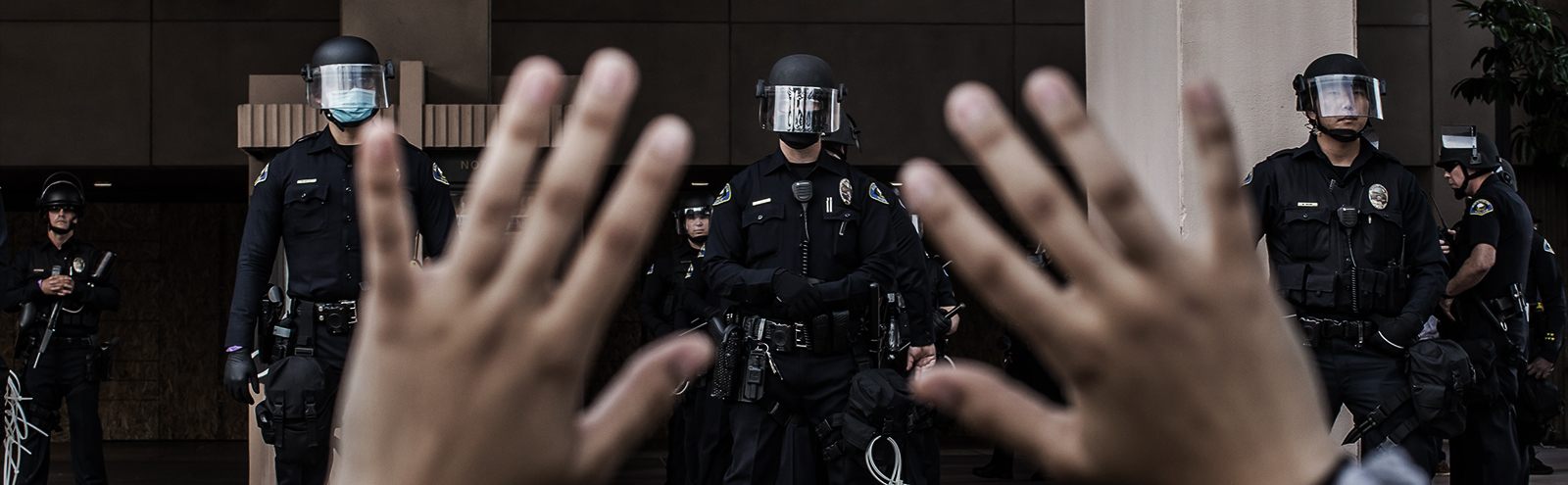
‘Enforcing The Law Is Inherently Political’: ‘Ghettoside’ Author Jill Leovy On Police Reform In America

With the new national conversation about the nature and future of policing, and mainstream debates about defunding and abolition and what those mean in practice, it’s hard not to think of Ghettoside, Jill Leovy’s award-winning 2015 bestseller. In Ghettoside, Leovy, an LA Times reporter for more than 20 years, examined the state of policing in America, as viewed through the lens of one murder in south LA.

The book had a seemingly paradoxical thesis: that low income black neighborhoods are simultaneously underpoliced and overpoliced — that is, frequently denied justice for major crimes even while being frisked and harrassed for minor ones. As the Washington Post’s Wesley Lowery (who spearhead a massive data collection project building on the idea) noted, “this suggestion is only ‘counterintuitive’ if you haven’t spent time listening to black people — who have always said this. …Black Americans have said, since the inception of American policing as we know it, that the police harass and harm them while also not protecting them.”

As many have noted, the protests following George Floyd’s death seemed to represent a breaking point, when disgust with police conduct is so widespread that some form of change is inevitable. With public fervor at a point when governments have to respond, how should they respond? Since Leovy’s book is packed with valuable insights on how the system is broken, I thought it might be worth picking her brain on ways to fix it. We did our interview over email (“If I don’t write it, it sounds like blather,” Leovy told me.).

I was mainly interested in what I imagined was the central thesis of the book: that black people in the inner cities were simultaneously over-policed and harassed but also ignored in the sense of not being able to get justice for major crimes. This seems important to revisit right now in light of these discussions about defunding police, as long as we’re pondering what the future of law enforcement could and should look like. I was hoping maybe you could expand on it/unpack it. Have you had any additional thoughts and insights on it since then?1

To reprise the Ghettoside thesis, I think there is a lot of evidence that American policing has a very strong nuisance-enforcement tradition that has come at the expense of effective investigations. There are a lot of reasons for this. But two stand out: effective investigations are expensive, and traditionally, there hasn’t been much of a political constituency for them.

On the left, many people do not like the idea of any part of policing being pushed as a solution to crime. They view crime as rooted in social ills and, accordingly, view expanded social services as the appropriate remedy. (People to the left of the political spectrum also tend to be reluctant to advocate for law enforcement functions that put more people in prison.) On the right, there has been enthusiasm for the idea of “preventive” policing and a ready embrace of the notion that patrol activities are effective in driving down levels of crime.

Neither of these views has taken much notice of detective work, which is distinct from the patrol function, and to the extent it is considered, it was traditionally viewed by both sides as “reactive” rather than “proactive” — that is, as a distasteful but necessary sort of clean-up work that must occur after crimes are committed but which cannot be endowed with any important role in combating violence, much less preventing it. The Ghettoside thesis is that effective investigations and the incapacitation of those who employ informal violence instrumentally are key elements of state-building, and thus important to driving down the frequency of inter-personal violence, although obviously not the only factor that matters.

The smartest critics of the Ghettoside thesis have pointed out, correctly, that the difference between solve rates of black-victim crimes and solve rates of white-victim crimes is not that great, and so cannot explain disproportionate death rates from homicide between those groups. I agree with this. Those who think I’m arguing that differential solve rates explain the case misinterpret what I argued in Ghettoside. Differential solve rates are not so much the problem; low solve rates across the board are the problem.

This situation is the result of a complex historical American legacy. African Americans get the worst of the consequences because of their distinct history, and because of residential segregation and poverty. Affluent and mobile Americans are better able to cope with the ineffectiveness of the justice system with respect to violence by using other means to avoid violent people, and to escape the economic and social conditions that tend to enmesh people in violence. And once one has escaped to a pricey far-flung suburb with a homicide rate of 1 per 100,000 population per year, even the failure to solve that one case (a 0% clearance rate) may not be noticeable if the victim isn’t a family member. Life is very different in places with death rates from homicide of 60 per 100,000 per year. In that case, there might easily be 30 unsolved homicides in your immediate neighborhood in the last 12 months. Imagine that.

[As AOC put it recently when asked what an America with defunded police looks like, “It looks like a suburb.”]

As you say, “The Ghettoside thesis is that effective investigations and the incapacitation of those who employ informal violence instrumentally are key elements of state-building, and thus important to driving down the frequency of interpersonal violence.” Can we also apply this to the police themselves? Isn’t a big part of what police critics are asking for simple accountability for instances when police use violence? It seems now that they’re insulated from just about any accountability. How could we remove that and how much good do you think it would do? It seems like there have been attempts to do this already but they haven’t worked and that that has increased the calls for police defunding and abolition.

The answer is yes, and indeed, this is what a good internal-affairs department (‘professional standards’ in Los Angeles) is for. I think the assertion that police are insulated from “just about any accountability” is arguable in L.A.’s case, given the many factors involved. Recall that, we, the taxpayers, recently spent something like $300 million on consent-decree reforms of LAPD, an overhaul of the entire department that took a dozen years.

The whole point of this effort was to respond to exactly the concern you articulate. Consent decrees came about as part of Justice Department civil rights-related litigation and were supported by President Obama, so they can fairly be characterized as liberal reform instruments. The provisions of the LAPD consent decree included a vastly expanded internal-affairs apparatus, complete with stings against officers. Also, with a police shooting nowadays, whether ruled in-policy or not, will nearly always result in a civil lawsuit. The financial payouts in such cases are paid by taxpayers, and these probably function as another form of accountability.

Certainly, “risk management,” that is, how much the city must pay in awards to civil plaintiffs, is a significant part of what police executives worry themselves about these days. I think research on consent decrees’ effectiveness has been mixed. At least one study found they reduce lawsuit payouts, but I can’t come down on one side or another because I haven’t spent a lot of time studying it. My point is just that quite a few police-accountability measures have already been put into place in Los Angeles, at some considerable cost, and evaluating their effectiveness is complicated and there’s probably room for reasonable people to disagree. It’s worth noting that the long historical trend has been toward fewer killings by police in L.A. From 1974 to 1978, when Los Angeles had 2.8 million residents, police fatally shot about 30 people a year. In 2019, when Los Angeles had nearly 4 million residents, police fatally shot 12 people. That’s a 70% decline in fatal police shootings per capita. It might help to understand exactly how and why this came about. But it would take a lot of research. Everything does.

Do you think there’s an effective way to shift policework away from nuisance enforcement and into effective investigations? Has the focus been so historically skewed (and discredited in the eyes of the populace) that it’s better to disband and start from scratch? What doesn’t the average person understand?

I guess one question that presents itself is this: Are people objecting to the particular form or administrative design of the police, or are they objecting to their function?

The former is obviously easier to reform than the latter, although it might cost money. There are probably lots of ways to design a police bureaucracy to meet governance objectives, such as accountability for misconduct, etc., and certainly, I have observed with my own eyes that the current system is far from perfect.

But sometimes, I wonder if certain police critics are objecting to something deeper — to the fundamental role the police fill in society. Reforming this would require change of much greater magnitude since the function of police cannot be separated from the political system in which police are lodged. Police are us. Police are politics; enforcing the law is inherently political. And — here’s the rub — not enforcing the law is, also, inherently political.

I could write an entire book about each of the statements I’ve just made. Don’t get me started! But I think I’ll just settle for this: People don’t get along. They will eternally have problems with each other that are difficult to resolve. Crime is conflict, a particular form of it, granted, but still, fundamentally, conflict. Enforcing law is choosing sides, choosing the winners and losers in conflicts. But here’s where it gets interesting: Not enforcing law is also choosing sides.

Today, police are most active in conflict-rich environments and sometimes it seems to me that it is this conflict that people really deplore — that it is this conflict that people wish to abolish along with the police. Conflict, however, is not so easily de-funded or reformed. If police forces are abolished, it’s likely another conflict-resolution instrument with a similar function would replace them. Indeed, this is how police were invented in the first place.

Categories
News Trending Viral Worldwide

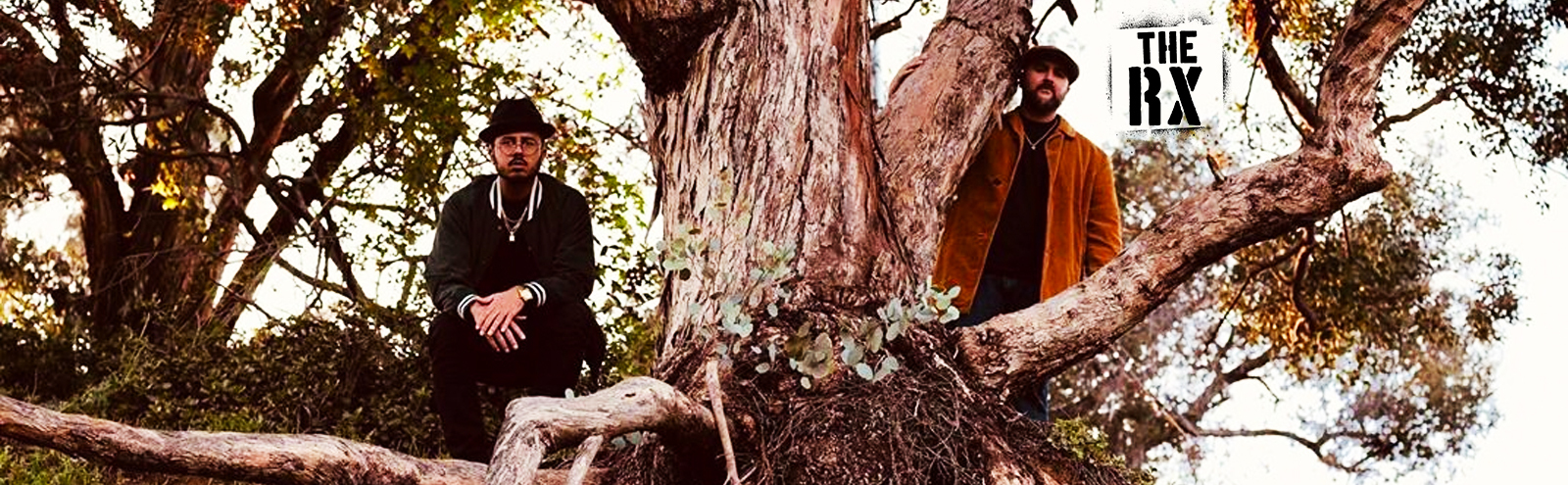
Blu & Exile Tell Us How Their New Album, ‘Miles,’ Helped Them Rediscover Their Brotherhood

The RX is Uproxx Music’s stamp of approval for the best albums, songs, and music stories throughout the year. Inclusion in this category is the highest distinction we can bestow, and signals the most important music being released throughout the year. The RX is the music you need, right now.

Pressing play on Miles: From An Interlude Called Life, the new project from Los Angeles producer-rapper duo Blu & Exile, is like catching up with old friends after a long time apart. Some of that is due to the nostalgic nature of Exile’s warm, jazzy beats. The rest can be attributed to the autobiographical cut of Blu’s earnest, spiritual rhymes.

Songs like “The Feeling” featuring Jacinto Rhines, “Dear Lord” featuring Jimetta Rose, and “To The Fall, But Not Forgotten” draw sketches of the eight years between this project and their last, 2012’s Give Me My Flowers While I Can Still Smell Them, yet with a more electric chemistry between the rapper and producer, as on their seminal 2007 debut, Below The Heavens.

Both readily admit that this alchemy was less easy to capture than they thought it might be, despite the fact that they’ve collaborated and remained friends since. Exile says that they had to rebuild their “trust” in one another as partners, finding their footing in shoes that have changed sizes and styles many times in the years since their groundbreaking debut.

With the inclusion of fellow longtime collaborators Aloe Blacc, who once performed in a duo of his own with Exile called Emanon, and Miguel, who grew up with Blu in the Los Angeles area city of San Pedro, Miles feels like a family reunion as well. Other members of their colorful tribe to appear here include Cashus King, Choosey, Dag Savage, and Fashawn, while LA underground rap elder statesman Aceyalone also brings fresh blood to the proceedings.

This interview is something of a family reunion for Blu, Exile, and I as well. With a personal and working relationship that goes back to their first few shows as a group, plenty of our conversation is taken up just by catching up — yes, Blu’s returned to Pedro, no, I moved out of Compton, and Exile could only take about 15 minutes of Hamilton — but soon, a rhythm is established, just like on Miles. We find ourselves deep in discussion about lessons we’ve learned from time apart, how much work goes into finding your way back together, and how Blu remains one of hip-hop’s premiere – if underrated — rappers and storytellers, 13 years after descending from the heavens.

How in the hell are you guys getting through this quarantine? Because I know that as independent artists, that affects things financially, artistically. What have you guys been doing both personally and professionally to keep it going?

Blu: I’ve been working. I’ve been trying to work, trying to write, you know what I mean? But other than that, unemployment, bro.

Exile: Yeah. I mean the only thing that’s different is women and going out to the bars, and missing tours and going to the beach whenever I want. But I’m still hitting the beach, you know, I’m wearing my mask. Maintaining, just need to find a sponsorship so we could still kind of get some money that could cover what we would make on tours and still give the people somewhat of a live experience.

Man. I’m also just thankful for, when this first happened it felt a lot more real. We’re a lot more used to it now, but when it first happened, it really made me appreciate the relationships I have with these humans. It’s such a gift, and it’s something that we take for granted. It just put it in a perspective where I wouldn’t want to take these things for granted anymore.

Blu: It brought me closer to my family.

I want to know more about this trap album that almost happened. What happened there? Why did you guys want to make a trap album and what happened to it?

Exile: Basically, I made all kinds of different beats and always have, and even like back in the Below The Heaven Days I would make like, you know, I guess back then we call them bounce beats, you know.

Blu: Double-time beats.

Exile: Double-time beats. I had a beat with a sample in it and then at the end it goes into double time. I also did a flip of Herbie Hancock’s “Watermelon Man.” And it flipped at the end. So, you know, I’d always experiment with stuff. Even electronic stuff that’s not even “trap” also. But around this time I just went through a few runs of a beat phase, just bouncy, trap, electronic beats. And I just like to show Blu beats that I’m working on. I know that he loves electronic stuff, too. I was showing him the stuff and I didn’t really expect it to get back like urges. But yeah, he did, he rapped over the beat.

Blu: The trap album is way loud, bro. It’s too loud.

Exile: That’s a good way to put it. You know, it was Blu just experimenting with what he can do. And I think it could work as an alias or something like Blu’s Dr. Octagon record or something, but it wasn’t answering the call to…

Blu: An angle for the return. It wasn’t answering the call of the return.

And then you guys did return like you had never left. I know you guys said you were working on the chemistry at first, trying to get back into the groove. So Exile, what’s something that you learned about yourself and then what’s something that you learned about Blu while you were technically on hiatus and then when you started working back better again?

Exile: I think we had a lot of life happen in between from Below The Heavens until now. My mother passed, you know…

Blu: Both my grandmothers — my grandmother and my great grandmother — passed.

Exile: Our life was living. It was going and lots of shit was happening. We were different people in the between time. And I think at some point we may have even lost faith in each other to some degree. And even though it didn’t affect us working with each other, it definitely made it so we worked differently. I think what I learned from this is to just be patient with people and communicate what you want. And I think that’s what I did — and we did, in a sense — to be able to work with each other. In a similar chemistry that we had in the past to make it work again full throttle, full force.

Blu, I think what struck me on this was, I’ve seen your writing process and I know how you get inspiration for individual bars. I’ve seen how it works. But what I don’t know is, is that it’s almost been 20 years we’ve known each other, you have maintained the same level of hunger for this thing that many, many, many of our peers lost. How do you maintain that level of motivation? That level of still caring about each individual line, like the way you do?

Blu: It’s the people, it’s the fans. It’s the love. The love that I received, man. I try to give back and I’ve received so much love that I absorbed.

Exile: If I may, I think it has to do with you being a fan yourself, Blu.

Blu: Yeah. And I’m a huge fan of the music too, man. That is my whole M.O. If you ask who am I as a rapper, I am first a fan. I’m a reflection of hip-hop. Blu like the ocean, is like the sky is a reflection of the ocean. You know what I mean? I’m just like hip-hop. I just reflect everything I’ve learned from hip-hop.

With Miles, I’ve felt like it was a happy medium where I could feel like a fan and I could feel like your guys’ bro who grew up with you guys, and seeing two names on that tracklist made this huge smile come across my face. You know what two names I’m going to go off on because that was how I encountered both of you guys. I encountered Exile through a mixtape that had an Emanon song on it. Ex, if you could sum up the feeling of working with Aloe Blacc again in just one word, what would that word be and why?

Exile: Family.

Blu: You always work with Aloe.

Exile: There’s just no question about it. It was just perfect. I know with his range, he can do anything. And I knew he could tap in on that African vibe [on “African Dream”] and he did his thing and it wouldn’t be right to not have him on the album.

Blu, same question. You and Miguel, I know you guys go all the way back. I met you because of Miguel. What does it mean to you to have him come back and be on a record with you and Exile again like it was 2005 all over again?

Blu: One word: everything. It was like sealing the deal. It made everything worth everything.

When you look at those guys’ career, arts, and their talent and what’s happened for them, what does that make you guys think about?

Blu: I mean, yeah, we didn’t spark things for years off of those joints, but it was definitely like, you know, we helped lay down some of those milestones.

I noticed that you guys get so much love for Below The Heavens, but almost nobody ever mentions Give Me My Flowers While I Can Still Smell Them. And it’s crazy because that’s the entire thesis of that album title: “Hey, notice this when it exists in front of you.” And even now people are talking about it as a reunion to the Below The Heavens days. What are you guys’ impression on that?

Exile: Below The Heavens had high art, but it also has just like lots of digestible stuff.

Blu: We actually worked together on Below The Heavens. Below The Heavens was done over the span of two years. Flowers was done over the span of like a couple of weeks.

Exile: Blu was a different person and he was even on a more higher level of art [on Flowers], but also just like spirituality. Man, he just saw the world differently and I think it really comes across. I think that album, Flowers, is at a higher level of artistry. At least for Blu’s sake, if not my own. The song, “The Seasons,” it might be one of my favorite songs he’s ever made. He just taps in. It feels like he kept tapping in with the ancient ancestors and just like…

Giving us bars.

Exile: He wasn’t giving those simple bars for an average hip-hop fan.

Right, he was giving those “you got to sit there with a calculator and figure it out” bars.

Exile: He’s like, “I just shot like a whole tribe of ghosts through your brain.”

Blu: You know, I think it just may have went over people’s heads, but I think the people who got it, some of them say that they like it better than Below The Heavens, you know? There’s a lot of Flowers fans out there. Hopefully, some Miles fans soon, too.

Miles: From An Interlude Called Life is out now through Dirty Science Records. Get it here.

Categories
News Trending Viral Worldwide

‘Summer In Mara’ Is An Exhausting Adventure That Unfortunately Isn’t Worth The Journey

All adventure games are fetch quests when you really get down to it. The magic of playing those games, however, is the feeling that completing that seemingly-endless list of tasks is worth it in some way. The characters grow, maybe you grow or unlock new abilities or parts of the story. In a world full of potential distractions, video games occupy a space between the idle and the pointless. It’s not passive entertainment, and though the effort they require effort may only create results trapped inside the game itself, it feels worthwhile because of the journey taken.

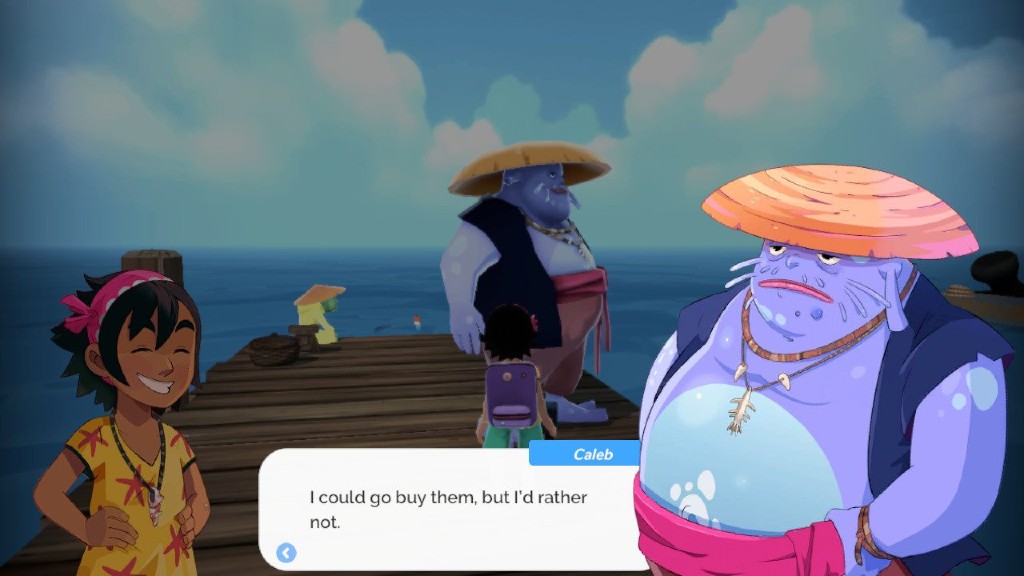
When that magic isn’t there, though, the tedious nature of what video games are can be difficult to ignore. Unfortunately that’s the case with Summer in Mara, an adorable seafaring exploration game that never feels like more than the sum of its mechanics. The Chibig Studios release hit consoles in mid-June and offered a sunny adventure title where a little girl, Mara, explores a world of islands and magical secrets.

Early looks at the game drew comparisons to the sprawling Breath Of The Wild, and while comparing it to a massive Nintendo title is unfair it’s safe to expect at least a remotely compelling story to drive the experience of playing an adventure title. But despite some gorgeous cinematics and mystery, Summer In Mara never escapes the feeling you’re chasing things down for the sake of little more than passing time.

Perhaps the problem is an attempt to be too many styles of game. It has farming simulation and an exhaustion meter, a la Stardew Valley. But unlike that indie darling, or even the day/night mechanics of a game like Animal Crossing, it never feels like that passage of time means much of anything in relation to the tasks of the actual story. Growing crops takes time and people need to sleep, but you often find yourself “going to bed” early in a day just to advance the calendar.

Sailing is a main aspect of the game, but while initially exciting it quickly becomes a drag. So much of the game is sailing between islands to do a single thing, or sleeping in a boat just to complete a task before having to sail to another island and back in order to complete another. You craft for the sake of crafting, make dishes because other characters are simply too lazy to do the same and find items useless other than to be a macguffin that continues the story in no otherwise meaningful way.

Chibig Studios

The game tries to be funny and colorful and sweet, and it’s definitely two of those things. But the childishness and vivid palate only slightly masks the completion of tasks for the sake of checking them off a list. And those tasks often don’t flow very elegantly from one to the next. Rather than a sense of limitless potential like some adventure games, the feeling is more about aimless sailing, backtracking and running across islands as quickly as possible to move on to the next task to complete.

After a while, the most satisfying task was to just try another story entirely.

Categories
News Trending Viral Worldwide

Everything We Know About The ‘The Walking Dead’s Upcoming Season 10 Finale

It has been exactly 104 days since we last saw a new episode of The Walking Dead, or any episode from The Walking Dead universe. It’s not the longest we have gone as viewers without The Walking Dead universe content, but by the time The Walking Dead season 10 finale finally airs, it might be. To think: When 2020 began, AMC expected to air episodes from The Walking Dead universe for 40 straight weeks.

The bad news is this: We still don’t know when The Walking Dead will come back. The good news, however, is that we will soon find out. The announcement about when The Walking Dead season finale will air will be made at virtual Comic Con a week from now on July 24, according to showrunner Angela Kang, who said as much in response to a question in her Instagram comments.

While we don’t know the exact date, we can speculate, and my guess is that AMC has mapped out a new schedule for their The Walking Dead series. There’s one The Walking Dead episode left, there’s a few Fear the Walking Dead episodes that were shot before the pandemic arrived, and there is a whole season of The World Beyond that had been shot but still needed some post-production work to be completed on it. My guess is that the Fear the Walking Dead episodes that are ready to go will air in September or so and act as a lead-in to The World Beyond, which will air where The Walking Dead season 11 should have debuted in October. The Walking Dead season 10 finale will be used either to launch the next season of Fear the Walking Dead or, more likely, the new series, The World Beyond.

As for what we know heading into the season 10 finale? We know that Alpha is dead, and that Alexandria and their alliance will face off against Beta and a horde of zombies in the finale. They’re also weirdly holed up in Grady Memorial, the hospital that Beth was killed in, although clearly it is not supposed to be Grady Memorial. Meanwhile, there is some speculation that a major character may die in the finale, and some think that it could be Father Gabriel.

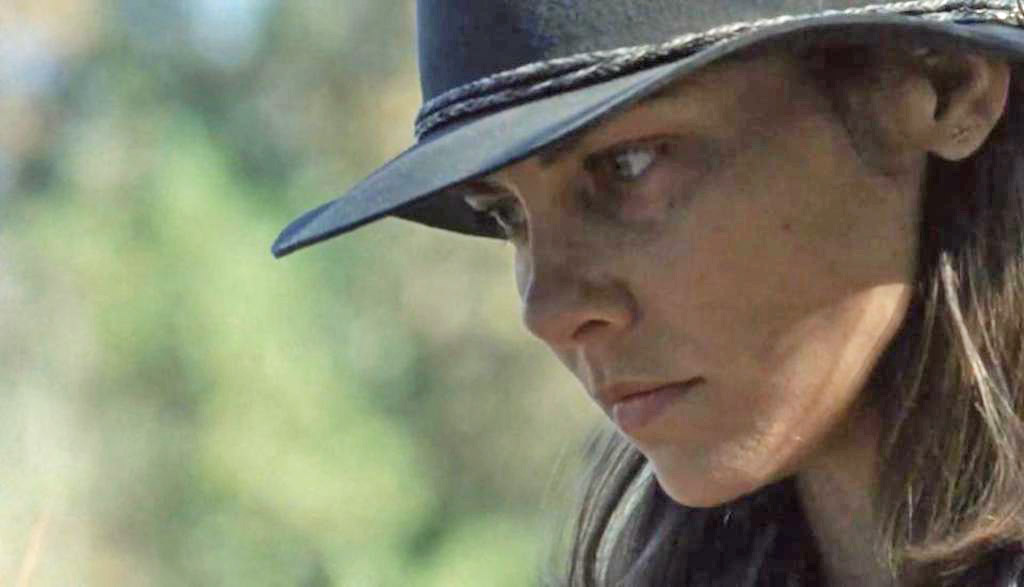
Meanwhile, while the season 10 finale should be wrapping up the Whisperer War, it will also set in motion the next chapter in The Walking Dead universe, the search for what Father Gabriel calls “the others.” Those others will include Maggie, who will be returning in the season 10 finale and thereafter. Meanwhile, Virgil — who helped to shepherd Michonne’s exit from the series — will return to The Oceanside and may become a more permanent member of that community. Elsewhere, Yumiko, Ezekiel, and Eugene are en route to meet a woman that Eugene has been communicating with on the radio, and they are bringing another new character, Princess, along with them.

We will also get to see what role Negan will get to play on the series moving ahead, especially in light of the return of Maggie, who nearly killed Negan in both the series and the comic book.

Elsewhere, Michonne is in search of Rick Grimes, whose spin-off movies are obviously still up in the air. Her journey, however, is likely to intersect with CRM, a military outfit that also appears to be overseeing the community in The Walking Dead spin-off, The World Beyond. In fact, The World Beyond explicitly ties into the Rick Grimes’ movie (The World Beyond is a limited two-season series, which could end by merging into the Rick Grimes’ movie).

There is clearly a lot going on, and most of it is immediately connected to the season 10 finale of The Walking Dead. One the TWD finale, the remaining episodes of Fear the Walking Dead, and the first season of The World Beyond air, however, it is unclear when we will get more new The Walking Dead content. The situation on the ground in both Georgia (where The Walking Dead shoots) and Texas (where Fear shoots) is not good, and it’s only marginally better (but not good) in Virginia, where The World Beyond films. One imagines, however, that Scott Gimple and the writers have all the scripts for the upcoming seasons written and ready to go, so when production finally does resume, AMC should be able to produce new episodes fairly quickly.

We will find out more about future plans for The Walking Dead universe on July 24th, when The Walking Dead, Fear and The World Beyond all host panels at virtual Comic Con, which will be remote and free to anyone who wants to watch.

Categories
News Trending Viral Worldwide

A New Report Refutes Speculation That Britney Spears Is Being Held Hostage By Conservator

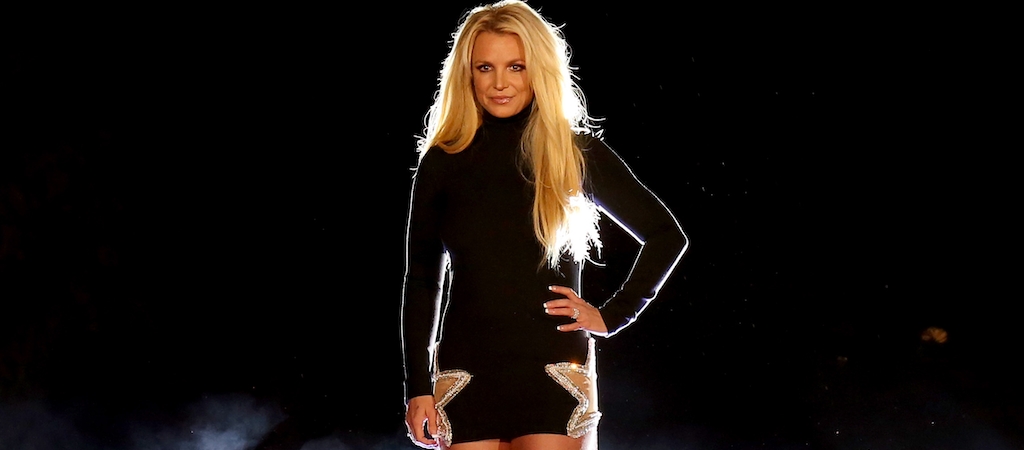
Since growing up in the limelight, Britney Spears’ long history with mental health has many times been the source of public scrutiny. Now, a second wave of the #FreeBritney movement has surfaced that theorizes the singer is being held hostage by her conservator. But a new report denies that the singer’s arrangement is unhealthy, rather stating it’s quite the opposite.

A recent report from TMZ quells the #FreeBritney movement, saying the singer is continuing to work through an ongoing battle with mental illness. The report states that the last two years have been particularly difficult for the singer as her former medication stopped working and doctors were having trouble finding the right dosage and combination. TMZ claims that sources have confirmed Spears sometimes pushes for “more freedom,” but she ultimately “hasn’t been especially stable managing her mental illness.”

Spears’ father had been conservator, or legal guardian, for the last 12 years before ceding the role to her manager in 2019. While it’s true that 12 years is an unusually long time, TMZ’s report points out that the singer’s mental health conditions most likely necessitate a lifelong conservatorship. Moreover, there were many professionals who weighed in on the legal decision. In order for a conservatorship to be granted, a handful of doctors, lawyers, therapists, and a judge all have to deem it necessary.

According to the report, a source close to the singer said the conservatorship was put in place to protect Spears’ safety: “These people who are screaming for the conservatorship to end, well if that happened and she hurt herself or died 2 weeks after would these people utter a peep? No way.”

A hearing to review Spears’ conservatorship was originally set for September last year but after the singer didn’t show, a new date was scheduled this April. Due to the pandemic, the official court date was delayed and is now set for July 22.

Revisit Uproxx’s timeline of the #FreeBritney movement here.