While ASAP Rocky fans impatiently await word on the release of his upcoming album, Don’t Be Dumb, at the very least, they can follow his moves on the big screen thanks to his flourishing acting career. While his matchup with Denzel Washington in Spike Lee’s Kurosawa remake Highest 2 Lowest is right around the corner, the trailer for another film starring Rocky in a pivotal role came out today.
In the trailer for A24’s If I Had Legs I’d Kick You, Rose Byrne plays a frazzled single mom forced to move into a motel when her upstairs neighbor’s leaky bathroom falls into her apartment (can you say, “lawsuit?”). Conan O’Brien is her seemingly disengaged therapist, while Rocky plays a fellow motel dweller who invites her back to his room for some late-night… ahhh… viewing.
He’s a pretty charming guy in general, so it seems believable that he’d be able to convince this older woman to make an ill-advised liasion — and he can do scumbag well enough that you believe he’d try. If I had to choose between the two, I’d go with Highest 2 Lowest, but I’m a sucker for pretty much all Kurosawa remakes.
You can watch the If I Had Legs I’d Kick You trailer featuring ASAP Rocky above. The movie is out in October.
Savvy travelers have been slipping away to Vidanta Riviera Maya for years — drawn by its jungle-lined paths, peaceful luxury, and a sense of play you don’t always find at polished resorts. Between the lush boutique water park, Jungala Aqua Experience, and JOYÀ — Cirque du Soleil’s only permanent show in Mexico, complete with a multi-course dinner — the experience here goes beyond your typical beach escape.
I was lucky enough to spend a few days at Vidanta and was truly blown away, not just by the luxury, location and service, but the fun and whimsy that you don’t often find at a resort of this size and caliber. Whether I was floating past waterfalls on the lazy river, lounging at an upscale beach club, or getting dressed up for a night of aerial acrobatics and champagne, Vidanta struck a rare balance: relaxed but refined, imaginative but grounded, and a place I can’t wait to return to.
WHY IT’S AWESOME:
Emily Hart
Vidanta Riviera Maya is the ultimate fusion of luxury, culture, and adventure. With pristine beaches, world-class dining, and access to incredible experiences like the Cirque du Soleil Joya show, this resort is the definition of paradise. Perfect for both relaxation and exploration, it’s ideal for families, couples, or solo travelers looking for a truly immersive experience.
With six separate hotels on property, over 15 bars and restaurants, on over 1000 acres of pristine paradise – this property doesn’t feel like your traditional Mexican resort getaway. With luxe touches, celebrity guests, and incredible beaches, this is truly a resort for those in the know.
IN-HOUSE FOOD AND DRINK:
Emily Hart
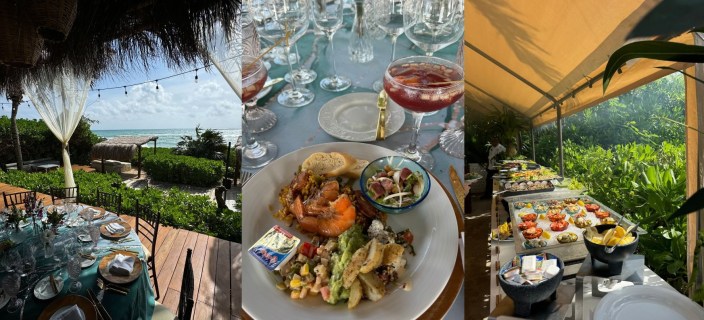
Dining at Vidanta Riviera Maya is anything but boring. From tacos and margaritas under swaying palms to sushi, steaks, and indulgent in-room dining, there’s something for every craving—and then some. You can snack barefoot at a beach shack, dress up for a night out near the JOYÀ theater, or wander the Salum Market for sunset cocktails and casual bites. With bold flavors, playful vibes, and more variety than you’d expect from one resort, eating here is half the fun.
Here were some of my favorites:
Gong
Emily Hart
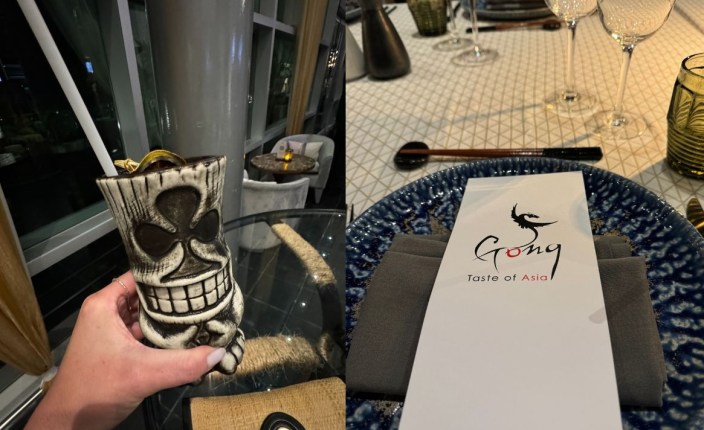
Dinner at Gong was hands down my favorite meal at Vidanta Riviera Maya. The space is sleek and serene, with warm wood accents, glowing lanterns, and an atmosphere that feels both elevated and inviting. The menu blends flavors from across Asia, and every dish I tried—from the fresh, delicate sushi to the rich, flavorful filet—was perfectly executed. I sipped a beautifully balanced cocktail while soaking in the calm, almost transportive vibe of the restaurant. It felt like stepping into another world for the evening—refined, peaceful, and completely memorable. If you’re only splurging on one dinner while you’re here, make it this one.
La Cantina
Emily Hart
La Cantina at Vidanta Riviera Maya, set within the vibrant Salum Market and Beachside Eateries, brings classic Mexican comfort food to life in a modern yet deeply rooted setting. The colorful ceramic tiles and polished wood details create an inviting atmosphere that honors tradition without feeling dated. I savored fresh, creamy guacamole, a tasing menu of Mexican favorites, alongside expertly made margaritas—simple but elevated flavors that lingered long after the last sip. It’s the kind of place that feels like a celebration of Mexico’s rich culinary soul, making it one of my favorite spots on the property.
Quinto
Emily Hart
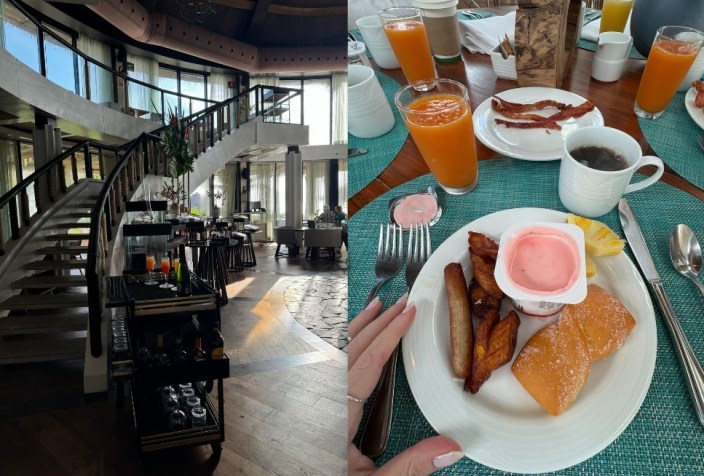
Breakfast at Quinto was the kind of buffet that makes you want to try everything—twice. Set in a beautiful two-story space with sweeping ocean views, it offered an almost overwhelming spread: tropical fruit, fresh pastries, chilaquiles, waffles, smoked salmon, made-to-order omelets, and more. I filled my plate, grabbed a cappuccino, and settled in by the window to watch the light shift over the water. The setting felt polished but relaxed, and the sheer variety made it easy to linger. It was one of those vacation breakfasts you actually remember.
AMENITIES:
Resort-Wide Amenities:
Multiple Pools – Including private pools for specific hotel guests and beachfront pool areas. Jungala Aqua Experience – A luxury water park with slides, lazy rivers, wave pools, and private cabanas. Cirque du Soleil Joya – The first resident Cirque du Soleil show in Mexico Spatium Spa – A high-end spa offering massages, hydrotherapy, and wellness treatments. Jack Nicklaus Golf Course – A professionally designed 18-hole golf course. Fitness Center – State-of-the-art gym with personal training and group classes. Shopping Plaza – Boutiques featuring designer clothing, souvenirs, and local artisan goods. Private Beach Club – Exclusive beachfront lounging with food and beverage service. Fine Dining & Casual Restaurants – Over a dozen restaurants serving international and local cuisine. Luxury Transportation – Complimentary resort shuttles and transportation between resort areas. Concierge Services – Custom experiences, dining reservations, and personalized recommendations.
ROOM TYPES:
Emily Hart
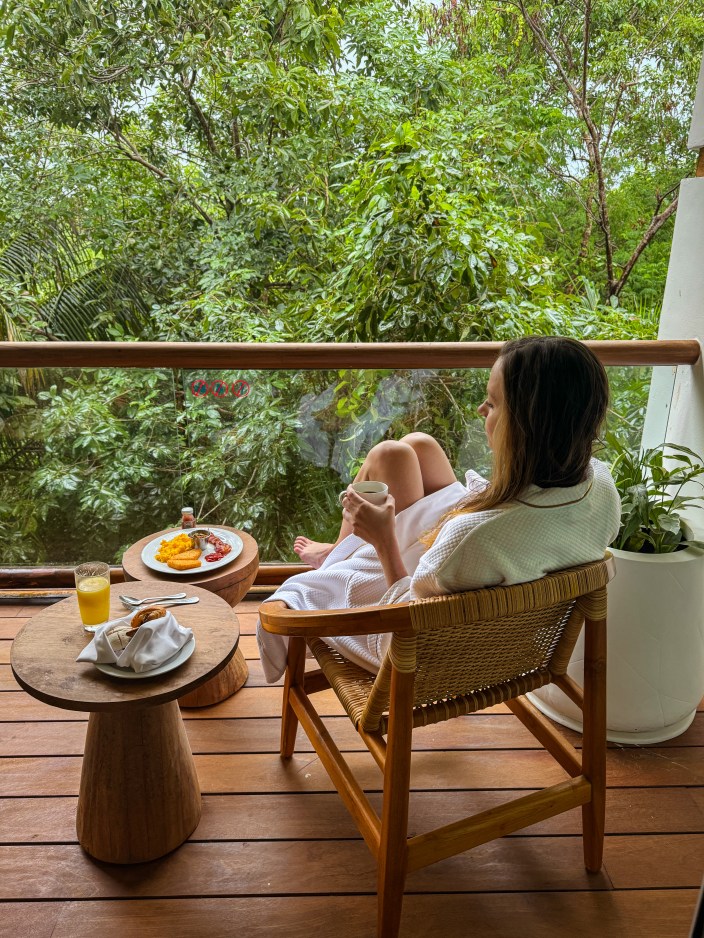
I stayed in a One-Bedroom Suite at the Jungala Park Hotel which was not just larger than my apartment back home, but the epitome of jungle-chic. With a large bedroom with private balcony, huge bathroom, kitchen, dining room, guest bath, large living area and another spacious balcony running the length of the suite — this was one of my favorite hotel rooms I’ve ever stayed in.
Room Amenities:
In-Room Features: Spacious Living Area – A comfortable lounge area with a plush sofa and seating. Private Large Balcony – Offering scenic jungle or water park views. Luxury Bathroom – Spa-like features with a rainfall shower, soaking tub, and designer toiletries. Mini-Kitchen – Equipped with a small fridge, microwave, coffee maker, and sink. 24-Hour Room Service – A full menu available for in-room dining. Turndown Service – Nightly service with fresh linens and evening treats.
BEST THINGS TO DO/EAT/DRINK WITHIN A 10-MINUTE WALK/SHUTTLE RIDE:
Jungala Aqua Experience
Emily Hart
Jungala Aqua Experience isn’t your average water park. With more adult touches, like cocktails, muted stylish colors, and gourmet food options, it is a must-visit for thrill-seekers or those who just want to spend a day in a lazy river with a drink. With water slides, the aforementioned lazy river (my favorite), and plenty of places to relax (pro tip: book a private cabana), it’s the perfect place to cool off and have fun.
Beach Club
Emily Hart
Spending an afternoon at the Vidanta Beach Club is the ultimate way to unwind in style. With beautiful pools, private cabanas, and direct beach access with stunning ocean views, it feels like your own little slice of paradise. The service is next-level attentive without being over the top—they make you feel like the only guest that matters. I loved sipping expertly made cocktails, especially the Aperol Spritz from the roaming cart that adds a fun, festive vibe. The fresh, flavorful food pairs perfectly with the ocean breeze. This exclusive spot is available to Grand Luxxe and Grand Bliss guests, making it a must for those seeking chill luxury.
BEST THING TO DO WITHIN A 20 MIN SHUTTLE RIDE:
JOYA Cirque de Soleil
Emily Hart
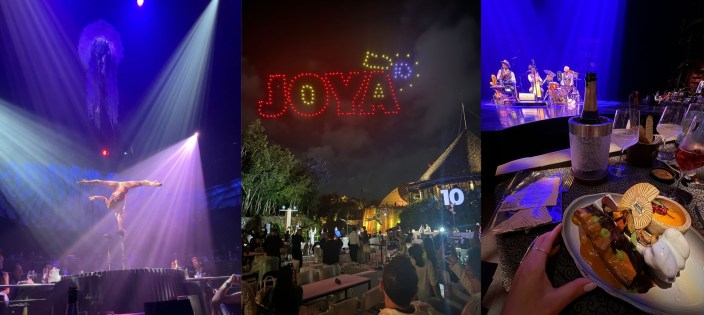
Seeing the JOYÀ dinner show at Vidanta Riviera Maya was one of the most exciting nights I’ve had in a long time. It’s Mexico’s first Cirque du Soleil resident dinner show—and the only permanent Cirque du Soleil show in the country until Ludo, a new water-themed production, debuts in November 2025 at Vidanta Nuevo Vallarta. The theater’s cozy, immersive setting makes you feel like you’re part of the story from the moment the lights go down. The acrobatics and performances are absolutely breathtaking—full of energy, creativity, and moments that seriously wowed me.
The dinner was just as impressive as the show. The menu itself is part of the experience—with edible menus, dishes infused with smoke, and even a treasure box course that feels like uncovering a delicious secret. The plating is playful and full of surprises (but I don’t want to give away too much!). The flavors were spot-on, perfectly balanced, and paired seamlessly with the pacing of the show. It was a total sensory experience—great food, amazing entertainment, and a vibe that kept me smiling all night. Definitely a must if you’re visiting Vidanta.
BED GAME: 9/10
Emily Hart
The beds are ultra-comfortable with plush mattresses and high-quality linens that make sinking in after a day of exploring pure bliss. I loved opening the balcony doors to let in the fresh air and listen to the gentle sound of passing rain — it was the perfect way to unwind and fall asleep peacefully.
SEXINESS RATING: 9/10
Emily Hart
Vidanta’s modern design, chic atmosphere, and incredible service create a stylish and romantic vibe. Whether it’s a sunset dinner by the beach or a spa treatment, there’s no shortage of moments to make you feel like you’re in a luxurious, sexy escape.
VIEWS/PIC SPOTS:
Emily Hart
Vidanta Riviera Maya is packed with seriously Insta-worthy spots. Whether it’s the lush jungle paths, colorful gardens, or the sparkling pools, every corner feels like a photo op waiting to happen. The beach views of the turquoise Caribbean? Total postcard vibes. And the Salum Market area is full of bright, fun details that pop on camera. Honestly, whether you’re snapping sunrise from your balcony or chasing golden hour by the water, your feed is gonna thank you.
BEST SEASON TO VISIT:
Emily Hart
The best time to visit Riviera Maya is between November and April when the weather is warm and dry. This is the ideal time to enjoy the beach, the pools, and the outdoor activities without worrying about the humidity or rain that often hits in the summer months. Shoulder seasons will likely have less crowds, and I’d even recommend rainy season as rain on the jungle-like grounds is very cozy and often doesn’t last too long.
IF I HAD TO COMPLAIN ABOUT ONE THING:
The resort is enormous – which for most people is a plus – but it could feel a bit overwhelming for some travelers. It’s massive, and while the layout is stunning, getting from one area to another sometimes requires a bit of walking—or waiting for a shuttle. This could be a minor inconvenience if you’d rather have less movement during your stay.
Back in May, indie pop singer Samia released her third studio album, Bloodless to critical acclaim. And while “Bovine Excision” and “Lizard” have garnered plenty of attention for the album, her latest release looks back to her 2020 debut The Baby and her viral 2023 NPR Music Tiny Desk Concert.
“Pool” is the opening track from The Baby, but made or a moving finale to her Tiny Desk set — so moving, that fans have made that version of the song go viral all over again on TikTok. In thanks for their support, the singer has released an official, “Stripped” rendition of “Pool.”
The TikTok trend for the song is based around the lyric“ How long do I have left with my dog / ’til I start forgetting shit? / How long ’til we’re rich / And then we’re not, and then we’re rich? / How much longer ’til I’m taller? / How much longer ’til it’s midnight? / How much longer ’til the mornin’? / Are my legs gonna last? / Is it too much to ask?” Fans have used the song as backing music for everything from their existential breakdowns (fitting) to their daily fit checks (unhinged). All of it has only served to help raise awareness of the Tiny Desk set and bring more awareness to a rising star.
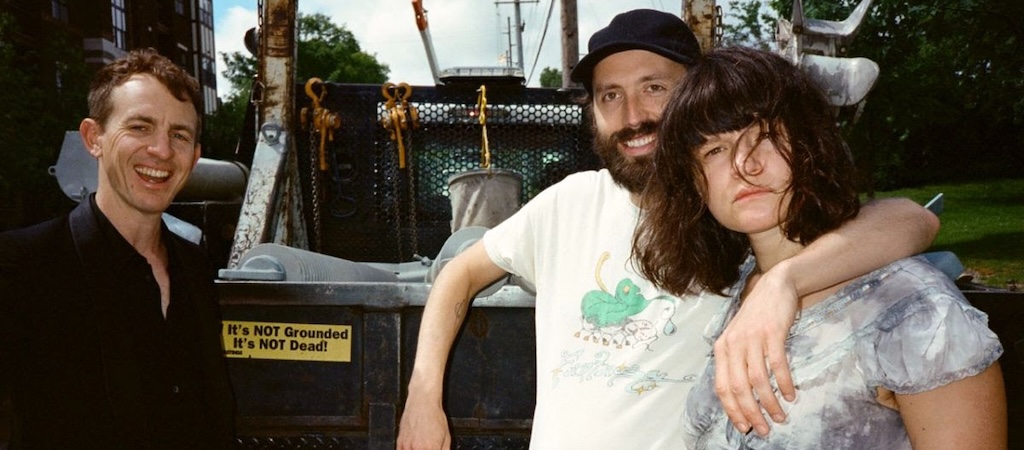
Big Thief‘s new album Double Infinity is coming soon, so they’ve shared a double single release, consisting of “Grandmother” and “Los Angeles,” following up July’s “All Night All Day.”
The first single, “Grandmother,” features multi-instrumentalist Laraaji, who also contributes haunting vocals, and captures the wistful experience of getting older. “So what’s the use of holding? / It’s unfolding, we’re all insane / We are made of love / We are also made of pain,” Adrianne Lenker sings. However, she as she notes in the chorus, there’s a positive outcome to the bittersweet experiences, “Gonna turn it all into rock and roll.”
The second is “Los Angeles,” which uses the titular city as an object metaphor for the constant changes life makes without changing the character of things. “Feels like it’s been ten years, has it only been two years?,” Lenker sings, “Two years feels like forever but I know you without looking / You call we come together even without speaking.”
Double Infinity, the band’s upcoming album, was recorded over three winter weeks in New York City, according to the press release. The nine-hour sessions were largely improvised, recorded live, and produced, engineered and mixed by longtime Big Thief collaborator Dom Monks.
You can listen to “Grandmother” and “Los Angeles” above.
Double Infinity is due on 9/5 via 4AD. You can find more info here.
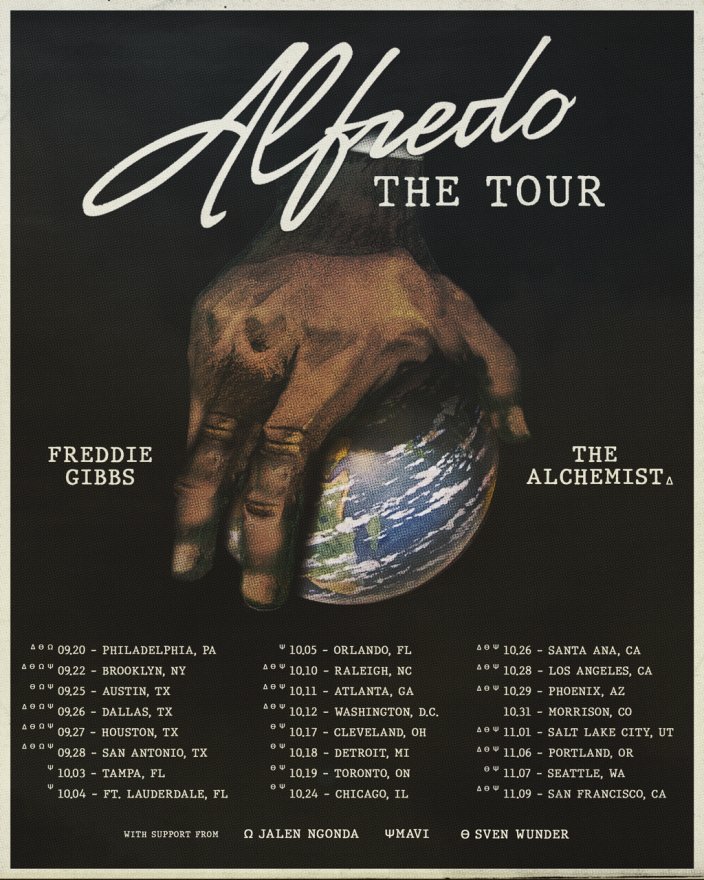
No apologies for the headline on this one; you name your album after food, you deal with the food puns. Freddie Gibbs and Alchemist are hitting the road in support of their new joint project Alfredo 2. They’ll have a few openers: Jalen Ngonda, MAVI and Sven Wunder.
Alfredo 2 is, of course, the follow-up to the duos Grammy-nominated 2020 joint project Alfredo. It was released alongside a short film and the single “1995.” Over the weekend, they released a second video, for the song “A Thousand Mountains,” which you can check out above, a video game that you can play while you listen. Check it out here.
Tickets for the tour go on sale Friday, August 8 at 10AM local time, with a presale beginning August 6. You can see the tour dates below.
Freddie Gibbs And The Alchemist Tour Dates: Alfredo 2
09/20 – Philadelphia, PA @ The Fillmore Philadelphia
09/22 – Brooklyn, NY @ Brooklyn Paramount
09/25 – Austin, TX @ Emo’s
09/26 – Dallas, TX @ Gilley’s Dallas – South Side Ballroom
09/27 – Houston, TX @ House of Blues Houston – Music Hall
09/28 – San Antonio, TX @ Aztec Theater
10/03 – Tampa, FL @ Ritz Ybor
10/04 – Fort Lauderdale, FL @ Revolution
10/05 – Orlando, FL @ The Beacham
10/10 – Raleigh, NC @ The Ritz
10/11 – Atlanta, GA @ Tabernacle
10/12 – Washington, DC @ Echostage
10/17 – Cleveland, OH @ Agora Theatre
10/18 – Detroit, MI @ Masonic Jack White Theatre
10/24 – Chicago, IL @ Riviera Theatre
10/26 – Santa Ana, CA @ Observatory Orange County
10/28 – Los Angeles, CA @ The Novo
10/29 – Phoenix, AZ @ The Van Buren
10/31 – Morrison, CO @ Red Rocks Amphitheatre
11/01 – Salt Lake City, UT @ The Union
11/06 – Portland, OR @ Roseland Theater
11/07 – Seattle, WA @ Showbox SoDo
11/09 – San Francisco, CA @ The Warfield
Freddie Gibbs
Alfredo 2 is out now via Virgin Music Group. You can get more info here.
Hayley Williams‘ rebellious streak gets deeper in the video for “Ego Death At A Bachelorette Party.” The standout from the collection of songs she released last week — which is, nonetheless, not considered an album — gets a grainy visual in which Williams strolls the streets of her native Nashville, subtly rebuking its shortcomings while still expressing hope for its future.
The video features a cameo from Tennessee State Representative Justin Jones, who is the second-youngest member of the Tennessee House of Representatives. Jones made headlines when he was expelled in April 2023 for violating decorum rules by leading a gun control protest on the House floor after the 2023 Covenant school shooting. He was later reinstated as an interim representative and won a special election that won back his seat full-time. He was re-elected in 2024.
His casting in the video certainly lines up with many of Williams’ other political statements. Her band, Paramore, was known for protesting what they viewed as unjust laws or stumping for what they see as needed ones. Even the first chorus of “Ego Death At A Bachelorette Party” takes shots at a local “racist country singer’s bar,” which some fans and publications have connected to recent comments she made to Stereogum in which she named “Morgan Wallen’s” as her least favorite country star’s bar. Whew.
You can watch the “Ego Death At A Bachelorette Party” video above.
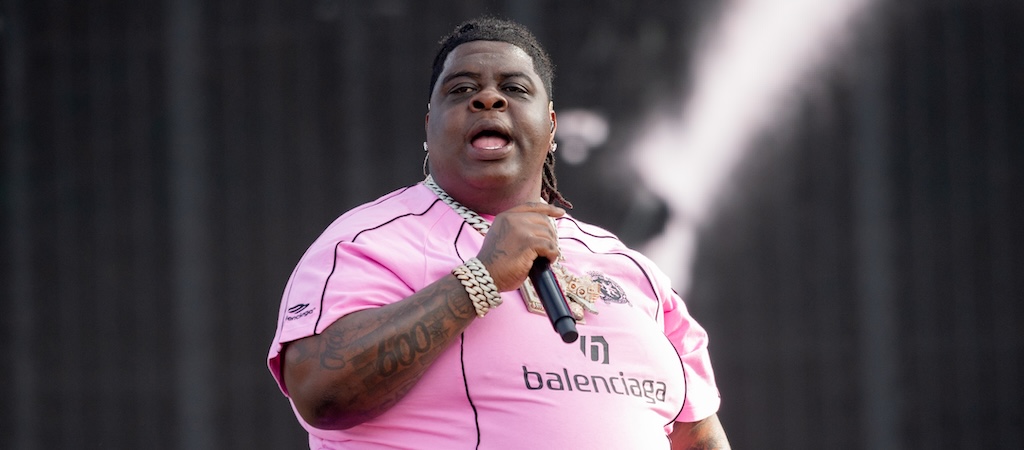
August 22 will be a big day for Texas rapper BigXthaPlug. That’s when he’s releasing his third album, I Hope You’re Happy, he announced on Instagram.
According to the press release that followed, the project will see him continue to experiment with country music, as we’ve heard him do on songs like “All The Way” with rising country star Bailey Zimmerman, “Holy Ground” with Jessie Murph, and “Home” with Shaboozey.
While hearing his new album will be largely country-influenced may throw off some of his day-one fans, it should come as no surprise for anyone familiar with the heartland. As a Texas native, BigX was likely exposed to as much country music via the radio, rodeos, and local commerce as he was by rappers like fellow Dallas natives Big Tuck and Dorrough, so, it makes sense that country flourishes come out in his own music.
BigX wouldn’t be the first rapper to delve deeper into the connections between country and hip-hop. While Lil Nas X arguably kicked off the most recent set of collaborations between country artists and rappers, you can look to artists like Nelly as true pioneers of the “country-rap” (or “rap-country,” if you prefer) subgenre, which has included names like Bubba Sparxxx, Jelly Roll, Shaboozey, and more.
I Hope You’re Happy is due on 8/22 via UnitedMasters. You can find more info here.
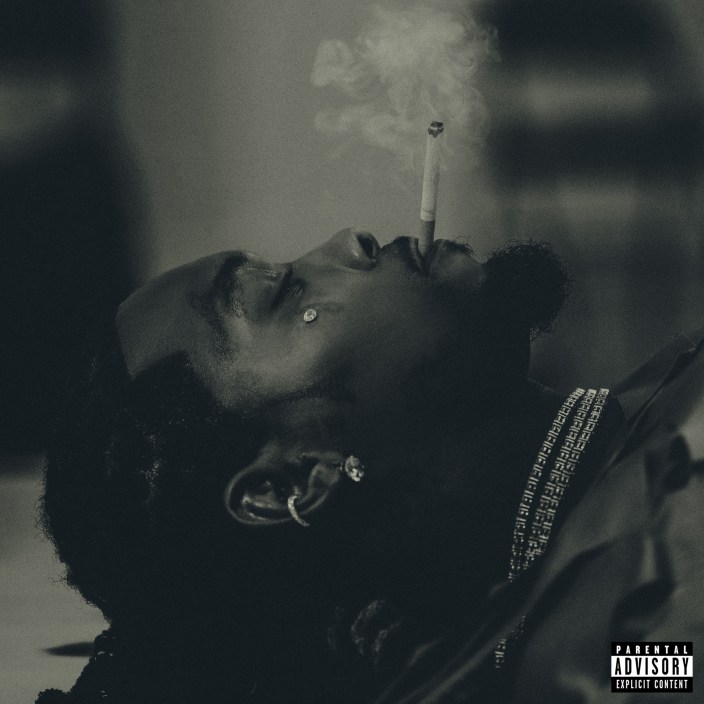
Offset’s third studio album, Kiari, has a release date, at long last. The former Migo announced the release date, August 22, along with the cover art, features, and tracklist. The album will feature appearances from Offset’s “Style Rare” collaborator Gunna, JID (who appears on the previously released “Bodies“), John Legend, Key Glock, Teezo Touchdown, Ty Dolla Sign, YFN Lucci, and YoungBoy Never Broke Again.
Offset has been sharing singles from the project since December, when he released the video for “Swing My Way.” He followed up in February with “Ten,” then released “Bodies” in June. Most recently, he dropped the video for “Professional,” shortly after dropping by Uproxx Studios to take on the Sound Check challenge.
The title for Kiari is taken from Offset’s government name, Kiari Kendrell Cephus. It’s his first full-length release since 2023’s Set It Off, which featured Don Toliver, Future, Latto, Travis Scott, and Offset’s ex-wife, Cardi B. Set It Off debuted at No. 5 on the Billboard 200, led by singles “Jealousy,” “Fan,” and “Worth It.” Will Kiari be able to surpass its predecessor? We’ll find out in a couple of weeks.
See the tracklist below.
Offset
Offset Kiari Tracklist
01. “Enemies”
02. “Pills” Feat. YoungBoy Never Broke Again
03. “Professional”
04. “Back In That Mode” Feat. YFN Lucci
05. “Different Species” Feat. Gunna
06. “Bodies” Feat. JID
07. “Love You Down”
08. “Run It Up” Feat. Key Glock
09. “Set It Off”
10. “Folgers”
11. “All Of My Hoes”
12. “Calories”
13. “Checkmate”
14. “Backends Fasho”
15. “Prada Myself” Feat. Teezo Touchdown
16. “Never Let Go” Feat. John Legend
17. “Favorite Girl” Feat. Ty Dolla $ign
18. “Move On”
Kiari is due on 8/22 via Motown Records. You can find more info here.
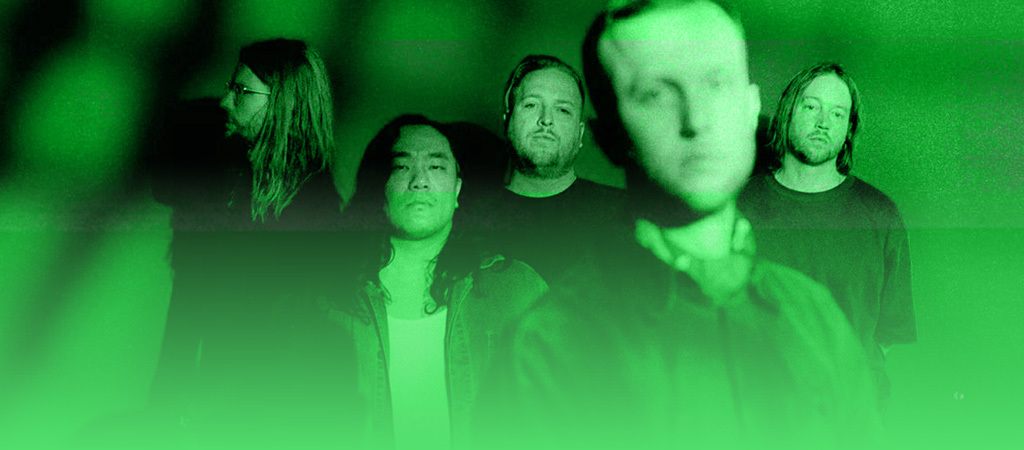
Jordan Dreyer had the concept for No One Was Driving the Car figured out pretty early: a winding, intricate network of characters trying not to buckle under the strain of environmental disaster, religious dogma, generational trauma and multi-level marketing schemes. From that point forward, he tried to consume art that matched the mood he imagined for La Dispute’s fifth album, and so breaks in recording were filled with the films of Lars Von Trier, David Cronenberg, and Ari Aster, and most importantly, Paul Schrader’s First Reformed. The final product spanned five acts and 65 minutes, with the longest lyrics sheet I’ve ever received in an album promo — a 47-page Google doc, bursting at the margins. A work of such magnitude was bound to leave Dreyer wishing he could change a word or two, or maybe add another verse. But his main regret about No One Was Driving the Car is more global. If he was locked into spending the past six years trying to capture the tragedy and comedy of blue-collar Joes and Janes barely surviving in the Rust Belt, he could’ve spared himself some misery by watching more Detroiters.
“Detroiters is deeply right in my wheelhouse because it’s full of obscure Michigan references,” Dreyer admits during our Zoom conversation. It’s unsurprising he’s a fan of the Tim Robinson Extended Universe. Still, you can’t argue with results: La Dispute albums typically arrive after five or so years, and so every one will be received like a highly anticipated novel rather than a mere album, something that demands undivided attention and academic dissection from their hardcore fanbase. But even more so than their prior, narrative-based concept albums, No One Was Driving the Car feels like an entire universe unto itself, so dense that it has its own gravitational pull.
The searing opener “I Shaved My Head” introduces a series of narrators who try to will profound change into their lives to no avail; witness the doomed addiction of “Steve,” the hopeless nostalgia of “Self-Portrait Backwards,” the ensuing cast of squabbling, drunken siblings and hopeless bricks in a pyramid scheme. It all peaks at “Top-Sellers Banquet,” where First Reformed’s indelible “floating scene” is transposed onto the deeply unmagical tableau of a corporate holiday party. I’d argue that it’s La Dispute’s most immersive yet; I kinda wish it could actually be expanded into a novel… or, at least, a limited series on Netflix.
Dreyer’s language is so rich and gripping that it almost invariably leads to La Dispute, the band, being given short shrift. But having set aside the more overt genre experiment of their early work and the frothy production of 2019’s Panorama, No One Was Driving the Car is a refinement of everything they’ve done well over the past 20 years – fusing vice-tight, vein-popping post-hardcore with jazzy flourishes, veering out into mesmerizing, In Rainbows-style art-rock and downcast acoustic ballads. After the grueling experience of Panorama, La Dispute vowed to take the entire recording process into their own hands with their next album. “I think we knew pretty early on that we were capable of being entirely responsible from beginning to end, that we had the tools in our toolbox,” Dreyer says. “It was a nerve wracking experience, but we’re very profoundly happy that we did because knowing you’re going to be responsible for that aspect of the process allows you to fully buy in.”
The recording of No One Was Driving the Car spanned four continents, though Dreyer remains fixated on his former home of Grand Rapids throughout; only one member of the quintet still resides in the city, while Dreyer himself has resided in Seattle for the past decade. That doesn’t mean he’s fully settled down. “Even approaching 40, I haven’t transitioned particularly well to the between time from anything La Dispute-related,” he admits. “I’ve lived a strange lifestyle for a very long time, and only in the last few years have I been actively trying to figure out a level of discipline that allows me to remain productive on a fulfilling level, you know, not just like doing the f*cking dishes and laundry.” He’s spent most of his free time working at a small venue in Seattle and taking up the Dreyer family tradition of woodworking. Dreyer’s parents own a hardware store, he has two brothers who work as carpenters and another who went to luthier school. “The inevitable arc of my life was working with power tools,” he jokes.
There’s probably a metaphor there for how the patience and concentration of building furniture is a perfect outlet for someone who spends upwards of five years creating dizzyingly literate post-hardcore. Maybe it’ll come across in the next La Dispute album. As for No One Was Driving the Car, Dreyer took the title from a police report of a fatal, self-driving Tesla accident; there’s definitely a metaphor there, the core of an album where Dreyer repeatedly asks how much agency we have in our own lives, and how much is subject to the whims of billionaires and technology. And yet, the tragedy of the inspiring incident doesn’t quite obscure for Dreyer how “self-driving Tesla accident” could’ve been the premise of a Tim Robinson sketch. “I Think You Should Leave is fascinating because at first glance, I think it can seem so grounded in absurdity,” he offers. “But I think the absurdity in which it finds itself is representative of the absurdity of contemporary living and office culture and these bizarre micro-interactions we have. I should probably watch more comedy, maybe to balance out the part of me that feels so fascinated with the morose and the Paul Schraders of the world.”
Though I’ve seen many books and documentaries and podcasts about multi-level marketing, I’m not sure that it’s been explored on any album as deeply as this one. It’s a world that’s definitely tied up in the church and the Midwest in general, were MLMs a focus from the beginning, or a way to tie together the themes of the record?
Jordan Our hometown of Grand Rapids is pretty present in our entire catalog, it’s the most consistently appearing character in our storytelling. This record is not an exception. We’re thinking about systems of control and what forces enact their influences on people, and what level of agency we have over our own lives. I thought a lot about my environment growing up in Grand Rapids, the history of the city is pretty difficult to tell without talking about Amway, which was founded and is still headquartered in Western Michigan.
It’s impossible to avoid, even if you’re not directly affected by it. Everyone’s gotten the pitch. Everyone knows people who live that lifestyle. And it’s suspiciously woven together with Christianity to the point where it reflects an air of a cult. It’s not sold to you just as a means of financial success. It’s sold to you as a religious endeavor and prosperity gospel and that’s something that I’ve always seen growing up in a very specific branch of the church, in a very specific area that is touched in many ways by Amway — the wealth that it creates and, relatedly, the lack of wealth it creates for a lot of people and the negative situations it puts people in. It’s also a way to represent the church itself, at least the parts of the church that I find particularly objectionable as somebody who was raised immersed in it.
It’s interesting how a lot of punk and emo that emerges from the Midwest exists in opposition to the church, while still operating within those physical spaces.
Even when I was 13 and getting into punk rock and moving pretty urgently away from the religious aspects of my life and my upbringing, a lot of the Midwest scene was Tooth and Nail, Solid State, that weird era of metalcore that I’m assuming still exists somewhere out of my purview…thankfully, for the most part.
I often see Grand Rapids portrayed as a quintessential, mid-sized Midwestern city “making a comeback” with art spaces and microbreweries and such, how have you seen it evolve in the past decade, especially now having Seattle as a comparison?
I think that Grand Rapids is certainly convincing itself of something. Growing up in Grand Rapids, the second most populous city in the state of Michigan, you inevitably suffer a bit from little brother syndrome relative to Detroit. It’s the automotive capital of the world. It has in so many ways defined the state of Michigan at large. Grand Rapids is very different from Detroit in its demographic makeup and in the industries that have defined it, and it weathered the recession remarkably well for a Rust Belt town. It’s reinvented itself as a destination place and has really embraced hospitality and arts and culture, but in a way that feels a bit superficial, a little like an aspiration more than something it’s been able to fully adopt. But I feel like I’m talking a lot of shit and there are a lot of things that I love about my hometown and I still consider myself somebody from Grand Rapids and somebody from Michigan and very much a Midwestern person even almost 10 years on in Seattle. But the identity has changed a lot.
I’m struck every visit by how much has shifted, particularly the neighborhoods that I frequented as a young person. The neighborhoods where people go to eat and drink and shop now are the ones that were home to all the quirky old hippies and old punks and college kids because the rent was affordable and that’s where the left-leaning people in the city populated. The neighborhoods where early furniture barons lived used to be eminently affordable, like 12 college kids living in a house because you could afford to pay for the whole house for $600. But everyone started moving back from the suburbs into the city and buying and renovating these incredible historic homes for $500,000 or whatever. People have really invested into making Grand Rapids a place where art and music and forward-thinking people thrive, but it’s constantly under the umbrella of its history and the influence of the church. It’s still forming its identity.
By the time this piece publishes, I think 75% of No One Was Driving the Car will already be available on streaming. What’s been your experience with this unorthodox rollout of releasing the album in “acts,” several songs at a time?
It’s been really rewarding in ways I didn’t necessarily anticipate. Our manager, who has been our friend for longer than he’s been our manager, and is in many ways the “other member” of our band, suggested to us that we approach things a bit unconventionally and invite people in a slightly more interesting way, given that we consume music in such a formulaic pattern. It was initially met with reticence, you think you don’t want to give away the whole game off the bat. But we’d also written the record pretty deliberately via that sort of five-act structure. On previous records, we have relied on some structural element to demarcate the changes in intention or in mood. We’ve had actual signifiers of those changes, like typographic and grammatical differences when you look at the actual track listing. Specifically on Wildlife and on Rooms of the House, we broke the record up that way and signaled that we had done so. And that wasn’t the case with this record. Everything more or less flows from one part to the next without any intercalary transition. Releasing it act by act allows you to understand it a bit better, because those changes don’t happen as obviously as they did on previous releases.
Were you concerned that La Dispute fans might misinterpret the whole of the project based on one song or one act, especially something like “Environmental Catastrophe Film,” which itself was a one-song “act”?
This is maybe where the initial hesitation came from, there are a lot of parts that I feel are considerably different from others. The first three tracks off the bat, that all have this post-punk-y, gritty feel to them. And my concern was that people would expect [the album] to continue in that direction, like the way that film trailers set expectations by how carefully curated and intentional they are to evoke a particular feeling of excitement, which belies the actual subject matter when you go to see the film itself. I think that can have an interesting effect psychologically on how much you enjoy or do not enjoy a movie. But I think if people have engaged with our catalog, [they know] our records always contain a dynamic spectrum. So I’ve mostly seen people excited and open-minded, especially after we released the single eight-and-a-half minute song.
Between the release strategy and the decision to self-produce, I had wondered whether La Dispute had any sort of existential debates about whether the band could continue to exist post-COVID, let alone continue doing the typical “make an album, tour for three years” cycle.
There was a degree of anxiety about the industry as a whole, and there have been periods of time in our band’s history where I think we felt pretty fatigued. Panorama was maybe the best example, and it was a difficult record to make for a lot of reasons, and reasons that I think ultimately made it fulfilling for us. But I also think coupling the difficulty of that record with the way years of touring wear on you and trying to balance lives at home with the realities of the financial landscape of the industry you’ve committed all of your time and resources to with the consideration for your future well-being. And then…COVID.
Looking at the landscape of not only the world, but narrowing focus on the world that you know most acutely and feeling pretty fucking dire about its ability to recover considering how many changes have already put bands of our size at a disadvantage, and venues of a certain size at a disadvantage, there’s this existential dread for the industry at large. Having the opportunity to come out of COVID playing an anniversary tour and then another one right after that, we came back not just to playing music, but records that had meant a lot to us individually and also had meant a lot to the people who came out to see those shows.
I think it was a great, forced recalibration for us to consider the place it has in our lives and to understand that a lot of the feelings expressed on the new record came from the bottom falling out and not being able to do the thing that is like essential to your character and to the way you define yourself. I think a lot of how this record turns out comes from us rediscovering what works for us and being able to contextualize that in a healthy way. We feel a degree of urgency we haven’t since we were 23 and writing records and feeling reckless and focused wholly on only one thing.
With the long gaps that happen between La Dispute albums, have you considered using your writing in other ways, whether it’s a novel or screenplay or just poetry?
The band is the perfect synthesis of my lifelong passions and has given me the opportunity to write and to be a musician and to be in the world of punk rock. I’ve always not perceived myself as a writer, but as somebody who might eventually be one, were I able to learn and practice that discipline. But I’ve always talked myself out of it. I understand that, as I get older, that the only real obstacle towards pursuit of something you love and feel capable of doing are internal.
The unexpected consequence of this recording process and the pride I feel at the work that I did is a newfound sense of confidence that I’m capable of also doing something on my own. And my status as a writer is still pending, but I think I feel capable of taking that step for the first time and ignoring the voices in my head screaming imposter syndrome or limiting myself otherwise by thinking about all the benchmarks I’d have to reach in a different universe to get to where I want to be. I think I would like to write a novel at some point.
Since so much writing goes into each La Dispute record, how do you keep things on track and not give into the temptation to endless tweak one sentence?
If I were not given the deadline of a record, I fear I might never fully commit to anything that I’ve written. Although I felt this time around it was considerably easier than it has been in the past to commit to something, this project was fleshed out from the beginning and I think I knew a bit more about what I wanted to say and how to say it. But there’s always second guessing, how do you know when something’s done?
I think ultimately you don’t, you find ways to look back at something you’ve done 15 years ago and think, hmm. But you have to really commit to what it is, which is a snapshot of a particular time and a particular set of experiences and a feeling that wants to be expressed for one reason or another.
Especially for something as lengthy as “Environmental Catastrophe Film,” I can’t imagine how much work goes into memorizing the lyrics for the live performance. What’s your process like?
The beauty of how particular I am about my writing, about making every word perfect and constantly editing and re-editing, is that I go over it eight million fucking times in my head. So I’ve more or less committed lyrics to memory through writing and repeatedly tracking them. But some songs require more effort than others, to not get in the habit of misremembering what I’m saying and reciting it incorrectly live. The spoken stuff that has less structure and relies less on what is happening in the music, that’s hardest to commit to memory. Those are the ones where I sometimes have taped lyrics to my monitor on stage.
We played these new songs while we were in Europe for the last two weeks, and the first three days of tour, were anxious in a way that they haven’t been for a very long time, because I was worried about fucking up words. So there’s a lot of sitting in the green room with my headphones on while everyone was like hanging out and talking and getting ready to play and just listening to our own band over and over again, which is pretty fucking embarrassing. But the beauty of playing new songs and fucking it up is that no one else knows the words. As long as I don’t fully draw blank on stage, I’m fine. But I do get teased by our front of house engineer, because if I do go blank, my response is to act like the microphone’s not working. Then our tour manager is on stage looking at the backup mic to go see if he has to go. But ultimately, I’m just buying time until the next part comes in so I can remember what the fuck I am doing.
In the process of fleshing out your characters, are there ever ones that develop in ways that make you think, “damn, I’d like to meet this person in real life”?
I have a pretty specific idea about what I want to accomplish story-wise, character-wise in each song. But there’s always a period of evolution that is instructed by how my bandmates translate the story itself. Ultimately, I don’t want to put my finger on the scale and lead the audience in the direction of some point, but to observe and to capture the complexity and nuance of what it is to exist as a human being in the world. I think you become more empathetic when you approach things from that standpoint. You see how even the people you fabricate contain multitudes.
No One Was Driving the Car is set for release on 9/5 via Epitaph Records. You can find more info here.
Some albums welcome you with laidback ease, like a morning cup of coffee. Other records take that cup of coffee and toss the hot brew directly into your lap. The latest Tyler Childers LP, Snipe Hunter, is an example of the latter. The first song is a bracing class-conscious rocker called “Eatin’ Big Time,” in which the 34-year-old Kentucky native makes a sly reference to government assistance (EBT) while his band (named, coincidentally, The Food Stamps) slams hard into a chunky, organ-spiked groove. “Have you ever got to hold and blow a thousand fucking dollars?” Childers hollers, and you can sense his wide, gleeful grin beaming through the chaos.
It’s an auspicious opener for an album that’s mostly drawn raves from critics since dropping late last month, as well as a vocal backlash from some fans and a reactionary blogger or two. But even among people who love Snipe Hunter, a curious adjective keeps popping up: “Weird.” Sometimes that word is invoked directly (“pleasantly weird,” says Pitchfork) and other times an adjacent term is applied (like “trailblazing” from Rolling Stone or “visionary” from GQ). To be sure, this appears to be by design, given Childers’ admission to GQ that he enlisted Nick Sanborn of Sylvan Esso to make Snipe Hunter “weirder” sonically. (Which, as far as I can tell, mostly means “add some drum machines, vocoder, and trippy synths.”) And I suppose some of the subject matter (like the “I literally want to bite people who piss me off” song “Bitin’ List”) and cultural references (the Hare Krishna chant laced throughout the mesmerizing “Tomcat And A Dandy”) suit the use of the “w” word.
But at the risk of being annoyingly pedantic, I think what people mean is that Snipe Hunter is weird for the kind of record it is being marketed as, which is not the same thing as the kind of record (I think) it actually is. Which is to say: It’s weird for a country or Americana record, but fairly normal for a heartland rock album.
Admittedly, this is a linguistic hobby horse of mine. (I am about to get very annoyingly pedantic here.) But for years, I have seen artists and albums that at one time — say, back in the 1990s and earlier — would have been called “rock” now get reclassified as “country” or “Americana.” And it bothers me. Not a lot, but more than a little. On my list of pet peeves, it’s up there with people who spell “whoa” like “whoah” and “rock star” like “rockstar.” I’ve conceded defeated on those other two fronts, but I continue to fight for heartland rock. It partly stems from my distaste for “Americana,” which I always type out reluctantly because it’s part of the common nomenclature, even though the “sepia-toned old-timey small-town folk” connotations are corny and kind of gross. (Also, unless we’re talking about the menu at Cracker Barrel, “Americana” just sounds dumb.) Now, heartland rock has some of the same baggage, but at least it’s slightly more specific as a descriptor of music (rather than as a signifier of a rhetorically amorphous hat-and-suspenders vibe).
Let me give you an example of what I mean: The first time I heard Snipe Hunter, I thought about The Lonesome Jubilee, a 1987 album by John Mellencamp. That record was described upon release by the great New York Times critic Jon Pareles as a textbook example of heartland rock, which he defined as “songs about unemployment, shrinking economic expectations and tough luck, set to three-chord rock laced with mandolin and accordion.” That’s also a pretty good description of Snipe Hunter.
Mellencamp doesn’t get talked about much these days, even though a lot of so-called contemporary Americana resembles the music he put out in the late ’80s and early ’90s. (He even challenged the “anti-woke” prejudices of his audience by featuring an interracial couple in the video for “Cherry Bomb,” a gesture as bold for the era as Childers putting a gay couple in his video for “In Your Love.”) After The Lonesome Jubilee, he went on to work with Malcolm Burn, a musician and producer who rose to prominence as an associate of Daniel Lanois on albums like Bob Dylan’s Oh Mercy and The Neville Brothers’ Yellow Moon. On those records (as well as records later produced by Lanois such as Emmylou Harris’ Wrecking Ball and Willie Nelson’s Teatro) the lines between country, R&B and rock (as well as “authenticity” and “artifice”) were blurred by heavy use of technology and atmospheric art-rock soundscapes, in a manner that points directly to Childers and his current record.
Childers undoubtedly is a defining artist of modern (sigh) Americana, mostly on the strength of his landmark 2017 LP, Purgatory. In terms of the point of the view (lower middle-class Appalachia), storytelling (vivid and raw) and musical delivery (hard-strummed acoustic guitar and heartfelt, unpolished vocals), it’s about as close to a Platonic ideal for this kind of music as you will find in the past decade. It’s also the record that Childers has been running away from ever since. Starting with 2019’s Country Squire, which piggybacked on the psychedelic country aesthetic pioneered five years earlier by producer Sturgill Simpson (who also assisted with Purgatory), Childers has gone out of his way to avoid copying the sound of his most popular numbers. In the case of “Feathered Indians,” his top track on Spotify with nearly 624 million streams, he’s stopped playing it entirely.
(Childers’ explanation for this, which essentially relates to his retrospective discomfort with “Indians” as a term for indigenous people, was the most controversial part of the recent GQ profile. Childers, clearly, is free to play or not play whatever song he wants. And he is obviously a sensitive and thoughtful artist when it comes to complicated cultural matters. I would just gently counter that not playing one of your best songs for any reason might not be a wise decision. Neil Young no longer wholly agrees with the sentiments expressed in “Southern Man,” but he still plays it, perhaps because exposing rather than burying a work of art can be a chance to grow and learn along with your audience if presented in the proper context.)
With Snipe Hunter, Childers attempts (and, in my view, largely succeeds) at integrating the well-intentioned if occasionally clumsy experiments of post-Country Squire efforts like Long Violent History (a mostly instrumental affair that concludes with the George Floyd-inspired title track) and 2022’s Can I Take My Hounds To Heaven? (a collection of eight gospel songs presented with three different mixes) while also leveling up on the relatively straight-forward country of 2023’s Rustin’ In The Rain. It’s the album that, theoretically, gives the most fully dimensional view of Childers yet, mixing stripped-down live favorites derived from the Purgatory era (the appropriately hard-scrabble “Nose On The Grindstone,” the ravishing love song “Oneida”) with more hard-charging material like “Eatin’ Big Time” and the similarly kick-ass title track.
I would argue that the heart of the album lies with those last two tracks, as well as broad-shouldered folk-rock numbers like “Down Under” that showcase his expertly rowdy backing band. It’s crucial here to note the involvement of Rick Rubin, whose influence on modern country music is subtle but extremely important. His most celebrated country projects — Johnny Cash’s American series and the Dixie Chicks’ Grammy-winning Taking The Long Way — involved “rockifying” his patrons. For Johnny, he paired him with Tom Petty And The Heartbreakers and suggested songs by everyone from Beck to Soundgarden to (most famously) Nine Inch Nails. For the Dixie Chicks, he enlisted a murderer’s row of ringers in the supporting cast (John Mayer, Matt Sweeney, Chad Smith from the Chilli Peppers, etc.) while guiding the beleaguered trio toward a SoCal-friendly, Fleetwood Mac-esque sound.
Perhaps even more important, Rubin co-produced Tom Petty’s Wildflowers, another album that would probably be called Americana if it came next week rather than 1994. Wildflowers signifies the Rubin production style at its best: live, naturalistic, loose, and with a heavy emphasis on the interplay of musicians hanging out and entertaining each other. That’s the feeling you get from Snipe Hunter, and that feeling is why it’s my favorite Tyler Childers album to date. It’s also a very “heartland rock”-type sound. And that’s a hill I’m willing to die on.
This website uses cookies to improve your experience. We'll assume you're ok with this, but you can opt-out if you wish. Cookie settingsACCEPT
Privacy & Cookies Policy
Privacy Overview
This website uses cookies to improve your experience while you navigate through the website. Out of these cookies, the cookies that are categorized as necessary are stored on your browser as they are essential for the working of basic functionalities of the website. We also use third-party cookies that help us analyze and understand how you use this website. These cookies will be stored in your browser only with your consent. You also have the option to opt-out of these cookies. But opting out of some of these cookies may have an effect on your browsing experience.
Necessary cookies are absolutely essential for the website to function properly. This category only includes cookies that ensures basic functionalities and security features of the website. These cookies do not store any personal information.
Any cookies that may not be particularly necessary for the website to function and is used specifically to collect user personal data via analytics, ads, other embedded contents are termed as non-necessary cookies. It is mandatory to procure user consent prior to running these cookies on your website.