With Boba Fett playing an, at least seemingly, important role in this second season of The Mandalorian, the howls on social media about how Boba Fett is “overrated” have once again started. You know, basically that he looks cool, but didn’t really do all that much in the actual movies. And it’s hard to argue with all that. But there’s still this disconnect between people who love Boba Fett and the people who just don’t get it. The answer is the original line of Kenner action figures that spanned between 1978 and 1985. Okay, sure, the Star Wars Holiday Special can take some credit, which was the first actual appearance of Boba Fett, at least in animated form, but Kenner took character anticipation to a new level with the release of the Boba Fett action figure in 1979.
At first, Fett was offered as a free action figure that was acquired by mailing four proof of purchases from other Star Wars action figures. The description of Boba Fett on that mail away offer was simply, “A fearsome interplanetary bounty hunter. A threat to the Rebel Alliance, especially Han Solo. A new character in the Star Wars sequel.” Let me tell you, a kid’s imagination could run wild with that description. The other characters didn’t even have descriptions. With Fett, there was a jumping-off point. So, by the time a lot of impressionable youths had seen The Empire Strikes Back, Boba Fett had already been on hundreds of imagined adventures. And this is why Fett has such a cache.
The thing is, a lot of those characters who had Kenner action figures have a lot of deemed importance for those of us that were around who owned them. It was, let’s say, curious who got an action figure and who did not. Grand Moff Tarkin, who, if you look at the original Star Wars as a singular movie, was the main villain, did not get an action figure. R5-D4, the red droid with 30 seconds of screen time, whose name is never mentioned and is just called “red”, whose head explodes, causing Luke to pick R2-D2 instead, did have an action figure. So, for many kids, it wasn’t about recreating scenes. It wasn’t like we all rolled R5-D4 out for a few seconds so his head could explode. No, R5-D4 joined back up with Luke and the Rebel Alliance and went on many, many adventures. As did Hammerhead, and Walrus Man (who was most likely dead), and Greedo, (who was for sure dead), and Snaggletooth. Kenner made something called Death Star Droid, which to this day I have trouble even finding in the movie. But in my adventures, you didn’t mess with Death Star Droid.
In the season premiere of The Mandalorian (written and directed by Jon Favreau), Amy Sedaris’s character, Peli, calls for her Droid, “R5.” As we see R5 roll in, from behind, with the residue still on its head from a nasty explosion, it’s undoubtedly the same “red” we saw in the original Star Wars. Only now for the first time, its name is being used and it has more of a function in the actual plot other than “being broken.”
I’ve noticed this a lot in The Mandalorian, especially episodes Jon Favreau directed or wrote. (As opposed to Dave Filoni, who seems to drift more toward the newer characters he helped create in Clone Wars and Rebels.) Favreau was 10 years old when Star Wars hit theaters in 1977 and would have been 11 by the time the first Kenner action figures came out, which puts him right in the age range where these would have had an effect on him. So it is curious that so many of his episodes have these characters: from R5-D4, to Ugnaughts, to Gamorrean Guards, to a Bossk stand-in, to an IG-88 stand-in, to, just this past week, a whole planet of Admiral Ackbars and Squid Heads. (Look, I realize planets like Mon Calamari have been seen before in other forms of canon, but seeing it in live-action is really a trip.) I truly believe Jon Favreau is here to try and make the old Kenner action figures relevant … finally.
Which brings us back to Boba Fett. I used to think The Mandalorian was a way to do a Boba Fett show without actually doing a Boba Fett show. Now it seems that a reason The Mandalorian exists is to vindicate the ultimate Kenner Star Wars action figure, Boba Fett himself. You see, even those of us who love Fett because of the many imaginary adventures we had with him over the years, we were still pretty horrified by how he went out in Return of the Jedi. Unlike The Empire Strikes Back, now he didn’t even have any lines. He just kind of hung out at Jabba’s palace, living off his notoriety. Then when he jumped into action, he was beaten by Han Solo, who couldn’t even see at the time, who didn’t even know Fett was right behind him – then accidentally igniting Fett’s jetpack, which sent him into the mouth of the Sarlacc. Then the Sarlacc burps. (Though, at least we finally hear Fett’s name said out loud for the first and only time in the Original Trilogy. Though, the lack of exposition is something I love about the original Star Wars movies. To the point they don’t even bother telling us anyone’s name half the time.)
I think, deep down, Favreau is tired of Fett being picked on for being “overrated.” I bet Favreau was one of these kids who had hundreds of adventures with his Fett action figure before he ever saw Fett in a movie. He was tired of R5-D4’s one lone appearance being the indignation of being called “red” then having his head explode. The Mandalorian is a lot of things, but I’m personally very excited that my old Kenner Star Wars action figures, that were relegated to being in the background for a few seconds, all have new lives of their own.
The headlines about Conan O’Brien getting ready to leave late night after almost 30 years (to go host a weekly variety show on HBO Max next summer) are technically true, but they also seem to herald some kind of big change while adhering to a linear idea of what a late night show is and where it has to happen. An idea that is slowly losing its form. In as much as indie films and music aren’t solely things made in a basement, late night comedy doesn’t have to be two guests, a performance, and a focus around the midnight hour. It’s an aesthetic. One that O’Brien has helped shape and one he’s still going to inform in his next spot. Perhaps with more ease than before. In short: I’m not sure how earth-shaking this news really is.
It should be noted that, damn, does Conan O’Brien know how to pivot. When Andy Richter left Late Night in 1999, the show dynamic changed somewhat. The show changed again, more fully, when O’Brien briefly took over The Tonight Show in 2009 and again when he went to TBS to start Conan after NBC’s fuckery. That show has changed as well, gradually over the years before a total remix in January 2019 when it went from an hour to a half-hour. And then it transformed again, like every other late night show, going virtual due to COVID before shooting crowdless episodes at Largo in LA. Depending on how things go with social distancing and public health, the show may well change again before its now concrete end date in June.
O’Brien and company’s demonstrated adaptability isn’t just a virtue, it’s a necessity on par with comedic instinct in the effort to keep making people laugh while maintaining relevancy across generations. This all while confronting the ultimate TV existential threat: the explosion of available outlets and the splintering of audience. Because for everyone a niche offering and a niche offering for everyone. O’Brien has embraced this reality and the need to reach fans in multiple spaces already, creating a network of podcasts that allows friends of the show, fixtures, and O’Brien himself to focus on specific interests and giving love to Late Night old heads with the Classic Conan archive on his Team Coco site. Additionally, there’s a series of comedy specials he’s producing for HBO Max that keep him and the Team Coco brand connected to the world of stand-up. The TBS show has its own segmented niche offerings as well, with Clueless Gamer and Without Borders (which will continue with stand-alone specials on TBS) feeling like shows within the larger show. Money people call this diversification. It makes you less vulnerable in a volatile industry. Even in entertainment.
David Letterman is another uncommonly durable comedy culture figure. He and O’Brien will be forever linked since they both hosted Late Night on NBC (Letterman from 1982 to 1993 with O’Brien following him and then taking the reigns until 2009) and preferred a kind of “let’s see what we can get away with” esotericism that managed to find bigger than anticipated audiences and impact. But I’m wondering if their respective third acts also joins them.
When Letterman left The Late Show in 2015 it was assumed that he’d sit in a rocking chair for 20 years, but instead he went to Netflix and isolated and elevated the element from his late night show that he seemingly liked best (interviews). And now he gets to do it without the guardrails and expectations of a network nightly “late night” show even though it still feels like late night for who it is and what it is. For Letterman, this “do whatever you want, just do it for us” treatment seems like a reward for a foundational run in classically defined late night. Is this new show on HBO Max Conan O’Brien’s version of that? Maybe. We’ll see if he has the freedom or inclination to make big changes or hone in on a single aspect, but O’Brien certainly has the name recognition and loyal multi-platform audience to be a separator for a freshly launched streamer when it comes to buzz and maybe subscriptions. And he’s still got a lot of pathways to entertain his audience (the previously mentioned Team Coco, those specials, the podcasts, Without Borders at a time when the world will be ripe for re-exploration and a little cultural curiosity, etc). This on top of whatever this new show winds up being. So the stage is set for him to take advantage of this.
You know what else this feels like? When Howard Stern left terrestrial radio for Sirius. It’s a further breakdown of an established formula and subscription fees suck, sure, but in the end, no one will really give a shit about what channel or service the content is on if it’s still good. That’s the challenge, same as it ever was. So long as O’Brien has the ability to follow his instincts and do his thing then does it really matter if it’s all on channel 39 or on a couple of different apps? Conan ala carte is still Conan and it’s still going to be late night.
Donald Trump’s continued legal battle to win the 2020 election despite Joe Biden winning both the popular vote and the electoral college has certainly had its Rudy Giuliani-fueled ups and downs. Well, mostly downs when it comes to Trump’s actual chances of changing or invalidating tens of thousands of votes and flipping some states his way.
Some would imagine that it takes a certain devotion to Trump in order to keep the fledgling legal campaign going, but according to a report one of the president’s legal advisors isn’t nearly as loyal as you’d expect. According to report from CNN’s Andrew Kaczynski, Trump’s legal advisor, Jenna Ellis, has a history of criticizing Trump both on Facebook and on a radio program in Colorado.
Ellis, an attorney and former law professor from Colorado, repeatedly slammed then-candidate Trump as an “idiot,” who was “boorish and arrogant,” and a “bully” whose words could not be trusted as factually accurate. She called comments he made about women “disgusting,” and suggested he was not a “real Christian.”
In one March 2016 Facebook post, Ellis said Trump’s values were “not American,” linking to a post that called Trump an “American fascist.” She praised Mitt Romney for speaking out against Trump, referring to him as “Drumpf,” — a nickname coined by comedian John Oliver after a biographer revealed Trump’s ancestor changed the family’s surname from Drumpf to Trump.
Things have obviously changed for Ellis, as she’s worked for Trump as a legal advisor and surrogate for more than a year now. But the network reported on a number of different instances where Ellis attacked both Trump supporters for not caring about the truth and the candidate itself for being an “unethical, corrupt, lying, criminal, dirtbag.”
Ellis gave a statement to CNN and didn’t deny the reports, but instead called her early criticism “no secret” and that things, in her mind, have changed.
In a statement to CNN on Wednesday, Ellis said, “It’s no secret that I did not support Donald Trump early in the primary process in 2015, like many others who didn’t know him, and I’ve always been straightforward with my opinions and I’ve always admitted when my opinion changes. I am glad to have learned that I was completely wrong about Trump back then and I’ve said that over and over publicly, as I saw him keeping his promises, and then eventually getting to know him personally.
Ellis has apparently changed her mind about Trump, and as the full story shows certainly has the more recent social media activity to prove it. But the list of criticisms is pretty long, too, and if we know one thing it’s that Trump definitely doesn’t like being called names.
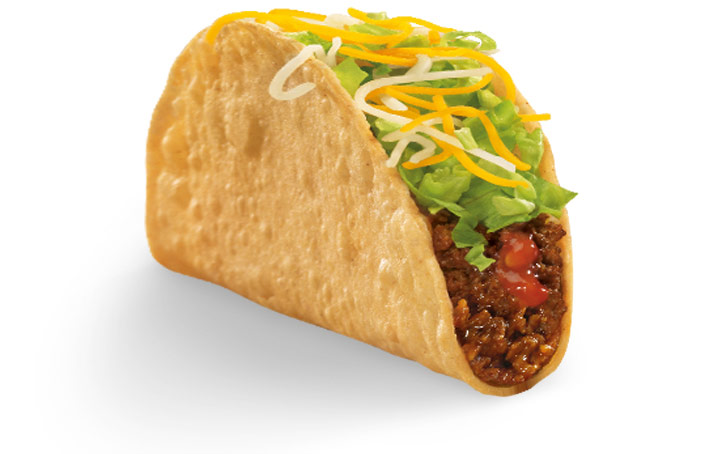
Growing up in Los Angeles equips you with two key attributes: 1) an ungodly amount of patience for sitting in traffic, and 2) enough experience eating tacos to be a certified taco expert. I’m also Latino, which means my authority on what makes a good taco is essentially bulletproof. Am I saying that every Latinx person living in LA is a Jonathan Gold-level authority on tacos and Mexican food who would make respected Mexican chefs like Aarón Sánchez weep with pride?
Yes, that is what I’m saying. Come at me.
I have other hallmarks of a true LA taco snob, too. I’ve already published a hierarchy of the best tacos the city has to offer (most of my picks are on the east side, another taco snob hallmark), I make my own salsas, and I’m one of those people who says “but tacos don’t even need cheese” even though I know damn well they taste better with it. Plus I always, always rep for my favorite LA street vendor.
But being a taco snob can be a lonely life. Because there are times when you’re away from your home turf and you have to try things on the fly, compromise, or — gulp — hit the drive-thru to get your taco fix. It may not happen anytime soon (my beloved spots are near where I’m riding out the pandemic), but it will happen. To help prepare myself (and you) for just such an eventuality, I went on a quest last week to find the best fast food tacos on the market.
Before we dive into my definitive ranking of fast food tacos, here is something I discovered on my odyssey: If you compare a fast food taco to an authentic corn tortilla street taco, you’re never going to be satisfied. They should be recognized as two vastly different items. So if you came to debate “authenticity” with me, know that this isn’t the place. Once you accept the fast-food taco as its own beast, the snobbiness starts to fall away and you’re able to appreciate them for what they are.
*A brief note on fish tacos*
On this list, you’ll find all sorts of chicken and beef-based tacos, but you won’t find any fish tacos. Mostly because I don’t like fish tacos and I’m especially dubious of any fish taco you can pick up at a fast-food restaurant. This shouldn’t be a problem unless you’re a huge Baja Fresh fan, in which case, you have my sincerest apologies on multiple levels.
Let’s go!
15 — Burger King — Crispy Taco
Oh boy. I knew things were going to get dark during this ranking, but I didn’t know I’d experience something quite as awful as Burger King’s Crispy Taco. First of all, it was news to me that Burger King even had a taco. Not only have I never noticed it on the menu, but I’ve never heard a single person ever mention tacos from Burger King.
For good reason.
The meat here is questionable. It’s crumbly yet wet. Salty yet flavorless. It’s more texture than anything. This might as well be lobster at a diner, something inexplicable on a menu for variety’s sake, not for the intention of ever being truly savored.
It’s the Dream Cafe from Seinfeld.
The Bottom Line:
Close your eyes, point to the menu and there is a high chance you’ll land on something better than Burger King’s Crispy Taco.
14 — Carl’s Jr — Crunchy Beef Taco
Carl
The Carl’s Jr Crunchy Beef Taco is a lot like the Burger King taco only (marginally) better… because there is less of it. Seriously, this taco is probably the thinnest taco in all of fast-food. The shell-to-fillings ratio is all off here. Luckily, the shell tastes better than Burger King’s entire taco. The taco sauce isn’t bad either, it provides a nice, warming heat but is still mild enough for people who can’t tolerate spice.
The major miss on this taco is the lettuce, I’ve had the Crunchy Beef Taco on a few occasions now and every time the lettuce has been white and flavorless. At that point don’t even put it in, Carl!
The Bottom Line:
A step up from Burger King. Better shell and less taco overall, which — in this case — is a gift.
13 — Taco Bell — Chicken Soft Taco
Taco Bell’s chicken is the worst chicken I’ve ever tasted. That’s it. That’s the review. You can also order it with tomatoes and sour cream, which does nothing to improve the experience.
The Bottom Line:
The worst chicken I’ve ever tasted in my life, yet somehow still a better overall experience than I had at Carl’s Jr or Burger King.
12 — Baja Fresh — Baja Taco
I’m pretty split on the Baja Taco. On one hand, I love the grilled double corn tortilla, I’ll take cilantro on tacos every time it’s offered to me, and Baja Fresh’s salsa options — which include verde, a chunky red sauce, and a spicy six chili sauce — offer pretty deep complexity, for a chain.
But then there’s the meat.
If I had to rank Baja Fresh’s non-fish protein options it would go 1) Tender Steak, 2) Pork Carnitas, 3) White Meat Chicken. The chicken is almost inedible. Now, I’m not expecting fresh non-frozen chicken from Baja Fresh (ironic as that is), but the texture here is rubbery — like it was reheated after being pre-cooked. I’m not saying it is, I have no idea, but it tastes like what I imagine Subway’s grilled chicken would taste like if it was cut up and thrown into a taco.
It’s bland, it’s dry, and relies on the salsa to impart any flavor.
The Pork Carnitas are a significant step up but are generally pretty dry. The steak is tough but has a flavorful outer char.
The Bottom Line:
For the love of all that is holy never order the chicken! The other two are… middling.
11 — Baja Fresh — Americano Taco
I’m embarrassed to admit this, but I prefer Baja Fresh’s Americano Taco over the Baja. Fast food flour tortillas taste better than fast food corn tortillas. The romaine lettuce is a nice addition, the tomatoes pack a lot of much-needed flavor and are a great compliment to any of Baja Fresh’s salsa options, and the inclusion of jack and cheddar cheese offers a big step up.
While I appreciate the Baja Taco’s attempts to recreate a taqueria-style street taco, the Americano just has more flavor. At the end of the day, that’s what it’s all about.
The Bottom Line:
The better of the two Baja Fresh tacos.
10 — Rubio’s — Classic Chicken/Steak Taco
Rubio’s is a very small step up from Baja Fresh, mostly because their meat is of slightly higher quality. Unfortunately, the salsa options are much more limited here than at Baja, but the classic taco features cheese, romaine lettuce and is topped with a creamy spicy chipotle sauce that results in an all around better flavor experience. The tortillas here are also leagues better.
The Bottom Line:
A mid-tier fast-food taco. Too bland to be considered good but inarguably a taco. That’s an improvement from the bottom five on this list!
9 — Rubios — Grilled Gourmet Taco Chicken/Steak
While Rubio’s Classic Taco is just so so, the Grilled Gourmet is actually pretty good. As I mentioned before, Rubio’s corn tortillas are solid and they’re made all the better when toasted cheese is melted on top of them. The Grilled Gourmet also features avocado slices, a roasted version of their Chipotle salsa, cilantro, onions, and bacon.
All fast food tacos would be better served with some bacon!
The Bottom Line:
One of Rubio’s best menu choices. That being said, you’re still at Rubio’s.
8 — Chipotle — Tacos (Crunchy or Soft)
It might surprise some that someone who calls themselves a “taco snob” would rank the more “authentic” offerings from Chipotle in the middle of this list. I mean, these tacos contain meat that can actually be identified, and that’s saying something, right?
Unfortunately, while being able to choose between chicken, steak, barbacoa, carnitas, and carne asada is nice, none of that really matters when your food is as flavorless and uninspired as Chipotle’s fare.
Chipotle’s entire menu just lacks character. No single item on the menu — aside from the MEGA-LIME chips — tastes like any creative thought was put into it. It’s like making a sauce without tasting it. It doesn’t matter that you followed a recipe with perfect precision, if you don’t dip your finger in, taste it and see how the spices are coming together, it probably won’t come out very good. We’re not suggesting the burrito makers at Chipotle dip their fingers into the guac or the salsa to see if the stuff tastes good (God knows the chain has already had food contamination issues), but the point stands.
You can order these tacos crunchy or soft. Not a lot of people know that, which is probably because this choice doesn’t really make a difference.
The Bottom Line:
Chipotle is a master of options but doesn’t know anything about how flavors come together. Because of that, this taco tries to pass itself off as “authentic” and falls short.
7 — Qdoba — Tacos
Qdoba suffers from all the same problems that Chipotle does, only I’m not nearly as angry over Qdoba. Honestly, the two chains are interchangeable in my eyes, though Qdoba has better meat options, like the Grilled Adobo Chicken, Pulled Pork, and Smoked Brisket. Their fajitas are also more flavorful, and they’ve got cotija cheese.
Alas, I’ve never in my life once craved Qdoba. Jack in the Box from a drive-thru at 3 AM after two too many drinks? Definitely. But Qdoba? I’ve eaten at Qdoba for two reasons ever: 1) morbid curiosity and 2) this article.
The Bottom Line:
A tiny step up from Chipotle. Not a regrettable choice, but definitely a forgettable one.
6 — Taco Bell — Nacho Cheese Doritos Locos Taco
Now see, this is what a fast-food taco should be. It’s tacky and eating one kind of feels like a dare, but come on, the taco shell is essentially a giant folded Dorito. If you ate the shell alone, it’d be an enjoyable experience and that’s hard to say for any fast food taco.
Honestly, this taco should’ve been called the “Americano Taco.” It’s such a bastardization of what a taco should be that I kind of appreciate it. It’s truly Frankensteinian.
The Bottom Line:
If you like Doritos you’ll love this. If you don’t, it’s time to grab a joint and run through a bag.
5 — Jack in the Box — Two Tacos
Are these ranked way too high? Absolutely. First of all, Jack in the Box uses American cheese in these tacos. They just slide a slice of American cheese into a taco shell.
What? I’m sorry, what?!
If that isn’t f*cking crazy enough, it almost seems like they age the lettuce. You don’t cure lettuce in a wine cellar, friends. That’s not the way. The taco sauce’s flavor can only be described as wet and no one — Jack in the Box included — knows what the hell kind of meat this is. Seriously, this is the description of the taco straight from the Jack in the Box website: “Two crunchy tacos with American cheese, shredded lettuce, and taco sauce.”
That’s it. No meat call out at all. Jack knows we’ll roast him.
Having said all of that… have you ever had one of these while drunk or stoned? Tacos aren’t a meal from Jack in the Box, they’re an add on. Jack in the Box is full of stoner food, it’s why they made the “Munchie Meal,” and this is their crown jewel. The next time you’re high, go to Jack in the Box, order Two Tacos, Curly Fries, Mozzarella Sticks, and, f*ck it, an Oreo Milkshake.
Will you regret your decision an hour later? Yes. But for the previous 59 minutes, it’ll be the most amazing fast food indulgence you’ve ever enjoyed.
The Bottom Line:
A stoner staple. Never eat sober.
4 — Taco Bell — Beef Soft/Crunchy Taco
Taco Bell’s meat is weird. For the longest time, when Taco Bell was the only prominent “Mexican” fast food offering, we all just collectively agreed that this was beef. Sure, ground beef tacos exist. They can often be delicious. But there is something about Taco Bell’s meat that just seems… suspect.
It’s wet, greasy, and flavorful, but I just know what I’m eating isn’t 100% beef. My only gripe is that once I’ve had one of these, I burp the flavor for a full 24hrs. That experience alone makes me pause on ever opting for the Taco Bell drive-thru.
I can’t explain it. To me, the soft flour tortilla version of this taco is vastly superior to the crunchy version, but I’ve been known to order one of each when that Taco Bell craving strikes.
The Bottom Line:
Good enough to eat sober!
3 — Del Taco — The Del Taco Crunchy/Soft
Del Taco is massively underrated. It doesn’t enjoy the same cult status amongst stoners, teenagers, and college kids as Taco Bell, but just about everything the Bell does, Del Taco does better. They slow cook their beans, the tacos are less greasy, their meat isn’t as wet and actually tastes and looks like ground beef, and their cheese is freshly grated.
Also, they have fries! That might seem like a random aside, but buy a Del Taco taco, throw some crinkle-cut fries in there, and prepare for one of the tastiest fast food tacos you’ll ever experience. The beef is well seasoned, with a nice peppery bite, the lettuce never feels old, providing you a crisp mouthfeel and the salty crinkle-cut fries offer that addicting umami.
The Bottom Line:
More mature and refined than Taco Bell.
2 — Del Taco — Grilled Chicken Taco
Fast food tacos sometimes feel like an afterthought. They’re generally designed to be added to your meal, rather than a meal unto themselves. But Del Taco’s Grilled Chicken taco is something you might actually go to Del Taco for. We don’t know we can say that about any of the tacos that preceded this entry. At Chipotle and Qdoba, people generally opt for burritos or bowls. Rubio’s and Baja Fresh have the fast food fish taco scene on lock. And nobody is visiting Taco Bell or Jack in the Box for their standard tacos alone.
But Del’s Grilled Chicken Taco is actually good enough to base a meal around. The chicken is as good as fast food chicken can be. Again, the freshly grated cheese makes a major difference, and each bite is infused with some creamy habanero sauce or Del Taco’s “savory secret sauce” (which is just modified sour cream.) Both sauce options are good, but a packet or two of Del Taco’s green or red sauce will still really help to enhance the flavors.
The Bottom Line:
A fast-food taco you don’t have to feel ashamed for ordering.
1 — El Pollo Loco Chicken Avocado Street Taco
This is a curious one because I never, ever, ever order tacos from El Pollo Loco. Hell, most of the time I don’t even remember that El Pollo Loco has tacos. But they do, and they’re pretty f*cking good.
In fact, I think they’re the best fast-food tacos in the game (obviously). First, you have a thick and flavorful stone-ground corn tortilla (though El Pollo Loco’s quality varies, sometimes you get a stale tortilla) thick fresh slices of avocado, cilantro dressing, Pico de Gallo, queso fresco, and El Pollo Loco’s tasty marinated chicken.
Top it off with El Pollo Loco’s avocado salsa and you’ve got an absolute flavor bomb. Everything melds together like a great taco should and feels greater than the sum of its individual parts. While overall I believe the best fast food tacos are the ones that don’t try to be authentic, El Pollo Loco’s Chicken Avocado Street Taco provides an experience I can’t deny.
The Bottom Line:
Did you know El Pollo Loco had tacos? They do, and they’re actually pretty good. The bridge between fast food tacos and the real thing.
After many months of anticipation and uncertainty, the 2020 NBA Draft kicked off on Wednesday night with a virtual format, and as always, it was a good opportunity to learn more about the talented young men who will comprise the incoming class and their long and often arduous and emotional journeys to achieve their basketball dreams.
It was a big night for the Ball family in particular, as LaMelo Ball was selected with the No. 3 overall pick by the Charlotte Hornets, making him the second Ball brother, behind his older brother Lonzo, to be taken as a top five lottery pick in the last four years. And not to be out-shined, Lonzo had a little something up his sleeve for his brother’s big night.
On Wednesday night’s episode of The Masked Singer, #WhatchamacallitMask took the stage to do a version of Terror Squad’s “Lean Back,” with some lyrical edits that dropped a few hints about who might be behind the mask, before it was revealed to be Lonzo.
Our own mock draft had LaMelo going No. 1 overall to Minnesota, but he’ll make a good addition in Charlotte. Of course, there’s the added layer of father LaVar’s many outlandish boasts about his basketball abilities and his son now playing for the team owned by Michael Jordan, the world’s most maniacal competitor and nurturer of petty slights. Regardless, the Ball family legacy continues to grown, both on court and in prime time.
Ok, so the year is 2020 and Dolly Parton is responsible for funding a vaccine for a deadly disease that the sitting American president has all but ignored. Strange sci-fi short story plot or real life? Who in the hell would choose the latter if given that sentence any time before March of this year? Yet here we are, that’s all true. Parton’s well-known benevolence has apparently drifted into the medical world, and a lot of us have Dolly to thank for that.
But the situation is just strange and surreal enough, and everyone stuck at home during the pandemic are just bored enough, that the internet is really showing out when it comes to jokes and commentary about the matter. They’ve had me cackling all day, so I’m collecting a few of the best here to entertain you.
Joining in the fray are the likes of Steve Martin:
I imagine Dolly Parton sitting in a quiet room, manipulating RNA while writing a hit song.
Which is, of course, referencing this classic Dolly moment:
Dolly Parton not only funds public health endeavors like the Covid vaccine, has given away 100 Million books, and has been willing to take flack to speak out for BLM, BUT she can also do this!pic.twitter.com/vIftlnVHmI
The NBA Draft is a life-changing event in so many young men’s lives each year. Even though it’s being conducted virtually this time around, we still get to watch all of the emotional moments with the draftees and their family members as they hear their names called and find out where their NBA journey will begin.
But for some players, it’s not always so clear how things are going to pan out. Take R.J. Hampton, for instance. Hampton opted to forego college last season and in favor of playing professionally in New Zealand, and after struggling somewhat overseas saw his draft stock fall.
So when the Bucks selected him with the No. 24 pick, it was with the understanding that he would be heading to New Orleans, who would subsequently trade him to the Denver Nuggets. Confused yet? Don’t worry. You’re not alone. When ESPN cut to Hampton’s live feed, they still hadn’t figured out which hat to use, and in the commotion, the elder Hampton tossed one across the room.
It appeared to be the Bucks hat that went sailing, before they realized that was the one they actually needed for the purposes of the live spot. One of the more interesting developments for the virtual format was that each player was sent all 30 hats just to be sure that all their bases were covered, although in this case, the complex mechanisms of the draft and trade and trade again scenario were still too much to overcome in the moment.
Though 2020 has been chock full of decidedly surprising and even mind-blowing things, it’s safe to say that many people who formerly thought they disliked Machine Gun Kelly have been proven wrong by his new album, Tickets To My Downfall. The album even went No. 1, a solid benchmark for commercial success. Former haters have morphed into fans, and MGK has become the kind of pop-punk star (rapper?) that’s cool enough to grace the cover of ultra-cool mag Nylon. Nice.
If that wasn’t enough, he’s profiled by none other than Naomi Fry, New Yorker staff writer and definitely one of the funniest and best culture writers in the game right now. You should read her piece on MGK in full, but well, if your brain is short circuited from election drama, fake recounts, a pandemic, unemployment, and the men who insist on wearing masks below their noses, then let me pull out the most choice quote for you right here in this blog post. As first called out by Tyler McCall on Twitter, Fox compares their relationship to… a tsunami.
Describing her relationship with MGK as a “once in a lifetime thing” and a connection of “mythic proportions,” Fox went on: “Loving him is like being in love with a tsunami or a forest fire. The intensity of merging with him is just overwhelming, and the threat it poses is so powerful but so beautiful that you have no choice to surrender with reverence and with gratitude.”
There you have it, that’s what dating MGK is like. And my gratitude, Megan, for that description. Anyway, here’s my favorite song off Tickets To My Downfall:
The 2020 NBA Draft went down on Wednesday night and while fans had a decent list of prospects who they expected to get picked by teams across the league, there was one name who came up hours before the draft that surprised a lot of people. GOOD Music rapper Sheck Wes took to Instagram to announce that he would be entering the 2020 NBA Draft. The rapper shared the news with some pictures that found him working on his game in the gym. He also shared a lengthy caption that detailed his excitement towards declaring for the draft.
“Damn… it’s really real , The 2020 NBA DRAFT , all my life I always wanted to follow my passion for music and basketball,” he said in the caption of the post. “Playing basketball and going to play pro in the @nba is something that I always strived for. Tonight that dream comes true! I want to thank the @nba for their hard work with the growing the game and every team that gave me an opportunity to work out and talk with them. I also want to thank my team and my fans for always being there !”
The rapper used to play Amateur Athletic Union (AAU) basketball before he switched into the music and fashion lanes prior to the former taking off for him back in 2018. He is also good friends with Orlando Magic’s Mo Bamba, who helped his announce the release date of his Mudboy debut album.
After hearing news of his declaration to the NBA Draft, fans took to Twitter to share their reactions to the announcement.
To be clear here: to actually get picked in the draft you have to formally declare well before, you know, the day of the draft. But you can read Sheck Wes’ “announcement” in the post above.
With David Fincher’s latest, Mank, hitting Netflix next month (Dec. 4), we thought it was high time to celebrate the auteur’s indelible imprint on the cinematic art by ranking his complex films quantitatively — that is, by turning his body of work into cheap trinkets, to be priced and haggled over like so many hags outside a vegetable cart. Ranking art is a dumb thing to do that we’re going to do anyway. Fighting to the bitter end over unquantifiable intangibles is just how the internet shows affection.
And I have great affection for David Fincher. While he has a few tics here and there (rewatching his movies this week I noticed how much he seems to love rain and taxi cabs), Fincher’s style isn’t nearly so easily parodied as virtually any other “name” director. It’s not that Fincher is some chameleon who never draws attention to himself. On the contrary, his films tend to be conspicuously “directorly.” Yet his conspicuous touches seem to change from film to film. He loves to play within a theme, but repeating them. Certainly not as often as other famous directors tend to do. Sorkin, Christopher Nolan, Terrence Malick, Quentin Tarantino — most moviegoers have a pretty good idea what a parody of those guys would look like. The hallmarks of a David Fincher film are more abstract — dry wit, commitment to a plan, visual panache, a sense of glee.
Fincher famously doesn’t like the word “auteur” and doesn’t take writing credit on any of his films. It’s this kind of no-nonsense humility that might be his defining characteristic. In his interviews and commentaries, he gives off the aura of a guy who doesn’t have time for your bullshit, which makes me think I’d like him. His work often reflects that termite-like single-mindedness. He doesn’t shy away from schlock, and loves adapting a mass-market paperback. Almost all of his movies have pulpy, straightforward conceits — the guy who ages backwards, the movie set entirely inside a house, cops chasing a serial killer. He’s the rare director who seems neither schmaltzy nor pompous, a deft storyteller who doesn’t cut corners and isn’t given to puffery.
In a world of auteurs who aspire to film, Fincher makes unapologetic “movies,” embracing the bullshit and artifice inherent to moviemaking, and in so doing, often reminding us why those conceits exist. Frequently throughout his career he’s given us the very best version of what we’d normally consider a fairly trivial thing. He tends to embrace the corniness of the gesture. There’s probably a life lesson in that.
I ranked these films pretty simply in terms of which ones I most want to watch, and which were the most memorable. Fincher is unique in that I don’t know that I wholeheartedly love any one of his films without reservation, but they’re all, basically without exception, interesting and worth arguing over.
11. The Girl With The Dragon Tattoo (2011)
Being an adaptation of hot-at-the-time, mass-market fiction, The Girl With The Dragon Tattoo fits firmly into the Fincher canon, though it’s also a sort-of remake (Fincher’s only), with the Swedish version having been released two years earlier. Rooney Mara’s Lisbeth Salander, a role for which she was nominated for an Academy Award — a bisexual, computer-hacking avenging angel of the anti-patriarchy who rode zoomy motorcycles and had a photographic memory — was a thoroughly memorable character. Everything else about the film… not so much.
I saw it and liked it okay at the time, but in retrospect, it’s the Fincher film I find myself least wanting to rewatch. Which may have something to do with the fact that it’s almost two hours and 40 minutes long. The bigger issue is that it’s the rare Fincher film that never quite transcends the pitch. It’s essentially three dudes (author Stieg Larsson, writer Steve Zaillian, and Fincher) trying to tell the story of one comically badass woman trying to stick it to one comically evil dude. In retrospect, it sort of smacks of trying too hard.
10. Alien 3 (1992)
This was the prison planet Alien, remember that one? David Fincher was 28 when he started shooting Alien 3, “without a finished script and after $7 million had already been spent.” Said Fincher, “It was an absurd and obscene daily battle to do anything interesting with what we were allowed to do.”
Keep in mind, this was the third installment of a franchise previously helmed by Ridley Scott and James Cameron, being handed to an unknown 20-something music video director. It was basically a lose-lose situation. Watching it now, Alien 3 is an interesting concept, Ridley having crash-landed along with an alien now running amok on a prison foundry planet with no weapons. The set up hooks you immediately, and the cast — Sigourney Weaver opposite Charles S. Dutton and Charles Dance, future Tywin Lannister — is wonderful. Once all the pieces are in place though, Alien 3 turns into a middling action thriller. Alien 3 isn’t a bad film, but I think even Fincher would agree that it’s not his best.
9. Seven (aka SE7EN) (1995)
Seven is so firmly established in the cultural imagination (what’s in the box, what’s in the boooxxxxx!) that it’s easy to forget how goofy it is. Seven is exactly as corny as you might expect a movie with a number in the middle of the title to be, and yet so much more. On one level, yes, it’s a movie about two cops — the snot-nosed punk and the soon-to-be-retired salt — hunting a serial killer who is committing themed murders based on the seven deadly sins. On paper, Seven is almost the exact movie Charlie Kaufman was making fun of in Adaptation.
CHARLIE KAUFMAN: The only idea more overused than serial killers is multiple personality. On top of that, you explore the notion that cop and criminal are really two aspects of the same person. See every cop movie ever made for other examples of this.
DONALD KAUFMAN: Mom called it “psychologically taut.”
Yet in practice, it’s impossible to deny that David Fincher directs the absolute shit out of this movie. He takes what is essentially a middling episode of Law & Order, gives it a clear and consistent tone, a coherent visual style, and makes us care about every character, to the point that it feels almost like an arthouse movie. It’s quite an achievement.
Still, it’s hard not to wonder, on some level, why this movie? The villain, Kevin Spacey’s “John Doe” (sure, yeah, okay) has dedicated his life to punishing a wicked world for their sins. Fincher seems to justify Doe’s worldview, to some extent, depicting the setting as a crumbling, vice-ridden cesspool where it’s virtually always raining. The setting is ostensibly New York, and Andrew Kevin Walker’s screenplay was said to be inspired by time he spent living in New York, where he was working at Tower Records. There’s more than a little Taxi Driver/Death Wish/Dr. Manhattan in Seven, where the city itself is a sinful place in need of cleansing. Which is sort of funny coming out in 1995, when New York was already becoming the Starbucks-friendly mecca for yuppies we know it as today. Hell, Friends premiered in ’94. It’s funny to imagine Detective Somerset walking by Central Perk muttering about man’s inherent wickedness.
Of course, they never actually say New York in the film. It’s only strongly implied, and at one point there’s a cameo by a pizza joint called “New York Pizza.” Meanwhile, the famous finale was very clearly shot somewhere in Southern California. Specifically Lancaster, but it’s obvious to anyone who has driven through California that it takes place somewhere in California.
Geographical vagueness is something that trips up a lot of filmmakers, but Fincher uses this contradictory setting to his advantage, giving us a place we can imagine but can’t quite pin down. He pulls a similar trick in Fight Club.
8. Panic Room (2002)
Panic Room stands out as arguably Fincher’s most slight concept, a film in which a wealthy divorcee played by Jodie Foster holes up in the (*air quotes*) “panic room” of her weird new apartment with her diabetic daughter played by Kristen Stewart while some thieves played by Forest Whitaker, Dwight Yoakam, and Jared Leto try to rob them. Fincher somehow has to make us care about the rich lady, believe (and to some extent commiserate) with the thieves, make a single-setting story feel dynamic, and breathe humanity into this dime novel concept.
Panic Room is far, far more entertaining than a movie starring Jared Leto as a burglar in cornrows has any right to be. That Fincher seems to love nothing more than to give Jared Leto a stupid hairstyle and then beat the shit out of him is one of his most endearing qualities as a storyteller. Fincher does some of the best directing work of his career just to get us to buy into this goofy concept, that largely works because of its goofiness rather than in spite of it. Forrest Whitaker and Dwight Yoakam, with Jodie Foster and Kristen Stewart is one of those truly bizarre flavor combinations that sounds insane but ends up feeling inspired.
Yet in the end, Panic Room has a bit of a Jurassic Park problem, where David Fincher was so preoccupied with whether he could that he didn’t stop to think about whether he should. This is weirdly true of a lot of David Fincher projects, but the better ones make you forget.
7. The Social Network (2010)
Between the 10-year retrospective and last week’s Aaron Sorkin ranking, I’ve already written plenty (read: too much) about The Social Network. Suffice it to say, it wouldn’t be nearly so well remembered without David Fincher, who probably made Aaron Sorkin’s dialogue seem intense, where in another director’s hands it would’ve merely been smug.
Fincher himself called The Social Network “as close to a John Hughes movie as I can make,” by which I think he means that at its heart, The Social Network is a story about teen and post-teen drama. If you ignore the fact that it doesn’t seem that close the facts, the portrayals of real people aren’t that accurate, and it doesn’t say much about the thing that was invented in it (2010 may have just been too early to know), The Social Network IS a wildly entertaining movie about post-teen drama.
David Fincher makes slick movies. In having a slick director with a slick screenwriter based on a slick book, The Social Network polishes down reality until there isn’t much left but shine. That works a lot better in an adaptation of airport fiction than it does in an origin story for a real guy who 10 years later is still testifying in front of congress.
6. The Curious Case Of Benjamin Button (2008)
Yes, I will be one of the last people on the internet to defend Benjamin Button. A few years after it came out, the public seemed to collectively decide that Eric Roth’s spiritual sequel to Forrest Gump (so similar in structure that it practically qualifies as self-plagiarism) was an overrated hunk of shit. Maybe it was the awards? Nothing sours the public on a kind-of-okay movie like too much awards consideration. Take awards out of the equation and Green Book is an above-average Farrelly Brothers movie. Give it a best picture and it’s a travesty.
This seems less fair in the case of Benjamin Button, given that the actual best picture that year was Slumdog Millionaire, one of the most excruciatingly lame movies ever made. The Wrestler was better than all of them that year, but that’s a story for another time.
My take is that David Fincher is brilliant at having his finger on the pulse of the zeitgeist at the exact moment his movies are released, and a lot of times we look back at what we liked in, say, December 2008, and we’re thoroughly ashamed of ourselves. Not that he’s blameless — Fincher and Roth should’ve known that a movie that ends just before Hurricane Katrina (with no reason for it other than cheap name dropping) would age about as well as that rom-com starring Robert Pattinson and the obnoxious Lost girl that ended with planes hitting the building on 9/11 (which was called, fittingly, Remember Me). Ditto Cate Blanchett hacking up a hairball hamming it up as an old woman. We get it, Cate, you’re supposed to be old.
I digress, but my point is that the things that are hateable about The Curious Case of Benjamin Button are very hateable. That aside, Roth and Fincher seem to be using this kooky story of a man who ages backwards as a meditation on the act of storytelling. Lived forward, everything seems so random and arbitrary. Recounted backwards, every tiny event becomes freighted with meaning, such that it could only happen just that one way. That simple act of recounting seems to justify all our most romantic notions. Benjamin Button is about the human drive to tell stories so that we don’t go crazy. In that way, Benjamin Button actually has a lot more depth to it than Forrest Gump, which only seems to get half the amount of hate.
5. The Game (1997)
The Game is similar to Seven in that it’s an example of Fincher taking a very, let’s say, commercial concept and directing it so well that it feels like art. The Game is maybe Fincher’s most movie-movie, one of his least introspective and most viscerally exciting. Starring Michael Douglas as a wealthy executive who gets drawn into an elaborate role-playing game who eventually becomes unable to discern the game from reality, The Game is a little like an experiment to see if a movie could do Total Recall without the sci-fi and with a businessman instead of a bodybuilder. It works shockingly well, and then it’s over.
The Game doesn’t necessarily stick in your mind, but it is one of the more thrilling thrillers ever made, which is its own kind of achievement.
4. Gone Girl (2014)
David Fincher is one of the only directors around who can take an already-hot bestseller and turn it into a movie that’s even more memorable. Gone Girl fits firmly into the canon of other Fincher fiction adaptations, a mass-market potboiler, guilty pleasure kind of read that Fincher does justice to by not treating it like something that needs to be “elevated.” Fincher does pulp because he loves pulp. He justifies genre by committing to it.
In a lot of ways, Gone Girl is the much more successful mirror image of The Girl With The Dragon Tattoo. He works with the actual author, Gillian Flynn, an actual woman, for another story with a meaty female role. (To be fair to Dragon Tattoo, the author was long dead by the time the movie was in production). True, the woman in this case, played by Rosamund Pike, turns out to be a murderous sociopath, but the fact that it’s written by a female screenwriter gives it some veracity (can you imagine if Aaron Sorkin had adapted this one? it’d probably look like Malice). And much like The Sopranos, the beauty of Gone Girl is that every character in it is kind of shitty in their own special way. Except maybe Carrie Coon’s character, but that could just be my love of Carrie Coon talking. Also, Neil Patrick Harris hangs dong.
3. Mank (2020)
Like Benjamin Button, Mank is another love letter to the act of storytelling. In this case, telling the story of Herman Mankiewicz (played by Gary Oldman), the 40-something screenwriter who battled alcoholism and the effects of a car accident to write the script for Citizen Kane, and its 25-year-old “wunderkind” director Orson Welles.
The Kane character is, of course, a stand-in for William Randolph Hearst, played by that old Fincher standby, the great Charles Dance. Mank uses a flashback structure to explain why the humanistic old drunk Mankiewicz had it in for Hearst, who had once upon a time had used Mank as something of a personal court jester. As Mank tells it, it all goes back to the 1934 gubernatorial race in California, in which Hearst and his cat’s paw, Louis B. Mayer, used their media might to crush the candidacy of Upton Sinclair, the famous author and avowed socialist who had steamrolled the Democratic primary.
The story of a disillusioned writer turning to alcohol after his socialist hero gets rat-fucked by the forces of entrenched wealth did, perhaps, hit a little close to home. And yes, Fincher, in shooting the whole thing in contrasty black and white, with cigarette burns, wipe transitions, fake film scratches, and all manner of Kane-mimicking conceits, did maybe get a little carried away with formal experimentation. He probably could’ve shot the whole thing in color with none of the cutesy transitions and the movie would’ve been better for it.
But part of the beauty of Fincher is that he does get carried away. The best thing about him is that he gets deeply into whatever he’s shooting. And in addition to exploring the act of storytelling, Mank is also something of a love letter to the era of filmmaking that produced Herman Mankiewicz and Citizen Kane. Even as someone who groans every time I see an awards movie conspicuously shot in black and white (and don’t even get me started on “creative” aspect ratios), Mank‘s plucky dialogue (written by Fincher’s father Jack, who died in 2003) and massive sets even managed to seduce me, exactly as intended. It’s a cliché that Hollywood loves movies about Hollywood, but there’s also no story that they’re more qualified to tell.
2. Zodiac (2007)
For whatever reason, I’m imagining half the people reading this are pissed that I didn’t put Zodiac at number one. And hey, you could certainly make a case for it. Zodiac is gorgeous, beautifully-crafted, unpretentious filmmaking, easily the least warty and most timeless of any of Fincher’s films. Despite being an at times terrifying and intensely creepy film about the hunt for a famous serial killer, it also makes me intensely nostalgic for the 10 years I spent in San Francisco.
Even when I still lived in San Francisco it made me nostalgic, for the time when San Francisco was still a place that attracted oddballs, eccentrics, and counter-culture figures who seemed like they couldn’t exist anywhere else — like Robert Downey Jr’s unforgettable take on reporter Paul Avery. Sure, that all happened before I was even born, but that was the city we wanted it to be, and five or 10 years ago it still existed in certain pockets.
Avery might be Downey Jr.’s finest role, and with a cast that also included Jake Gyllenhaal, Mark Ruffalo, Brian Cox, and John Caroll Lynch, Zodiac has one of the finest ensembles ever assembled. It’s a landmark in terms of films that helped Jake Gyllenhaal transition from the sullen kid in Donnie Darko to the man who absolutely should’ve won an Oscar for Nightcrawler. Honestly, Jake Gyllenhaal should probably have a few Oscars by now.
1. Fight Club (1999)
I know, I know, Fight Club is now near the top of the list of art closely associated with toxic males and pseudo erudite fuckbois, along with Scarface and David Foster Wallace, and admitting that you love it is practically asking to be canceled. It gets derided all the time, for promoting fascism, toxic masculinity, Marxism, or Jared Leto. I can certainly concede that Fight Club is gospel for a certain subset of depressive male misanthrope who probably sleeps on a mattress directly on the floor and thinks washing his legs is ableist or whatever (insert the latest “type of dude who” Twitter meme here), but unlike Scarface, Fight Club actually is a lot more than people’s half-assed interpretation of it.
There’s certainly enough material in Fight Club to spur arguments over whether it’s fascist or anarchist or misogynist or whatever. The much easier and more obvious interpretation is that it’s anti-consumer culture. To some extent, Fight Club was very of-the-moment in 1999, when the emptiness of consumer society — “the IKEA nesting instinct” — seemed like America’s biggest problem. Not to mention it being the high-water mark of Generation X’s ongoing need to call out advertising for not telling the truth. It’s notable, watching it now, that when Tyler Durden tells his army of space monkeys “We have no Great War or Great Depression. The great war is a spiritual war. The great depression is our lives,” the same generation to whom he was speaking would have both a war and a depression in just a few short years.
It’s perfectly natural for a Zoomer, Gen Y*, or younger millennial to hear something like “there is no war or depression” and automatically flip the bird at this movie and anyone who likes it. Yet the spiritual emptiness of consumer culture and of the third way, free trade meritocracy (in which acquisitiveness is applied not just to consumer goods but to titles, degrees, and accolades as well) remains.
Yes, Fight Club is a very male-centric and mostly white-centric look at middle and working-class disaffection (the types of disaffection two white guys, author Chuck Palahniuk and David Fincher, are most qualified to explore). It’s also one of the most insightful and incisive portrayals of adult male disaffection ever made. Roger Ebert famously calledFight Club “cheerfully fascist” and a “celebration of violence” in what I consider one of the biggest whiffs of his career. Fight Club doesn’t celebrate violence; it simply depicts honestly how young men often turn to violence and vandalism as part of a larger search for human connections and an authentic experience — a kind of joy not defined by materialism. Fight Club and the rightly-revered Office Space are kissing cousins.
It’s worth noting that when the fight club guys kick the shit out of each other, they’re not celebrating winning. They’re celebrating feeling something, thanking the guy who kicked the shit out of them for this shared moment of authenticity and celebrating themselves for being willing to take a risk. Why don’t people often take risks in life, even in order to find happiness? Usually, because they’re worried about losing their stuff, their jobs, their houses, their cars. Fight Club doesn’t celebrate the fighting itself so much as the boldness to tell some efficiency consultant to f*ck off. (I love this scene intensely):
And yes, it’s very homoerotic — Chuck Palahniuk is a gay man — but that peculiarly male love of play-violence is always pretty homoerotic. See also Jackass, and pretty much any Schwarzenegger movie ever made for examples of this. Brad Pitt makes the perfect avatar for this kind of stunted white male, the guy Edward Norton’s character wants to be and kind of maybe wants to kiss. Fincher applies the “male gaze” to Brad Pitt throughout the movie — like when Tyler Durden casually puts his hand in his pocket at the soap counter, revealing his lack of underwear and offering a brief glimpse of the ripped lines leading to his groin (“cum gutters,” in gay parlance).
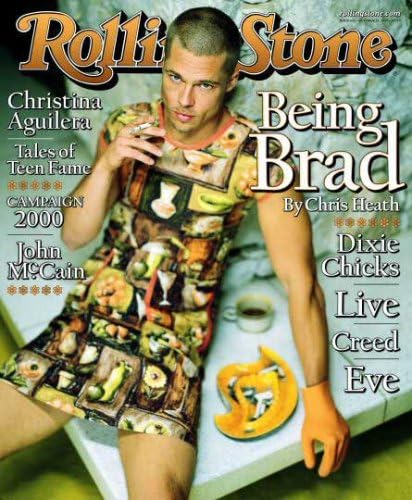
It’s funny that all the alt-right dorks online are up in arms about Harry Styles wearing a dress in Vanity Fair this week, when Brad Pitt did the same thing on the Rolling Stone cover 20 years ago.
The other thing that Fight Club depicts, which it does perfectly, is the way the violent impulses of disaffected young men can so easily be exploited by demagogues and authoritarians. Fight Club isn’t promoting fascism, it’s explaining how fascism functions. There’s a point at which Fight Club‘s relatively pure, or at least harmless form of community building turns into something dangerous. That the film is crystal clear about the exact moment when this happens puts the lie to the argument that it’s promoting it. Tyler Durden turns to the camera as he’s saying “you are not your f*cking khakis,” breaking the fourth wall as the film stock effect jiggles behind him. It’s clear just from the look on his face that this is a heel turn. After that, the fight club goes from a way to feel, to “I wanted to destroy something beautiful” (as Edward Norton’s character says to explain his brutal beating of Jared Leto). It’s the point at which their artful “self-destruction” turns outward.
The Proud Boys famously use a goofy version of a fight club as an initiation ritual (as did many street gangs, before and after Fight Club). Fight Club didn’t promote that, it simply predicted it. It was the spiritual rot of the Clinton years that spawned Fight Club that paved the way for the Trump years that spawned the Proud Boys.
As a film, Fight Club is just funny and memorable in a way that no other Fincher film, not even Zodiac, can match. Helena Bonham Carter’s entire performance is perfect, and the clever little touches, like Brad Pitt opening the door naked wearing nothing but yellow dishwashing gloves, are moments I’ll never forget. Fincher also perfectly captures, visually, the kind of punk rock grossness that defines Chuck Palahniuk’s work. Palahniuk being the author who famously had people running to their puke buckets during readings of his famous short story “Guts,” about a guy who gets his intestines sucked out his ass by a pool drain while masturbating. Likewise, who could forget that image of Tyler Durden cupping his hands to catch the fat from the liposuction bag after it snags on a barbed wire fence? The image is perfectly depraved and perfectly Palahniuk.
Which isn’t to say that Fight Club doesn’t have its faults. The film basically falls apart after the narrator realizes he and Tyler are the same person, leading to a silly, nonsensical ending that not even a Pixies song can save. It’s a flawed ending, and a sour note for an otherwise great film to go out on, but I have to give the slight edge to one of the most memorable films of an entire decade even if it’s not perfectly consistent.
*I refuse to be lumped in as an “older Millennial.” If you learned to masturbate before internet porn, you’re not a Millennial.
‘Mank’ is currently in select theaters, and hits Netflix on December 4th. Vince Mancini is on Twitter. You can access his archive of reviews here.



 SPOILER ALERT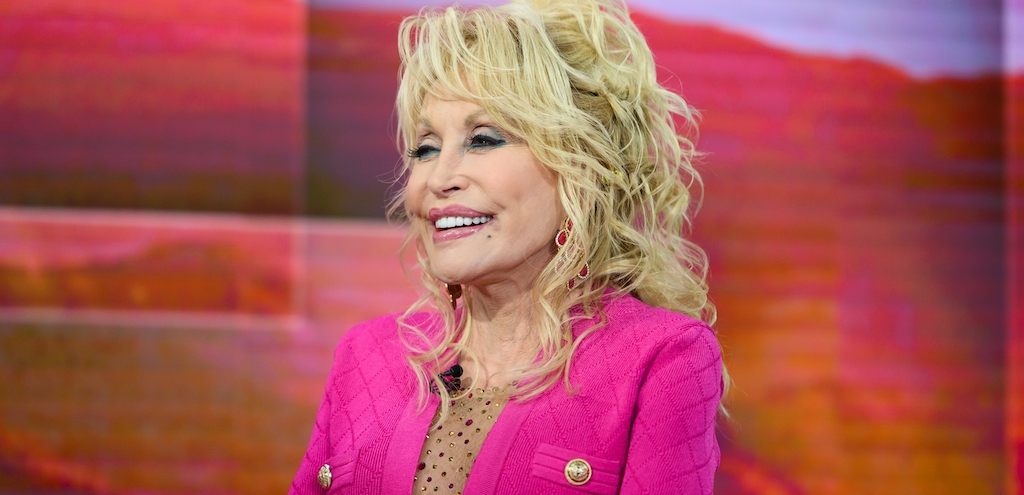





 (@HoodieIsaiah)
  (@PrimeLindsay)
  (@conjonclem)