Categories
News Trending Viral Worldwide

Street artist creates delightful 3D scenes in walls and walkways for everyone to enjoy

Street artists are a special breed. While “the art world” can sometimes be a snooty, elite place for those with means, street art is made for everyone. Sometimes that means large public murals, but street art can be small, too. In fact, some of the best street art is so small you might miss it if you’re not paying attention. But those who are can discover some delightful surprises.


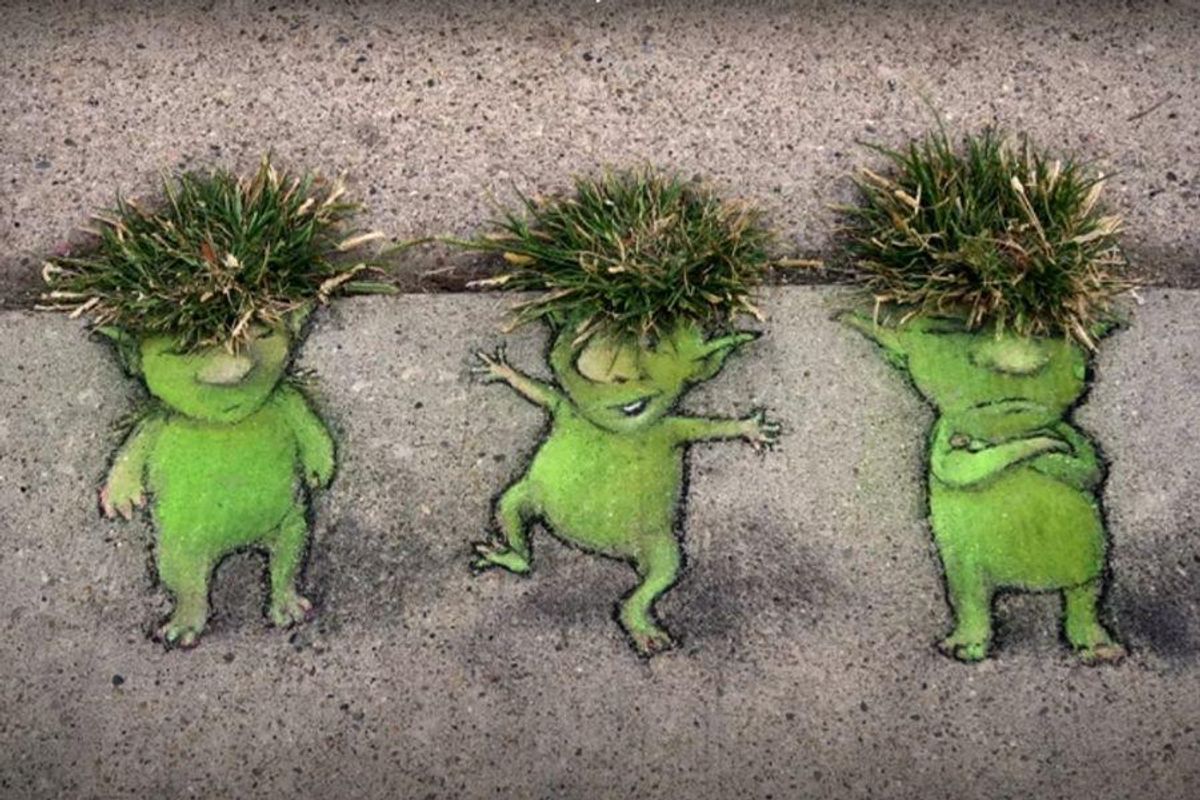
Just imagine walking down a sidewalk and seeing this little fella at your feet:

Or this young lady:

Or this creature:

That would make your day, wouldn’t it? Or at least bring a smile to your face for a while?

Public art is an act of love to strangers, a way of connecting to people without saying a word. It says, “Hey there, fellow human. Here’s a little something to make you smile, just because.”

That’s the beauty of David Zinn’s street art. It’s meant for the public—just average passers-by—to enjoy, individually and collectively.

Zinn has created an entire world of characters who pop up in unexpected places. For instance, meet Gerald the otter, who is waiting for a blind date in this tree stump.

Zinn uses chalk and charcoal to make his cast of characters come to life in cracks and crevasses, sidewalks and tree trunks. His creations aren’t meant to last forever; in fact, as Zinn points out, the temporary nature of them adds value to them.

“Famous works of art hanging in museums get seen by thousands of people every day. But this? You could be among the dozens of people who get to see this while it exists,” he told CBS Mornings. “That’s pretty special.”

Watch how he takes something he finds in the sidewalk and transforms it into a sweet little duo.

Sometimes he uses natural things he finds as inspiration for a piece.

Other times, he uses something human-made, like this upside down terra cotta pot:

Or this manhole cover:

Sometimes the shape of a rock lends itself to a character, like Keith and his emotional support chick here:

Or the space itself serves as inspiration.

Nadine the mouse features in many of Zinn’s pieces, probably due to her small size making it easy for her to fit into small spaces.

Usually his pieces use what’s already there—like a crack in the sidewalk—to tell a story.

The 3D nature of his drawings make it feel as if his characters are truly there.

“Looks like another long day of things stubbornly refusing to be impossible,” he writes in a caption of one of his “pigasuses.”

(Speaking of having wings, Nadine found a pair for herself.)

Watch Zinn turn a simple pot into a character with personality in a matter of minutes:

His entire Instagram page, Facebook page and TikTok channel are filled with endless delight. It was nearly impossible to decide what to include in this article because I wanted to include everything.

This is all well and good, you might say to yourself, but how does Zinn make a living if he’s not selling this art?

He sells books and prints of photos of his artwork on his online store. He also gets invited to schools and events. He has created a career for himself by rejecting blank canvases, putting his imagination out on the street for everyone to see for a while, then selling versions that will actually last. Pretty brilliant, really.

Zinn gave a fascinating TEDx Talk explaining how he found his own artistic niche. You’ll never look at a parking meter or sidewalk the same way again.

This article originally appeared on 02.12.22

Categories
News Trending Viral Worldwide

‘You saved my life’: Suicidal person’s life is changed after reading a homemade bumper sticker

If you are having thoughts about taking your own life, or know of anyone who is in need of help, please call the National Suicide Prevention Lifeline at 1-800-273-TALK (273-8255) or text “HOME” to the Crisis Text Line: 741741.


There’s an old Hebrew saying that if you “save one life, you save the world entire.” Who knows if Brooke Lacey, 22, had that lofty goal when she began a campaign in 2020 to help uplift people’s spirits during the first COVID-19 wave.

But her kind efforts may have done just that.

Lacey has struggled with mental health issues throughout her life and she knew that people like her were going to have a really hard time during COVID-19 lockdowns. A study from May 2021 found that the New Zealand population had “higher depression and anxiety compared with population norms.” The study also found that “younger people” and “those most at risk of COVID-19 reported poorer mental health.”


To help those who may be struggling, Lacey printed 600 stickers with an uplifting message and posted them around places where people may take their lives, including trains, bridges and large bodies of water in Wellington, New Zealand. She also made a bumper sticker with the same message for her car.

The stickers spoke directly to those who may be contemplating taking their own life. “Please don’t take your life today,” the stickers read. “The world is so much better with you in it. More than you realize, stay.”

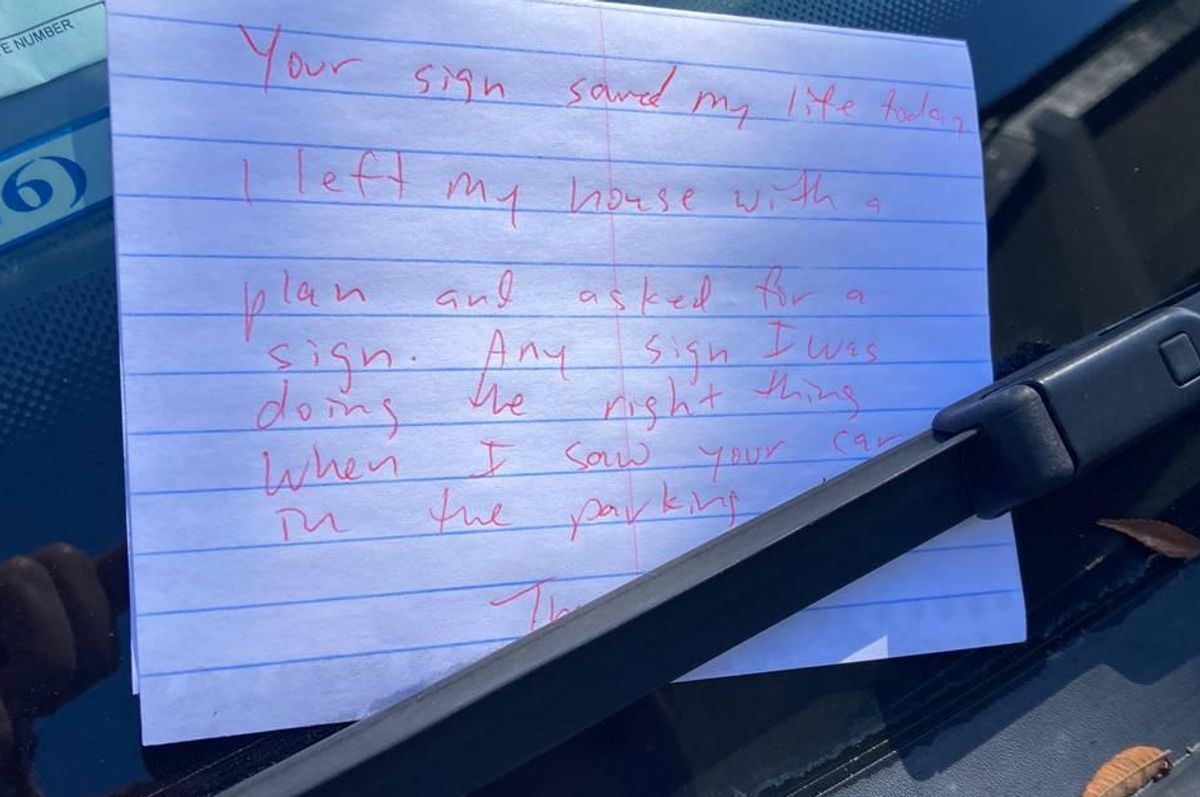
Earlier this month, Lacey parked her car in her university’s lot and when she returned to her vehicle to leave, she noticed a note was affixed to the windshield. Thinking it was someone complaining about how she parked or a ticket, she prepared for the worst but wound up being blindsided by the positive message.

“I left my house with a plan and asked for a sign, any sign, I was doing the right thing when I saw your car in the parking lot. Thank you,” the note read. At first, Lacey wasn’t sure what the person was referring to, then she remembered her homemade bumper sticker.

“I had these made so long ago, put one on my car and forgot about them, until now,” she tweeted on her since deactivated account. “I am so glad whoever you are chose to stay today. You never know who needs this reminder.”

Now, it’s unclear exactly what the person’s “plan” was, but there’s no doubt that Lacey’s bumper sticker inspired them to choose life. Let’s hope that the sticker also inspired them to seek professional help for whatever difficulties they are going through.

Whether it was intentional or not, Lacey’s sticker was effective because it followed one of the most important strategies that people use at suicide hotlines. According to Science.org, it’s of utmost importance that people contemplating suicide are handled with “respect and empathy.”

Lacey’s story is a beautiful reminder of the power that one simple, thoughtful gesture can have on another person’s life. Every day, there are people all around us who are looking for a sign to give them a reason keep going. Whether it’s a hug, a smile or the right message in the right place at the right time, we should all be like Lacey and make sure everyone knows that the world is better with them in it. In fact, much more than they ever realize.

This article originally appeared on 02.24.22

Categories
News Trending Viral Worldwide

Kind strangers showed up big for a dad who bought a way-too-tiny lawn mower

If you’re looking for a reminder of the good in people, we’ve got some sweet evidence for you.

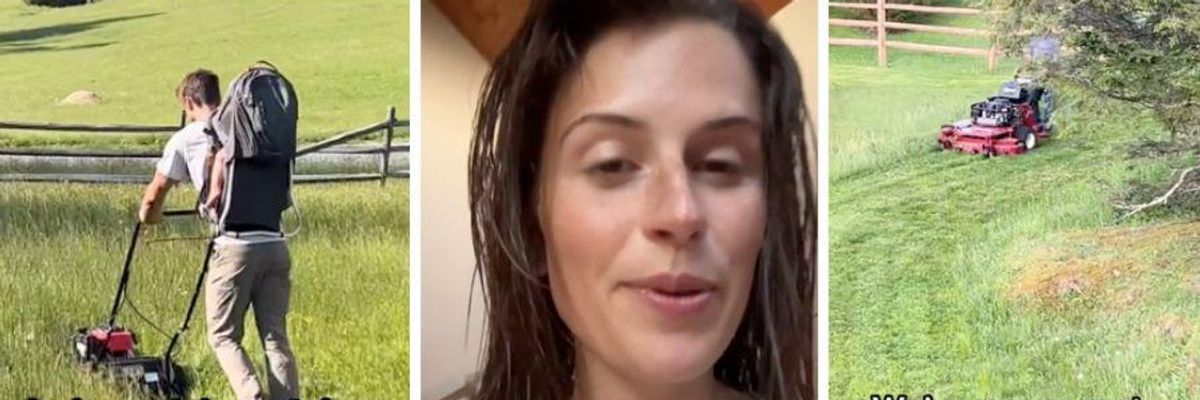
Madison Mealy and her husband Blake recently moved to a rural area in the Blue Ridge Mountains and are new to country living. Mealy shared a video on TikTok showing her husband mowing the lawn with their baby in a backpack.

Cute, right? The only problem is they have a humongous lawn and her husband was mowing it with the teeniest push mower.

To be fair, if you’ve never had a big lawn, you may not realize how long it takes to mow and that not all lawn mowers are created equal. (They make riding lawn mowers for a reason, and it’s not because of laziness.)

Mealy shared her amusement at having sent her husband out to buy a mower and seeing him come back with the tiny mower. It was going to take him hours to mow their grass.


But after she took a shower and went back to check on his progress, what she found was so heartwarming.

Not one, not two, but several strangers—presumably neighbors—had seen Blake trying to tackle their acreage with a subpar mower, and they showed up to help.

“We don’t know any of these people,” Mealy wrote.

Watch:

“Reminder: there’s a lot of good left in this world,” wrote Mealy.

It’s true. Helping without being asked. Showing up when you see a need. Taking a burden off of someone’s back without expecting anything in return. There are instances of pure human kindness like this all around us, every day, even if they’re not right in front of our faces.

We have plenty of viral examples of people at their worst, so it’s important that we share humanity at its best. And if you’re tempted to think that the former is the norm while goodness is the exception, don’t. Studies show that most people are honest, generous and helpful.

As Mealy said, “People are so good.” We just need beautiful reminders like this on occasion.

Thanks for providing one of those reminders, Mealy family. (Now go get yourselves a proper mower.)

This article originally appeared on 06.17.22

Categories
News Trending Viral Worldwide

Trevor Noah and Roger Federer board the ‘wrong train’ in perhaps the greatest tourism ad ever

What do you get when you combine comedian Trevor Noah, tennis legend Roger Federer and the world famous clock-making, chocolate-brewing, Alpine-skiing symbol of neutrality, Switzerland?

Apparently, a delightfully charming train ride through the Swiss countryside and perhaps the greatest tourism ad ever made.

Both Noah and Federer shared a tourism ad they collaborated on for the Grand Train Tour of Switzerland, and people are loving it. It’s one of those ads that people don’t care is an ad because it doesn’t really feel like an ad and it’s so enjoyable to watch. (It’s also incredibly effective—like, give us alllll the train rides through Switzerland, please.)


The ad plays like a mini-documentary of Noah and Federer filming a Swiss tourism ad gone wrong. The two men—both of whom are half-Swiss in real life—appear to hop on the wrong train while arguing about whether or not the ad they are filming is funny (or whether it even should be).

What follows is a tale involving Swiss punctuality, hospitality and stunning natural beauty, all wrapped up in wholesome hilarity.

Check it out:

Thousands of commenters have chimed in with how enjoyable and effective they found the ad:

“This clip is brilliant and I am definitely going to travel on that train in Switzerland in the near future. Excellent work,” wrote one commenter.

“Usually, I hate tourism ads because they’re always so clichéd and unoriginal, but this one hooked me from the beginning,” shared another. “Switzerland is such a beautiful country, and this ad singlehandedly convinced me so. Looking forward to this train ride sometime in the future! :)”

“This is criminally short!” wrote another. “I wish for a full hour! I can’t seem to get enough of them.”

Noah and Federer shared their experience making the video with Financial Times, and their “behind the scenes” stories are as delightful as the ad itself.

Federer, who is an official Switzerland Tourism Ambassador, shared how much he has enjoyed making Swiss tourism ads with Robert DeNiro, Anne Hathaway, and of course, Trevor Noah. He said the shoot with Noah brought him back to his own childhood.

“I was always on trains, leaving home, looking out of the window, seeing the trees and the fields go by and thinking, ‘Will I be a good tennis player? Will I not? Will I win, will I not?'” he said.

Several parts of the ad point to how strict the Swiss are about being on time, and Noah shared that there were a few instances while filming when a train really did almost take off with them inside.

“They weren’t even going to hold it for us,” he said. “We were like, ‘Oh, we’re making an ad,’ and then they were like, ‘Yeah, and the train has a schedule.'”

“We were laughing,” Noah said, imagining what would have happened if a train really had left with them on it. “Like, would that become the meta joke? Does that become the joke in the joke?”

If you enjoyed the train tour ad, take a few minutes to see Noah and Federer share how it came to be and how much fun they had making it.

This article originally appeared on 4.5.23

Categories
News Trending Viral Worldwide

4-year-old’s emotional intelligence is off the charts and people are giving kudos to his mom

Sometimes they even stand out from grownups. Take young Aldie, for example, whose ability to articulate his feelings exceeds many adults. When you find out he’s barely 4 years old, hearing him calmly talk about his emotions and good choices is all the more remarkable.

Aldie’s mom, Jonisa Padernos, tells Upworthy that she’s felt he was “really special” since he started talking in full sentences at 20 months. “Believe it or not, he had no major tantrums in his toddler years because he was always able to express [himself] with his words,” she says.


Padernos started young, asking Aldie questions and giving him time to answer without interrupting. “I’d always ask his opinion or feelings towards something and I don’t rush him to answer,” she says. “I give him time and just listen. I make sure I also tell him how I feel and explain to him because I think kids copy us, and if we do that, they would think that it’s normal to feel all those emotions as long as you can express it with words and [are] able to process it.”

Check out the conversation between Aldie and Padernos at bedtime as he goes through a recap of his emotions that day, which has racked up more than 17 million views on TikTok.

@mom_aldie

Bedtime conversation. The last part made me ❤️🥹 #fyp #momlife

The way Aldie shared what he was feeling about his mom not letting him go outside, how he helped his papa make a better choice with his emotions, and how he described the different emotions he feels is more than most adults can muster when they’ve had “a hard time doing emotions” during the day. And the way Padernos listens and reflects and reassures him is so, so beautiful.

People in the comments agreed.

“Emotionally intelligent, articulate and able to string super sophisticated sentences together,” wrote one commenter on Instagram. “I taught 7-year-olds that weren’t this advanced – heck, most adults aren’t this emotionally intelligent. I have confidence in his future and the consequences are working beautifully Mama. We have to raise kids other people will like too. 😍👏”

“Wowwwww….. I’m so amazed by this baby’s EVERYTHING … the emotional intelligence, the vocabulary, empathy, the processing skills…all of it! ❤️❤️❤️❤️” wrote another.

“The most mature conversation I’ve heard about emotions – tbh I don’t think I’ve ever been as honest about my feelings as this little one was 🙌🏽 feeling so inspired by both of them. ♥️🫶🏽✨” shared another.

There’s a lot that parents can do to help their children develop this kind of emotional intelligence, and this interaction between Aldie and his mom is a prime example.

“My advice is just be present, encourage kids to tell you how their day was or anything, listen and give them time to express without rushing,” says Padernos. “Be patient, consistent and honest when communicating with them. Always remember that kids mirror us and so we have to show and express our emotions so they will be encouraged to also express their feelings to us. And when we get mad or frustrated, also let them know and explain why and apologize if you feel that you’ve let your emotions get in the way.”

While not every child will be able to understand and articulate as clearly as Aldie did at such a young age, most kids are far more capable of understanding and processing emotion than we give them credit for. Proactively teaching them how to communicate what they’re feeling and explaining how emotions work can go a long way toward helping them develop the self-regulation tools they’ll use throughout their life.

This article originally appeared on 4.4.23

Categories
News Trending Viral Worldwide

Dad writes heartbreaking message after the death of his son

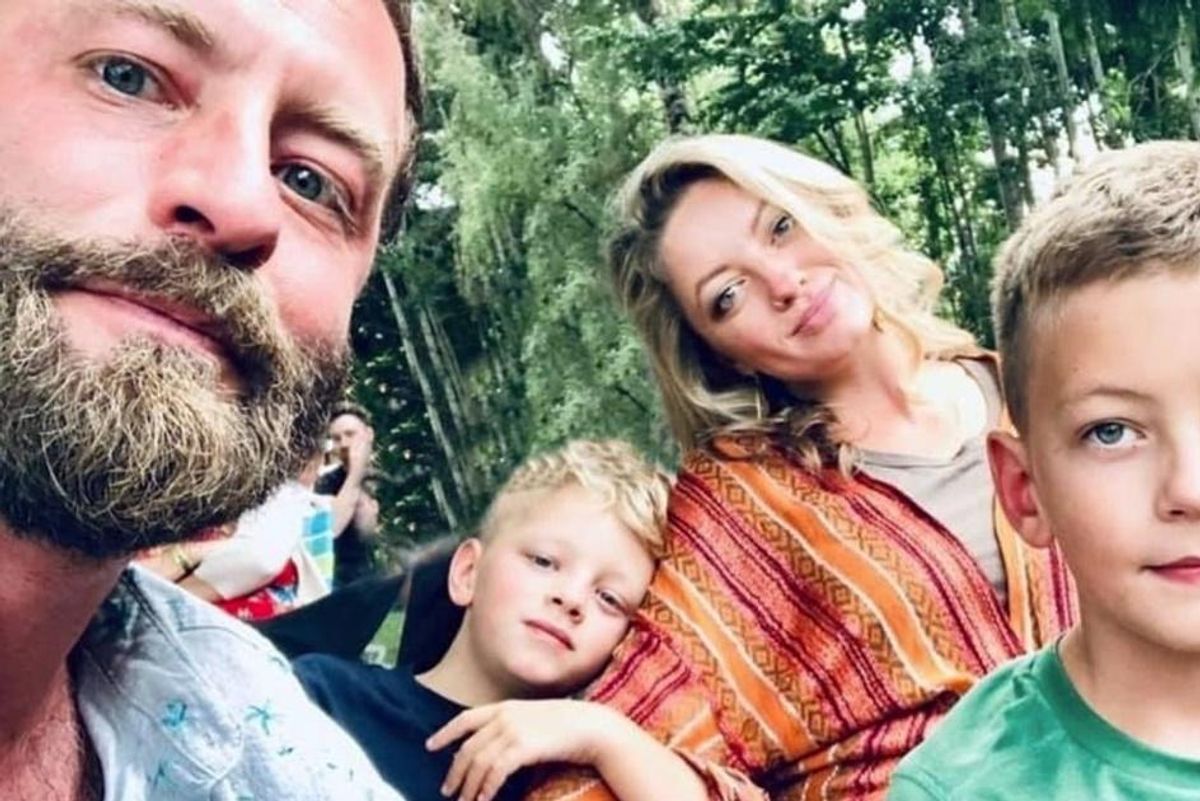
A dad from Portland, Oregon, has taken to LinkedIn to write an emotional plea to parents after he learned that his son had died during a conference call at work. J.R. Storment, of Portland, Oregon, encouraged parents to spend less time at work and more time with their kids after his son’s death.


In an open letter on LinkedIn, which has so far garnered over 26,000 likes and 2,700 comments, Storment explains that his son, Wiley, passed away during his sleep as a result of complications from his mild epilepsy. He then goes on to blast himself for not spending enough time with his son, and encourages other parents to take more time off work.
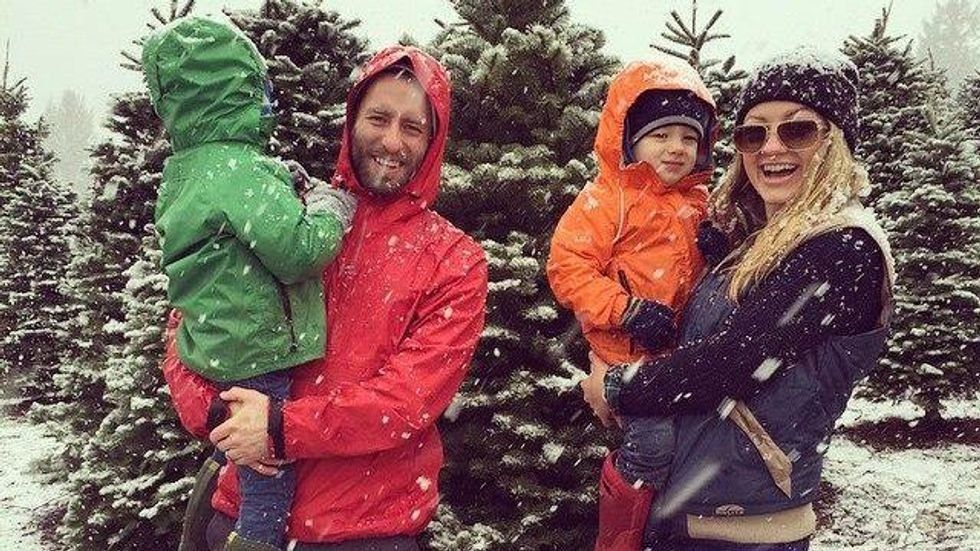
Widowed father with his family

Storment starts by explaining that the day his son passed away started like any other:

“Eight years ago, during the same month, I had twin boys and co-founded Cloudability. About three months ago Cloudability was acquired. About three weeks ago we lost one of our boys.”

“When I got the call I was sitting in a conference room with 12 people at our Portland office talking about PTO policies. Minutes earlier, I had admitted to the group that in the last 8 years I’d not taken more than a contiguous week off.”

That’s when Storment received a call from his distraught wife.

“My wife and I have an agreement that when one of us calls, the other answers. So when the phone rang I stood up and walked to the conference room door immediately.”

“I was still walking through the door when I answered with ‘Hey, what’s up?'”

“Her reply was icy and immediate: ‘J.R., Wiley is dead.'”

“‘What?’ I responded incredulously.”

“‘Wiley has died.’ she reiterated.”

“‘What?! No.’ I yelled out, ‘No!'”

“‘I’m so sorry, I have to call 911.'”

Storment goes on to explain the chaos that happened next.

“That was the entire conversation. The next thing I know I’m sprinting out the front door of the office with my car keys in hand, running ferociously across the street and muttering ‘oh F**k. oh F**k. oh F**k.’ Half way down the block I realize I don’t have the opener to my parking garage. Running back into the lobby, I all but shout “Someone drive me! Somebody drive me!” Thankfully, a helpful colleague did.”

Storment made it home, but not yet knowing the cause of death, police were treating the house as a possible crime scene. The heartbroken father was unable to see his son for two and a half hours.

“When the medical examiner finally finished his work, we were allowed in the room. An eerie calm came over me. I laid down next to him in the bed that he loved, held his hand and kept repeating, ‘What happened, buddy? What happened?'”

“We stayed next to him for maybe 30 minutes and stroked his hair before they returned with a gurney to take him away. I walked him out, holding his hand and his forehead through the body bag as he was wheeled down our driveway. Then all the cars drove away. The last one to leave was the black minivan with Wiley in it.”
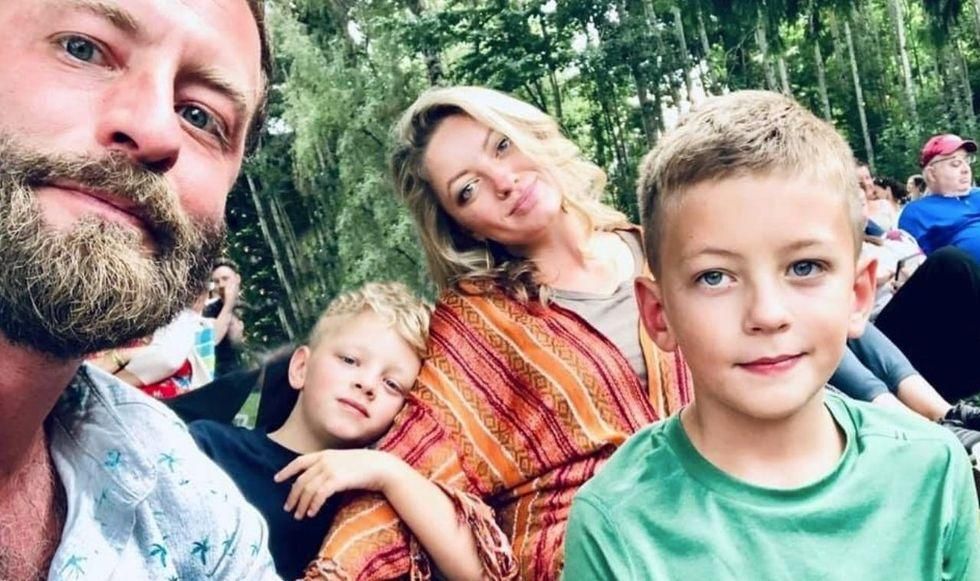
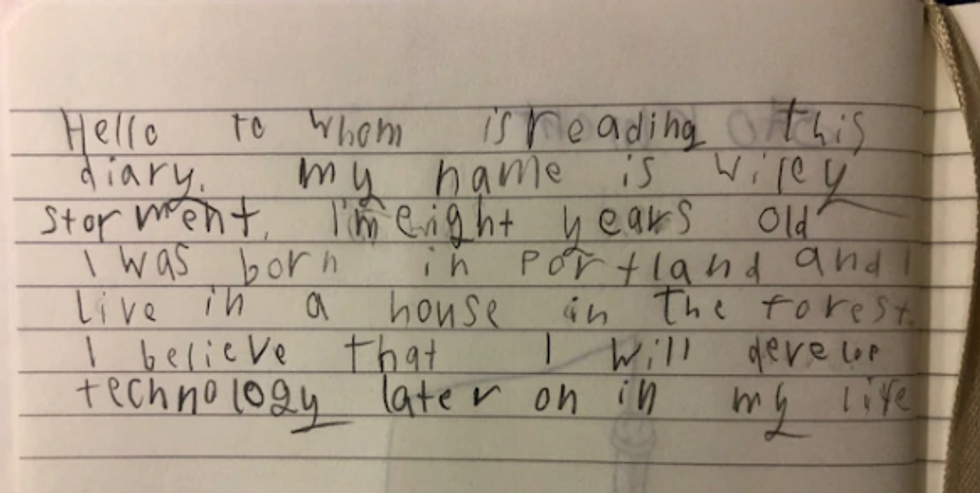
Storment goes on to explain his son’s dreams and aspirations, and the difficulty he had signing his son’s death certificate.

“Wiley was obsessed with starting a business. One day it was a smoothie stand, the next it would be a gallery, then a VR headset company, then a ‘coder’, then a spaceship building company. In each of these scenarios he was the boss. His brother (and sometimes us) were invited to work for—not with— him and were each assigned jobs. In the gallery scenario, Wiley informed Oliver that he would be manning the cash register.”

“Around 5 years old, Wiley decided he was going to get married as an adult. By 6 he had identified the girl, holding her hand at recess on the first day of kindergarten. Over the next two years as we moved from Portland to London to Hawaii, he kept in touch with her by handwritten letter. Not long before we moved back to Portland, the two agreed (by letter) to marry. She beat him to the punch and asked him. He accepted. Happily, he got to see her twice after we moved back to Portland in June.”

“One of the countless difficult moments of this month was signing his death certificate. Seeing his name written on the top of it was hard. However, two fields further down the form crushed me. The first said: ‘Occupation: Never worked’ and the next: ‘Marital Status: Never married.’ He wanted so badly to do both of those things. I feel both fortunate and guilty to have had success in each.”
Storment then criticises himself for spending too much time at work. And while it sounds that Wiley got to live an amazing life, Storment only wishes he could have done more with him.

“Over the last three weeks I have come up with an endless stream of things I regret. They tend to fall into two categories: things I wish I had done differently and things I’m sad not to see him do. My wife is constantly reminding me of all the things he did do: Wiley went to 10 countries, drove a car on a farm road in Hawaii, hiked in Greece, snorkeled in Fiji, wore a suit to a fantastic British prep school every day for two years, got rescued from a shark on a jet ski, kissed multiple girls, got good enough at chess to beat me twice in a row, wrote short stories and drew comics obsessively.”

Storment hadn’t checked on the boys the morning of the tragedy because he had to get up early for meetings, a decision he seems to regret.

“Around 5:40am, the next morning I woke up for a series of back to back meetings. I did a Peloton ride, took an analyst call from my home office, one with a colleague on the drive to work, then the rest at the office. None seem that important now. I left that morning without saying goodbye or checking on the boys.”
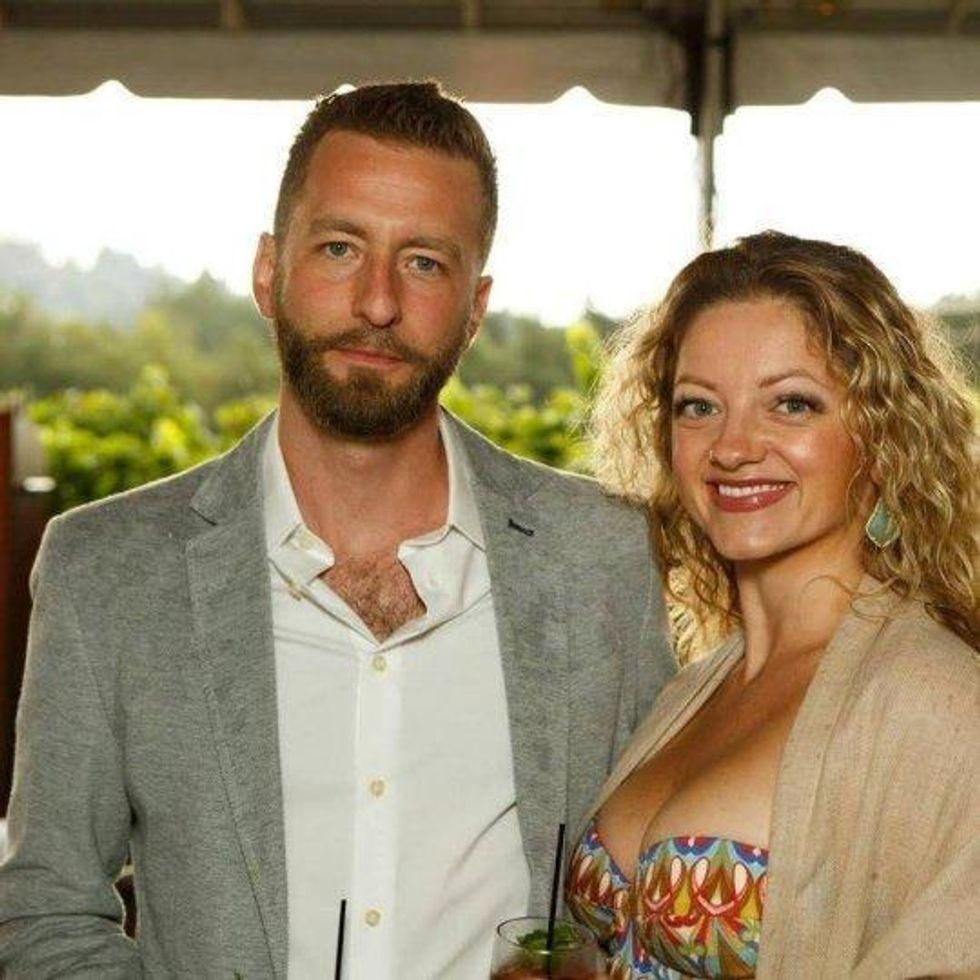
Storment has a simple message for parents:

“Many have asked what they can do to help. Hug your kids. Don’t work too late. A lot of the things you are likely spending your time on you’ll regret once you no longer have the time. I’m guessing you have 1:1 meetings on the books with a lot of people you work with. Do you have them regularly scheduled with your kids? If there’s any lesson to take away from this, it’s to remind others (and myself) not to miss out on the things that matter.”

“The big question is how to return to work in a way that won’t leave me again with the regrets I have now. To be honest, I’ve considered not going back. But I believe in the words of Kahlil Gibran who said, ‘Work is love made visible.’ To me, that line is a testament to how much we gain, grow and offer through the work we do. But that work needs to have a balance that I have rarely lived. It’s a balance that lets us offer our gifts to the world but not at the cost of self and family.”

“While I sat writing this post, my living son, Oliver, came in to ask for screen time. Instead of saying the usual ‘no’, I stopped writing and asked if I could play with him. He was happily surprised by my answer and we connected in a way I would have formerly missed out on. Small things matter. One silver lining from this tragedy is the improving relationship I have with him.”

“Our family has gone from having two units of two (the parents and the twins) to now being a triangle of three. That’s a big adjustment for a family that has always been four. Oliver’s brilliant reply when we discussed the shape of our new family: ‘But Papa, the triangle is the strongest shape.’ By some sad and beautiful irony, Oliver has met three sets of 8-year-old twins in our new neighborhood since Wiley passed.”

“I’ve learned to stop waiting to do the things the kids ask for. When we sold the business I gave each of the boys a $100 dollar bill. They decided to pool their money to buy a tent for camping. But we didn’t make it happen before Wiley died. Another regret. So, after the first round of family visits after his death, I took Jessica and Oliver to REI to get gear and we left town quickly to camp near Mt. St. Helens.”

“Somehow, we got to the wilderness without enough cash to cover the campground fee and had a slight panic. Jessica then realized that Wiley’s $100 bill was still in his seat pocket. He got to spend his money on camping after all. Collectively, the family said a big, ‘Thanks, buddy’ out-loud to him. It was one of many bittersweet moments we will experience for the rest of our lives. Each happy time brings with it the sadness that he doesn’t get to experience it.”

“One of Wiley’s happy times was listening to music and dancing. Damn, could that kid dance. He loved the Oregon Country Fair and the year before we left for London, we listened to a band there play a version of ‘Enjoy yourself (It’s later than you think)‘. The words stuck with me that day three years ago and painfully so now:”

“You work and work for years and years, you’re always on the go

You never take a minute off, too busy makin’ dough

Someday, you say, you’ll have your fun, when you’re a millionaire

Imagine all the fun you’ll have in your old rockin’ chair

Enjoy yourself, it’s later than you think

Enjoy yourself, while you’re still in the pink

The years go by, as quickly as a wink

Enjoy yourself, enjoy yourself, it’s later than you think”

This article originally appeared on 07.10.21

Categories
News Trending Viral Worldwide

Interesting video explains why people looked a lot older in the past than they do today

This article was originally published on 3.3.23.

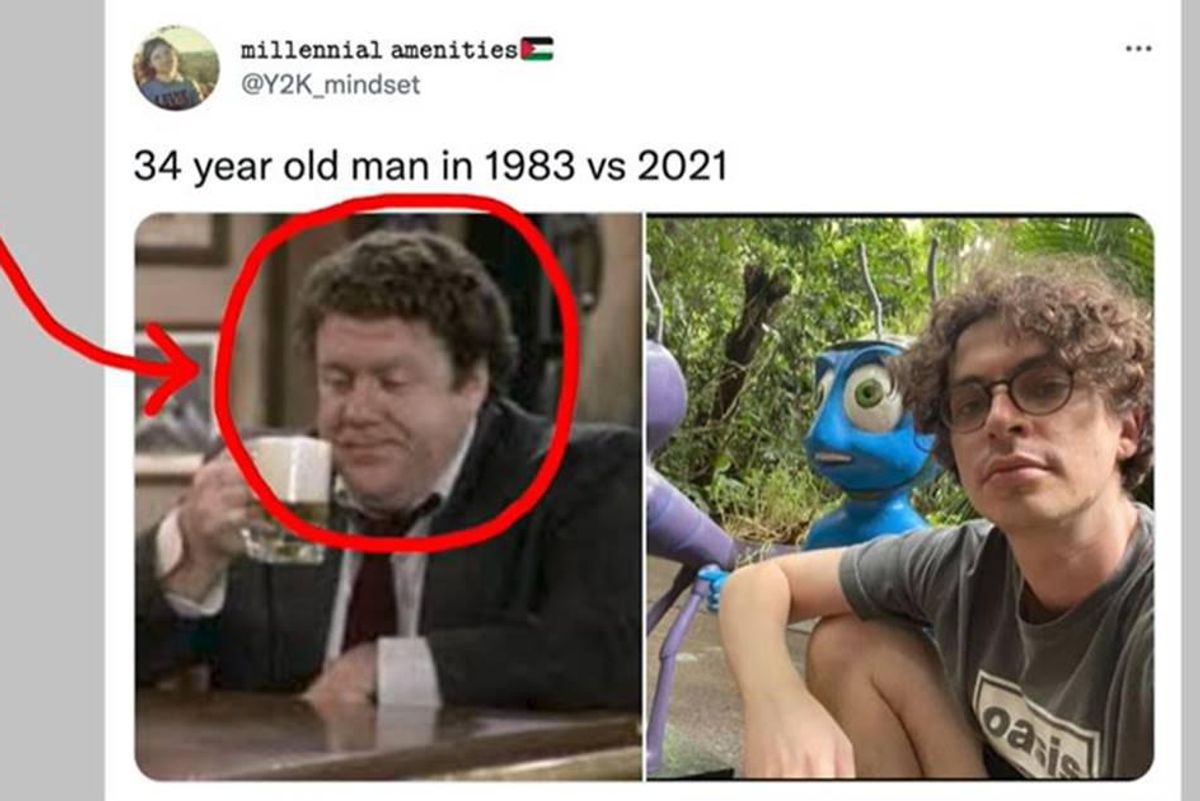
Ever look at your parents’ high school yearbooks and think people looked so much older back then? All of the teenagers look like they’re in their mid-30s and the teachers who are 50 look like they’re 80.

When we watch older movies, even those from the 1980s, the teenagers appear to be a lot older as well.

Why is it that they looked so much older? Was life harder? Did people act more mature? Did they spend more time outdoors and less time playing video games? Is it their sense of fashion? Were they all smokers?


Educator Michael Stevens, who runs the super-popular Vsauce YouTube channel, explains the phenomenon in a new video called, “Did people used to look older?” In the video, he explains that people in the past appear a lot older due to a phenomenon known as retrospective aging.

When we see people in the past, they are wearing outdated styles that we associate with older people; therefore, we think they have aged rapidly. For example, a teenager in the 1950s may have been in fashion while wearing thick Buddy Holly-style glasses.

But as people age, they tend to cling to the fashion of their youth. So many people of that generation continued to wear the Buddy Holly-style glasses into their 50s. So when younger people see those glasses they see them as old people’s glasses and not a hip kid from the ’50s.

So in the photo from the ’50s, the teen appears to look a lot older because our perspective has been tainted by time.

But it isn’t all just an illusion. Stevens also points out that people did age faster back in the day due to differences in nutrition, lifestyle and medicine.

This article originally appeared on 07.11.22

Categories
News Trending Viral Worldwide

Mantras to help get you through life, created by 6-year-olds

This article was originally published on 3.2.23.

Kids might say the darnedest things, but occasionally they also give sage advice.

A teacher in the United Kingdom by the name of George Pointon has made a name for himself by tweeting his 6-year-old students’ comical, candid and sometimes profound answers to weekly questions.

Or, as he humorously writes in his Twitter bio, “exploiting children’s imagination for likes.”

One of my favorite threads so far is when Pointon asked his students to create a “mantra to help us through life.” The teacher posted each student’s response, along with some commentary.


It’s all some noteworthy food for thought, if not harmless, wholesome entertainment.

Best of all, the genuine affection Pointon has for his students is undeniable.

Rory: “Don’t stop running”

Pointon: “The other day I grunted when picking up my keys from the table. If I didn’t stop running, I’d die. Rory has gone for the Forrest Gump approach here. It seemed to work for him. Forrest that is. I’ve seen Rory run into multiple trees. Persistent tho.”

Rory might be running into trees, but some spot-on perspectives on life as well.

kids, kid reactions

friendship

JJ: “Only be friends with people who you want to be friends with”

Pointon: “This gets forgotten about in adults. Sometimes we are friends with people out of convenience or history. Look around and ask yourself, “does this person positively impact my life?”. JJ has his head screwed on.”

JJ understands the value of authentic friendship. And, as Pointon reflected, setting boundaries and letting go is something so many adults struggle with, though there are countless sources noting its importance.

scolding children

Jack: “You might [get] told off but sometimes you’re not doing anything wrong”

Pointon: “His anti-authority attitude is refreshing as it is scary. He’s right tho. Fight for what you believe in and it’s never wrong. Although Jack believes he can back flip over a lorry, so I don’t know.”

What’s a lorry, you may ask? Turns out it’s a British term for an 18-wheeler. I didn’t know either.

sesame street

Ravi: “Some people don’t have anything so be happy you have everything”

Pointon: “We truly are in the presence of greatness. There are world leaders without this clarity. Step back and look at what we take for granted, you’ll be amazed. Ravi elevates people around him. He’s a special lad.”

I believe this was a major theme that “Don’t Look Up” was trying to convey. Well done, Ravi.

funny kids

Lola: “You can’t swim in a sink but a bath is just a big sink”

Pointon: “I believe she’s talking about perspective. One person’s baby step is another’s giant leap. Lola moves at her pace and is proud of the people around her moving at theirs. Otherwise you’ll lose a one horse race.”

I’m gonna assume Lola is also a proponent of the “just keep swimming” mentality.

introverts

Emma: “The people who don’t talk, still have something to say”

Pointon: “Empty vessels makes the most noise. Emma is quiet and has grown in confidence since I’ve known her. She is an advocate for letting people be themselves. A true woman of her time. She’ll make an excellent leader.”

Hear, hear for quiet confidence, Emma.

perspective

Belle: “Flowers live in the ground, we live in a house. Everyone lives somewhere.”

Pointon: “It’s a huge, overwhelming concept to think every individual lives an equally complex and rich life as you. Knowing that everyone is coming from something make[s] you see we’re all the same. One team.”

A lesson in empathy, taught by Belle.

viral twitter

Mikey: “Mud hills are fun but also muddy”

Pointon: “I’d never heard of the term “mud hill” but I assumed it’s a hill, that is muddy. I was wrong. It’s basically a pile of mud mashed up and used to throw at cars or people…So if you see a boy holding a mud ball with a devilish grin, run.”

No such thing as good, clean fun, according to Mikey.

kids self esteem

Zahra: “Some things are cool and some things aren’t”

Pointon: “There is no messing about with Zahra. A woman of precision. She wanted to add that if you find things cool, then it is. Which in itself is a pretty cool thing to say. If you enjoy something, don’t let other[s] bring you down.”

Zahra is clearly the Queen of Cool.

mantras

Susanna: “Don’t start a fire in a forrest”

Pointon: “I take this as, understanding your situation and objectively being able to know what is benefitting you and what isn’t. But Susanna confirmed that there is no subtext. Just don’t start fires in forrests because it goes whoosh, okay.”

I also love how Pointon was loyal to Susanna’s spelling of the word “forrest.” That dedication right there.

According to indy100, Pointon protects the identity of his young pupils by using made-up aliases. But reassured, the answers provided are all too real.

Pointon told indy100, “School can sometimes make you think quite linear, like there are only right or wrong answers but, especially with them being so young, their thoughts are actually really abstract.”

Passion, purpose, and a dash of social media stardom have allowed Pointon to help raise awareness around children’s issues. Last November he worked with the Anti-Bullying Alliance, asking the question “what makes you unique?”

For Zahra, it was her two different eye colors. For Susanna, it was the fact that she could fit 100 grapes in her mouth (Pointon isn’t so sure, but encouraging nonetheless).

Pointon hopes to work with even more charities, using his platform to “have conversations with children about things that need to be spoken about, or things that are going on in the world and get their point of view on things.”

In the meantime, you can catch all of Pointon’s thoughtful questions, along with his students’ endearing and brilliant answers, on Twitter.

This article originally appeared on 01.28.22

Categories
News Trending Viral Worldwide

A story about two pairs of boots illustrates how rich people get richer in ways poor people can’t

Any time conversations about wealth and poverty come up, people inevitably start talking about boots.

The standard phrase that comes up is “pull yourself up by your bootstraps,” which is usually shorthand for “work harder and don’t ask for or expect help.” (The fact that the phrase was originally used sarcastically because pulling oneself up by one’s bootstraps is literally, physically impossible is rarely acknowledged, but c’est la vie.) The idea that people who build wealth do so because they individually work harder than poor people is baked into the American consciousness and wrapped up in the ideal of the American dream.

A different take on boots and building wealth, however, paints a more accurate picture of what it takes to get out of poverty.


Author Terry Pratchett is no longer with us, but his writing lives on and is occasionally shared on his official social media accounts. Recently, his Twitter page shared the “Sam Vimes ‘Boots’ Theory of Socioeconomic Unfairness” from Pratchett’s 1993 book “Men At Arms.” This boots theory explains that one reason the rich are able to get richer is because they are able to spend less money.

If that sounds confusing, read on:

Pratchett wrote:

“The reason that the rich were so rich, Vimes reasoned, was because they managed to spend less money.

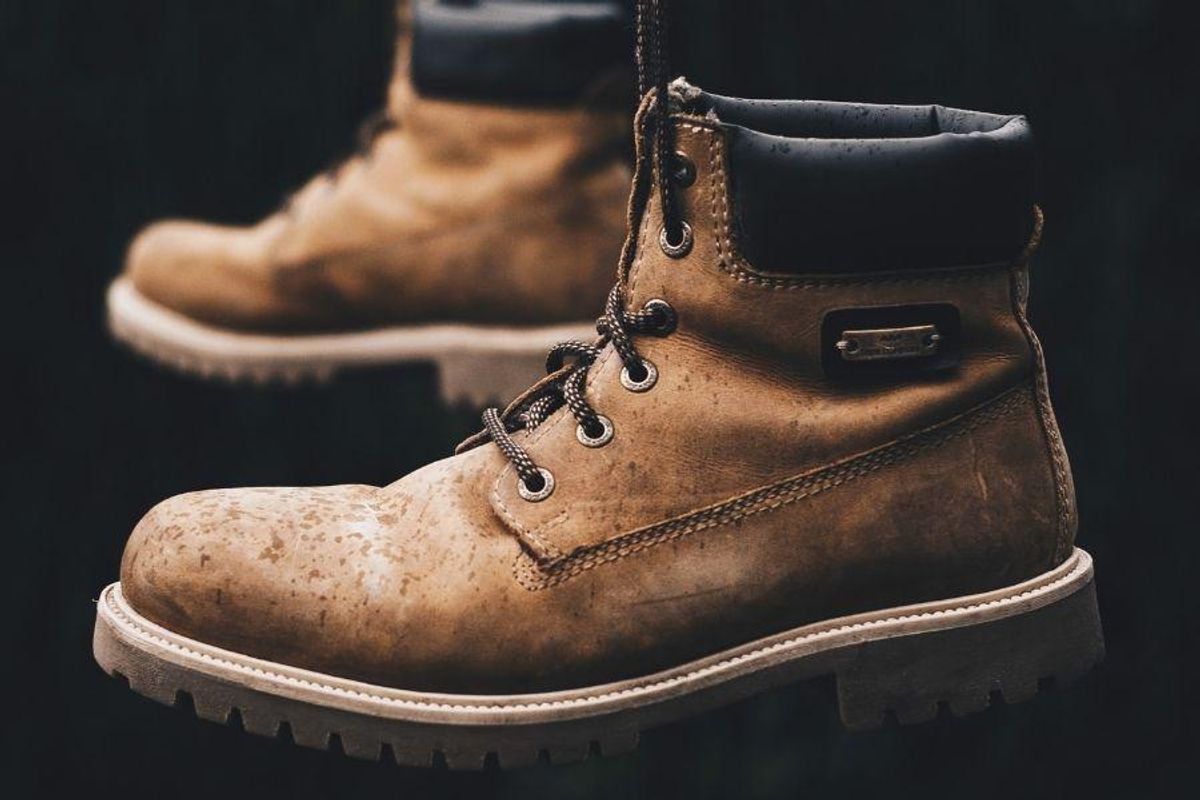
Take boots, for example. He earned thirty-eight dollars a month plus allowances. A really good pair of leather boots cost fifty dollars. But an affordable pair of boots, which were sort of OK for a season or two and then leaked like hell when the cardboard gave out, cost about ten dollars. Those were the kind of boots Vimes always bought, and wore until the soles were so thin that he could tell where he was in Ankh-Morpork on a foggy night by the feel of the cobbles.

But the thing was that good boots lasted for years and years. A man who could afford fifty dollars had a pair of boots that’d still be keeping his feet dry in ten years’ time, while the poor man who could only afford cheap boots would have spent a hundred dollars on boots in the same time and would still have wet feet.”

In other words, people who have the money to spend a little more upfront often end up spending less in the long run. A $50 pair of boots that last five years essentially cost you $10 a year. But if you can only afford $10 upfront for a pair of boots that last six months, that’s what you buy—and you end up paying twice as much over a five-year period.

There are so many areas in which this principle applies when you’re poor. Buying in bulk saves you money over the long run, but you have to be able to afford the bulk cost up front. A reliable car that doesn’t require regular repairs will cost more than a beater, but if the beater is all you can afford, that’s what you’re stuck with. You’ll likely spend the same or more over time than if you’d bought a newer/higher quality car, but without the capital (or the credit rating) to begin with, you don’t have much choice.

People who can afford larger down payments pay lower interest rates, saving them money both immediately and in the long run. People who can afford to buy more can spend more with credit cards, pay off the balances, build up good credit and qualify for lower interest rate loans.

There are lots of good financial decisions and strategies one can utilize if one has the ability to build up some cash. But if you are living paycheck to paycheck, you can’t.

Climbing the financial ladder requires getting to the bottom rung first. Those who started off anywhere on the ladder can make all kinds of pronouncements about how to climb it—good, sound advice that really does work if you’re already on the ladder. But for people living in poverty, the bottom rung is just out of reach, and the walls you have to climb to get to it are slippery. It’s expensive to be poor.

When people talk about how hard it is to climb out of poverty, this is a big part of what they mean. Ladder-climbing advice is useless if you can’t actually get to the ladder. And yet, far too many people decry offering people assistance that might help them reach the ladder so they can start taking advantage of all that great financial advice. Why? Perhaps because they were born somewhere on the ladder—even if it was the bottom rung—and aren’t aware that there are people for whom the ladder is out of reach. Or perhaps they’re unaware of how expensive it is to be poor and how the costs of poverty keep people stuck in the pit. Hopefully, this theory will help more people understand and sympathize with the reality of being poor.

Money makes money, but having money also saves you money. The more money you have, the more wealth you’re able to build not only because you have extra money to save, but also because you buy higher quality things that last, therefore spending less in the long run. (There’s also the reality that the uber-wealthy will pay $5,000 for shoes they’ll only wear a few times, but that’s a whole other kind of boots story.)

Thanks, Terry Pratchett, for the simple explanation.

This story originally appeared on 01.28.22

Categories
News Trending Viral Worldwide

Cat owner put a first person camera on their collar and accidentally filled the world with delight

Have you ever wondered what it’s like to be a cat? To watch the world from less than a foot off the ground, seeing and hearing things humans completely miss, staring out the window for hours while contemplating one of your nine lives?

Well, thanks to one person, we need wonder no more—at least about what-they’re-seeing part.

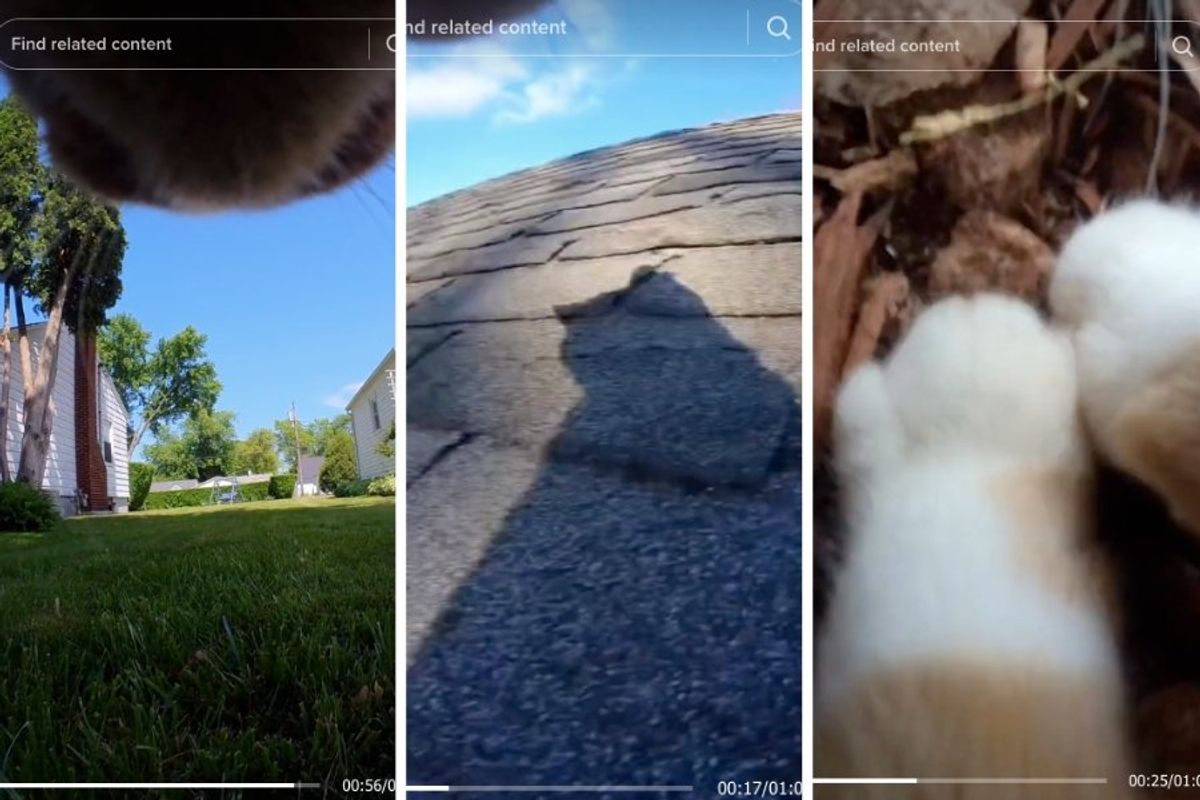
The TikTok channel Mr. Kitters the Cat (@mr.kitters.the.cat) gives us a cat’s-eye view of the world with a camera attached to Mr. Kitters’ collar. And the result is an utterly delightful POV experience that takes us through the daily adventuring of the frisky feline as he wanders the yard.


In a video titled “Spicy cats,” which has more than 74 million views on TikTok, we begin with the cutest cat sneeze ever. Then we hear Mr. Kitters’ meow as we walk with him through the grass before the scene switches to a thrilling, yowling cat chase he witnesses across the yard (while tucking himself even more securely under the bush he’s in).

The best is seeing his kitty paws as he walks and then digs in the mulch. And there’s apparently something very exciting that needs to be pounced on right along a chain link fence.

Watch and enjoy:

@mr.kitters.the.cat

Spicy cats 🌶️ #fyp #cat #meow

The commenters made their delight known.

“I love how he saw the cat fight and was like that’s not my business today,” wrote one person.

“WHEN HE DIGS WITH HIS LIL PAWS,” declared another.

“People: Cats only meow at humans.” Mr Kitters -Meows at everything-” wrote another.

And of course, countless people responded simply to the sneeze with “Bless you.”

Mr. Kitters has other POV videos as well. This one demonstrates how chatty he is and shows his black cat buddy as well.

@mr.kitters.the.cat

“What do you want?” “Nothing!” #fyp #cat #meow

It really sounds like he says, “Let me in,” doesn’t it?

And this “extreme sports” video is riveting.

@mr.kitters.the.cat

Extreme sports 💀 #fyp

It’s funny how something as simple as putting a camera around the neck of a cat can draw in tens of millions of people. We’re all so curious about the lives of the creatures we see every day, and the adorable quirkiness of cat behavior is a big part of why we keep them as companions in the first place. Seeing the world through their point of view is just one more way we can enjoy and learn about our pet friends.

This article originally appeared on 6.15.23