The Fast & Furious cast really is like “family,” in that they’re always complaining about each other. We dedicated an entire post to all the sh*t-talking in the Fast-verse, but the big two were (are?) The Rock vs. Vin Diesel (“Some conduct themselves as stand up men and true professionals, while others don’t. The ones that don’t are too chicken sh*t to do anything about it anyway. Candy asses”) and The Rock vs. Tyrese Gibson.
The GibsiHana founder sided with Diesel in the beefy beef, especially after The Rock got his own spin-off movie with Jason Statham, and wrote on Instagram, “Diversity, love, multi ethnic worldwide multi generational, United Nations, One Race, Fast Family…… Until Dewayne showed up I guess this whole time he had a problem cause he wasn’t the ONLY ONE on the movie poster.” It’s impossible to explain every facet of the surprisingly complex feud, but don’t worry, things are now good between The Rock and Tyrese.
“Me and The Rock peaced up,” a Santa hat-wearing Gibson said on Stir Crazy with Josh Horowitz. “We talked for like four hours about three weeks ago. Yeah, we talked… It was great. What’s interesting about the Fast and the Furious is, it’s not about any of us individually. See, we’re like the U.N. at this point.” The United Nations should settle disagreements the same way as the Fast and Furious movies: whichever country’s leader successfully drives a car from one skyscraper to another skyscraper, wins. Still unexplained is why Tyrese referred to The Rock as “Dewayne,” however.
John Mulaney stopped by Jimmy Kimmel Live on Tuesday night and opened up about his surprising new job as a staff writer for Late Night with Seth Meyers. As Mulaney describes it (around 13:45 above), the whole thing happened rather quickly after he hosted Saturday Night Live on Halloween. The comedian noticed that he enjoyed going into an office and accomplishing a task, which was something that was missing from his life since the pandemic hit. He also noticed that the lack of structure was making him engage in some odd behavior around the house.
“During quarantine, I was like, ‘Why am I going totally crazy?’” Mulaney explained to Kimmel. “And, like, why I am telling my own wife my accomplishments? You know, like, ‘I had a Comedy Central Presents when I was 23 years old!’”
Mulaney then spoke to his psychiatrist, who encouraged him to get a job with a boss and tasks in a pretty blunt way. “She said to me without external structure I don’t have any confidence in you thriving. And she would know because I told her everything about my brain.”
From there, Mulaney approached Meyers about working for him, which made him very nervous despite the two being best friends. However, while Mulaney got the job, he readily admits that he’s not very good at it particularly when it comes to writing monologues, which are kind of important for a late night talk show. “I’m not that valuable,” he joked to Kimmel. “There’s a rhythm and a brevity to monologues, which you know, and I’m so bad it.”
Ryan Reynolds, through his Maximum Effort advertising company, has released a new ad for Match, which features a snippet of Swift’s new version of “Love Story.” The ad stars Satan, who gets matched on the dating platform with a woman named 2020. The song plays for about the last 40 seconds of the ad and it sounds quite a bit like the original version.
Swift shared the ad on Twitter and provided an update about the progress of her rerecordings, saying, “Okay so while my new re-records are NOT done, my friend [Ryan Reynolds] asked me if he could use a snippet of one for a LOLsome commercial he wrote so…here’s a sneak peak of Love Story! Working hard to get the music to you soon!!”
Okay so while my new re-records are NOT done, my friend @VancityReynolds asked me if he could use a snippet of one for a LOLsome commercial he wrote so…here’s a sneak peak of Love Story! Working hard to get the music to you soon!! https://t.co/0vBFXxaRXR
Without the representation of marginalized voices in media, there are only two options left on the table: exclusion and tokenization. Those aspects have dominated the Indigenous experience in the United States since… well, really since the colonizers arrived. Year after year, we fail to see our people thoughtfully portrayed in mainstream TV, movies, and literature. If we aren’t the “warriors” or the “wise elders,” we often don’t exist.
As 2020 draws to a close, we’ve begun to see a shift in that centuries-long pattern. Not a complete sea change, mind you, but forward progress nonetheless. Networks and studios have started greenlighting mainstream projects with all-Indigenous writers’ rooms, casts, directors, and producers. Meanwhile, statues of European colonizers and slavers are finally coming down and racist epithets are being removed from (some) of our sports teams. There are more Indigenous folks on every rung of the U.S. political system than ever before. Most prominently with Representative Deb Haaland (Laguna Pueblo) of New Mexico short-listed to run the Department of Interior under the incoming Biden administration. (This would be the first time an Indigenous American actually got to run the agency that not only controls all public land, national parks, and natural resources but also administers all the Indian reservations across the country. It would be a massive win for Indian Country, the preservation of our cultures, and the environment.)
Still, there’s a long way to go. Most people have still been taught poisoned rhetoric about our shared history. The prevailing narrative continues to glorify colonization and ignore actual genocide while infantilizing Indigenous identity and erasing our cultures. And other crucial conversations aren’t being had at all: Indigenous women and girls are still being raped and murdered at the highest rates in the country, of the 535 members of Congress, only six are Indigenous, and red face is still seen on TV shows in 2020.
To help us add context to the representation conversation across media, pop culture, and everyday life, we’ve gathered a group of our favorite Indigenous comedians. These are folks from all over the country who write, joke, and think about these realities while also creating art (and comedy) about their own lives, loves, and cultural touchstones.
Our panel:
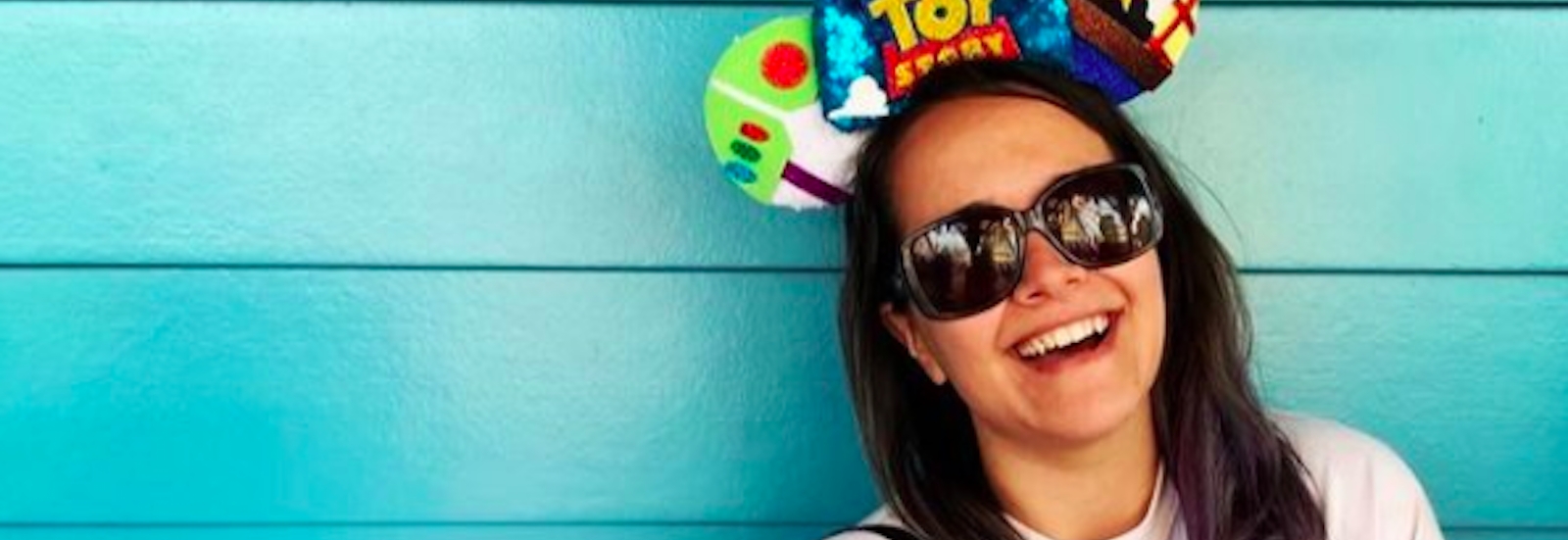
Jackie Keliiaa, Yerington Paiute and Washoe — Bay Area-based stand-up and writer who hosts renowned comedy shows. You can follow along on Twitter and Instagram.
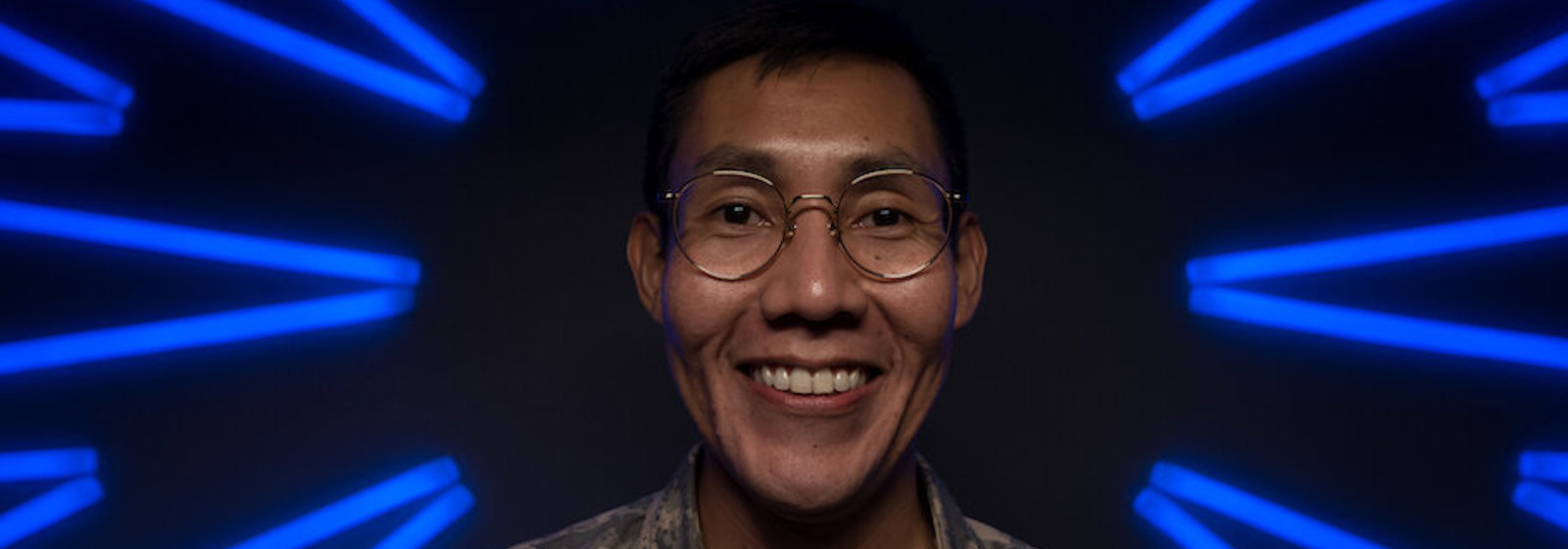
Brian Bahe, Tohono O’odham Nation, Hopi, and Navajo — New York-based stand-up, sketch comedy actor, and writer. You can follow along on Twitter and Instagram.
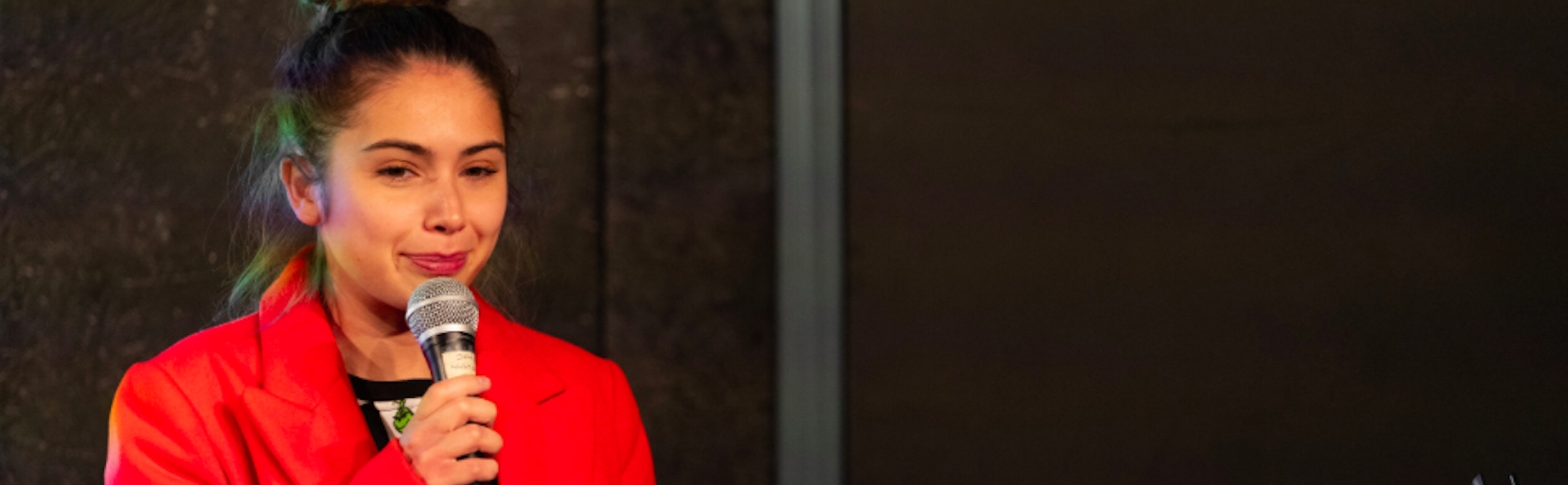
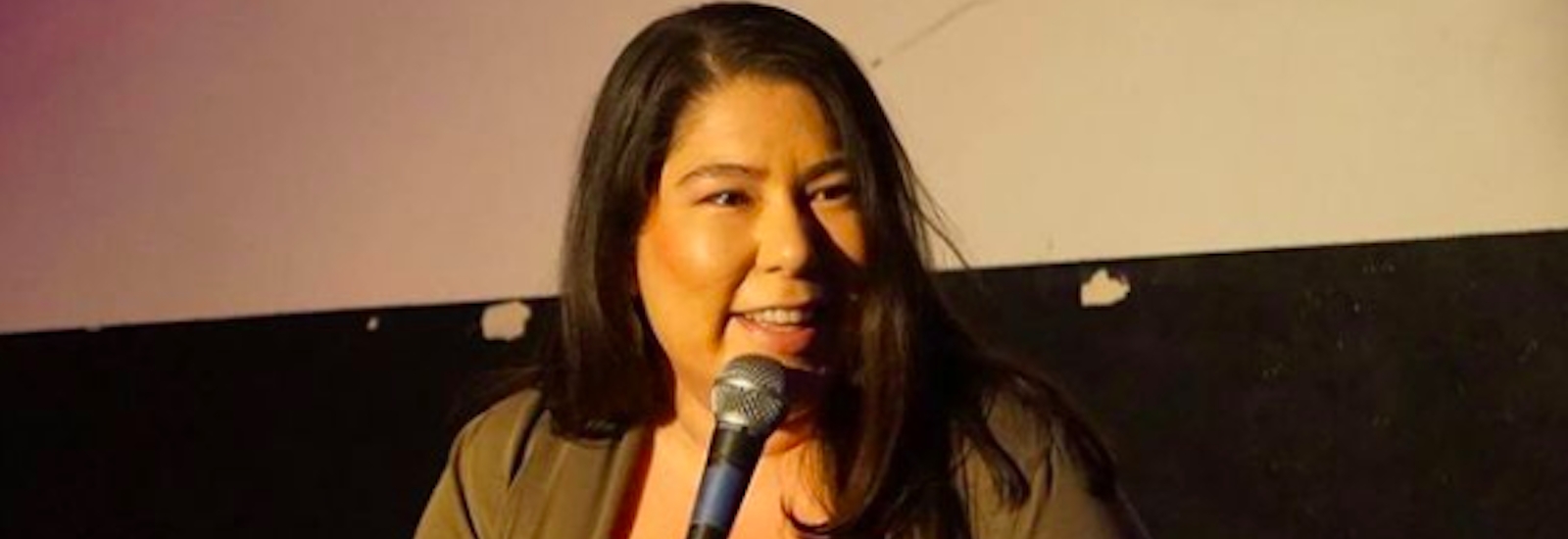
Siena East, Choctaw Nation of Oklahoma — Los Angeles-based stand-up, writer, and actor of many a short film. You can follow along on Twitter and Instagram.
Tai Leclaire, Kanien’kehá:ka (Mohawk Nation) and Mi’kmaq — New York and Los Angeles-based stand up, sketch comedy actor, and writer most recently working on NBC’s Rutherford Falls. You can follow along on Twitter and Instagram.
Kelly Lynne D’Angelo, Tuscarora, Haudenosaunee — Los Angeles-based comedian, writer, lyricist, and musician. Co-writer of Starry Night and co-founder of All-Native D&D Campaign. You can follow along on Twitter and Instagram.
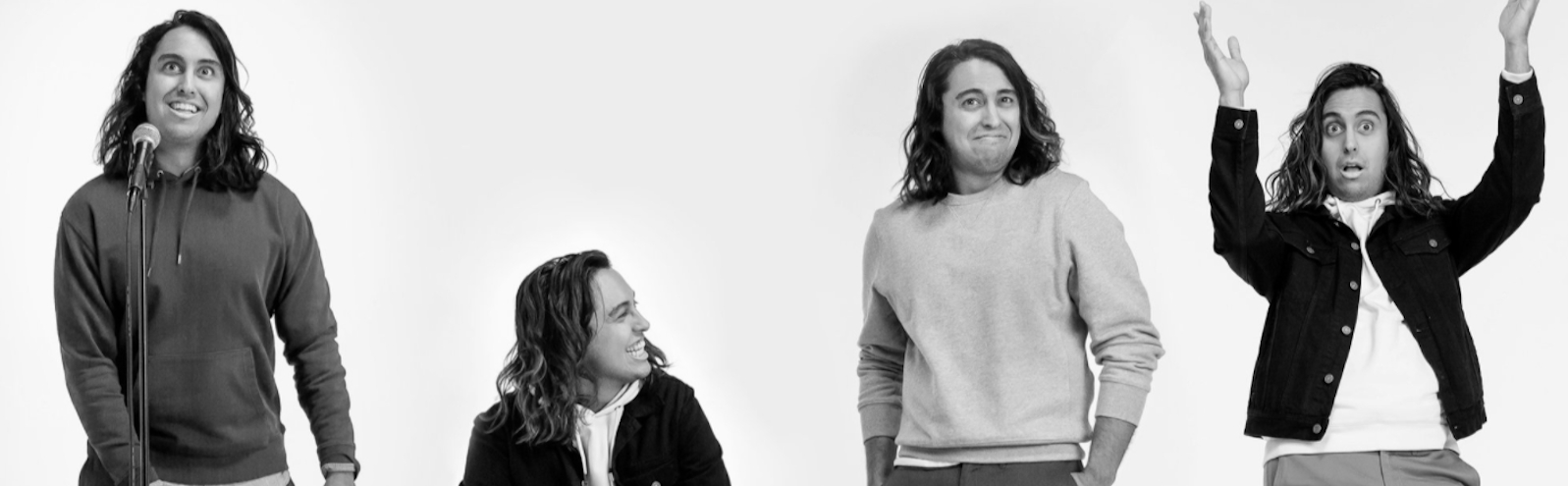
Joey Clift, Cowlitz — Los Angeles-based stand-up, writer, and sketch actor who’s on the house team at Upright Citizen’s Brigade and also a Garfield (the cat not the president) enthusiast. You can follow along on Twitter and Instagram.
Before we dive in, please remember this: Everyone on this panel (including myself) comes from vastly different nations, cultural backgrounds, and experiences. For instance, Joey Clift — whose appearance on a podcast about videogames inspired this roundtable discussion — calls the Cowlitz Nation home. My family hails from the Skokomish Nation. Our nations are only about a 90-minute car ride apart, but we don’t share the same Indigenous languag and that’s just the tip of the iceberg of variation between our two cultures. This is simply to say, the opinions below are solely meant to represent the speaker’s experience and not an umbrella experience for every single Indigenous person across America.
My generation often holds up Graham Greene in Die Hard With A Vengeance, Wes Studi in Heat, and now Zahn McClarnon in Doctor Sleep as Indigenous folks who got to play just people in movies and not the “Indian” in a western or in some other capacity on a sitcom, etc. Who else do you see out there in pop culture playing people where being “Indian” isn’t their only character trait?
Jackie Keliiaa:
I’m really excited about ‘Rutherford Falls,’ the upcoming sitcom on NBC’s Peacock service! If you don’t know about it, get ready. Native showrunner. Native writers’ room. Native actors. Period! The show is still in production, but with that much Native talent steering the ship, you know it’s going to be amazing! There’s also a huge wave of Native media in and on the brink of production and I’m excited for all of it!
Did I mention I’m excited?!
Brian Bahe:
Honestly, no one is coming to mind… which means that they’re pretty successful at not making being Native their only character trait.
Siena East:
Zahn McClarnon is amazing. I was shocked when he didn’t get nominated for Westworld. He’s such an incredible and nuanced actor and, this is a “me” thing, but we don’t talk enough about how he played the first-ever Native robot. He brought so much to that episode that really did widen the lens and emotional context of ‘Westworld.’
The stories Natives are getting to tell and help tell are growing and changing fast. I’m so excited to see not only what Zahn McClarnon does in the future, but also other Native storytellers and actors who are working right now. I’m excited for Rutherford Falls, Reservation Dogs, and Spirit Rangers. So I’m really excited to answer this question in 2021!
Not to say there aren’t artists to be pumped about now. Thinking about right now, there’s Q’orianka Kilcher in Color Out of Space as Mayor Tooma (cold and matter of fact mayor!), Tiio Horn in Letterkenny as Tanis (hilarious and unrepentant), and Michael Greyeyes in True Detective season 3 as Brett Woodard (a complex and exhausted veteran).
Tai Leclaire:
Me! In something soon! I hope? *COUGH* Agents, call me *COUGH.*
Kelly Lynne D’Angelo:
Personally, I come up short. But there’s a lot of amazing new content coming out soon that’s shattering those old tropes with creative Natives in new spaces and roles. I’ve loved everything I’ve seen coming out from Trickster. I have to admit, I’m not as much as an aficionado on it. I’m really good at forgetting specifics!
Joey Clift:
I’d like to think that my friends in Native Hollywood, people like Jana Schmieding and Jason Grasl who are killing it in comedy right now, are doing that. Besides them, I’d particularly like to shine a light on WWE Wrestler Mickie James and AEW Wrestler Nyla Rose.
In the world of WWE, where every character is usually a stereotype in some way, Micke James — who is a member of the Powhatan tribe and a recent inductee into The Native American Music Awards Hall of Fame — has managed to create a pro wrestling character where her Nativeness has little to nothing to do with her onscreen persona. Plus, she’s a great wrestler who’s held WWE’s top title on multiple occasions. With the nickname “The Native Beast”, AEW’s Nyla Rose — who is a member of the Oneida Nation — leans into her Nativeness a little more. But she’s also a fully fleshed-out character and one of the best trash talkers in professional wrestling today. Both of these performers are clearly proud of their heritage, but they aren’t defined by it. They are both unique, and anything but stereotypical.
Plus, Nyla Rose recently became the first Two-Spirit pro wrestler to win a major wrestling title. How cool is that!?
Siena East
Panelist and comedian Siena East
This time of year, folks are reaching out to Indigenous people to talk about Thanksgiving and “Indian” issues. Can you talk about how that may have actually isolated Native voices from more mainstream discussions?
Jackie Keliiaa:
Identity is complex, especially so for Native people because the government, Hollywood, and everyone and their mom have tried to tell us who we are. Side note: It’s 2020. We don’t have time for that.
When I’m asked to talk about “Indian” issues, my perspective represents my lived experience. I’m Yerington Paiute and Washoe and I was raised in the Bay Area, so I’m an Urban Indian and my take on Native issues is informed by that experience. I also really love Hello Kitty, 90s movies, carne asada tacos, and can talk at length about any of these things.
No really, please, can we talk about this stuff?!
Brian Bahe:
Tokenization is pervasive because it makes you think like you’re helping. But at its best, it’s a lateral move. Like, “cool, you gave a Native person a platform or an opportunity.” But in doing so, you made the focus the fact that they’re Native. You put them in this box that they didn’t ask to be put in. You’re giving them this role to play and it’s like, if they don’t fulfill that role, then they’re useless.
So not to be a meta-ass bitch but I’m feeling kinda tokenized in this article, LOL.
Siena East:
For me, it’s less about being isolated from mainstream discussions. I’m pretty vocal about my opinions and people don’t stop me from saying them on a plethora of topics I’m both well versed in and not well versed in. So, no complaints.
My beef is that people only really want to talk about Native issues around this time of year, when those issues exist year-round. It makes me think of the Bojack Horseman quote in the episode “Bojack the Feminist” where Diane tells Bojack, “Being a woman is not a hobby or a pet interest of mine. You get to drop in and play Joss Whedon while everybody cheers, but when you move onto the next thing, I’m still here.”
When November ends, we’re still here. Saying “this is your month” isn’t helpful. We should be talking about Native history and Native issues all year because they exist all year! Only acknowledging Natives for one month a year is something people like to congratulate themselves for when really it turns us into decorations for their guilt. And that guilt gets twisted into something that serves tokenizers and can actually be damaging.
The weird Thanksgiving propaganda plays that get put on are unhelpful. On a personal note — in the case of my little sister and I’m sure other kids — they’re damaging. I guess my sister’s teacher thought it would be “subversive” to cast her as a pilgrim. It really ended up upsetting her and making her question if there was something wrong with her being Native. Like it was a secret. And my sister didn’t need her teacher to mess with her head because that was early 2000s MTV2’s job, not hers!
My point is when you’re just like “here is your month,” it doesn’t end up being about Natives. If it was, people would be interested in and discussing Native issues and history all year. All in all — Natives don’t need a month, we need to be a part of all conversations.
Tai Leclaire:
I feel like around this time of year everyone is interested in us, but then in March, or April, or literally any other month the interest to learn is gone. I’m still native the other eleven months of the year. There’s been this weird development of watching people in power rotate from minority group to minority group with each coming month in the last couple of years. I’m hoping it evolves into something more real and substantial.
Kelly Lynne D’Angelo:
Oh, November. Always an interesting month for Native peoples for a multitude of reasons. For those of us in visible spaces, this month really takes up our time, on top of our jobs, family duties, and a slew of other personal and professional things. This month, we have to do it all because of that tokenization. We feel this strange obligation to say “yes” to all the podcasts, the interviews, the chance at any discourse because it’s not often we’re given an opportunity to do so outside of this month.
When the “mainstream” months kick back in, the “I” in BIPOC always seems to take a backseat. Though I have hope these things will change in time, thanks to the work being done.
Joey Clift:
It isolates our voices by robbing us of our individuality. When people only ask me broad questions about Native issues like Elizabeth Warren or how I feel about Thanksgiving or if I was born in a teepee — a real question grown adults have asked me multiple times — I feel like I’m being viewed less as a comedian and more as a museum piece.
It’s already an uphill climb to make an audience laugh, but it’s an infinitely harder task when the audience also expects you to teach them the thousands of years of Native history that they didn’t learn in high school. I get that a lot of people wish they knew more about Natives, but by only asking me questions about Native trauma, it’s like they don’t want “Comedy Writer Joey Clift’s” opinion about those things. They just want a broad “Native” opinion and I happen to be the only Native they know, which sucks for about a million reasons.
Joey Clift
Panelist and comedian Joey Clift
Can you tell us your experience with only being asked about “Native” things in your career/life besides literally anything else and when you’ve been asked to be the lone “Indian” in the room?
Jackie Keliiaa:
I have a lifetime of experience being the only “Indian” in the room. It was distinctly challenging in college with a persistent onslaught of questioning about whether or not Natives pay taxes, if I got into school just because I was Native, or if I got in for free; the annoying list goes on. I felt othered and alienated by non-Native peers.
You might consider your question well-intentioned and harmless. But bear in mind, you’re likely the millionth person to have asked it.
If you want to be informed on Native issues, start by doing some research yourself. At a minimum, try to meet us halfway. Also, heads up, a big landmine to avoid – don’t ask a Native person “how much” they are. First off, it’s hella rude. And second, blood-quantum is such a hotly contended issue that there are books upon books about it. Go read them!
That said, it’s important to note that America’s blind spot for Native history is intentional and the result of a strategic effort of Native erasure. You simply don’t learn about Native history in school, a tactic I like to call “sweep-the-genocide-and-stolen-land-under-the-rug, hey, who wants turkey?!” In grade school, my dad would present to my class about our tribe’s history, our culture, and share pine nuts with the kids — I know, nuts in school, the 1990s was wild! The dearth of Native history in schools meant these annual presentations gave a much-needed and nuanced understanding of our Native culture both past and present.
And that’s the longstanding issue. We’re constantly talked about as ancient relics — a thing of the past.
Again, that’s Native erasure. If you participate in that narrative of thinking about Native people only as spiritualists, wisdom-keepers, and all those other Hollywood tropes, then you are part of the problem. We’re modern people. When our iPhone runs out of juice, we cry just like you do! Dude, the Native vote had a huge impact on getting He-Who-Must-Not-Be-Named out of office. Maybe now America will finally accept that we’re still here?
Brian Bahe:
In my experience when non-Natives ask me about Native issues, all they really want is their turn to speak so they can show me how much they know about Native issues. They just want to impress me or feel good about how much they know. In these situations, I can’t distill my entire experience of being Native and speak about Native issues into a fun convo at a wine and cheese event, so I won’t even try.
Often times I will just sit and listen and make a guess at how many dreamcatchers this person has in their home.
Siena East:
It’s stressful being put in that position. I’ve always approached those moments with a sense of responsibility. They don’t realize the weight they’re putting on your shoulders. No one asks one guy in Spain to explain what’s going on in all of Europe right now, how all Europeans feel about it, what pasta is, and then to be a good example for all Europeans on top of that. There are hundreds of tribes.
For me — Choctaw Nation of Oklahoma represent! — when I first started being asked to talk about “Native issues,” I felt a lot of pressure to know everything, to be an example, to answer every question they asked regardless of if it made me uncomfortable. Anyone who knows me knows that I am very far from perfect (can’t reach top shelves), know very little (just found out there’s soap for your toilet?), and that it’s hard to make me uncomfortable (you don’t even wanna know). I eventually realized it was pretty unfair to put all this on one Native person because we are all so different. We come from different tribes, have different histories, different family histories, different personal paths! We are varied.
You know, I want to talk about Native issues. Native issues are important. Native issues need to be talked about. Native issues are now. Navajo Nation needs access to clean water yesterday. I want to help. But I get pissed off when someone puts limitations on what I’m about to say. They go, “okay we’re gonna start, but before we start don’t talk about x, y, and z.” And that doesn’t work with me. I’m not here to perform how someone wants the Native identity to be seen. So now, I don’t think about performing in a way that is comfortable. I say what I need to say and the person goes “Wow. She really speaks her mind!” and I feel much less icky than when I felt the need to perform what was wanted from me.
Tai Leclaire:
It’s hard not to be tokenized when every time I meet a new person, be it in a professional or personal setting, there’s an expectation to explain my name. It’s Taietsarón:sere and I don’t need to explain it.
Within comedy, especially when I was first getting started, there was more than one moment when I would write jokes or characters that weren’t Native and there was always this pressure to bring it back to being something “Native.” I’ve been told that’s the “interesting” part about me. Sure it’s interesting but it isn’t the only part that defines me. Like I have a weird obsession with typography. Ask me about that!
Kelly Lynne D’Angelo:
This is a hard question for me to answer simply because I’m usually always the token “Indian” in the room unless someone else was gracious enough to create more space for us (though that’s usually at the hand of another Native person). Working in Hollywood, we’re often nothing but tokenized. People are just so ill-informed on who we are that, in some cases, they don’t even know that we’re still here.
Their educational systems succeeded in its plan: it erased us. And because of that, they don’t have the slightest clue on where to start. Their “mainstream” representation of us has been inaccurate, so they spit out the “token” tropes they know. And the pattern repeats and repeats. But thankfully, there aew a lot of good Native people changing that discussion now.
Joey Clift:
Oh man, where to start?
Last year, the week of Thanksgiving, I was asked to do five live comedy shows I’d never been asked to do before. In normal circumstances, it’s nice to get opportunities. But in pretty much every one of these asks, the way it was phrased was “We want to have a Native American comedian perform on our Thanksgiving show and you’re the only one we know. Will you do it?”
I’m sure all of those producers felt very woke in trying to book a Native person on their show the week of Thanksgiving. But to me, that sort of thing always leaves me feeling gross. You should hire and book Native comedians because you think they’re funny, and not just so you can score woke points by trotting out a minority in the designated time of year where you’re reminded to think of them. Especially if that’s the only time of year that you ever work with Natives.
There’s also when you’re booked into a token role as the only Native comedian on a “Thanksgiving show” or when you’re hired to write for a Native character on a TV show and there are no other Natives in the room, there’s often an expectation that you’re “speaking for everybody.” Everything you say about your culture can become a broad fact about all Natives in everybody’s minds which is a tough needle to thread while also trying to be funny. We aren’t a monolith.
There are 570+ different federally recognized tribes who all have their own languages and cultures (and hundreds of more tribes recognized at the state level). We all have our own opinions. But when you’re the only Native in the room, there can be an expectation that you’re not just a comedian, you’re also an encyclopedia for all things Native, which is impossible.
To book us on a show because “it’s Thanksgiving” and treating that as benevolence on your part is hugely disrespectful to the years we’ve spent developing our crafts. There are a lot of very funny comedians in Indian Country who have been killing it for years. We’re good at what we do, and you’d be lucky to have us on your show in a non-token slot. So don’t act like you’re doing us a favor by only booking us in November.
Tai Leclaire
Panelist and comedian Tai Leclaire
How do you have some of these conversations and navigate these issues as an Indigenous person in your day-to-day?
Jackie Keliiaa:
I create space and show up personally and professionally. I’ve had uncomfortable conversations with co-workers about why we don’t use “pow-wow” for meetings. I’ve advocated for my places of work to celebrate Indigenous People’s Day in place of, you know. I’m constantly repping for our people.
In comedy, I started producing shows to cultivate space for myself and like-minded comics and allies. It’s no surprise that stand-up can be very white, hetero, and misogynistic. So my shows fill a highly demanded space that’s woman-identified with women of color to the front.
I’m also lucky to live in a very active Urban Indian community where I frequently perform for Native audiences. In the pandemic, I’ve produced countless Native comedy shows and it’s truly been a blessing to connect with so many amazing Native comedians across the country.
Brian Bahe:
By being deeply flawed. I am a messy bitch who lives for drama. And to be that and Native, I hope I give off the energy to never ask me how I feel about the Washington R*dsk*ns because you already know how I will answer.
Siena East:
What’s wild is people try to get in your head and get you to tokenize yourself, even people who don’t know you. Some random guy at a party will strike up a conversation with you and ask “A short film? Is it about Native stuff?” and I go “No! It’s a commentary on Julie and Julia and I play Jerry Seinfeld!” And then they sort of try to make you feel guilty about it by saying, “Why that?” But, I never let them make me feel guilty about doing the things I want to do. Sometimes they’ll be like, “So… you don’t do stories about Native stuff?” because they want to box you in.
But I can talk about Jerry Seinfeld and also my experience as a Native person. I do what I want. I tell the stories I want to tell. I make the jokes I want to make. I play the characters I want to play. I don’t let them get in my head.
Tai Leclaire:
Simply existing. Taking up as much space as I can. It’s insane the number of people I’ve met who have never met or befriended someone who is Native.
Kelly Lynne D’Angelo:
Bluntly? I exist. Not only do I exist, but I also exist in a modern space and take up space within it. I’m a nerd and proud. I love musicals, Dungeons & Dragons, board games … our power of storytelling and imagination is unparalleled.
People forgot we come from oral tradition. We listen to our ancestors. We carry a healing spirit within us. That trickles into everything I do. Also, I think I have a nice little knack for comedy, even though you probably can’t tell from how stern I’m being in these responses! Am I coming across stern? I feel stern. Anyway, for some reason, a lot of people don’t realize Natives are some of the funniest people you’ll ever meet. You can’t put people through the wringer and not expect us to come out hilarious on the other side.
Joey Clift:
I’m an anxious person who doesn’t like confrontation, so in my professional life, for a long time, I’d just try to be polite and let racial microaggressions slide so as not to burn a bridge. Over the past few years, as I’ve gone farther in my career, I’ve realized that I’m one of only a few Native comedians who gets a lot of opportunities in Hollywood and am in sort of a privileged position to help fix some of the terrible ways Native are portrayed and tokenized in the media.
I recently started to let myself have those tough conversations with people. It started small. Asking friends to stop using the phrase “Spirit Animal,” to explain why they like Philadelphia Flyers mascot Gritty, or whatever. Eventually, it expanded into bigger conversations with my peers. Since Indigenous tokenization has been a “thing” for so long in society, I figure the only way things will get better is if we confront people about it and explain to them why what they’re doing isn’t okay, and the people who aren’t responsive to those conversations probably aren’t worth working with anyway.
That said, pretty much every time I bring this sort of thing up, it’s well-received and internalized by the person I’m speaking to. So I’d like to think that making people aware of their missteps is helping to fix the problem somewhat. I believe, ultimately, most people are just trying to do their best, and any weird racist behavior toward Natives is usually due to ignorance as opposed to hatred. So it’s just educating people, really. I’m still afraid and anxious every time I start these conversations. But for me, the best way to combat this shit is head-on.
Jackie Keliiaa
Panelsit and comedian Jackie Keliiaa
Where do you see issues of lack-of-representation and the tokenization of Indigenous folks still happening the most right now?
Jackie Keliiaa:
As much as 2020 has had a lot of wins — cue montage of Chris Columbus statues being beheaded, and Washington fans crying — there is still so much work to do. Media is evolving, but vestiges of the old spaghetti western days are built into Hollywood’s DNA and that shit ain’t going to change overnight. Native characters must be multi-dimensional, have agency, and not just be wise (eye roll), troubled (bigger eye roll), or a wolf (seriously, why?).
Let me be a Native woman who talks shit, eats tacos, and loves Hello Kitty, okay?!
Brian Bahe:
I work at a nonprofit and I’ve worked so many jobs at different types of organizations before this one. I feel like I always see tokenization in professional settings. Even the most front-facingly diverse organizations are still very white. And they think that hiring one Native employee is diversity. I think employers need to recognize that there are racial, gender, economic class, sexual orientation biases in every aspect of the workplace and hiring process and address those issues, which would help with not just Native tokenization, but with tokenization of all types.
Siena East:
I’ve been crazy lucky. As a writer and an artist, the mentors, execs, and bosses I have worked with have all been very supportive of me. I know my experience is not the case for other people. I’ve heard horror stories from other Native artists. Either things are changing or I am the luckiest bitch because people have never brought me in just because I’m Native and they’ve never invalidated when I’ve brought in a Native perspective. They’re the best and listen to me when I talk about other shit too like my period, or my mom, or Weezer.
However, in corporate events where they’re looking to fill a quota or they need an “insert speaker,” I see people getting asked to play a role, getting tokenized. You come in and the questions they ask to prep you are all very leading, and I come back at them with how I feel. It’s these people who don’t want to bother to get to know us as individuals who do this more than anybody. Those people who only call us up in November and who have already decided our story.
I guess that’s why as a writer, my experience hasn’t been that because the people I’ve gotten to work with have never decided my narrative for me and we talk in like January, February, March, April, May June, July, August, September, December and… not just the week before November.
Tai Leclaire:
I feel like it happens a lot within the political sphere, which is hard to say because everything around politics feels so propped up and everything seems to be political in some way.
Kelly Lynne D’Angelo:
As someone who works in Hollywood and knows that world, I can say I see it in Hollywood on the regular. I can’t speak for where I see it the “most” outside of that space. This is what I know best, so I’ll speak to it, though I have no doubt you can find its equivalent in any industry or field. Sadly, the tokenization of Natives happens everywhere.
Joey Clift:
If CNN’s recent gaffe referring to Native people as “Something Else” in their 2020 election coverage is any indication, the answer is “literally everywhere.”
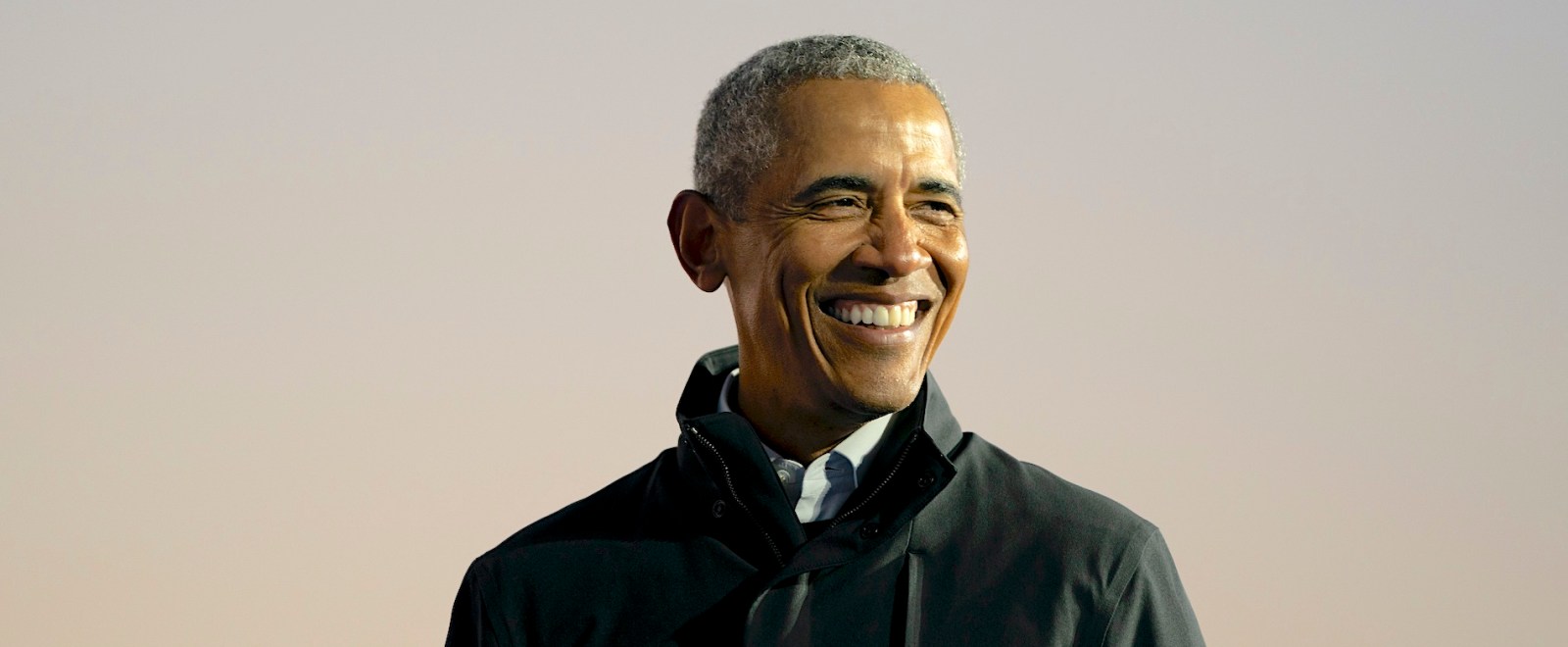
Barack Obama has given out more Presidential Medals Of Freedom than any other president, with 123 of them bestowed upon honorees during his time in office. Musicians who received a medal from Obama include Yo-Yo Ma, Bob Dylan, Loretta Lynn, Stevie Wonder, James Taylor, Diana Ross, and Bruce Springsteen, among others. There is one legend, though, that Obama wishes he had given a medal to but didn’t.
The former POTUS was interviewed by Stephen Colbert on The Late Show recently, and during a segment called “Questions We’re Pretty Sure Barack Obama Has Never Been Asked Before,” Colbert asked how Dolly Parton (who recently moved Colbert to tears on the show) doesn’t have a Presidential Medal Of Freedom. Obama responded, “That’s a mistake. I’m shocked. That was a screw-up. I’m surprised. I think I assumed that she had already got one, and that was incorrect. I’m surprised. She deserves one. I’ll call [Joe] Biden.”
Aside from writing some of the most beloved songs of all time (“Jolene,” “I Will Always Love You,” and the list goes on), Parton has been an active philanthropist for decades. Recently, the Dolly Parton COVID-19 Research Fund donated $1 million to Vanderbilt University Medical Center, which played a big part in creating the most promising vaccine so far.
Throughout this truly unprecendented year, songs have been with us. They were with us through the pandemic, when a rapper riffing on being “bored in the house” or a pop star creating an entire album with her fans made us all feel less alone. They were with us through this summer’s protests, when artists ranging from Denzel Curry to Leon Bridges used their artistic gifts to aid the cause. They were with us through the election, when musicians offered their talents in the form of performances and cover songs. And they are with us now, as we look forward to a 2021 that will hopefully wipe some of this slate clean.
Of course, not all songs are created equally, and some artists rose to the top in this truly incredible year. From Cardi B to Billie Eilish, the best of the best seemed to never stop producing, making sure there was always something new to help us get through the day to day. Their impact will be felt a lot longer than this calendar year. Check out Uproxx’s picks for the Best Songs of 2020 below.
50. Billie Eilish – “Therefore I Am”
Billie Eilish already has many big hits, but she only has one HIT. Her and brother/producer Finneas never seem to be trying to catch lighting in a bottle twice, but “Therefore I Am” does offer a few things that were present in her inescapable smash “Bad Guy,” namely that it veers away from some of the more spare songwriter-y territory she’s been exploring of late. “Therefore I Am” is as in-your-face as the titular sentiment conveys, all attitude and confidence, matching sonically just why Billie Eilish is so exciting to begin with. Whether anything ever supplants “Bad Guy” as her signature song remains to be seen, but “Therefore I Am” is her first release since her debut album to have a fighting chance.–Philip Cosores
49. DaBaby – “Rockstar” Feat. Roddy Ricch
DaBaby has been flying high since his 2019 breakout with “Suge.” The North Carolina native kept fans captivated with his enthusiasm and high-energy and that’s something that appears on his highlight “Rockstar” single. The track quickly grew to become one of his most successful releases as it topped the singles chart back in June. The Roddy Ricch-supported song brings an infectious experience for fans, one that helped it rule the charts for multiple weeks and extend DaBaby’s streak of commercial success.–Wongo Okon
48. Dinner Party – “Freeze Tag” Feat. Cordae, Phoelix, and Snoop Dogg
This year saw hip-hop and Black music highlighting more than ever the urgency of the Black Lives Matter movement, but few of those works are as beautifully musical as the standout from this jazz quartet‘s debut album. Its soothing instrumentation belies the darkness of the topic, as Cordae and Phoelix speak more to the resilience of the human spirit. It’s the most optimistic version of the message we’ve heard all year, when optimism was needed more than ever.–Aaron Williams
47. Conan Gray – “Maniac”
After breaking out in 2018 with the Sunset Season EP, Conan Gray proved he’s a hit-making machine with the huge success of “Maniac” this year. Just one of several massive songs off his debut album, Kid Krow, this song dismantles the petty gossip that separates former lovers and fake friends from the real ones in their lives. Not quite kiss-off, not quite sympathetic, “Maniac” gives every higher-ground ex an anthem for the days when the gaslighting is just too much.–Caitlin White
46. Salem – “Starfall”
In the decade since we last were discuss electronic dua Salem, the entire music industry changed. And as they return with the stunning “Starfall,” their music that was once dubbed “witch house” feels closer to center than ever before. The huge catharsis at the center of this single doesn’t quite provide rave-tent euphoria, but something more nuaced, packing the adrenaline that comes with more natural highs into its shooting star of a song.–P.C.
45. Polo G – “DND”
Many rappers aspire for Polo G’s level of success, but affirmations to bring everybody with them fall by the wayside once responsibilities necessitate hard choices and you “cut everybody off, keep hittin’ decline” like he reflects on “DND.” The track is a compelling glimpse of the turmoil that a young artist goes through coming into fame. If the skills he shows here are any indication, he’ll have plenty of time to figure it out.–Andre Gee
44. Lil Baby – “Emotionally Scarred”
Lil Baby recently reflected that he doesn’t want to “get political” in his music anymore, but that’s impossible. Lines like “I can’t move around without tools, these n****s loose screws” on “Emotionally Scarred” reflect a broken environment that’s directly tied to calls for abolition. He also rhymes, “They say I’ll be great, I guess I’m waiting for it.” But the emotional excavation he displays here reflects that his greatness is inherent.–A.G.
43. Selena Gomez – “Look At Her Now”
At the top of the year, Selena Gomez separated herself from Justin Bieber forever. Releasing Rare in the wake of his incredibly quick marriage, Gomez got her own perspective out there the best way she knows how — glistening pop songs. “Look At Her Now” is the standout of Selena’s latest collection, asserting she’s better than ever after a rough few years, with a riff so addictive it’ll be stuck in your head long after your last ex fades away.–C.W.
42. G Herbo – “PTSD” Feat. Juice Wrld, Chance The Rapper, and Lil Uzi Vert
On “PTSD,” all four MCs take turns reflecting on the toll of the streets. Herbo is “in them whips, right back on the enemies.” Chance The Rapper “used to run home from the train stop.” Uzi is “affected by the streets, no appetite, I can’t eat.” And the late Juice WRLD has “seen my brothers fall over and over again.” They reflect different disheartened perspectives of life in forgotten communities — ones that deserve resources and healing.–A.G.
41. Giveon – “The Beach”
Giveon’s best work arguably comes on the intro of his March EP, Take Time, with “The Beach.” The track is an ode to his Long Beach hometown and the highs and lows he experienced in his time there. “The Beach” captures Giveon’s vocal talents thanks to its strong runs that find his baritone voice elegantly reaching for the skies. The song also stands as an impressive bullet point on his 2020 resume that includes his When It’s All Said And Done EP and a guest feature with Drake on “Chicago Freestyle.”–W.O.
40. Bartess Strange – “Boomer”
“Boomer” is an eclectic highlight of Strange’s stunning debut album Live Forever, but he told Uproxx the song almost didn’t make the album: “I thought it showed that I didn’t take myself too seriously. I felt like it was true to who I am, where I’m from, the people I’m from. It’s just like a punk gospel country outro on top of a Thao & The Get Down Stay Down chorus and a DaBaby style rap verse, like starting right on the one when the song starts.”–Derrick Rossignol
39. Khruangbin and Leon Bridges – “Texas Sun”
The surprise EP from the genre-bending band and the R&B star tagged onto the end of the 2019 Yee-haw Agenda, continuing to highlight the rhythmic roots of Americana’s favorite twangy tunes. It also gave Leon Bridges another perfect soundtrack for his whiskey-smooth vocal explorations, adding yet another dimension to his already mutifaceted catalog. The title track is like a roadtrip through the Lone Star State, falling in love with its down-home beauty.–A.W.
38. Jackboys & Travis Scott – “Out West” Feat. Young Thug
On “Out West,” Travis Scott delivers a braggadocious verse stained with the admission that, “I pour all of my pain out in a cup,” while Young Thug plays seesaw between a compelling, guttural vocal presence and crude, unimaginative sex lyrics. One might have spent the course of the song pondering the gravity of the casual nihilism, but Jabz and Buddah Bless’ production is so intoxicating that most are just dancing their way through it.–A.G.
37. The Weeknd – “Blinding Lights”
As he’s done numerous times throughout his career, The Weeknd brought forth a new era in his music for his fourth album After Hours. The project saw a shift to synthwave for the Canadian singer, which is highlighted on “Blinding Lights.” The track topped the singles chart and became the singer’s fifth song to do so. “Blinding Lights” also took a number of awards this year and grew to be the most successful single of The Weeknd’s career.–W.O.
36. Rina Sawayama – “Comme Des Garcons (Like The Boys)”
Some pop songs were robbed of their rightful destiny this year. “Commes Des Garcons (Like The Boys)” is just one example of a track that would’ve dominated dancefloors this year, if we hadn’t all been stuck inside, isolating. Still, for a one man — or woman, as it would be — show in bedrooms around the world, there was probably no bigger track. Rina flexes her pop star reflexes on this massive house cut, which will live on well past 2020.–C.W.
35. Beabadoobee – “Care”
’90s nostalgia has been popular, it feels like, since January 1, 2000. Attempts to revive the decade’s magic don’t always go well, but Beabadoobee got it right with “Care,” which honors the tradition by highlighting the era’s appeal: comforting yet new and exciting.–D.R.
34. Future – “Life Is Good” Feat. Drake
Drake and Future’s worlds collide on their collaborative track “Life Is Good.” The song comes five years after the release of their No. 1 2015 mixtape What A Time To Be Alive and is a testament to their hit-making magic. Drake enters over a brooding track aided by the sounds of a haunting bass and strings, and offers a reflective hook. “Working on the weekend like usual,” he laments before Future blasts into the song’s hazy cadence on his own spaceship. Though the 6 God and The Wizrd are fully capable of playing in each other’s musical backyards, Drake does his thing on one side of the track and Future does his thing on the other side of the track without either having to leave the comfort of their home bases. “Life Is Good” is an addictive banger from Future’s High Off Life that showcases the duo’s willingness to explore outside the box with different ways to collaborate and pop out hits.–Cherise Johnson
33. Tobe Nwigwe – “Try Jesus”
When you saw that title, you undoubtedly rolled your eyes, thinking this is some kind of Christian rap anthem imploring you to praise the Lord. That’s where you’re wrong; it’s a stern warning and ultimatum rolled into one. If you’re going to try someone, it had best not be this Dallas native — because he doesn’t turn the other cheek. In a year in which the bullied masses decided they weren’t putting up with those shenanigans anymore, it’s a good message to take to heart.–A.W.
32. Blackpink – “How You Like That”
It was a long year without Blackpink, but the K-pop titans made their anticipated return this summer with “How You Like That.” The instantly memorable tune sees them on top of their game both artistically and commerically, as it shattered YouTube records.–D.R.
31. Jean Dawson – “Devilish”
Look no farther than MGK to see the influence pop-punk has had on rock music this year, and that inflitration coupled with the long-simmering impact of emo on hip-hop both seem to inform Jean Dawson’s excellent album. That’s all present on “Devilish,” along with some Bloc Party-esque theatrics that make this breakout song unlike much anything else released this year. In short, listening to Jean Dawson feels like the past, the present, and the future all at once, using some inspired reference points to hopefully draw a map to where popular rock music is heading.–P.C.
30. Soccer Mommy – “Circle The Drain”
On her second official album, Sophie Allison wanted to recreate the music from her childhood, but with a sense of degradation that comes with the harshness of everyday life. “Circle The Drain” is a perfect example of this goal, a warm and breezy track on the surface, but with lyrics that are not subtle in their message: “I’ve been falling apart these days,” Allison sings. “Split open, watching my heart go round and around.”–Zac Gelfand
29. Charli XCX – “Detonate”
Ever a stunning creative, Charli XCX took on the daunting task of quickly documenting her life during a global pandemic transparently and in real time. The result was a fascinating audio diary featuring highlights like “Detonate,” the vulnerability and self-criticism of which is masked by its glitchy, upbeat pop shell.–D.R.
28. Drake – “Chicago Freestyle” Feat. Giveon
Dark Lane Demo Tapes was a highlight reel of just about all the “Drakes” fans have come to love. The Giveon-featuring “Chicago Freestyle” is another dose of the rap icon in an introspective, brooding lane that reflects boredom with casual sex and situationships that we’d hope one could transcend at 34. His Eminem-channeling chorus reflects he hasn’t. Until he does, his fans will have fun eating up crestfallen journal entries like “Chicago Freestyle.”–A.G.
27. Blimes And Gab – “Shellys (It’s Chill)”
Closely related to Beckys and Karens are Blimes and Gab‘s new invention: “Shellys.” You know the ones; they’re always a little too touchy-feely at the club. They require a bit too much attention. They’re always around for the VIP section drinks and never around for the bill. They do too much and want everybody else’s participation or there’s a meltdown on the way. They don’t deserve a song this damn cool, but here we are. The retro-electro-funk vibes back Gab’s vocal display, while Blimes serves up an effervescent verse that balances complex rhymes with laid-back storytelling. “Shellys” even gets a nostalgic video complete with grainy VHS effects and all the loud patterns a child of the ’90s can handle.–A.W.
26. Internet Money – “Lemonade” Feat. Don Toliver, Gunna, & Nav
It’s the way “Lemonade” showboats with sweet guitar strings saturated in Don Toliver’s soulful reverie, for me. Created by the hit-making production crew Internet Money, “Lemonade” is bound by a syrupy draw that delivers an earworm so infectious it’s hard not to yell out “Off that juice, codeine got me trippin’” at random, especially before taking a sip of actual lemonade. The B4 The Storm song is also embraced with the essence of Nav and Gunna, who both add their own vibe to the song, which has exploded in popularity on TikTok. “Lemonade” has been one of 2020’s biggest songs with over 300,000,000 streams on Spotify alone and that’s just on the original version. Taz Taylor and Nick Mira also have plans on dishing out various remixes to “Lemonade” to keep the momentum going. So far, Roddy Ricch hopped on a version followed by a remix by Anuel AA. Word on the streets is that there are more remixes in the pipeline. It’s safe to assume the “Lemonade” conquest will go beyond 2020.–C.J.
25. Perfume Genius – “Nothing At All”
When Mike Hadreas first emerged as Perfume Genius more than a decade ago, just his tender, warbly voice was enough to captivate over mournful piano accompaniment. But as the albums have come, so has the ambition, leading to a song like “Nothing At All,” which underscores Hadreas’ delivery with music that pushes the project into maximal territory. It’s always hard to say whether Perfume Genius is getting better with each great album, but he’s certainly evolving, with each new destination as unexpected as it is true to the identity he’s been expounding on for all these years.–P.C.
24. Jack Harlow – “Whats Poppin”
Despite the song arriving in 2019, the full impact of Jack Harlow’s “What’s Poppin,” wasn’t felt until 2020. The single peaked at No. 2 on the Billboard singls chart and was later hit with a remix featuring Lil Wayne, DaBaby, and Tory Lanez. While the Kentucky native had three albums under his belt before the song, “What’s Poppin” introduced the world to his fun spirit and slick lyricism, something fans can continue to look forward to from him.–W.O.
23. Travis Scott – “Franchise” Feat. Young Thug & M.I.A.
Travis Scott will probably remember 2020 as much for his branding endeavors as his musical contributions. The Houston native inked deals with PlayStation, McDonald’s, and Fortnite, ensuring that everyone would know his name by the time his upcoming fourth album arrived. However, when you look at the music side of things, Travis did have a pretty good year. “Franchise” gave him another No. 1 release and also perfectly represents the brand he’s trying to build as its video was shot at Michael Jordan’s house.–W.O.
22. BTS – “Dynamite”
BTS have been steady building their global domination over the last few years, but when “Dynamite” exploded this summer, it basically broke every record in existence. The song found this Korean boy band hitting their stride with funky, golden-era pop that doesn’t sacrifice any of their style or swag. Whenever you need a pick-me-up, this banger is here to boost your spirits, and remind you, BTS don’t make pop music, they are pop music.–C.W.
21. Waxahatchee – “Fire”
Waxahatchee penned her album Saint Cloud in the period following her decision to get sober and her album’s lead single “Fire” displays the radical form of self-love it took to make that choice. Offering a precursor to her album as a whole, the song is a vulnerable and sincere recognition of her own strength as she reckons with her past and anticipates her future.–Carolyn Droke
20. Dua Lipa – “Cool”
By now, you’ve probably heard Dua Lipa’s infectious hit “Don’t Start Now” on the radio, in the grocery store, or in any other number of settings. But her shimmering sophomore album Future Nostalgia also boasted some underrepresented bops, like her bouncy song “Cool.” The track provides an opportunity for the UK singer to showcase her soaring vocals while leaning on a clapping beat for a compelling rhythm.–C.D.
19. Aminé – “Becky”
What may come across like an anti-miscegenation screed at first blush becomes even more potent when you zoom out and see just how fraught internecine race conflict has become in this country. In pointing out his personal experiences in Portland, Aminé highlights the ongoing problem; those little black Instagram squares aren’t doing much to keep “Beckies” and “Karens” from using their privilege to lash out at Black people just for existing. As millions of Americans banded together to demand systemic change, others turned meaner, more xenophobic, and even worse, empowered by a loudmouth whose dog whistles rang more like bullhorns to stoke the flames. “Becky” is the sigh of exhaustion at being forced to carry that weight despite doing nothing to deserve it.–A.W.
18. Lady Gaga – “Rain On Me” Feat. Ariana Grande
If ever there was a year where we needed a pop song about the relief and drama of being washed clean, it’s 2020. Lady Gaga issued her return to form Chromatica this spring after a brief pandemic-related delay, getting by with a little help from her chart-topping counterpart, Ariana Grande, to turn this dancefloor frenzy into a No. 1. “Rain On Me” begs the sky itself for redemption, and, presumably, when that freedom comes, this song will be the soundtrack.–C.W.
17. Yves Tumor – “Gospel For A New Century”
Just the title, “Gospel For A New Century,” points to the grandeur of this ambitious brush with pop sensibilities. Yves Tumor is naturally experimental, but on this standout from his excellent Heaven To A Tortured Mind album, Tumor shows that working in more conventional colors suits him. Of course, the accompanying video is essential to truly experiencing the song’s bredth, complete with a YouTube warning, demonic prostetics, and enough swagger to revive rock showmanship from its temporary slumber. Even at his most accessible, Yves Tumor is delightfully out there.–P.C.
16. Curtis Roach – “Bored In The House” Feat. Tyga
Who among us cannot relate? Truly, we all went a little bit stir crazy this summer with live entertainment, indoor dining, parks, beaches, and everything but the businesses essential to maintaining the American infrastructure shut down. Even those of us used to working from home were deprived of our usual outlets and reasons to breathe fresh air (seriously, the city took the rims off the basketball hoops at my local park. The rims!). Everything seemed to suck. And then, a 20-year-old rapper from Detroit gave us the anthem, the defining song of the moment — with a remix featuring Tyga! And it’s primed for a resurgence; the way things are headed, we’re staring down yet another lockdown (just wear the damn masks, people, and wash your disgusting hands) that may bring this hummable humdrum theme song back in fashion.–A.W.
15. Taylor Swift – “The Last Great American Dynasty”
While it will become abundantly clear in time that Taylor Swift never fell off, within the current narrative (which she never asked to be a part of) Folklore is a mother of a comeback album. And if we’re playing favorites, “The Last Great American Dynasty” is the quintessential Swiftian creation; bubbly melodies and paper thin beats soundtrack the downfall of a clever widow, who, unexpectedly, shares a strange connection with Taylor. Where others might see only a mansion on a hill, Swift unearths beauty in madness, honoring the past while reserving the right to tell her own story, too.–C.W.
14. Chloe x Halle – “Do It”
The Bailey sisters returned to 2020 all grown up with their sophomore album Ungodly Hour. Chloe x Halle showed their growth and maturity on their second effort, but another thing that came with the album was a shot for the charts. “Do It” quickly became a fan favorite and the song that introduced a wider audience to the duo. From Jimmy Kimmel to a remix with Mulatto, Doja Cat, and City Girls, the track has taken a life of its own, becoming the poster child of Chloe x Halle’s incredible year.–W.O.
13. Lil Uzi Vert – “Futsal Shuffle”
Lil Uzi Vert has a precocious aura that’s belied by lyrics like “she was ridin’ on my dick, she ain’t need two pedals,” but is nevertheless apropos for a fun dance song like “Futsal Shuffle,” which tided fans over until Eternal Atake’s March release. The track’s strobing synths are the perfect canvas for Uzi’s melodious boasts, as well as the footwork-heavy dance that everyone and their mother was trying out on TikTok.–A.G.
12. Mac Miller – “Good News”
“Good News” is charmingly glum, with ever-relatable laments like “why can’t it just be easy?” and “why I gotta build somethin’ beautiful just to go set it on fire?” over Mac and Jon Brion’s production that sounds ripe for a feel-good paper towel commercial. But instead of delight, there’s just Mac’s matter-of-fact despondency that’s so rife he’s barely articulating it. The track is beautifully crafted, but still haunting in hindsight.–A.G.
11. Haim – “The Steps”
After a string of one-off releases, “The Steps” marked the first official single from Haim’s excellent third album Women In Music Pt. III, a guitar-driven rocker about a dysfunctional relationship where the parties are fundamentally at odds, regardless of the situation. The track takes on a life of its own with a rousing chorus that forces the listener to pay attention if they’ve been faltering.–Z.G.
10. Pop Smoke – “Dior”
Brooklyn native Pop Smoke captivated the world with his energy and youthful exuberance. The rapper walked into hip-hop with his summer smash, “Welcome To The Party,” and followed it up with “Dior.” The latter track solidified the rapper’s presence in the game and discarded any “one-hit wonder” thoughts. Unfortunately, Pop would be taken from us at the beginning of 2020 in what was an extremely painful death for the hip-hop community. The young rapper’s music will always live with us and his potential will be something we dream of, just as he did.–W.O.
9. Ariana Grande – “34 + 35”
On a spectacularly filthy song, Ariana Grande juxtaposes the Disney strings she’s been known to use throughout her career with some of her most sexually explicit lyrics to date. Once you figure out what the sum of the two numbers in the title equals, the rest of this song falls into place like clockwork. More carefree and funnier than the lead single, “34 + 35” has all the makings of a late album hit, and will go down in Ari’s catalogue as one of her most clever offerings.—C.W.
8. Terrace Martin – “Pig Feet” Feat. Denzel Curry, Kamasi Washington, G Perico, and Daylyt
This summer was flooded with peaceful anti-police protests, and not-so-peaceful ones. A slew of artists captured the fury of the moment on “Pig’s Feet,” a resolute rebuke of the system. Denzel Curry leads off the song surmising, “They want us crucified with stones and hard rocks,” while rapper Daylyt sheds his comical reputation with a dead serious verse of his own. There were dozens of protests songs this year, and “Pig’s Feet” might be the most memorable.–A.G.
7. Doja Cat – “Say So”
Who’d have thought a disco-throwback deep cut from Doja’s year-old sophomore album would have shaken up the world like this? Suddenly, the floodgates are open for long-thwarted female rappers to traipse right up to the top of the Hot 100, TikTok is the first place major labels head to break their newest artists (and reintroduce older ones), and and Doja herself is forever branded with a false narrative promoted by dry-dicked nerds who can’t take a joke. “Say So” is a funny little ditty but if you’d told me it’d have caused a tongue-in-cheek “beef” between Doja Cat and Nas, I would have thought you were smoking a loud pack marked “jet engine taking off from 10 feet away.” Yet here we are, a long way from “Mooo!” and closer than ever to weird girl hip-hop dominance.–A.W.
6. Phoebe Bridgers – “I Know The End”
Only Phoebe Bridgers could fit a sweeping three-part suite into less than six minutes, tracing the burnout of bedroom ennui and toxic relationships to the fleeting euphoria of windows-down doomsday drives, and finishing it all off with a cataclysmic orchestral breakdown. Written long before the strange terrors and slow, deadly suffocations of 2020, the song feels oddly prophetic and cathartic at the same time. All we could ask for in a pandemic year, and whatever lies beyond.–C.W.
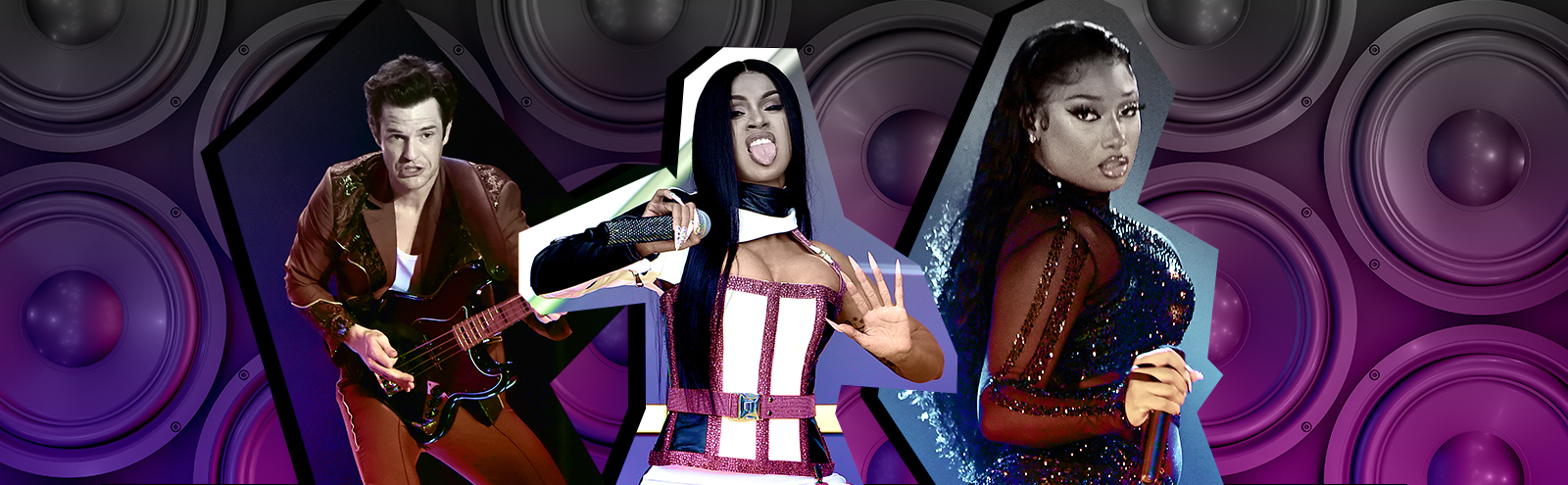
5. The Killers – “My Own Soul’s Warning”
You would be forgiven if you gave up on The Killers after their recent run of drab albums. But this year’s Imploding The Mirage was a legitimate comeback, providing all of the bombastic and giddy thrills that you hope for from this band. Maybe the best song from that album, “My Own Soul’s Warning,” is a pure adrenaline rush, an arena-rock anthem for a time in which arenas have been temporarily shut down. Hopefully, The Killers will be waiting for us when (if?) things return to normal.–Steven Hyden
Classy, bougie, ratchet. Those are three words to describe Megan Thee Stallion’s explosive “Savage” 2020 takeover thanks to the power of TikTok and dance creators Keara Wilson and the Nae Nae Twins. While the “Savage” dance has been done by millions of Hot Girls and Hot Boys across the globe upon the release of Meg’s Suga EP, Beyonce ignited new life into the movement with a sign-o-the-times verse for the remix to an already infectious smash hit. “Hips tick-tok when I dance / On that demon time she might start an Only Fans,” Queen B spits on the certified platinum hit, before gathering more momentum with essential life quotes such as “If you don’t jump to put jeans on, baby you don’t feel my pain” and “I can’t argue with these lazy bitches I just raised my price.” The song now lives on Meg’s debut album Good News, which made its debut on the Billboard 200 charts at No. 2. If nothing else goes right in 2020, at least we got the “Savage Remix” with Houston queens Beyoncé and Megan Thee Stallion.–C.J.
3. Roddy Ricch – “The Box”
There are Billboard number ones, then there’s phenomena that transcends metrics. The latter was the case with Roddy Ricch’s “The Box,” a single from this 2019 Please Excuse Me For Being Antisocial project. Roddy shows out on both verses — and yes, with his uninhibited “hee her” adlib, but it’s “The Box’s” resounding, impossibly catchy chorus that had TikTok, and the rap world in general, on fire during the simpler days of 2020.–A.G.
2. Run The Jewels – “A Few Words For The Firing Squad (Radiation)”
Spoiler alert. The words referred to in this song’s title are also the final words of Killer Mike’s song-closing verse: “Fuck you, too.” That’s a pretty accurate summation of the general mood of anyone left in this country who isn’t an outright fascist sympathizer. The lines have been drawn in the sand; you’re either for or against the state’s policy of bald-faced violence against its own citizens and those of us who aren’t here for the status quo have a new musical manifesto courtesy of Run The Jewels. The unapologetic duo may not have captured the zeitgeist on purpose, but they did — not so much out of timeliness as out of America’s repetitious addiction to doing its worst. It just so happens, the people have had enough. Bring it on.–A.W.
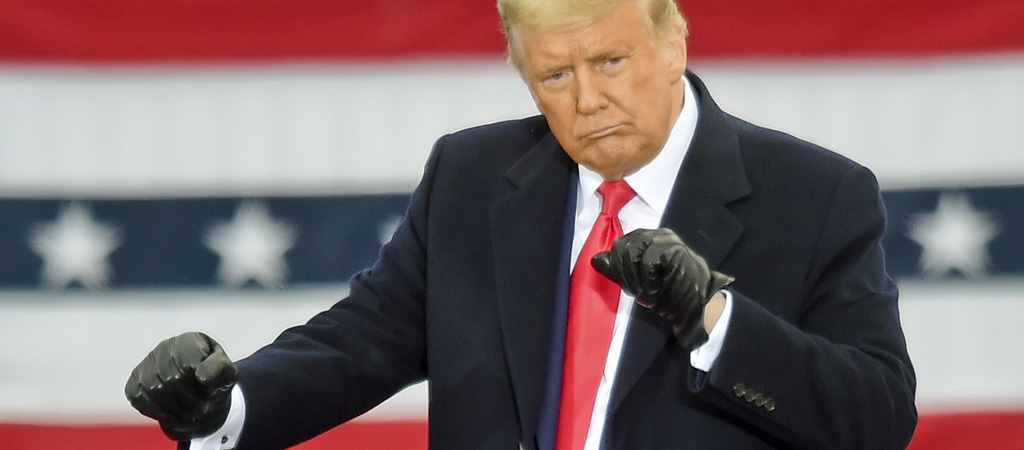
President Trump will seemingly do anything to hold onto the White House while complaining about “massive dumps,” which he falsely claimed cost him the election, to which Attorney General Barr has responded that there’s no evidence of such voter fraud. Of course, Trump has already tweet-hinted that he could refuse to leave the White House while ranting about a “Rigged Election,” and he may simply be trolling for “legal fund” money, but this has all still devolved into dangerous stuff.
A case in point would be a Georgia GOP election official, Gabriel Sterling, revealing that a noose (and a threat about a “treason” hanging) had been sent to a contractor for Dominion (which has been the target of a false MAGA conspiracy theory about a server switching Trump votes to Biden). A visibly emotional Sterling held a press conference in which he declared, “Mr. President, you have not condemned this language or these actions. This has to stop. We need you to step up, and if you’re going to take a position of leadership, show some.” The noose incident occurred after Trump lawyer Joe DiGenova declared that former White House cybersecurity official Chris Krebs should be “drawn and quartered” after Trump fired DiGenova for calling 2020 the safest election in history. And there have been threats against Georgia election workers. Sterling argued, “Someone is going to get shot. Someone’s going to get killed. And it’s not right.”
How did Trump respond to this plea to urge an end to violent threats? Not well. He retweeted a video of Sterling while escalating his rhetoric: “What is Secretary of State and @BrianKempGA afraid of. They know what we’ll find!!!” And yes, there was a “Rigged Election” in the mix as well.
Rigged Election. Show signatures and envelopes. Expose the massive voter fraud in Georgia. What is Secretary of State and @BrianKempGA afraid of. They know what we’ll find!!! https://t.co/Km7tRm2s1A
In doing so, Trump had retweeted video of Sterling posted by a reporter, Brendan Keefe, who hails out of Georgia. In response, Keefe retweeted Trump’s double-down: “This is the president’s reaction tonight to my tweet of @GabrielSterling asking him to lower the temperature after multiple death threats against Georgia election workers.”
This is the president’s reaction tonight to my tweet of @GabrielSterling asking him to lower the temperature after multiple death threats against Georgia election workers. The governor has no powers over the elected Sec of State. We’ve found no ‘massive’ voter fraud @11AliveNewspic.twitter.com/yBIuti70jz
It’s mind-boggling stuff, and it’s happening while the newly pardoned Michael Flynn calls for Trump to declare martial law for the purpose of holding a new election. 2020, are you over yet?
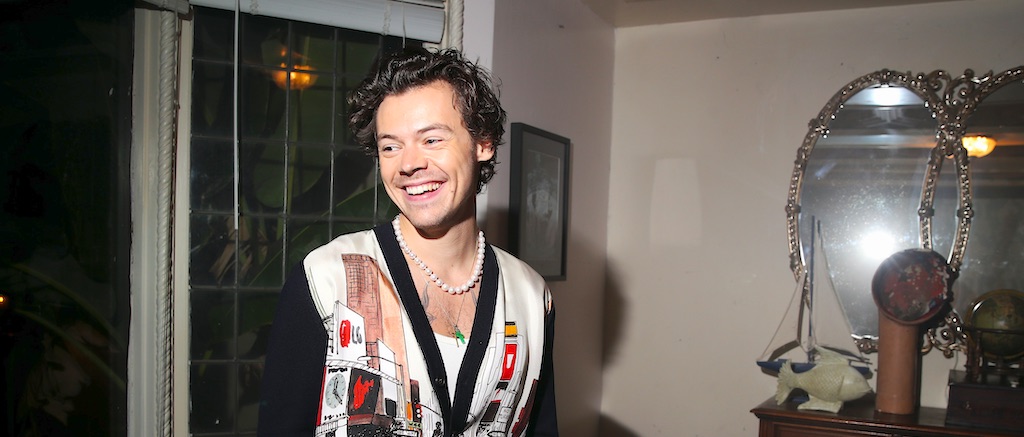
Harry Styles mostly uses his Instagram account as a promotional tool. Generally speaking, he tends to post only about his music and other aspects of his professional life. Every now and then, though, he uses the platform to get a personal message across. In May, for example, he shared a pro-Black Lives Matter message. Now, he has taken to Instagram to clap back at critics of him wearing a dress in his recent Vogue profile.
Specifically, he seems to be addressing Candace Owens, who wrote in response to the Vogue photos, “Bring back manly men.” Fast-forward to this morning, where Styles posted a photo of himself (from a recent Variety feature) wearing what appears to be a women’s suit and blouse while eating a banana. He threw Owens’ words back at her with his caption, in which he simply wrote, “Bring back manly men.”
In the Vogue profile, Styles said of his fashion choices, “Clothes are there to have fun with and experiment with and play with. What’s really exciting is that all of these lines are just kind of crumbling away. When you take away ‘There’s clothes for men and there’s clothes for women,’ once you remove any barriers, obviously you open up the arena in which you can play. I’ll go in shops sometimes, and I just find myself looking at the women’s clothes thinking they’re amazing. It’s like anything — anytime you’re putting barriers up in your own life, you’re just limiting yourself. There’s so much joy to be had in playing with clothes. I’ve never really thought too much about what it means — it just becomes this extended part of creating something.”
Stephen Colbert looked positively giddy during Tuesday’s episode of The Late Show. You would, too, if you got to say “massive dumps” (with a sh*t-eating grin… pun intended?) on network television. Colbert covered the president’s lie-filled interview with his future ex-wife, Maria Bartiromo, as well as Attorney General William Barr confirming what everyone but Trump and his cronies already knew, that “to date, we have not seen fraud on a scale that could have effected a different outcome” in the presidential election. “Fraud on a scale, also known as the president’s annual physical,” the host quipped.
Trump “has failed to stop the vote certification in all six states where he contested his defeat,” including Arizona and Wisconsin, Colbert continued. “So that’s 0 and six in the certifications and 0 and three in recounts, and he hasn’t won a single fraud case. He’s undefeated at losing. He is the Michael Jordan of playing baseball.” Also like Jordan, Trump has been known to down an entire pizza in one sitting. Colbert compared the president to “a guy at a custody hearing saying, ‘Your honor, my wife has made it seem like I’m a delinquent father and a terrible gambler, but how would she know any of that? I’m always at the casino.’” Not that Trump would anything about casinos and being a bad dad.
It has been nearly a year since Juice WRLD unexpectedly passed and left a him-shaped hole in the music world. He seems to have left plenty of music behind, though, as he has popped up on songs here and there over the past year. Today (December 2) would have been his 22nd birthday, and to mark the occasion, a collaboration with Benny Blanco, “Real Sh*t,” has been released.
Blanco also shared a lengthy Instagram post reflecting on recording the song and his relationship with Juice, writing, “my friend played me a song like 2 or 3 years ago… i looked at him and said it was one of the best songs i had ever heard… my friend didnt even know the artists name… said it was juice or something… i searched and searched on instagram until i came across juice’s page… he had 9k followers at the time… i dmed him and said we had to work… he said he was coming to la in a week and we could go in then… i booked us a studio… he didnt even have a record deal… labels were coming to the session all night trying to butter him up and offer him anything he wanted… he didn’t give a f*ck… he just wanted to make music… we made like 6 songs the first night… one of them being ‘roses’… the first song we ever recorded tho was ‘real sh*t’… it was the first time i saw his magic… the whole room dropped their jaws and watched him in awe… we knew we were in the room with a man who was going to change music forever… he went in the booth and recorded a song top to bottom in one take… then he did it 3 more times and said pick the best one… and they were all perfect songs… he was an absolute genius to say the least but above all he was one of the kindest and most considerate people i have ever met… he was my friend… happy birthday juice… we miss u…”